

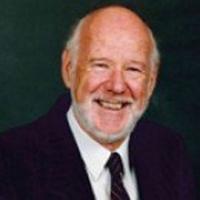

Professor

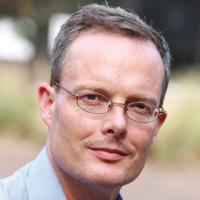
Geoff Fincher

AO FAA FTSE

Geoff Fincher
Image Description
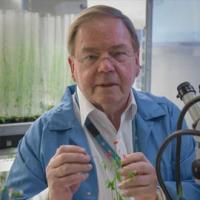
Geoff Fincher has made a distinguished contribution to cereal chemistry and the grains industry through his work on the structure, biosynthesis and digestion of plant cell walls. Plant cell walls are the most abundant source of renewable energy on the planet. They play a major role in human and animal nutrition and as sources of biofuels and biopolymers. His work has impacted on all these applications. He discovered many of the enzymes involved in the synthesis and degradation of cell wall polysaccharides of barley, particularly the (1,3;1,4)-β-glucans that have a key role in the brewing industry and human nutrition.

Fields of research

10 TECHNOLOGY 30 AGRICULTURAL AND VETERINARY SCIENCES
  • 3001 AGRICULTURAL BIOTECHNOLOGY
    • 300103 Agricultural Molecular Engineering of Nucleic Acids and Proteins
    • 300105 Genetically Modified Field Crops and Pasture
  • 3004 CROP AND PASTURE PRODUCTION
    • 300404 Crop and Pasture Biochemistry and Physiology
31 BIOLOGICAL SCIENCES
  • 3101 BIOCHEMISTRY AND CELL BIOLOGY
    • 310103 Cell Metabolism
    • 310105 Cellular Interactions (incl. Adhesion, Matrix, Cell Wall)
    • 310106 Enzymes
  • 3105 GENETICS
    • 310505 Gene Expression (incl. Microarray and other genome-wide approaches)
  • 3108 PLANT BIOLOGY
    • 310806 Plant Physiology

For full list of research codes, please visit the ARC Website .

Expertise type

  • Plant Cell Walls
  • Enzymology
  • Functional Genomics
  • Molecular Genetics
  • Plant Physiology
  • Agricultural Science
  • Biochemistry
  • Biology
  • Genomics

Please contact fellowship@science.org.au to request any updates to the data.

Professor

Les Field

AM FAA

Les Field
Image Description
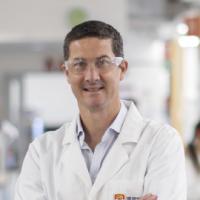
Professor Field's international reputation rests largely on his work with novel reagents containing coordinatively unsaturated transition metals. These reagents react with unactivated C-H bonds and hence these reactions are of great fundamental interest. There is also industrial potential, especially as Field has devised a catalytic cycle based on one of his reactions. Field is also well-known for extensive work in NMR spectroscopy which includes novel studies on heteronuclear coherence transfer and multiple quantum NMR. Professor Field has been awarded the inaugural Organic Chemistry Medal of the Royal Australian Chemical Institute in 1992 (shared with Professor A L J Beckwith FAA FRS) in recognition of his contributions to research in Chemistry.

Expertise type

  • Chemistry
  • NMR Spectroscopy
  • Organic Chemistry
  • Organometallic Chemistry

Please contact fellowship@science.org.au to request any updates to the data.

Professor

Laurie Faraone

AM FAA FTSE

Laurie Faraone
Image Description
Professor Faraone has played a leading role in academic teaching and postgraduate research training, undertaking leading edge research, building internationally competitive research capacity, and interacting with Australian and international researchers, industry and end-users in areas related to his research interests in microelectronics, optoelectronics, micro-electro-mechanical systems (MEMS) and nanotechnology. He leads a high profile research group that is internationally recognised as one of the premier university-based research groups in the world in the strategically important area of optoelectronic infrared sensor technology. Professor Faraone has a very strong track-record of service to professional societies and conference organisation.

Fields of research

10 TECHNOLOGY
  • 1099 OTHER TECHNOLOGY

For full list of research codes, please visit the ARC Website .

Expertise type

  • Electrical Engineering
  • Engineering
  • Nanotechnology
  • Semiconductors

Please contact fellowship@science.org.au to request any updates to the data.

Professor

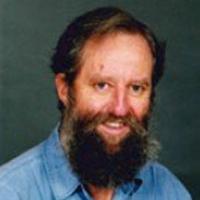
Rob Evans

FAA FTSE

Rob Evans
Image Description
Over the past 25 years Professor Evans has made a number of seminal contributions in the areas of signal processing, control systems and target tracking. He introduced the idea of the envelope-constrained filter, which has revolutionised the design of filters that must satisfy critical performance constraints. Envelope­ controlled filtering has now become a major area of study and is seeing wide application in communications and radar. He is also a leading international figure in adaptive control with input saturation constraints, target tracking in clutter and switched controller systems. He has publis

Fields of research

40 ENGINEERING
  • 4008 ELECTRICAL ENGINEERING

For full list of research codes, please visit the ARC Website .

Expertise type

  • Computer Science
  • Control Systems
  • ICT
  • Signal Processing

Please contact fellowship@science.org.au to request any updates to the data.

Professor

Jeff Errington

FAA FRS

Jeff Errington
Image Description
Professor Jeff Errington is distinguished for his pioneering studies on the molecular cell biology of bacteria. His laboratory has identified and characterised many genes and proteins supporting fundamental functions of bacterial cells, including cell wall synthesis, chromosome replication and segregation and cell division. In recent years his laboratory has uncovered how strange bacterial variants, called L-forms, grow and proliferate, with implications for the origins of cellular life, cell wall synthesis, antibiotic killing and recurrent infection. Professor Errington founded and directed the world’s first research Centre for Bacterial Cell Biology, as well as two spin-out companies working on antibiotic discovery.

Fields of research

31 BIOLOGICAL SCIENCES
  • 3107 MICROBIOLOGY
    • 310701 Bacteriology
    • 310704 Microbial Genetics

For full list of research codes, please visit the ARC Website .

Expertise type

  • Antibacterial Discovery
  • Microbiology
  • Natural Products
  • Bacterial Chromosome Replication
  • Molecular Biology
  • Bacteria
  • Microbial Evolution
  • Early Life
  • Microbial Diversity
  • Antibiotic Resistance
  • Bacteriology
  • Cell Biology
  • Bacterial genetics
  • Bacterial Cell Biology

Please contact fellowship@science.org.au to request any updates to the data.

Sir

Hugh Ennor

CBE FAA

Hugh Ennor
Image Description

Expertise type

  • Biology
  • Chemistry
  • Biochemistry

Please contact fellowship@science.org.au to request any updates to the data.

Dr

Jeff Ellis

FAA FRS

Jeff Ellis
Image Description
Dr Jeff Ellis is renowned for his work in plant molecular biology and, in particular, for research into disease resistant genes. In 1994 Ellis and his colleagues cloned the first plant rust resistance gene from flax and he has made major advances in the understanding of the rust plant interactions and the relationship between the avirulence genes from the flax rust and the resistance genes from flax. Earlier Ellis played an important role in understanding the Agrobacterial transformation of plants and using the early methods of transformation to study the maize Adh1 promoter and octopine synthase promoter enhancer.

Expertise type

  • Rust Disease
  • Biology
  • Fungal Disease
  • Immunology
  • Plant Biology

Please contact fellowship@science.org.au to request any updates to the data.

Professor

Bill Ellis

AO FAA

Bill Ellis
Image Description

Expertise type

  • Physics
  • Radioastronomy

Please contact fellowship@science.org.au to request any updates to the data.

Professor

Bill Elliott

FAA

Bill Elliott
Image Description
Elliott has made several substantial and impressive contributions to biochemistry. Glutamine synthetase was discovered by him and was the first enzyme to be discovered of the group, now known as the synthetases, which catalyse the syntheses of peptide bonds coupled with the breakdown of ATP. This discovery also constituted the first example in which a carboxyl group of an amino acid took part in such a synthetic reaction. The enzyme system which synthesises taurocholic acid via cholyl-CoA was also discovered by Elliott, as was the synthesis of nicotinuric acid by liver mitochondria. The elucidation of the reactions involved in urea synthesis was partly due to his discovery of an enzyme system which condensed arginine and fumarate to form arginosuccinate. His most recent work on glycine and threonine metabolism, in which a new metabolic cycle was proposed, is extremely elegant and provides a raison-d'etre for the existence of glyoxalase and D-lactate dehydrogenase in animal tissues.

Expertise type

  • Biochemistry
  • Biology

Please contact fellowship@science.org.au to request any updates to the data.

Professor

Jane Elith

FAA

Jane Elith
Image Description
Jane Elith is an internationally acclaimed ecologist, specialising in species distribution models that describe relationships between the occurrence of species and the environment. She has made outstanding contributions to species distribution modelling. This modelling is key in many aspects of species management, including understanding current distributions of threatened species, predicting how distributions might change over time, supporting threat management and controlling invasive species. Elith is a Thomson Reuters highly cited researcher (2014-2016) placing her in the top 1% of scholars internationally. She was awarded the 2015 Prime Minister’s prize for Life Scientist of the Year and the 2016 Fenner Medal from the Australian Academy of Science.

Expertise type

  • Boosted Regression Trees
  • Ecological Niche Models
  • Habitat Models
  • Maxent
  • Species Distribution Models
  • Ecology
  • Biology

Please contact fellowship@science.org.au to request any updates to the data.