




Academy endorses Uluru Statement from the Heart


Photo by Henrique Félix on Unsplash
Today, the Australian Academy of Science proudly adds its name to those endorsing the Uluru Statement from the Heart.
We do so alongside the four other learned academies, as part of the Australian Council of Learned Academies (ACOLA), and we recognise the need to do more to acknowledge and understand the deep knowledge held by Aboriginal and Torres Strait Islander people.
“As leaders in the research sector, we commit to participating in the creation of a harmonised, national research culture,” said Academy President and Chair of the ACOLA board, Professor John Shine.
“One that removes structural inequity, values diversity, enriches and strengthens our and others' understandings of the world, and takes tangible actions to address the past and create a better future.”
Through this response, we commit to:
- ensuring our processes and activities respect Aboriginal and Torres Strait Islander knowledge systems and perspectives
- appropriate and deep engagement with Aboriginal and Torres Strait Islander peoples and knowledge systems
- our responsibility and leadership role to actively expose, and foster dialogue about, racism and bigotry
- stopping tokenism in research efforts to ensure Aboriginal and Torres Strait Islander peoples are true partners in the conduct of research and benefit from its results
- participating in the creation of a harmonised, national research culture that values diversity, removes structural inequity and delivers benefits
- ensuring our activities, and the research we promote, are conducted under appropriate ethical arrangements, research principles and practices.
We also acknowledge that actions speak louder than words, the importance of reconciliation, and the sustained actions required to move forward—which involves us listening, learning, reflecting and engaging better.
To this end, the Australian Academy of Science has committed to a Reconciliation Action Plan (RAP), which outlines the practical steps we will take to support positive change and facilitate reconciliation.
See ACOLA’s full response to the Uluru Statement from the Heart
Australian nutritional researcher nominated for international 2021 ASPIRE Prize

Dr Jessica Bogard from CSIRO has been nominated by the Australian Academy of Science for the APEC Science Prize for Innovation, Research and Education (ASPIRE). Photo: Australian Academy of Science
A local leader in nutritional science has been announced as the Australian nominee for the prestigious 2021 ASPIRE prize.
Dr Jessica Bogard from CSIRO has been nominated by the Australian Academy of Science for the APEC Science Prize for Innovation, Research and Education (ASPIRE).
The ASPIRE prize, valued at US$25,000, recognises young scientists from Asia–Pacific Economic Cooperation (APEC) member economies who have demonstrated a commitment to excellence in innovation, research and education.
Dr Bogard’s work incorporates knowledge of local food cultures with management approaches to food production systems, aiming to increase accessibility of healthy and sustainable foods to vulnerable populations in low- and middle-income countries.
She has adapted traditional recipes with modern processing methods, creating food products that address common nutrient deficiencies among pregnant women and young children. She has also developed partnerships with local producers to supply raw ingredients and local businesses to process and distribute the products.
Two Australian runners up for the nomination have also been recognised: Dr Long Shi from RMIT and Associate Professor Matthew Harrison from the University of Tasmania.
Dr Shi is known for his work towards a sustainable environment. His ‘solar chimney’ passive ventilation technology, which he expanded from its traditional energy-saving function to an easy and cost-effective fire safety solution, also made him a finalist in the Australian Engineering Excellence Awards.
Associate Professor Harrison is renowned for his transdisciplinary work on the sustainability of agricultural systems, especially around climate change adaptation of agricultural systems and on mitigation of greenhouse gas emissions.
Since 2011, ASPIRE has recognised scientists under the age of 40 who are working in APEC member economies and have demonstrated a commitment to excellence in scientific research and cooperation with other APEC scientists.
Each member economy was invited to nominate one scientist under the age of 40 to be considered for the 2021 ASPIRE Prize. There have been two Australian winners of the ASPIRE Prize since its inception in 2011. In 2013 Associate Professor Carissa Klein won the prize for her work on sustainable ocean development, and in 2018 Professor Madhu Bhaskaran won the prize for her work on electronic devices and sensors.
The Academy wishes Dr Jessica Bogard all the best as the Australian nominee for the 2021 ASPIRE Prize. The winner of the 2021 ASPIRE Prize will be recognised at a virtual award ceremony hosted by New Zealand on 25 August. Learn more about the ASPIRE Prize, including past winners.
Can Australia build a world-leading RNA science-based biotech industry?
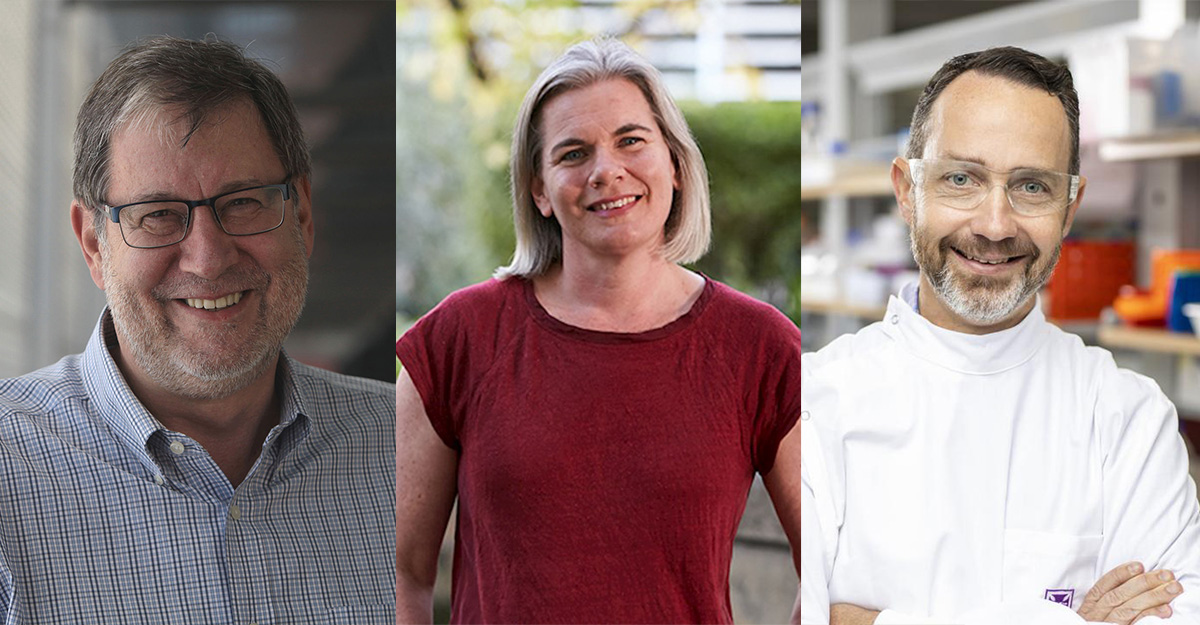
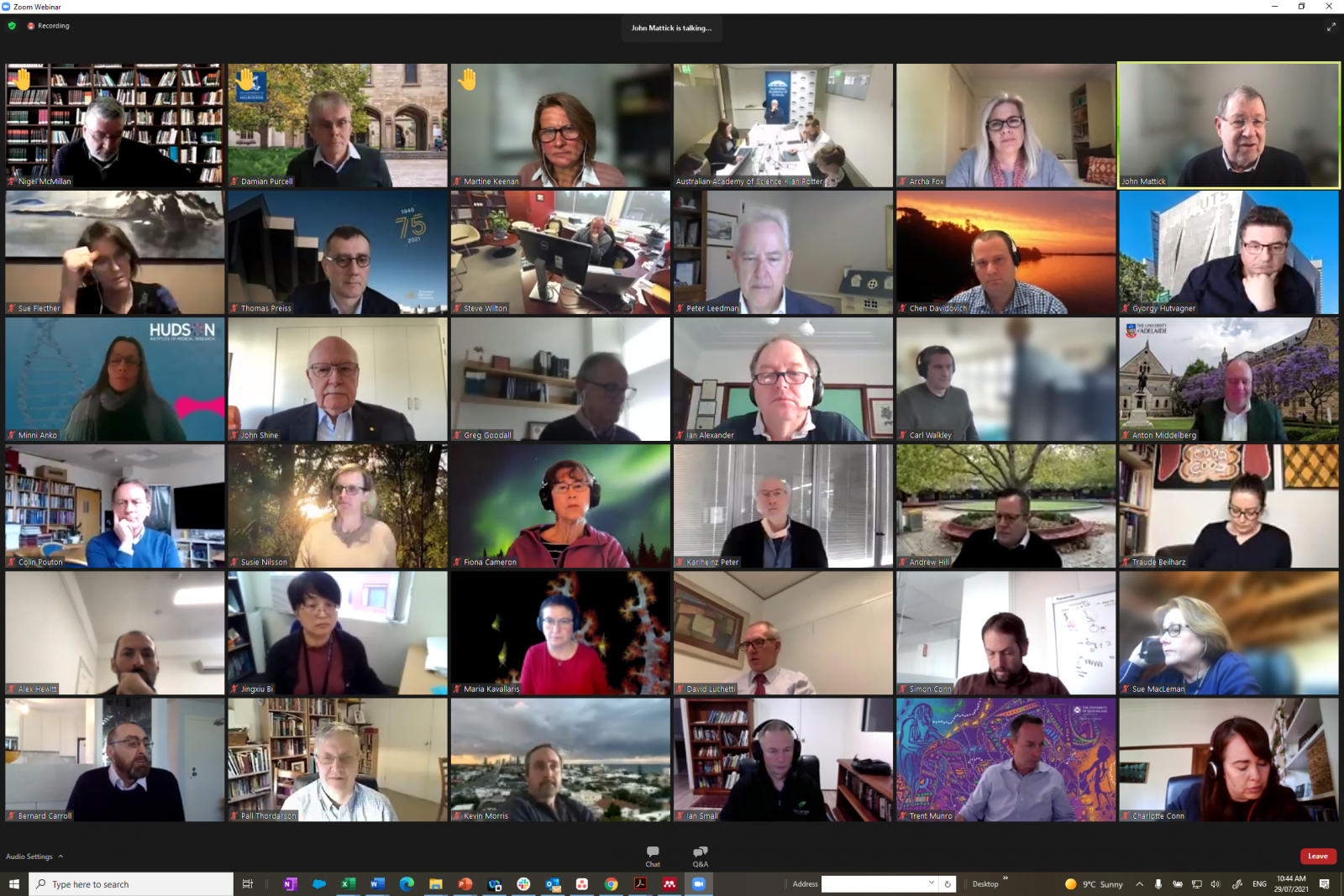
Co-chairs of the the roundtable (from left) Professor John Mattick, UNSW Sydney; Associate Professor Archa Fox, University of Western Australia; and Professor Trent Munro, University of Queensland.
Australia has led the world with several RNA research breakthroughs that have changed humans lives. Think: The discovery of the Shine-Dalgarno sequence, enabling high yields of cloned medicines such as insulin and growth hormone, or CSIRO/Peter Waterhouse’s RNAi technology to shut down or turn off genes to protect plants and animals from diseases.
But how are we positioned to continue with Australian-led innovations of RNA science? Think: personalised RNA medicine to treat cancer and neurodegenerative disease, or delivering RNA to plants to help them adapt to a changing climate.
Leading experts say Australia could deliver these innovations and become a world leader in RNA science and technology by establishing a national mission for the whole RNA science and technology pipeline in Australia, driven by strategic investment and prioritisation across funding schemes.
They made the call on Thursday at a national roundtable hosted by the Australian Academy of Science and the Australia and New Zealand RNA Production Consortium.
The group, comprising 38 experts in RNA biology and biotechnology from the Australian university and research sectors along with industry, called on Australia to play a leading role in the global ecosystem of RNA science and harness the opportunities for Australian industry to develop RNA-based products and services for global markets.
The group also called for the establishment of a local mixed manufacturing ecosystem, including pilot facilities to enable new Australian products to be translated, production of pre-clinical trial components and a Good Manufacturing Practice (GMP) manufacturing capability to support clinical trials.
Co-Chair of the Academy-hosted national roundtable, Professor John Mattick from UNSW Sydney, said the considerable potential for RNA based products had in many ways been overlooked up until now.
“However, the success of RNA based technology in the rapid development of safe and effective vaccines for COVID-19 has drawn sustained public interest in the technology,” said Professor Mattick, who is also a Fellow of the Australian Academy of Science.
“With the first commercially approved mRNA-based vaccine products there is now considerable potential for the development of more advanced uses of RNA therapies and technologies, including the treatment of disorders such as arthritis, cancer and malaria and administering RNA to plants and animals to improve productivity and reduce environmental pressures.
“Australia has an opportunity to create an innovative RNA research and development ‘ecosystem’ and become a global player in this disruptive industry, creating and manufacturing high-value RNA-based products here, and exporting them to the world.”
The expert group says Australia faces unique problems that stand to be solved by RNA science, including sensing new biosecurity threats and supporting climate change adaptation in agriculture. The expert group determined the following national research priorities, based on Australia’s strengths and emerging global trends:
- RNA vaccines, including vaccines for people with autoimmune disorders
- RNA therapeutics
- RNA sensing tools
- The role of RNA in plant and animal development
- The role of RNA in brain function and disorders
- RNA chemistry
- Stability and advanced manufacturing of RNA therapeutics
- RNA delivery technologies.
The rapid report from the roundtable and the list of participants involved is available here. Participation in the roundtable is not an endorsement of this rapid report.
What is RNA science?
RNA, or ribonucleic acid, plays a central role in the function of genes and the regulation of gene expression. RNA controls development in plants and animals, influencing areas as diverse as crop yields in agriculture, and brain function in humans.
RNA is one of the three major biological macromolecules essential for all known forms of life, along with DNA and proteins. For decades RNA has been viewed as the intermediate between gene and protein. It is now evident that many RNAs are not translated into proteins but rather act to control the complex processes of differentiation and development. These RNAs are also subject to modification, particularly in the brain, which connects hardwired genetic information to environmental parameters.
Marine and coastal leaders urge government to adopt FEA Sustainable Oceans and Coasts Strategy

Image: Marcus Ireland via Pexels
Delegates of the 15th Coast to Coast National Conference have formally endorsed Future Earth Australia’s Sustainable Oceans and Coasts National Strategy 2021–2030 and urged the Australian government to adopt and implement its recommendations.
The strategy provides a national implementation plan to ensure healthy Australian coasts and oceans for a just and environmentally sustainable future. Among the plan’s recommendations is a call for a national agency to coordinate ocean and coastal governance across all tiers of government. Other recommendations include to:
- empower Indigenous leadership
- build resilient communities
- decarbonise the blue economy
- support stewardship.
“The conference delegates were so supportive and enthusiastic about the strategy and its recommendations that they took the initiative themselves to endorse it,” said Emeritus Professor Nick Harvey, co-chair of the Expert Working Group of the strategy.
“Its call to create a national agency, support local grassroots actions, and empower Indigenous leadership has been received and amplified by the coastal community, and we urge the government to take action.”
Over 300 delegates attended the Coast to Coast Conference representing a diverse cross-section of leading marine and coastal experts, spanning government representatives, natural resource managers, community organisations, First Nations peoples, industry members, researchers and consultants. This biennial conference is organised by the Australian Coastal Society, a not-for-profit organisation that promotes knowledge sharing and action in national coastal management.
Future Earth Australia has convened leaders across expertise, sectors, and the nation to prepare the National Sustainable Oceans and Coasts Strategy 2021–2030 to advance the sustainability agenda and forge pathways to a thriving future. The strategy is a bottom-up, cross-sectoral plan that was developed through deep consultation across the country, with strategic oversight from an Expert Working Group composed of leading ocean and coastal researchers and practitioners. It provides a thoughtful and innovative way forward for our federal and state governments and other leaders across the nation, as well as a roadmap for implementing our vision for healthy oceans and coasts for a just and environmentally sustainable future.
Read the Sustainable oceans and coasts national strategy 2021–2030
Future Earth Australia
Future Earth is a global sustainability, research and innovation network. Future Earth Australia is the Australian and Oceania arm of Future Earth. It enables Australian researchers, governments, industry and NGOs to collaborate with each other and with international networks.
Media Enquiries
Nicholas Harvey, National Sustainable Oceans and Coasts Strategy Expert Working Group Co-Chair, nick.harvey@adelaide.edu.au, 0438358624
Tayanah O’Donnell, Future Earth Australia, tayanah.odonnell@science.org.au, 0490 472 687
Academy Fellows among ARC Linkage Project recipients

From top left: Associate Professor Lee Berger; Professor Martin Green; Professor Hala Zreiqat; Professor Richard Bryant; Professor Christopher Barner-Kowollik; Dr Anna Koltunow; Professor Craig Moritz; and Professor Steven Prawer.
Eight Academy Fellows are among the recipients of 67 collaborative research projects funded under the Australian Research Council (ARC) Linkage Projects scheme, bringing together higher education and industry to conduct research into pressing issues facing Australians.
The scheme supports collaborative research projects between higher education researchers and partner organisations in the public, private and not-for-profit sectors to find practical solutions to problems and challenges in real-world, industry-based settings.
The funding for research partnerships includes:
- $480,000 for Queensland University of Technology to pioneer an integrated solution for stormwater retention, while removing chemical pollutants. Professor Christopher Barner-Kowollik and colleagues will design fibre coatings based on a versatile and chemically simple deposition process, incorporate functionalities onto the fibres allowing active stormwater treatment, and investigate these interfaces in-depth by advanced surface and interface characterisation methods.
- $259,379 to the University of Melbourne to increase amphibian immunity to combat disease causing mass extinction. The project aims to increase amphibian survival to combat the devastating chytrid fungus by identifying resistance genes and increasing their frequency in the host population. Associate Professor Lee Berger and colleagues expect outcomes of enhanced international collaborations in comparative immunology, a comprehensive understanding of immunity to chytridiomycosis, and disease resistant amphibians.
- $837,040 to the University of New South Wales to understand the impact of missing family on forcibly displaced people. This project aims to investigate the psychological and social effects of having missing family on forcibly displaced people settled in Australia. With colleagues, Professor Richard Bryant will enlist a longitudinal mixed-method approach to compare those with missing family to those whose connections have been restored on key outcomes and coping strategies.
- $539,137 to the University of New South Wales to develop a long-life, stable, high-performance, and green chalcopyrite solar powered building steel, which is expected to offer a shapable truly green building integrated photovoltaic (BIPV) product for building deployment. Within the research team is Professor Martin Green. The project completion will accelerate the transition to zero-emission buildings.
- $607,411 to the University of Sydney for generating new knowledge of climate resilient seed production technology. The project aims to increase productivity and profitability of the Australian sorghum industry in the face of risks imposed by an increasingly variable climate. Dr Anna Koltunow and colleagues expect the project to support profitable and productive businesses, providing Australian agriculture with a competitive, sustainable edge.
- $516,968 to Macquarie University for new biocultural approach to fauna conservation. Professor Craig Moritz and colleagues aim to record endangered Indigenous knowledge of fauna and integrate this with innovative Western science to develop Australia’s first cross-cultural fauna conservation strategy.
- $443,000 to the University of Melbourne to develop a reliable microneedle array for blood collection procedures. Professor Steven Prawer hopes the outcomes of this project will include the development of synthetic diamond-based microneedles through improved and affordable healthcare and the development of new high-tech industries.
- $405,031 to the University of Sydney for the development of a novel technology platform to mediate load transfer between synthetic and biological materials with dissimilar mechanical properties, creating an effective interface mechanism. Professor Hala Zreiqat will work with colleagues to generate new knowledge in materials engineering by combining interdisciplinary expertise and state-of-the-art technologies in computational modelling, biomaterials, and additive manufacturing. This could ultimately benefit Australian industry engaged in developing next-generation synthetic orthopaedic solutions, providing a significant competitive advantage in an expanding global market.
More information about the latest recipients and research partners of ARC Linkage Projects funding.
Exploring possible futures through the Sustainable Shine Dome project
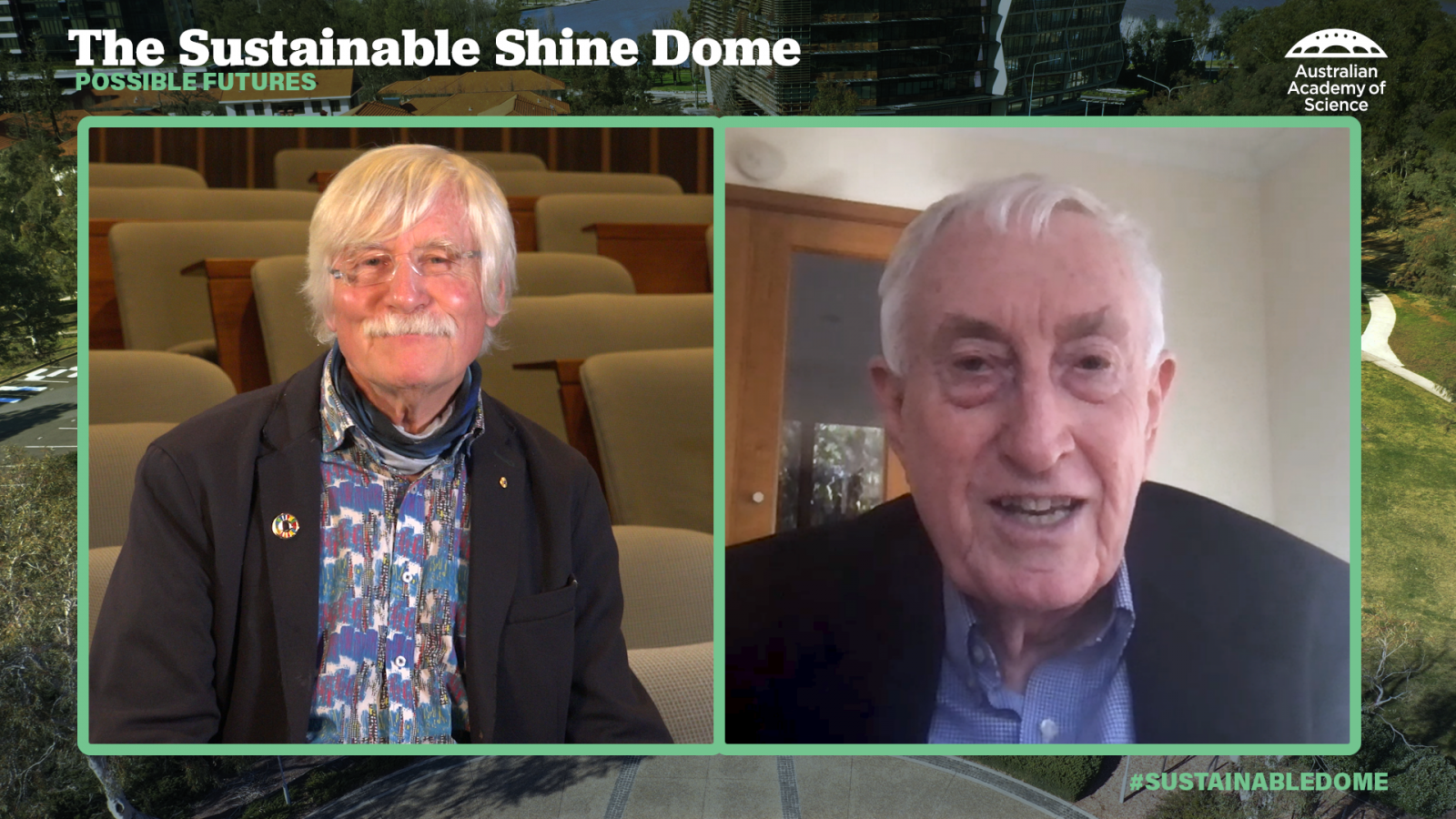
Academy Fellow and renowned immunologist and pandemic expert Professor Peter Doherty didn't mince his words when asked about climate change recently.
“Climate change is the greatest threat that humanity has faced in the modern era. Each and every one of us as a human being needs to do what we can both on the COVID front, and on the climate change front,” he said.
So how can we design the best possible future in the face of the great challenge of climate change?
Professor Doherty was one of the keynote speakers discussing this question at the recent Sustainable Shine Dome Symposium titled ‘Possible Futures’. It was the final event in a series of three symposia on heritage values and sustainability. The event focused on broad challenges and practical issues in the Australian response to climate change, lessons for a carbon active future, and specific findings and recommendations for the Shine Dome.
The event aimed to spark further inspiration for sustainable cultural heritage research in response to the climate change crisis.
In conversation with the Academy's Secretary Education and Public Awareness, Professor Hans Bachor, Professor Doherty explained how climate change and future pandemics are connected.
“There are many aspects to it as we have issues with, for instance, food production, in particularly developing countries, with climate change. That means people turn more to wild animals as a source of food … and people are moving more into forested areas and into areas where you can be at greater risk of contacting wild animals, which will carry novel pathogens,” Professor Doherty said.
It’s evident that human health and the health of the environment are connected in so many ways. Projects like the Sustainable Shine Dome enable people to focus on ways to improve lives by drawing on lessons from the past.
Ross Harding from Finding Infinity spoke about the potential for future buildings and cities, framed around work his company is doing overseas and in Australia.
Catherine Forbes from GML Heritage and May Ngui from GHD also reported on the discoveries, recommendations and next steps arising from the research carried out as part of the Sustainable Shine project.
The Sustainable Shine Dome is a joint project of the University of Canberra and the Australian Academy of Science and the object of an Australian Heritage Grant 2019–20 to preserve and promote the Shine Dome’s national heritage values. Find out more about the Sustainable Shine Dome project.
Watch the video below of the Possible Futures symposium, part of the Sustainable Shine Dome series.
scienceXart returns in 2021 to celebrate the International Year of Fruits and Vegetables

Young people will again have the chance to explore science through art! Building on from last year’s success of scienceXart, the Australian Academy of Science is this year giving primary school students the chance to put thought into their food and create a plate, learning about the science of nutrition along the way.
In celebration of the United Nations International Year of Fruits and Vegetables, the 2021 competition theme is ‘scienceXart: food for thought’. This art competition calls on primary school students to design a plate of food and get inspired to sink their teeth into the science of what they eat.
scienceXart is hosted by the expert members of the Academy’s National Committee for Nutrition and supported by Dieticians Australia, an organisation of over 7500 dietetic and nutrition professions striving to build healthier communities. Together they aim to highlight the inherent creativity of the nutrition sciences to young people. The competition has been created in consultation with the Academy's education team.
About the competition
scienceXart: food for thought is open to primary school students studying in Australia, with submissions made using photos of the creative works.
The challenge is to design a plate of food that tells a story. It could be a story about the nutritional value of the meal, how the food on the plate was grown or created, or simply fun ways to consume fruit and vegetables.
Students can create the plate however they want, from a drawing to craft supplies or even with real foods, fruits and vegetables! The possibilities are endless. Once they’ve created their plate, students write a description in 100 words or less about the science behind their plate and the story it tells. Then, snap a picture and submit the photo to the competition website for the chance to win an awesome prize pack for their entire class.
Not only will students get to the opportunity to think about our food and flex their creative muscles, but they’ll also be celebrating the United Nations International Year of Fruits and Vegetables with others around the world.
The competition is great for learning in the classroom or at home and has been designed to align with Australian curriculum learning outcomes. There are also activity plans for all age groups to integrate the competition into the classroom.
Find out more about the challenge, the prizes, and how to get involved at scienceXart: food for thought.
The ‘scienceXart: spot the maths’ competition in 2020 received nearly 1000 amazing entries from school students across Australia, where students ‘spotted the maths’ in their everyday lives. See a gallery of the 2020 scienceXart winners.

Facial recognition to identify victims

Defence science and innovation is not only critical to maintaining Australia’s military capability but its multi-disciplinary applications are increasingly becoming crucial to the safety and security of the broader community.
Through collaboration with researchers, academia and industry, facilitated by Defence Science and Technology Group’s National Security Science and Technology Centre, research into real-world Defence needs and challenges are being translated into real-world commercial and community applications.
One outstanding example is Defence's ground-breaking biometrics research which is being used to combat serious crimes.
Defence scientist Dr Dana Michalski is the Lead for several programs of work, including those in Child Identification and Post-Mortem Identification within Identity Intelligence.
She is also a Visiting Research Fellow at the University of Adelaide, where she supervises honours and PhD students, and is the Australian Research and Development (R&D) Lead for the Five Eyes Digital Forensics to Combat Child Exploitation Program. Her research has been adopted by agencies around the world.
Her roles involve directly communicating with Defence and national security agencies to ensure her and her team conduct research and development to help identify some of the most vulnerable members of society.
Renowned for tackling the challenging cases for facial recognition by optimising ways to identify children, her team have moved into another challenging area: identifying the dead.
“Again, facial recognition technology was never really developed with this use case in mind. But deep learning methods and access to appropriate datasets makes this a real possibility, it’s exciting,“Dr Michalski said.
Dana’s team is multidisciplinary, providing an edge to tackle the whole facial identification process. Her team evaluates the performance of commercial facial-recognition systems, using images from the agencies’ own data sets and then suggesting improvements. This optimisation process enables the authorities to get the most out of the technology they have invested in. Her team also develops novel technologies where technologies don’t exist to help with the identification process.
While advances in technology have enabled law enforcement agencies to make significant breakthroughs, the human element cannot be ruled out.
“We aim to make the whole identification capability better, rather than just enhancing the technology,” Dr Michalski said.
Her team also tests human face-matching specialists who manually compare faces. They found there is a 20 per cent drop in performance when matching images of children versus images of adults.
“Identifying children is particularly challenging because their faces change so much as they develop,” Dr Michalski explains.
They are currently developing an evidence-based training program to enhance performance.
The team also provides advice on how to capture appropriate images for various use cases, to ensure the technology and human face-matching specialists can be as accurate as possible.
Building capability in these challenging areas has been made possible by collaborating across agencies, industry and academia.
“We can’t do this work alone,” Dr Michalski said.
“It’s about working closely with others to make the impossible possible, with the end goal to safeguard Australians as much as we can”.
This partner story was provided by the Department of Defence, Platinum Event Partner of the Academy’s flagship event, Science at the Shine Dome 2021.

Interstellar impact
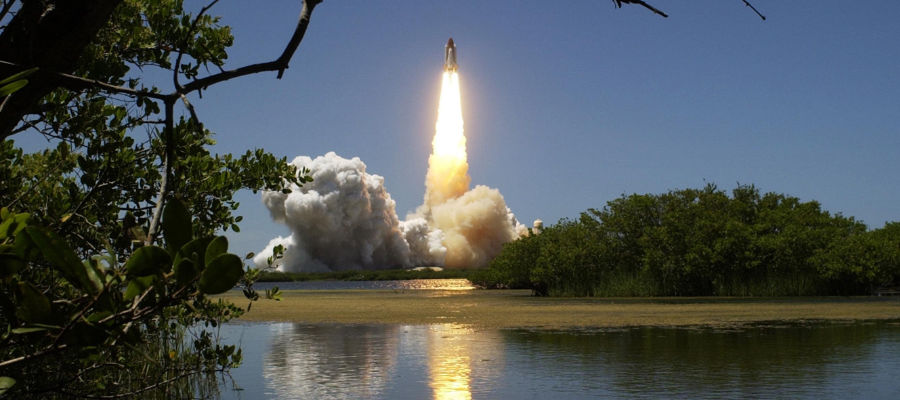
Image adapted from Pixabay, CC0
Humanity’s move into space is gathering momentum. It’s widely predicted we could feasibly see lunar settlements as soon as the 2030s and crewed missions to Mars just a decade later. But significant hurdles remain—not least, how to ensure a sustainable supply of many survival essentials: food, water, medicines and minerals. University of Adelaide research is meeting the challenge.
Adapting crops to thrive in space
An Adelaide team, led by Professor Matthew Gilliham, is adapting space-ready plants to enable astronauts to grow their own high-quality food.
“We’re working with a variety of crops to accelerate growth, increase nutrient efficiency and density, use less water and minimise waste,” says Matthew.
Another key focus is identifying ideal gene combinations to cope with microgravity.
“Weightlessness creates major problems,” he says. “For example, water doesn’t move down the soil profile, and can starve plants of oxygen by enveloping tissues.”
Producing stable “space smoothies”
Adelaide’s Professor Volker Hessel and his team have developed technology that will enable astronauts to rapidly produce nutritious fortified beverages.
“We’re using a space-proven method known as microfluidics to create stable nanoemulsions,” explains Volker.
“The personalised approach we’ve developed allows production in minutes, compared to hours for conventional batch technologies.”
Identifying extraterrestrial resources
The University of Adelaide is heavily involved in the multi-party Seven Sisters consortium, which will send nanosatellites and exploration sensors to the Moon in 2023 to search for water and minerals.
“Our involvement centres around the development of large arrays of wireless geophysical sensors for real-time seismic and heat-flow data mapping and analysis.” says University team leader Professor Graham Heinson.
In related work, Adelaide’s Professor Nigel Spooner is leading an Australian Space Agency-funded project testing the use of “novel fluorescence” sensing technology for real-time identification of minerals critical for extraterrestrial manufacturing.
Shielding medicines from cosmic rays
Another Adelaide space science project is the development of cosmic-ray-stable pharmaceutical compounds. Also led by Professor Volker Hessel, the University team’s approaches are currently being tested inside and outside the International Space Station (ISS) in the first Australian-led NASA-ISS experiment.
This partner story was provided by The University of Adelaide, Gold Event Partner of the Academy’s flagship event, Science at the Shine Dome 2021.
For more information on the University of Adelaide’s research, visit: ua.edu.au/research
QUT research advancing bioenergy crop resilience
A new QUT-US research partnership aims to develop a proof-of-concept for drought resistant bioenergy crops within five years that could lead to our greater use of renewable fuels.
QUT will help advance crop resilience research through a strategic partnership with Pacific Northwest National Laboratory (PNNL), a US Department of Energy laboratory.
Plant biotechnologist researcher Professor Sagadevan Mundree, director of the QUT Centre for Agriculture and the Bioeconomy (CAB), commenced a five-year joint appointment in July as Senior Scientist in PNNL’s Environmental Molecular Science Division of the Earth and Biological Sciences Directorate.
He will work with PNNL scientists to improve understanding of the role of plant microbe interactions in drought tolerance and stress resistance, and to develop approaches to enhance plant productivities and nutrient acquisition that ensure economic feasibility of bioenergy crops.
“Ultimately, we want to ensure that, within a certain timeframe, we can switch to renewable sources of energy,” Professor Mundree said.
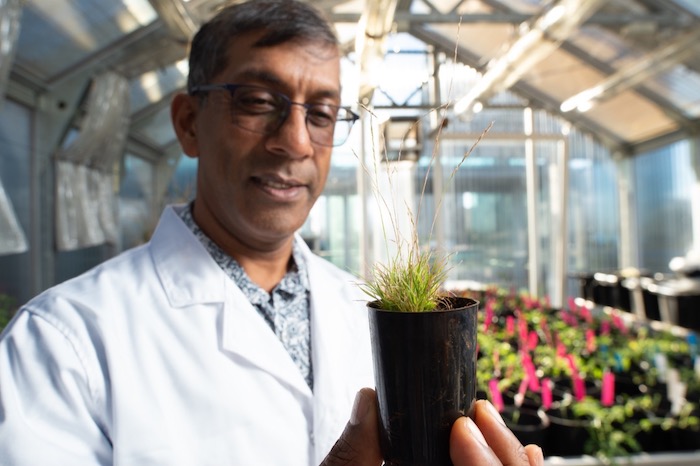
Professor Sagadevan Mundree, director of the QUT Centre for Agriculture and the Bioeconomy, will work with Pacific Northwest National Laboratory scientists to help ensure drought and stress tolerance in future bioenergy crops.
“Bioenergy crops are specifically grown for biomass, not food. Our first challenge is to ensure we have a reliable, sustainable source of biomass feedstock like switchgrass or sweet sorghum that can be processed to produce renewable energy and fuels.
“We don’t want to compete with food crops, so we should have dedicated crops as biomass sources, and that's what PNNL has been focused on.
“By increasing the stress tolerance of the plant, we could move bioenergy crops away from prime areas for growing food crops and start to use small, marginal land.”
For the past 25 years, Professor Mundree has worked on enhancing stress tolerance in plants to develop resilient food crops that he will now extend to bioenergy crops.
He has a rich history of working with extremophiles—organisms that can survive in extreme environments like intense temperatures and highly acidic environments—including the Australian resurrection grass.
“We have identified some unique strategies of the native Australian resurrection grass which grows in the outback and can tolerate extreme environmental stress,” Professor Mundree said.
“This plant uses a number of strategies that we could use in our work, and we can advance our understanding of these using PNNL’s capabilities and world-class expertise in plant systems biology, microbiome science and multi-omics measurement technologies.”
This story was provided by QUT, a Major Event Partner of the Academy’s flagship event, Science at the Shine Dome in 2021.