




The science of immunisation—common questions answered

The Australian Academy of Science has launched a new guide about the science of immunisation to help counter misinformation and uncertainty surrounding vaccines for COVID-19 and other diseases.
The guide, which was developed with the support of the Australian Government Department of Health, answers common questions including:
- What is immunisation?
- What is in a vaccine?
- Who benefits from vaccines?
- Are vaccines safe?
- What does the future hold for vaccination?
It highlights that the vaccines currently in use in Australian provide benefits that greatly outweigh the risks of associated adverse side effects.
Academy President, Professor John Shine, said despite the benefits of immunisation and vaccine development being well established after decades of scientific research, it can be challenging to understand how immunisation works or where to find trusted and independent information.
“The continuing spread of misinformation about vaccines is making it difficult to understand whether a claim is based on credible scientific evidence.
“Herd immunity, adverse events, efficacy: these are just some of the vaccine-related terms people are hearing regularly in the media that they may not understand as we manage the COVID-19 pandemic or in relation to vaccines that protect us from other diseases.
“This booklet explains these terms and provides up-to-date information about the science of immunisation in clear and easy-to-understand language with the aim of giving confidence to individuals to make informed health decisions based on science,” said Professor Shine.
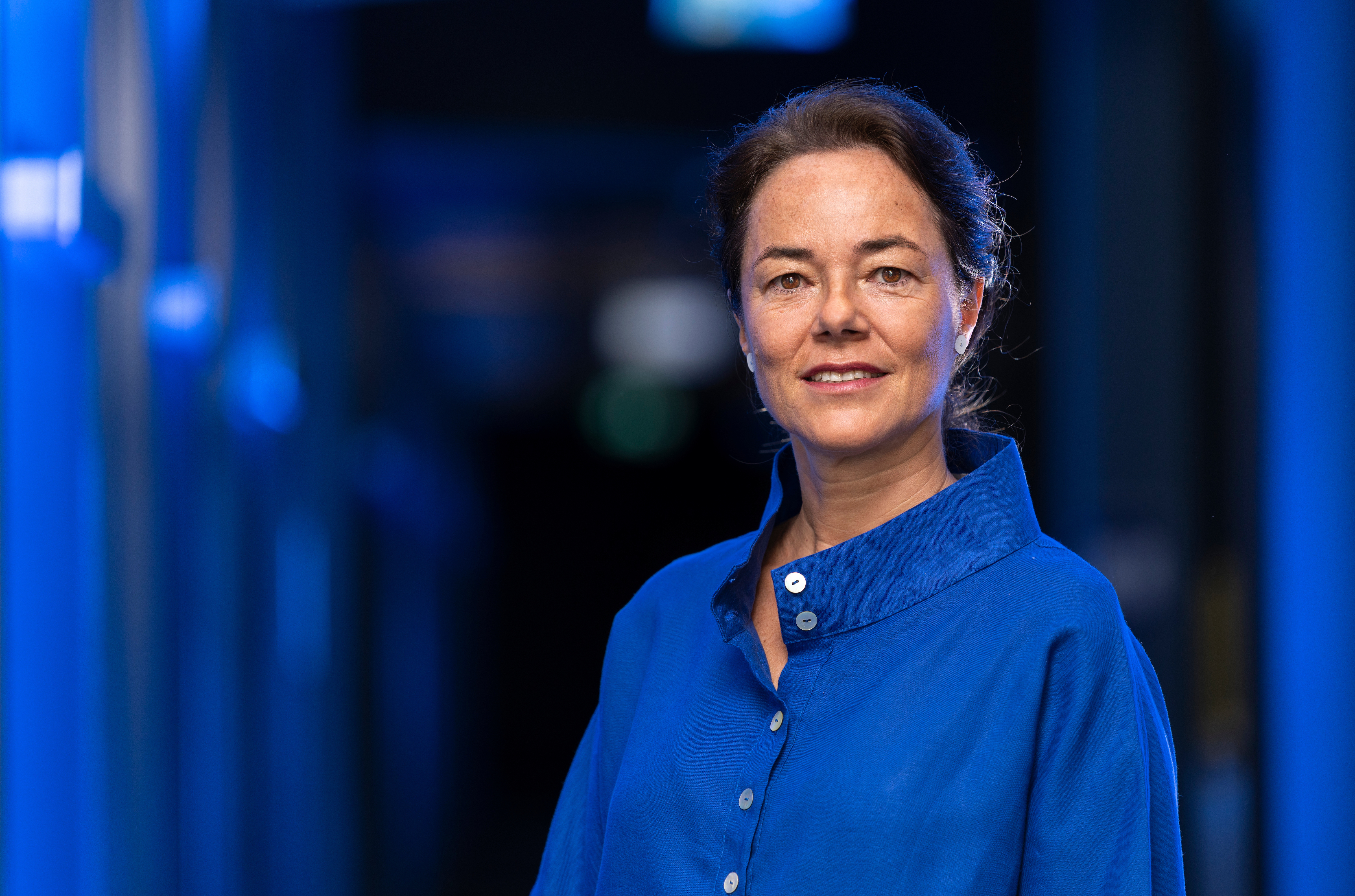
Professor Carola Vinuesa. Photo: Jamie Kidson, ANU
‘Vaccination saves lives’
The guide was prepared by an expert working group comprising leading medical practitioners and researchers including Australian Academy of Science Fellow Professor Carola Vinuesa.
Professor Vinuesa said the guide is designed to build trust and understanding among the public of the scientific process behind vaccines.
“It is encouraging to see that immunisation rates for a range of diseases continues to rise and is historically high,” Professor Vinuesa said.
“The act of vaccination saves lives and can limit and prevent infectious diseases around the world, which still account for around 40 per cent of all recorded deaths globally.”
The guide makes clear that scientists and health authorities keep a close eye on the safety and effectiveness of vaccines, including after vaccines are rolled out to the public.
General Practitioner Dr Preeya Alexander was a member of the expert working group that developed the guide. She said discussing vaccine concerns with a trusted health professional is one of the best ways for people to understand what scientists and public health professionals know about a disease and the best protection against it.
“However, it is equally important for health professionals to listen openly to those concerns,” said Dr Alexander.
Read the guide
The guide is available fully online as web content and as a downloadable PDF, and there are short easy-to-understand videos to watch and share.
Read more at www.science.org.au/immunisation.
How did science feature in the Budget? Australia's leading scientists respond
The Australian Academy of Science says the 2021–22 Federal Budget contains mixed news for science.
Academy President Professor John Shine says it is important for Australia’s future to ensure we have strong investment in basic research to be able to translate discoveries.
The Budget contains no significant new funding for fundamental discovery science and no initiatives to stem the loss of university science jobs.
“The Academy welcomes the commitment to develop an Australian mRNA manufacturing capability to fight COVID-19, the flu and future pandemics,” Professor Shine said.
“The Academy is pleased the Government has heeded our advice to future-proof Australia with the development of such a capability.
“Developing the capability will allow Australia to build resilience to future pandemics and potential biosecurity threats that require us to have the onshore capacity to mass produce vaccines.
“The Academy’s mid-term review of the 10-year plan for astronomy published last year recommended Australia pursue realisation of the full SKA Observatory. We are pleased the Government has honoured its commitment to this by providing $387.2 million over ten years,” he said.
The Academy also welcomes Budget measures including:
- A 10-year investment to support the implementation of the Technology Investment Roadmap and Low Emissions Technology Statements including $761.8 million over the forward estimates. These initiatives are welcome, however, remaining paramount are greater global efforts to further limit greenhouse gas emissions and Australia’s further participation in that effort.
- A range of measures to improve climate adaptation, including investments to stimulate the blue economy; support for a National Soils Strategy; support for biodiversity on agricultural lands; funding to establish an independent statutory Environment Assurance Commissioner; extension of recycling initiatives; and funding to establish the Australian Climate Service.
- $42.4 million to co-fund scholarships for women in STEM in partnership with industry.
- $10.4 million for medical research including support for more clinical trials in Australia and to introduce mitochondrial donation into research settings.
- The patent box initiative to encourage innovation in the medical and biotech sectors.
Twenty-two Australians recognised among our nation’s most distinguished scientists
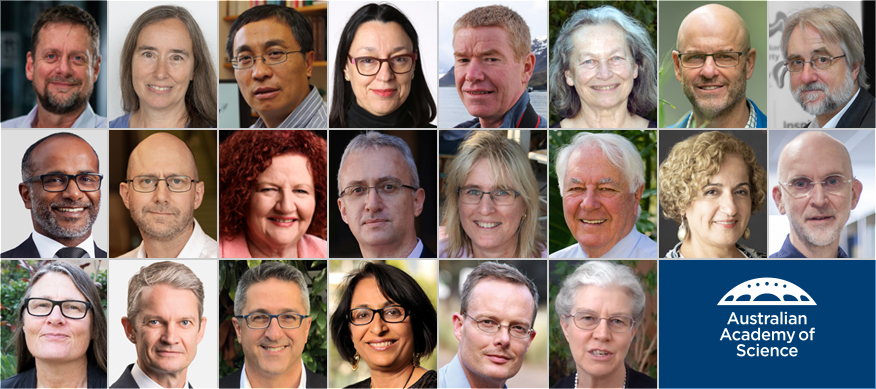
New Fellows
The Australian inventor of 3D-printed bone substitutes is among a group of scientists being acknowledged today for their outstanding contributions to science.
Professor Hala Zreiqat and her team developed world-first techniques for 3D-printing strong, bio-compatible ceramic materials that can bond to and help repair bones. This is leading to the development of new orthopaedic implants, including the world’s first synthetic material for healing large areas of bone while supporting weight.
The Jordanian migrant who came to Australia in 1991 to pursue her dream of medical research is one of 22 scientists newly elected a Fellow of the Australian Academy of Science.
The 2021 Fellows also include Professor Ian Reid, whose work on real-time robotic vision has applications in self-driving cars and robot-assisted construction; and Professor Alison Rodger, whose techniques for understanding complex biological molecules using polarised light are now applied in pharmaceutical research and development around the world.
Other new Fellows’ contributions include developing statistical theories to improve weather forecasting, growing ‘qubits’ which form the architecture of quantum computers, and revealing how plant cells communicate with each other about changes in their environment.
Australian Academy of Science President, Professor John Shine, congratulated the new Fellows for their achievements on the international stage.
“These researchers have not only been at the forefront of Australia's scientific community, but have also been leaders in global science,” said Professor Shine.
“The 2021 Fellows were elected by their Academy peers after a rigorous evaluation. I warmly congratulate and welcome each Fellow on their election and for their extraordinary contribution to science and society.”
Fellows of the Australian Academy of Science are among the nation’s most distinguished scientists, elected by their peers for ground-breaking research and contributions that have had clear impact. This year’s cohort is made up of 41% women and 59% men. Over the past five years, 35% of the Fellows elected have been women. Following the 2021 election of our new Fellows, the Fellowship now stands at 576 Fellows.
The 2021 Fellows will be formally admitted to the Academy on 3 November, with each new Fellow presenting their work and achievements in talks aimed at a general audience on the following day.
The Academy’s new Fellows for 2021 are:
ACT
- Professor Dorrit Jacob FAA—Geochemist, Australian National University
- Professor Barry Pogson FAA—Plant biologist, Australian National University
QLD
- Professor Catherine Lovelock FAA—Ecologist, University of Queensland
- Professor Margaret Sheil AO FAA FTSE—Vice-Chancellor and President, Queensland University of Technology (Special Election)
SA
- Professor Ian Reid FAA FTSE—Computer vision researcher, University of Adelaide
TAS
- Professor Barbara Nowak FAA—Fish health researcher, University of Tasmania
VIC
- Professor Steven Chown FAA—Antarctic ecologist, Monash University
- Professor Arthur Christopoulos FAA FAHMS—Molecular pharmacologist, Monash University
- Professor Brendan Crabb AC FAA FAHMS—Microbiologist, Burnet Institute
- Professor Mark Dawson FAA FAHMS—Cancer biologist, Peter MacCallum Cancer Centre
- Professor Robin Gasser FAA—Parasitologist, University of Melbourne
- Professor Rob Hyndman FAA FASSA—Statistician (forecasting), Monash University
- Professor John Sader FAA—Applied mathematician (nanoscale systems), University of Melbourne
- Professor Gordon Smyth FAA—Statistician (genomics), Walter and Eliza Hall Institute of Medical Research
- Professor Svetha Venkatesh FAA FTSE—Computer scientist (machine learning), Deakin University
NSW
- Dr Gregory Clark AC FAA FTSE—Non-Executive Director, NextDC (Special Election)
- Professor Susan Coppersmith FAA—Condensed matter physicist, University of New South Wales
- Professor Yihong Du FAA—Mathematician (differential equations), University of New England
- Professor Glenda Halliday FAA FAHMS—Neuroscientist, University of Sydney
- Professor Andrew Pitman AO FAA—Climatologist, University of New South Wales
- Professor Alison Rodger FAA—Biochemist, Macquarie University
- Professor Hala Zreiqat AM FAA FTSE FAHMS—Biomedical Engineer, University of Sydney
New Corresponding Members
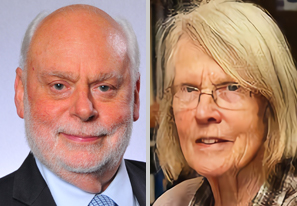
Sir Fraser Stoddart and Professor Eleanor Dodson. Photo: supplied
Also admitted to the Academy this year are two Corresponding Members.
Corresponding Membership is a special category within the Fellowship, comprising eminent international scientists with strong ties to Australia who have made outstanding contributions to science. As of this year, there are 34 Corresponding Members of the Academy.
The Academy's new Corresponding Members for 2021 are:
Sir Fraser Stoddart FAA FRS Nobel Laureate—Chemist, Northwestern University, USA
Sir Fraser is a 2016 joint Nobel Laureate in chemistry and one of the few chemists during the past 35 years to have created a new field of chemistry: mechanostereochemistry. He pioneered the development of techniques now employed as molecular switches in the fabrication of molecular electronic devices and in the design and synthesis of artificial molecular machines.
Emeritus Professor Eleanor Dodson FAA FRS—Computational biologist, University of York, UK
Professor Dodson’s work has brought the ability to understand large molecule structures into the public realm, revolutionising science and medicine. Known as a great teacher and influencer in the field of protein crystallography, she has made major contributions to both theory and practice.
Climate adaptation summit outlines priorities for a national approach
Critical priorities
A summit featuring climate, industry, community and government leaders has outlined critical priorities for future frameworks and collaboration for Australia to adapt to climate change.
Future Earth Australia, hosted by the Australian Academy of Science, held the Reimagining Climate Adaptation Summit from 19 to 21 April.
The summit attracted over 440 attendees and had 36 speakers and 4 keynotes. With speakers and attendees from all states and territories, and from across government, business, not-for-profits and community organisations, the event was able to gather diverse perspectives on adaptation as Australia mitigates its emissions.
The summit was underpinned by a comprehensive national consultation and is the latest milestone in an ongoing dialogue led by Future Earth Australia and its members about Australia’s climate adaptation agenda and action. Emerging from an increased national attention to community resilience and adaptation following the horrific 2019–20 bushfire season, the outcomes of the summit are particularly pertinent as the Australian Government refreshes its National Climate Resilience and Adaptation Strategy.
As well as defining priorities, the event acknowledged the pervasive nature of climate change effects on livelihoods, wellbeing, health, social life, economic and industry activities and our relationship with nature.
Climate adaptation manifests as a rich tapestry of priorities. While it might be adapting to the hotter, drier conditions which give rise to megafires, it also means having a plan to tackle intense heat waves, prolonged drought, coastal erosion, and floods. There are follow-on repercussions such as impacts on mental and physical health, damage and loss of property, significant changes to major industries like agriculture and tourism, and endangerment of culturally sacred and ecologically significant flora and fauna.
Diverse knowledge approaches to adaptation
Speakers on the first day of the summit, which centred on the importance of diverse knowledge approaches to adaptation, highlighted the need to create space and structure for First Peoples to define the conceptual basis for climate adaptation and define their priorities for how their knowledge is used.
“Aboriginal people have proven that cooperation can underpin human survival,” said Bruce Pascoe, author of the book Dark Emu and Yuin, Bunurong and Tasmanian man. Traditional methods for managing for bushfires after the 2019–20 summer, for example, have garnered attention in the national discourse.
“Addressing climate change, building resilience and social equality is the growth story of the 21st century,” said Dr Marcelo Mena, Chilean Minister for Environment 2014–18 and founder of the Coalition of Finance Ministers for Climate Action at the World Bank, in his keynote address on the second day.
The summit then defined key aspects of enabling practical adaptation through advancing frameworks which empower local communities to pursue their own vision and resilience in a warming world, collaboration across sectors and initiatives, and adapting business and finance to use a climate lens across their portfolios.
Zoe Whitton, Executive Director of Pollination Group, said that “investors are building the governance infrastructure themselves... at a point they need policy to enable the right decisions everyday across portfolios”.
Thriving future
The third day of the summit focused on transforming sectors and systems like agriculture, coastal and marine systems, and cities and towns to prepare and adapt. Proper valuing natural and social capital associated with healthy ecosystems and resilient communities in our governance and business planning is as a major priority. Building the capacity of practitioners across sectors to work with uncertain and constantly changing conditions, which can be informed by quality research, is also a central step.
In a time where so much is defined by urgency and emergency, we can't lose sight of the thriving future we are working for.Hon. Lily D’Ambrosio • Victorian Minister for Environment, Climate Change and Energy
Russ Wise, economist and adaptation specialist at CSIRO, emphasised that “our research, development, investment and strategies need to be based on an assessment of what we value, what we can’t stand to lose, and being aware of who is defining those priorities.”
Next step
The summit was recorded and will soon be made available on the Future Earth Australia website. A written synthesis of themes arising from the discussions will also be published on the website.
It is envisaged that the next step will be a roadmap for enabling adaptation policy and practice across Australia, informed by extensive consultation with stakeholder groups already working in adaptation.
Future Earth Australia thanks all speakers, chairs and attendees for their invaluable contributions to advancing an inclusive, evidence-based and effective climate change adaptation agenda. Future Earth Australia was delighted to work with FEA members, the Sydney Environment Institute at the University of Sydney and the Institute for Culture and Society at Western Sydney University, to deliver this summit, and with 3M which sponsored the ‘Emerging Leaders’ forum for early career researchers and professionals.
Two Academy Fellows elected to Royal Society
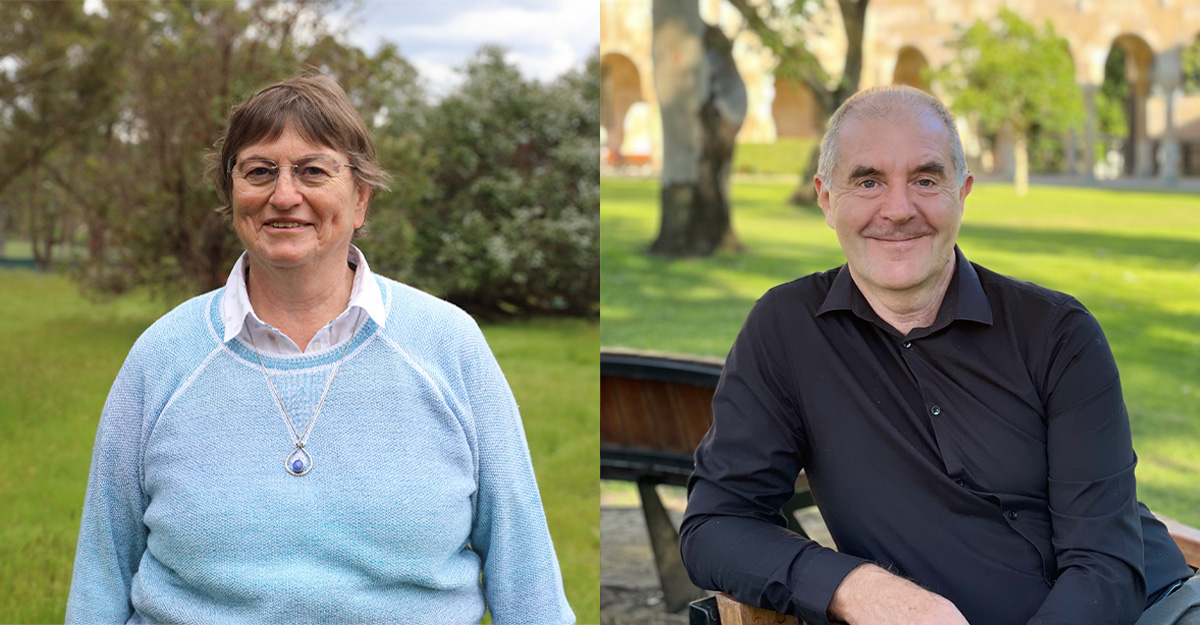
Two Academy Fellows, Professor Marilyn Renfree and Professor David Craik, have been elected as Fellows of the Royal Society, the world’s oldest scientific academy in continuous existence.
Professor Renfree said that it was “a little surreal” to hear the news, and Professor Craik said he felt “very excited”.
“Stunned might be a better word,” he said. “Looking through the list of current and past fellows I am just awe-struck to be amongst them.”
They are among 49 Fellows, one Honorary Fellow and 10 Foreign Members worldwide who have been recognised for their outstanding contributions to scientific understanding.
Past Fellows and Foreign Members of the Royal Society have included Lise Meitner, Albert Einstein, Dorothy Hodgkin and Stephen Hawking.
Royal Society President, Sir Adrian Smith, said the global pandemic has “demonstrated the continuing importance of scientific thinking and collaboration across borders”.
“Each Fellow and Foreign Member brings their area of scientific expertise to the Royal Society and when combined, this expertise supports the use of science for the benefit of humanity.
“Our new Fellows and Foreign Members are all at the forefronts of their fields, from molecular genetics and cancer research to tropical open ecosystems and radar technology. It is an absolute pleasure and honour to have them join us,” said Sir Adrian.
The Fellowship of the Royal Society are the most eminent scientists, engineers and technologists from or living and working in the UK and the Commonwealth. Each year up to 52 Fellows and up to 10 Foreign Members are elected from a group of about 700 candidates.
We asked both Fellows about their election to the Royal Society and what has inspired their work.
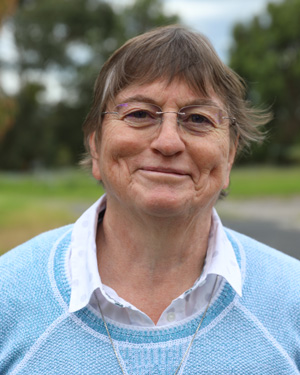
Professor Marilyn Renfree. Photo: Supplied
Professor Marilyn Renfree
University Laureate Professor and Ian Potter Chair of Zoology, Department of Zoology, University of Melbourne
Royal Society citation
Professor Marilyn Renfree is a world authority on marsupial biology, conducting physiological, developmental, molecular, and epigenetic studies that greatly expanded our understanding of reproduction and development including original findings about the wallaby, platypus and koala genomes. She discovered that marsupials have functional placentae, sophisticated lactational strategies, and both lactational and seasonal controls of embryonic diapause. Her work on Australian marsupials has revealed novel aspects of mammalian evolution and reproduction giving deeper insights into eutherian mammal biology. She discovered how sexual dimorphisms can be controlled directly by sex-linked genes rather than gonadal hormones and discovered a new androgen pathway explaining certain human disorders of sexual differentiation.
How did it feel when you were notified that you had been elected, from a pool of up to 700 candidates?
It was very exciting to learn of my election and wonderful to have been recognised this way.
Are there any Fellows of the Royal Society who have been a particular source of inspiration for you?
Dame Anne McLaren, who was the first woman to hold office in the Royal Society and with whom I did a post-doctoral Fellowship in Edinburgh; E.C. [Emmanuel Ciprian] Amoroso, renowned placentologist, whom with I had the privilege of co-authoring one of his very last publications during a short sabbatical I had in Cambridge; and of course my husband, Roger Short, who is also a Fellow of the Australian Academy of Science.
What inspired you to pursue your path in science?
My PhD supervisor and Academy Fellow, Hugh Tyndale-Biscoe, as well as my love of the outdoors and my passion to work on reproduction and development of Australian animals as alternative models to the ubiquitous mouse.
Why does science matter, particularly now?
There is nothing more important than science. We benefit from science in every way in our everyday lives, although most people do not think about this. The reason COVID vaccine development was so ‘fast’ is that it was the result of the previous decades' basic research that enabled, with amazing international cooperation, such rapid progress. In my field of reproduction and development, I quote my husband: “Reproduction is the science of the transmission of life! What could be more important than that?”
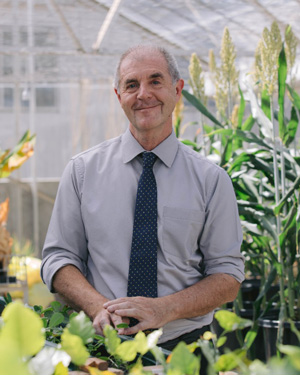
Professor David Craik. Photo: supplied
Professor David Craik
Director, Australian Research Council Centre of Excellence for Innovations in Peptide and Protein Science, Institute for Molecular Bioscience, The University of Queensland
Royal Society citation
Professor David Craik has pioneered the discovery, structural characterisation and applications of circular proteins, including the cyclotide family of cyclic plant proteins. His findings have revolutionised the understanding of protein topology and of how cyclic peptides are biosynthesised. He has used insights into natural circular proteins to chemically redesign natural peptides to dramatically improve their biopharmaceutical properties. His methods are used worldwide to address fundamental problems in protein chemistry and have ushered in a new era of stable peptide-based therapeutics.
How did it feel when you were notified that you had been elected, from a pool of up to 700 candidates?
I happened to be at dinner with my wife at a restaurant overlooking the Brisbane River when the email came through on my phone, so we will always remember the moment I was officially notified. Perhaps the thing that touched me most was the kind emails of congratulations that I received from Fellows during the embargo period, amongst them were two Nobel Prize winners. That kindness and recognition is that something that I could never have dreamt of happening when I grew up as a boy in the outer suburbs of Melbourne when no one from my family had ever been to university before.
Are there any Fellows of the Royal Society who have been a particular source of inspiration for you?
Amongst recent fellows, Iain Campbell, a world leader in the field of NMR spectroscopy and structural biology was one I greatly admired, and I was most fortunate to spend a short sabbatical leave in his laboratory in 1991. Sadly, he passed away in 2014, but I remember him as a brilliant and humble role model who had welcomed many Australian scientists to his laboratory. Closer to home I have always been impressed with Peter Colman's work on the structure of neuraminidase that led to the development of the anti-flu drug Relenza.
What inspired you to pursue your path in science?
It was a sabbatical visit to Iain Campbell's laboratory at Oxford in the early 1990s where I determined the structure of an obscure peptide called ‘kalata B1’, which came from a weedy looking plant called Oldenlandia affinis that grew in the Congo and was used in traditional medicine. The cyclotide structure was quite unique at that time, [and] I wondered whether there might be other examples of such a weird structure in peptides from other plants. That was my excuse to travel around Australia and around the world looking for plants. When it became clear that kalata B1 was not just a one-off peptide, in collaboration with Professor Marilyn Anderson we were able to show that cyclotides are host defence molecules, protecting plants from insect pests. In summary, the inspiration to develop this field came from wanting to understand how nature uses molecules for survival of organisms: this was curiosity-driven research and little did I know it might lead to applied outcomes.
What makes cyclotides special for making pesticides?
Plants makes cyclotides to defend themselves against insects and other pests and pathogens, but not all plants have them. The butterfly pea has a particularly rich suite of cyclotides and defends itself very well against such pests. The Australian company Innovate Ag [which I worked with] has now developed a cyclotide-containing product which is an extract from the butterfly pea plant that is now approved for the protection of other crops such as cotton and macadamia nuts. The great thing about this product is that it is non-toxic to beneficial pollinators such as bees.
Science at the Shine Dome returns in hybrid event series
12 May – 4 November
Online, and in-person at the Shine Dome, Australian Academy of Science, Canberra
Registration is now open for Science at the Shine Dome, the Academy’s premier annual event. Traditionally, Science at the Shine Dome is an annual three-day event in May where Australia’s science community gathers to celebrate the best of science from around the country.
The Academy will deliver Science at the Shine Dome in a new format in 2021 to accommodate COVID-19 restrictions while engaging new audiences online. Science at the Shine Dome will include online presentations by award recipients, a hybrid-style symposium exploring the theme Science and the Public Good, and a prestigious ceremonies celebrating the admission of the 2020 and 2021 new Fellows to the Academy.
Attendees are welcome to register for individual events, or purchase a season pass for all events.
Register for events or purchase a series pass
Premier medal lecture series
Science at the Shine Dome will kick off with the inaugural Ruby Payne-Scott Lecture, delivered online by this year's medal recipient, Emeritus Professor Cheryl Praeger AC FAA.
Professor Praeger will speak about her career, the challenges she faced, and her personal connection to Ruby Payne-Scott.
I felt I had this responsibility to maintain my research at the forefront in permutation groups and in understanding more about the finite simple groups. But I also felt a responsibility as professor to ensure that the teaching of mathematics remained at the cutting edge.
Professor Praeger’s lecture is the first of several given by medal recipients, which will occur throughout the year:
- May 12: 2021 Inaugural Ruby Payne-Scott Medallist Lecture—Emeritus Professor Cheryl Praeger AC FAA
- July 28: 2021 Matthew Flinders Medallist Lecture—Professor Andrew Holmes AC FAA FTSE FRS
- 3 November: 2020 Macfarlane Burnet Medallist Lecture (as part of the 2020 New Fellows presentations)—Professor Marilyn Renfree AO FAA.
Career award presentations
Each year, researchers receive highly sought-after honours for outstanding achievements in their scientific fields. Join the Academy for two online events on September 7 and 14 featuring 10-minute presentations by our 2020 and 2021 awardees, followed by live audience Q&As.
New Fellows
Fellows of the Australian Academy of Science are among the Nation’s most distinguished scientists, elected by their peers for ground-breaking research and contributions that have had clear impact.
The 2020 Fellows and yet-to-be-announced 2021 new Academy Fellows will be formally admitted to the Australian Academy of Science during online events on November 2 and 3. Each new Fellow will present their work and achievements.
The new Fellows for 2021 will be announced in late May.
Symposium: Science and the Public Good
The annual symposium will be held in August 2021 as we explore the value of science to society. Speakers will help us to explore the critical importance of studying mathematics, chemistry, biology and physics, and how this fundamental knowledge is essential to scientific advances and our everyday lives.
Join us for Science and the Public Good via livestream. If you're from a school, university, organisation or government department, or are simply interested in science, you can watch this thought-provoking event live online and have the opportunity to ask questions of the speakers.
See the event program and register for the event
Opportunities to partner
The Academy is delivering a dynamic new format in 2021 to accommodate COVID-19 restrictions while engaging new audiences online. Drawing on the Academy’s Fellowship, 2.4 million social media followers along with its networks within the sector and mainstream media, exposure and reach associated with Science at the Shine Dome for event partners is anticipated to be greater than ever before. To find out how you can become an Event Partner, email Partnership Enquiries to reserve your place.
The passing of His Royal Highness, Prince Philip, the Duke of Edinburgh
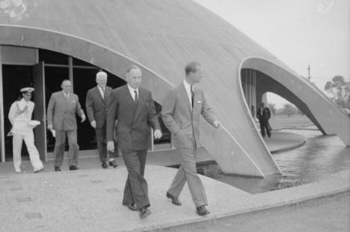
Prince Philip attended the Shine Dome in 1962 to sign the Charter Book when he was made a Royal Fellow of the Australian Academy of Science.
The Australian Academy of Science pays tribute to His Royal Highness Prince Philip, the Duke of Edinburgh.
HRH Prince Philip attended Government House when Her Majesty The Queen presented the Royal Charter in 1954, establishing the Australian Academy of Science.
HRH Prince Philip was a keen supporter of science and attended the Shine Dome in 1962 to sign the Charter Book when he was made a Royal Fellow of the Australian Academy of Science.
The Academy offers its sincerest condolences to Her Majesty the Queen and other members of the royal family.
Time capsule with Fellows’ messages for the future placed under Dome
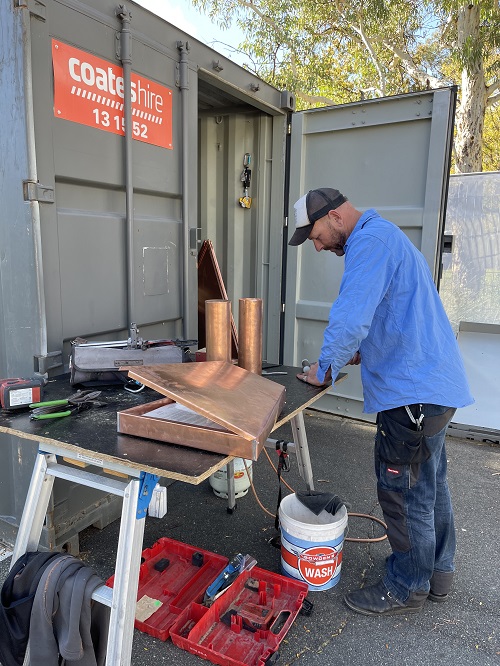
A time capsule containing Fellows’ messages to the future has been placed under the copper roof of the Shine Dome.
The capsule contains a letter from the President of the Academy, Professor John Shine, reflections of Fellows and staff of the Academy, newspaper front pages documenting the tumultuous events of 2020 and other historical documents, including the complete genome of SARS-CoV-2.
The Shine Dome was heavily damaged in January 2020 in a massive hailstorm. Restoration began in November 2020, with a new copper layer being laid over a timber frame, with waterproofing materials between. The original copper remains beneath these layers.
The project is in the final stage of completion. Over 1888 tiles of copper, each custom made and weighing approximately 15.5 tonnes in total, have been installed on the Shine Dome.
Meanwhile, a project to envision a zero emissions future for the Dome is underway, with several public symposia being held that build a conversation around heritage values and sustainability.
The following letter and items were included in the time capsule.
Note from the President and Chief Executive, 7 April 2020
2020 was a tumultuous year in Australia and around the globe. Australia had experienced bushfires of unprecedented intensity over the summer of 2019/2020 – a reminder of the impact on Australia of a warming globe due to anthropogenic climate change.
On 20 January 2020, Canberra was struck by a severe hailstorm that, in a matter of minutes, caused widespread damage. This included significant damage to the Australian Academy of Science’s two buildings: Ian Potter House and the heritage listed Shine Dome.
Whilst this was unfolding a “pneumonia of unknown cause” was spreading across the globe. This was to become known as SARS-CoV-2, a highly transmittable respiratory virus that triggered a global health pandemic, COVID-19. By 7 April 2021, COVID-19 had caused 130 million recorded cases and 2.86 million recorded deaths worldwide.
Following the hailstorm, the repairs to the Academy’s building included copper recladding of the Shine Dome. The original copper roof remained in place and a new structure was built over it to allow a new copper layer to be installed, improving the integrity and thermal performance of the building and rendering it waterproof. The apex of the Shine Dome was slightly elevated to assist water run-off and avoid water pooling at the top. In doing so, a cavity was created beneath the apex.
This time capsule was inserted into the cavity on Wednesday 7 April 2021. It contains the documents and historical materials listed below. They are but a small sample of the history of the Academy, of its building and of the extraordinary knowledge created and disseminated by its Fellowship. The time capsule seeks to capture the significant and tumultuous events of 2020, many of which shaped the way we live in Australia and across the world.
Professor David Curtis AC FAA FRS was a former President of the Academy. In an interview by Dr Max Blythe in 1993, Blythe asked Curtis “…your Presidency of the Academy of Science from 1986 to ’90. That must have been an interesting and fruitful time?”
Curtis replied “It was an interesting time. I can’t really judge how fruitful it was – you can’t do that yourself. You need to look back at it from the future and see what it looks like.”
Should you discover this time capsule, we ask that you look back from the future in order to assess our actions and inactions and to inform your way forward as custodians of our planet and all its biodiversity.
Time capsule contents
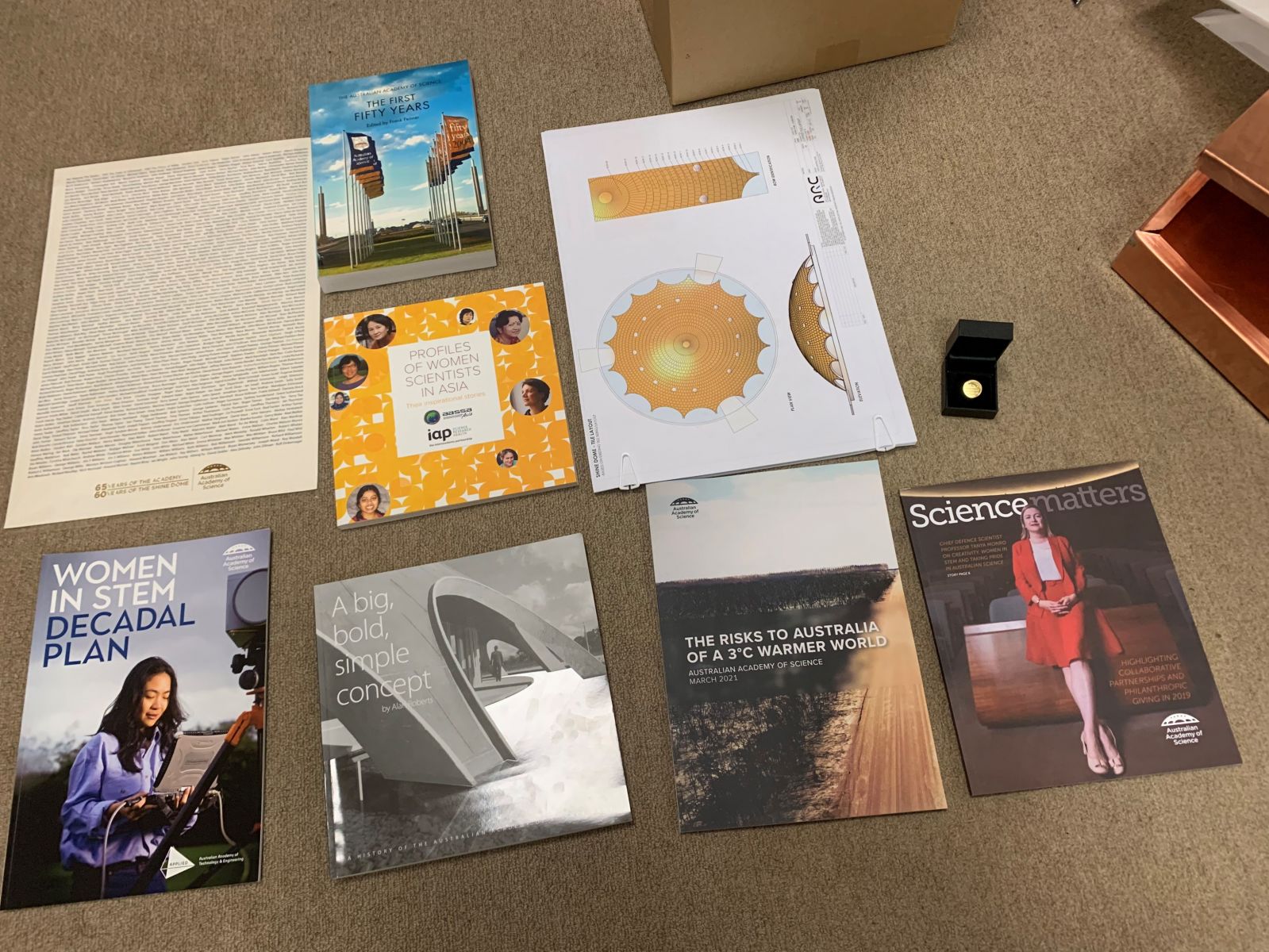
Books and reports

- Roberts, Alan. & Australian Academy of Science (2010). A big, bold, simple concept: a history of the Australian Academy of Science Dome.
- The Association of Academies and Societies of Science in Asia (2018). Profiles of Women Scientists in Asia: Their inspirational stories.
- Australian Academy of Science (2021). The risks to Australia of a 3°C warmer world.
- Australian Academy of Science (2020). Science Matters
- Australian Academy of Science (2019). Women in STEM Decadal Plan
- Frank Fenner (2008). The Australian Academy of Science: The First 50 Years
Newspaper covers
- Front page, Canberra Times, 1st January 2020
- Front page, Canberra Times, 21st January 2020
- Front page, Canberra Times, 29th January 2020
- Front page, Canberra Times, 2nd February 2020
- Front page, Canberra Times, 3rd March 2020
- Front page, Canberra Times, 13th March 2020
- Front page, Canberra Times, 22nd March 2020
- Front page, Canberra Times, 8th July 2020
- Front page, Canberra Times, 27th October 2020
- Front page, Canberra Times, 15th November 2020
Other documents
- Shine Dome restoration design plans
- Australian Academy of Science By-Laws, December 2020
- Reflections from Fellows of the Australian Academy of Science and early- and mid-career researchers
- 65 years of the Australian Academy of Science commemorative list of Fellows [poster]
- Images from staff of hail damage to Australian Academy of Science grounds and property and selection of events over the course of 2020
- First Rapid Research Information Forum report: Re-infection with SARS-CoV-2, Office of the Chief Scientist, 19 April 2020
- SARS-CoV-2 genome sequence:
- GenBank accession number MN908947/NCBI Sequence Read Archive Bioproject accession number PRJNA603194 from Wu, F., Zhao, S., Yu, B. et al. A new coronavirus associated with human respiratory disease in China. Nature 579, 265–269 (2020). https://doi.org/10.1038/s41586-020-2008-3
Objects
- Australian Academy of Science lapel pin received by every Fellow elected to the Australian Academy of Science
Regional research set to get digital boost
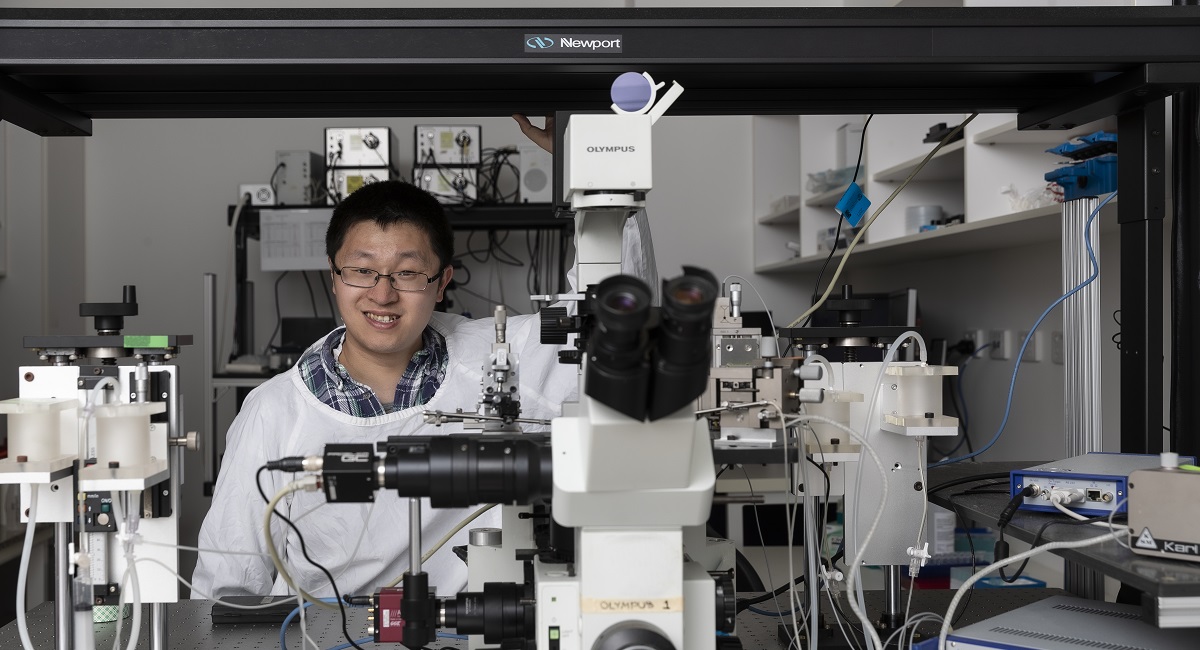
Dr Lining Arnold Ju, University of Sydney. Image: supplied.
The Australian Academy of Science along with the Department of Industry, Science, Energy and Resources (DISER), today congratulates the 26 recipients of the Regional Collaborations Programme COVID-19 Digital Grants.
Just over $250,000 in funding has been awarded to early-career and mid-career researchers to increase connectivity and engagement between Australian and Asia–Pacific economies in response to the COVID-19 pandemic.

Dr Jin Han. Photo: supplied.
Dr Jin Han, an early-career researcher from the Black Dog Institute, will use her $8,940 grant to deliver an online mental health course, aimed at helping international university students develop effective stress coping strategies and psychological resilience post COVID-19.
“International students are more prone to social isolation with less access to public resources due to potential financial, informational, language or cultural barriers,” said Dr Han.
“This project will address an important gap in the current Asia–Pacific regional economics and public health.”

Professor Tanja Junkers. Photo: supplied
Professor Tanja Junkers, a mid-career chemist from Monash is also a grant recipient. Her $9,000 grant will go towards building a machine-readable cloud database of chemical reactions that can be combined by different laboratories around the world.
“This project is a completely new way of collaboration and interaction in the chemical space, be it across laboratories in one country, or across borders in the Asia–Pacific region,” said Professor Junkers.
This funding initiative, part of the Australian Government’s Global Innovation Strategy under the National Innovation and Science Agenda, supports projects that utilise digital methods of collaboration to address shared regional challenges related to the COVID-19 pandemic response and recovery.
The Regional Collaborations Programme (RCP) is managed by the Australian Academy of Science on behalf of the Department of Industry, Science, Energy and Resources.
The grant recipients are:
|
Recipient Name |
Project Title |
Grant Amount |
|
Dr Kiki Maulana Adhinugraha, La Trobe University |
How can digital innovation transform people’s behaviour in response to the COVID-19 restrictions in Indonesia? |
$9,980 |
|
Dr Thushari Atapattu, University of Adelaide |
MindSpace: Mental wellbeing and emotion awareness tool |
$10,000 |
|
Dr Venkatakrishnan Balasubramanian, Federation University Australia |
AI-based alarm to predict the sudden deterioration of health in COVID-19 patients |
$10,000 |
|
Dr Siva Chandrasekaran, Swinburne University of Technology |
Classification of nCov using deep learning CNN models on lung x-ray images |
$8,199 |
|
Dr Narelle Cox, Monash University |
Easing health-service burden during COVID-19: Supporting implementation of remote rehabilitation in chronic lung disease |
$9,998.65 |
|
Dr Amirhossein Eslami Andargoli, Swinburne University of Technology |
COVID-19 and virtual Healthcare: The barriers, enablers and drivers in Australia vs Pakistan |
$10,000 |
|
Dr Kelley Graydon, University of Melbourne |
Audiology digital training modules for low resourced settings |
$10,000 |
|
Dr Jin Han, Black Dog Institute |
Online mental health education for international students |
$8,940 |
|
Dr Hassan Hosseinzadeh, University of Wollongong |
Patient experience with telemedicine: A risk reduction approach to COVID-19 management in Bangladesh |
$9,990.90 |
|
Dr Guangming Jiang, University of Wollongong |
Development of a machine learning platform to estimate COVID-19 community prevalence through wastewater-based epidemiology |
$10,000 |
|
Dr Lining Arnold Ju, University of Sydney |
Hemodynamic analysis for COVID-19-on-a-chip model of blood clotting with integrated computational fluid dynamics simulation and particle image velocimetry. |
$10,000 |
|
Professor Tanja Junkers, Monash University |
Cloud-based chemical synthesis: Breaking barriers and redefining international collaboration in the chemistry space |
$9,000 |
|
Dr Kishan Kariippanon, University of Wollongong |
Surabaya mental well-being check in (Surabaya tangguh: platform kualitas hidup penyintas COVID-19) |
$9,970 |
|
Dr Arutha Kulasinghe, Queensland University of Technology |
Understanding the immunopathology of COVID-19 infected myocardial tissue |
$10,000 |
|
Dr Christopher Lowbridge, Menzies School of Health Research |
Strengthening health systems capacity to respond to public health threats through digital education |
$10,000 |
|
Dr Iderlina Mateo-Babiano, University of Melbourne |
The Gender and Transport Assemblage of Learning and Knowledge (GTALK) |
$9,976 |
|
Dr Sajib Mistry, Curtin University |
Geo-spatial transfer learning data analytics to detect COVID-19 misinformation in the social media. |
$10,000 |
|
Dr Davoud Mougouei, University of Wollongong |
Reducing COVID-19 vaccine hesitancy by integrating public sentiments in vaccine communication: a machine learning framework |
$9,998 |
|
Dr Soon Hock Ng, Swinburne University of Technology |
Web platform for remote data analysis and processing of synchrotron data |
$10,000 |
|
Dr Siddhi Pittayachawan, RMIT |
Cloud-based disaster relief coordination and optimisation platform: a proof of concept for Vietnam and beyond |
$10,000 |
|
Dr Derrick Roberts, University of Sydney |
‘Self-immolative’ commodity plastics for single-use medical PPE |
$9,245 |
|
Dr Shazia Ruybal, Walter and Eliza Hall Institute of Medical Research |
Fit-for-purpose analytical tools to support COVID-19 sero-surveillance in Papua New Guinea |
$10,000 |
|
Dr Chin Wee Tan, Walter and Eliza Hall Institute of Medical Research |
Computational bioinformatics of COVID-19 digital spatial profiling in lungs |
$10,000 |
|
Dr Kamala Thriemer, Menzies School of Health Research |
Interactive digital capacity building for clinical trial staff and research institutions |
$9,660 |
|
Dr Johanna Wapling, Menzies School of Health Research |
Streamlining systems for remote support of SARS-CoV-2 testing at the National Health Laboratory of Timor-Leste |
$8,870 |
|
Dr Laurence Wilson, CSIRO Health and Biosecurity |
Developing a COVID-19 genetics platform for data-driven decision making |
$10,000 |
Other activities being undertaken with the Department of Industry, Science, Energy and Resources in response to COVID-19 include a project examining the impact of the pandemic on women in STEM in the Asia-Pacific and a series of webinars discussing how science, technology and innovation are assisting in the response to the pandemic.
Background
The Regional Collaborations Programme COVID-19 Digital Grants aims to build strong regional linkages in the Asia–Pacific by funding multi-partner activities that facilitate greater collaboration in science, research and innovation and delivering innovative solutions to shared regional challenges.
These activities will reduce collaboration barriers and promote an open approach to science, research and industry collaboration through Australian-led projects and multilateral fora.
This investment in collaborative engagement will help establish enduring and impactful networks.
Read more about the Regional Collaboration Programme COVID-19 Digital Grants.
Academy responds to Cabinet reshuffle
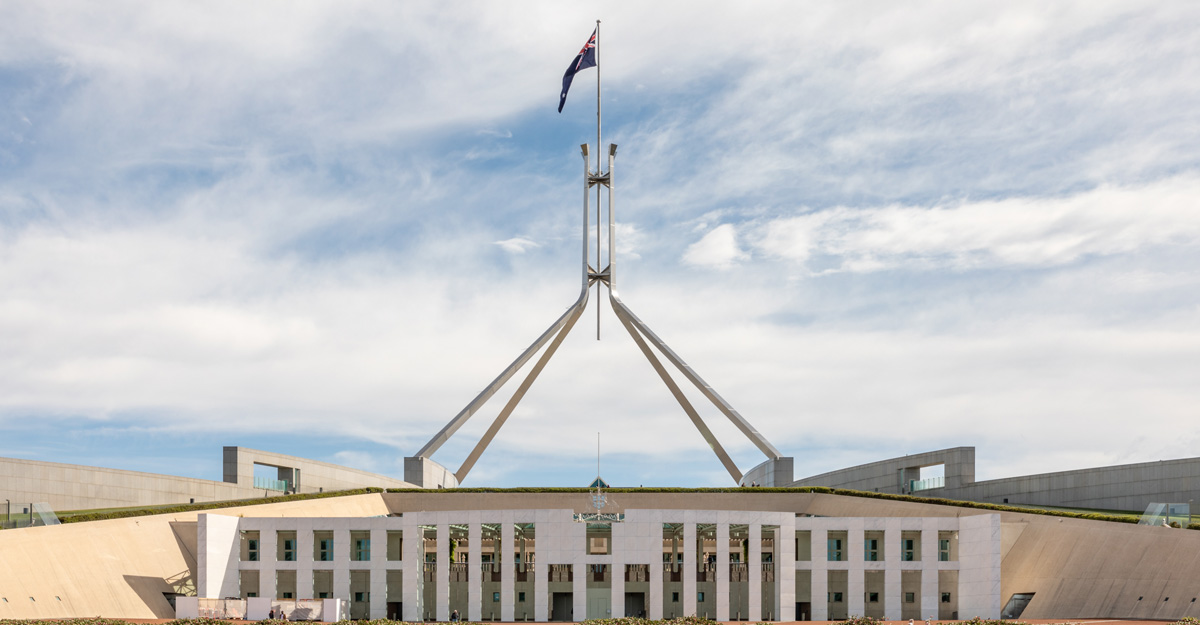
The Australian Academy of Science thanks outgoing Minister for Industry, Science and Technology Karen Andrews for her long-term and authentic commitment to science and technology.
The Academy congratulates Minister Andrews on her outstanding achievements including her leadership with the Rapid Research Information Forum, a critical independent scientific advisory function that has assisted the Prime Minister navigate the pandemic and that continues to be a valuable tool to assist evidence-informed decision making across portfolios; growth of the space sector; setting in train growth of onshore manufacturing capability much of which is driven by science and technology; and boosting the cooperative research centre programs that enhance collaboration between academia and industry.
In particular, we acknowledge Minister Andrews’ commitment to women in STEM and for advancing the recommendations of Australia’s 10-year plan for Women in STEM. The plan is aimed at achieving sustained increases in girls’ and women’s STEM participation. The plan was jointly developed by the Australian Academy of Science and the Australian Academy of Technology and Engineering.
Minister Andrews brought a wealth of knowledge and experience to the portfolio. An engineer before entering the parliament, she previously held the position of Assistant Minister and Parliamentary Secretary for Science and co-convened the Parliamentary Friends of Science group since its inception.
The Academy looks forward to continuing to advance science in Australia with the new Minister for Industry, Science and Technology, Christian Porter.