




Conferences to explore dynamics of the Southern Ocean and the conservation of Australian plants

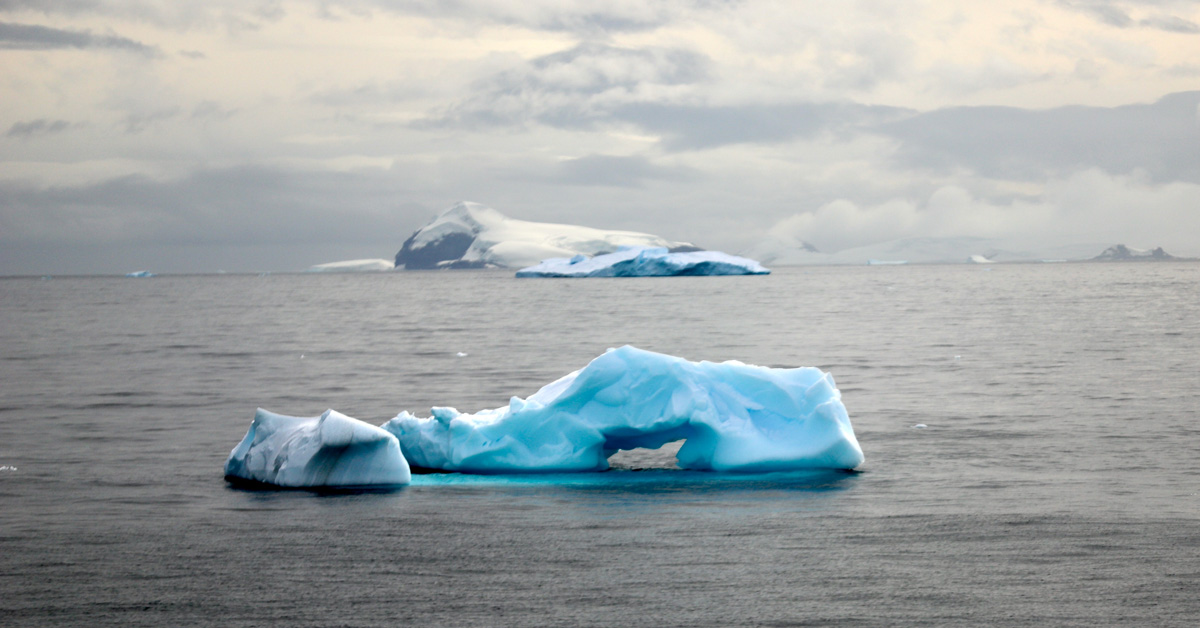
The multiscale dynamics of the Southern Ocean will be the focus of the next Elizabeth and Frederick White Research Conference. Photo by 66 north on Unsplash
The Academy has contributed funding towards two scientific conferences focusing on the Southern Ocean and the conservation of Australian plants.
Elizabeth and Frederick White Research Conference—‘Multiscale Dynamics of the Southern Ocean’
The multiscale dynamics of the Southern Ocean will be the focus of a workshop for the 2021–22 Elizabeth and Frederick White Research Conference.
The conference will accelerate Australian science advances in multiscale dynamics of the Southern Ocean: a crucially important water mass for the Australian climate, economy, environment, and security. The conference will promote knowledge transfer with New Zealand researchers and drive other international collaborations.
Funding for Elizabeth and Frederick White Research Conferences are offered for research conferences in the physical and mathematical sciences related to the solid Earth, the terrestrial oceans, Earth's atmosphere, solar-terrestrial science, space sciences and astronomy.
Fenner Conference on the Environment—‘Exceptional times, exceptional plants’
This conference will focus on ex situ conservation strategies for Australian plants that cannot be conserved by conventional seed banking methods.
The conference will provide an opportunity for scientists working on the conservation of Australia’s diverse flora to evaluate methods for conserving plant germplasm (seeds, plants and other plant tissues), adding value to guidelines produced by the Australian Network for Plant Conservation. This is crucial to protect some of our most threatened species, particularly in the context of climate change and water scarcity challenges.
Funding for Fenner Conferences on the Environment is offered for conferences that bring together those with relevant scientific, administrative and policy expertise to consider current environmental and conservation problems in Australia, with the aim of contributing to the formation of policies that can alleviate some of these problems.
Both the White and Fenner conferences are funded annually, with applications for the 2022–23 rounds opening in early 2021.
Celebrating science
2020: it’s been big.
As we count down the final days of what has been an unexpected year, join us as we reflect on the challenges and successes experienced by the Australian Academy of Science over the last 12 months. And, as we look ahead to a better tomorrow, we will be celebrating science and the leaders who will guide us there.
Keep an eye on the Academy social media channels through December as we share videos and profile articles introducing the 2020 cohort of Fellows elected earlier this year. We will also revisit some of the biggest stories we covered through the year. You can follow the Academy on Facebook, Twitter, Instagram and LinkedIn or subscribe to our monthly newsletter.
But for now, let’s have a quick look back at the year that was:
January
2020 started with much of Australia on fire, prompting a clear statement from the Academy President Professor John Shine on how human-induced climate change will continue to increase the frequency and severity of extreme weather. It wasn’t long before Canberra experienced another form of extreme weather, with a severe hailstorm causing catastrophic damage to the copper roof of our beloved Shine Dome, threatening the Academy’s unique and valuable scientific archives. Ian Potter House, where most of the Academy’s staff work, was also damaged to the point of being unsafe to occupy. For many staff members, this was the beginning of ‘working from home’.
February
In February, the Academy co-hosted the Catalysing Gender Equity conference where hundreds from across the Australian STEM sector, including twelve changemakers from the STEM Women online community, travelled to Adelaide to discuss how to advance gender equity in Australia and how to realise the opportunities described in the Decadal Plan for Women in STEM. The SAGE Athena SWAN awards were also held for the last time while SAGE was in its pilot phase. The Academy stands alongside co-founding partner, the Australian Academy of Technology and Engineering, in wishing SAGE Ltd a strong and successful future.
March
The honorific awardees for 2020 were announced in March, with 18 talented scientists recognised for their significant contributions to Australian science. Keep an eye on our social platforms as we revisit these discoveries and careers over the coming weeks. March also saw the implementation of COVID-19 restrictions nationally, and the Academy responded by making a call for the data underpinning COVID-19 decisions to be made public, and launching of a series of factual videos to support community awareness.
April
In early April, the COVID-19 Expert Database was launched providing access for decision-makers and journalists to key experts relevant to the pandemic. Later that month, along with Australia’s Chief Scientist and other learned academies and partners, we also launched the Rapid Research Information Forum (RRIF) to provide the best available evidence to rapidly respond to pressing questions about COVID-19 thereby supporting government decision-making in response to the pandemic. RRIF has so far provided 13 briefs along with additional updates.
May
May would normally be one of the biggest months in the Australian science calendar with our annual Science at the Shine Dome event. This year we still announced the 2020 cohort of Academy Fellows and Corresponding Members—keep an eye on our social channels during December as we recognise each of the new Fellows individually for their contribution to science and Australia. In May we also warned decision makers that the response to the pandemic risked wiping out many of the hard-won gains for women in STEM.
June

On World Environment Day, the Academy joined 17 other academies to call on world governments to ensure a sustainable recovery from the pandemic. June also saw the launch of a new outreach initiative, Global Science TV, a collaboration with the International Science Council that evolved from the science news capability developed at the Academy over the last three years.
July
In July we revisited the bushfire season, with Fellows providing evidence to Government via senate estimates and evidence briefs on the effect of the fires on soil health, biodiversity and later, the health impacts. A reminder was also issued by the InterAcademy Partnership (IAP) that only a low-carbon recovery will provide for social equity, the environment, and human health. The Academy program, Future Earth Australia, also called for local community needs not to be overlooked as we adapt to climate change.
August
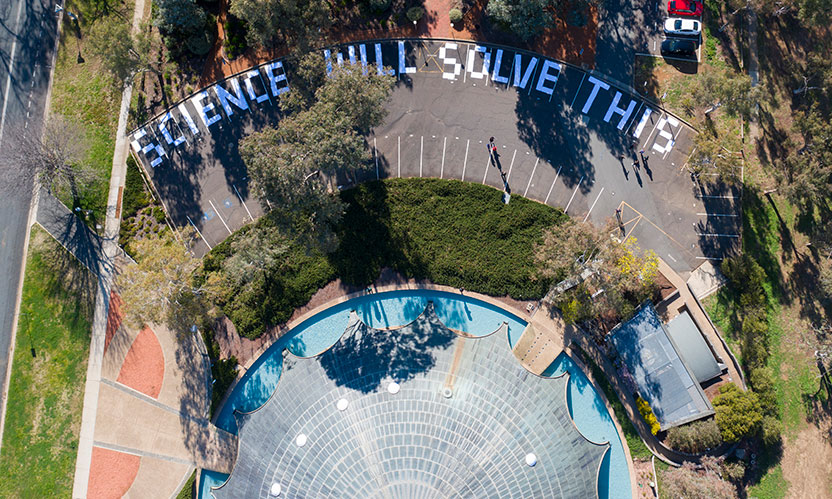
During August, we celebrated National Science Week with two online webinar events on saving our oceans and fighting bushfires with science. We also co-hosted a discussion with the Australian Academy of Law on the reception, quality and evaluation of scientific evidence in Australian courts. A satellite selfie was taken from space of the Shine Dome, and we took the opportunity to share more inspiring stories of the Academy’s Fellows. We also took a look back at the past 12 months of championing the vision for women in STEM, applauding the successes and recognising where more work still needs to be done.
September
In September, we made a call for data governance standards in sport, recognising the lack of oversight in how data is being collected and the associated impacts on athletes’ rights and protections. We also held the Australian final of Falling Walls Lab and recognised three winning ideas from early career researchers who then represented Australia in the international finals held in Berlin, Germany.
October
October saw the release of the delayed Federal Budget, which signalled a significant response to the crisis facing Australia’s scientists as a result of the pandemic. The Academy also contributed a policy brief to the parliament recommending the development of an independent national biodiversity agency, or ‘biodiversity BOM’, to be the custodian of biodiversity data in the same way BOM manages national weather data.
November
During November, we celebrated NAIDOC Week with two inspirational webinars that explored how Aboriginal and Torres Strait Islander peoples have knowledge that stretches back thousands of years and have so much to contribute to Australia’s future. We also announced the repair work to the Shine Dome, and a commitment towards net zero emissions at Australia’s home of science. We have also begun digitising the first of many collections in the Academy archives, which have already been accessed by researchers internationally.
December
Finally, during December we will be Celebrating Science. Over the next four weeks we will share videos introducing the 2020 cohort of Fellows elected earlier this year. We will also revisit some of the biggest stories we covered through the year as we prepare for what 2021 will bring.
The Academy has so many to thank for their support throughout 2020. Partners and sponsors from the private, government, science and education sectors, along with many generous donors, have made it possible for the organisation to achieve what it has this year. We will continue to recognise our supporters’ contributions in the second edition of Science Matters in the first half of 2021.
And we acknowledge the hard work of all our Fellows who make the Academy what it is. The Academy’s Fellowship of brilliant minds makes major contributions to the success and prosperity of Australia.
Maths and photography combine in the 2020 scienceXart schools competition
The Academy’s scienceXart competition showcases the talent of our next generation of scientific and creative thinkers.
This year, to mark the 100th anniversary of the International Mathematical Union, the competition theme was ‘spot the maths’. Students were encouraged to snap a photo of the maths they see in the world around them, and these entries came in thick and fast.
Today, we’re announcing the winners of each age-group category. These were selected by a panel of eminent members of the Australian mathematical science and art communities.
Over 850 individual students submitted entries in 2020, and we thank all of the students across Australia who took the time to participate and teachers who supported the competition.
Congratulations to all the winners. They will receive an exciting STEM-related prize pack for themselves and their class.
The winners
Foundation to Year 3
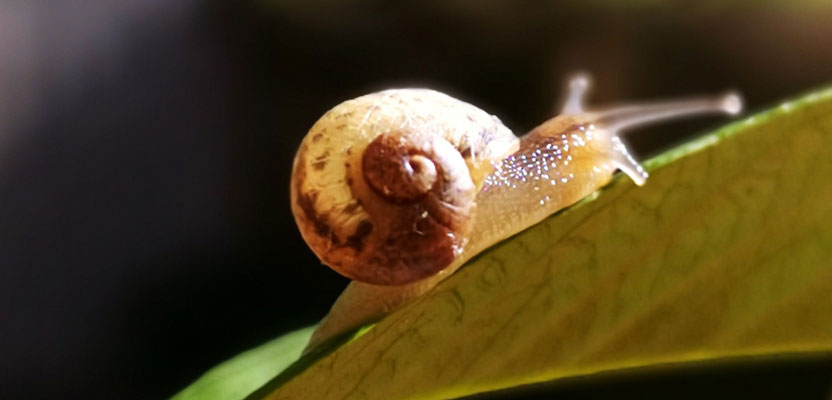
- First prize: Aaron for the photo of a snail on a leaf and spotting geometry in their garden friend.
- Second prize: Samuel for a photo of the terminus of a two-person chairlift and investigative recognition of its maths.
Year 4 to Year 6
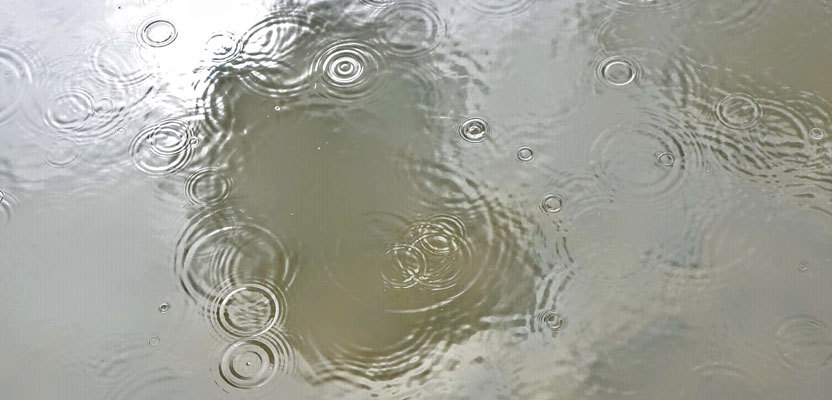
- First prize: Setayesh for recognising the maths that causes overlapping concentric circles in rain drops that fall close together.
- Second prize: Eleanor for a photo of a passionfruit vine that they spotted in the shape of a helix.
Year 7 to Year 9
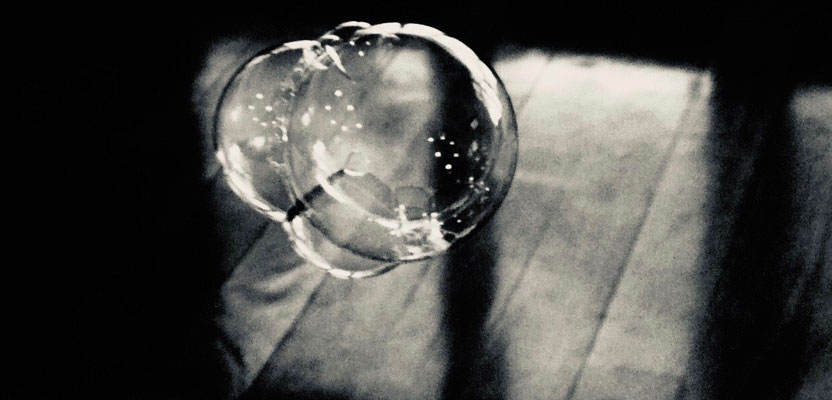
- First prize: Max for recognising that when bubbles merge, they form various shapes to maximise volume relative to surface area.
- Second prize: Niamh for a photo representing the theory of parallel lines meeting at infinity.
Year 10 to Year 12
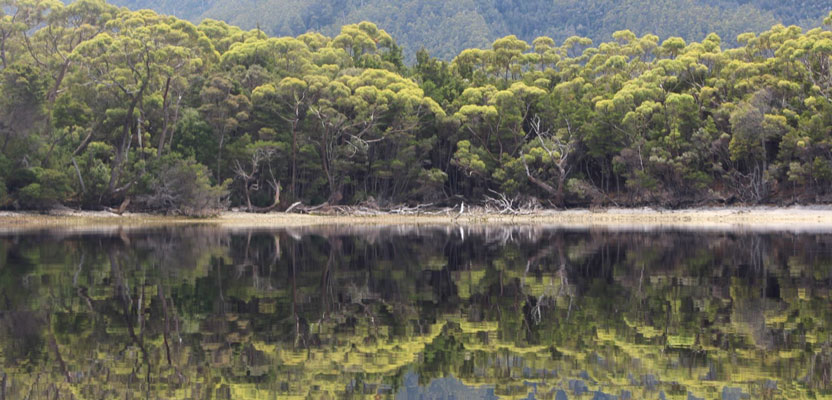
- First prize: Natalia for a photo of an island reflection, spotting symmetry in nature.
Statistics Prize
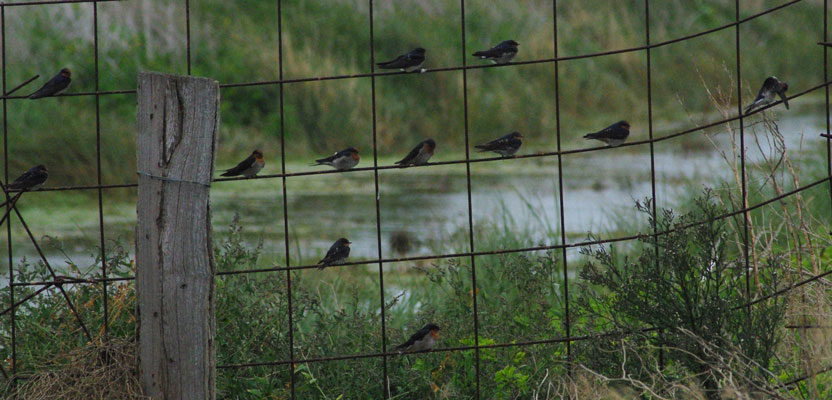
- Winner: Otylia for a photo describing a creative display of statistics in nature as the birds occupied boxes made by the fence.
scienceXart: spot the maths was developed in consultation with leading Australian mathematicians, including from the Academy’s National Committee for Mathematical Sciences. It was tailored to align with Australian curriculum learning outcomes under expert guidance from the Academy’s reSolve project.
The competition was supported by the Australian Mathematical Society and the Statistical Society of Australia. The collaboration of experts in mathematics, education and art has made scienceXart successful in showing the inherent creativity of mathematics and science.
See all the winning and shortlisted photographs or find out more about the scienceXart competition.
Academy Fellows get their Eureka moment
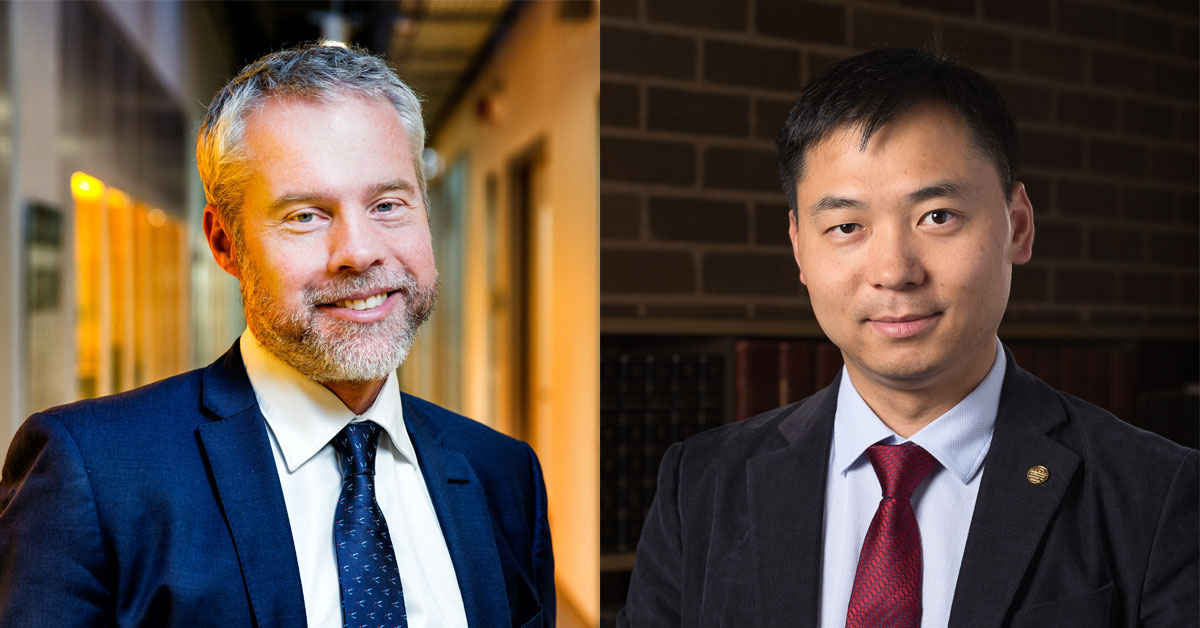
Professor Ben Eggleton FAA FTSE (left) and Professor Dacheng Tao FAA.
Two Academy Fellows, Professor Ben Eggleton and Professor Dacheng Tao, have each won a 2020 Australian Museum Eureka Prize.
Professor Tao won the Eureka Prize for Excellence in Data Science. His work on deep learning, which imitates the brain's ability to process data and make decisions, has enabled the design of algorithms for object detection and image enchancement.
Professor Eggleton and his team of Dr Eric Mägi, Dr Moritz Merklein, Dr Alvaro Casas Bedoya, Dr Yang Liu and Associate Professor Stephen Madden won the Eureka Prize for Outstanding Science in Safeguarding Australia. A microchip produced by the team, which uses the interactions between light and sound, can improve microwave signal processing in performance, efficiency and cost.
Four Fellows were also Eureka Prizes finalists:
- Professor Geordie Williamson, a world-leading mathematician in geometric representation theory, was a finalist for the CSIRO Eureka Prize for Leadership in Innovation and Science
- Professor Michelle Coote, regarded as a pioneer in computational chemistry for modelling radical polymerisation processes, was a finalist along with her team for the UNSW Eureka Prize for Scientific Research
- Professor Chris Dickman is internationally recognised for his contributions to our understanding of terrestrial vertebrates. His Cat Ecology, Impact and Management team was a finalist for the Eureka Prize for Applied Environmental Research
- Professor Robert Parton, known for his pioneering work on the plasma membrane organisation of mammalian cells, was a finalist along with the BioNanoVR team for the ANSTO Eureka Prize for Innovative Use of Technology.
Academy Fellows elected to American Association for the Advancement of Science
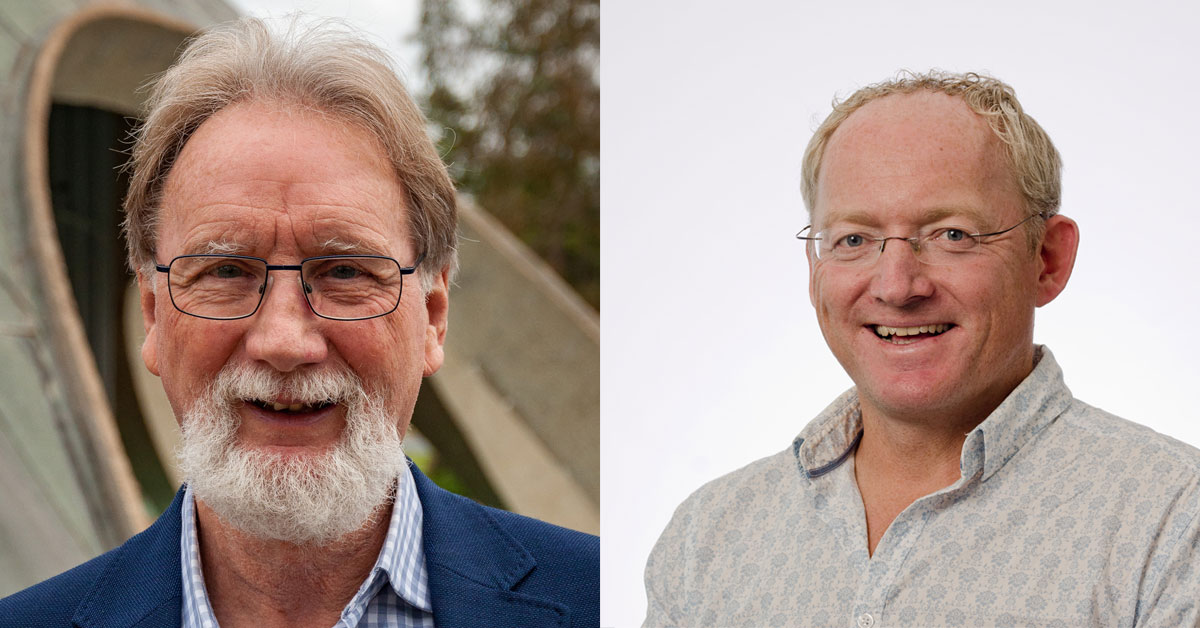
Dr TJ Higgins AO FAA FTSE (left) and Professor Toby Walsh FAA
Academy Fellows Dr TJ Higgins and Professor Toby Walsh have been named Fellows of the American Association for the Advancement of Science (AAAS).
Dr Higgins is an Honorary Research Fellow at CSIRO Agriculture and Food and was appointed an Officer of the Order of Australia in 2016 for distinguished service to agricultural biotechnology.
A CSIRO researcher for 36 years, he served as Deputy Chief of CSIRO Plant Industry from 2000 to 2009.
Dr Higgins was elected for ‘distinguished contributions to the field of molecular plant science, particularly using gene technology to transfer useful traits to grain legumes for food security’.
Professor Walsh is an ARC Laureate Fellow and Scientia Professor of Artificial Intelligence at UNSW and leads the Algorithmic Decision Theory group at CSIRO’s Data61.
He was elected for ‘intellectual leadership and significant contributions to automated deduction, constraint programming, and fairness in artificial intelligence’.
Professor Walsh was the 2019 Chair of Section T of AAAS, covering computer science.
“It is a great honour to join some of the best scientists around the world as a Fellow of AAAS. I especially value the work that AAAS does in promoting evidence-based policy, as well as in encouraging inclusion and diversity in science,” Professor Walsh said.
Professor Walsh is currently is the Chair of the Academy's Data in Professional Sport project, in collaboration with Minderoo Foundation.
Geoffrey Frew and Selby fellowships to bring distinguished scientists to Australia
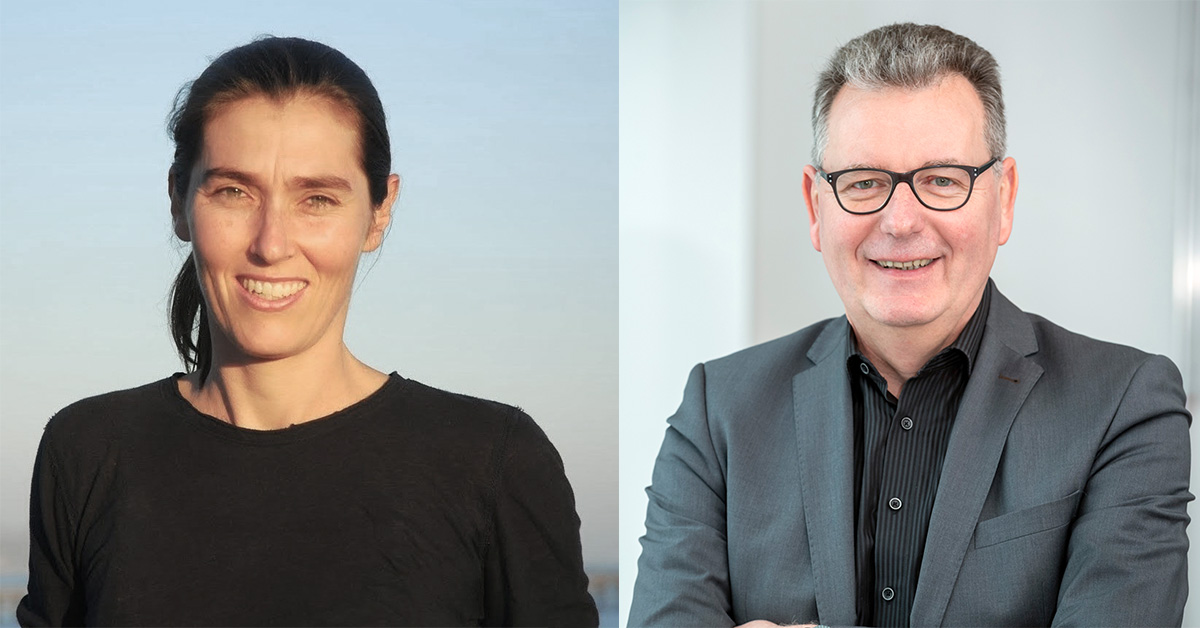
Frew Fellow Professor Ania Bleszynski Jayich (left) and Selby Fellow Professor Matthias Wessling (Photos supplied)
Geoffrey Frew Fellow: Professor Ania Bleszynski Jayich, optics and photonics
Experimental physicist Professor Ania Bleszynski Jayich of the University of California Santa Barbara is the 2021 recipient of the Geoffrey Frew Fellowship. The fellowship is awarded to distinguished overseas scientists to participate in Australian spectroscopy conferences and visit scientific centres in Australia.
Professor Bleszynski Jayich leads the Quantum Sensing and Imaging research group at UC Santa Barbara. The group’s current research includes spin-phonon coupling, magnetometry, and diamond growth and spin coherence, with applications such as quantum computing and magnetic resonance imaging.
Professor Bleszynski Jayich has made major research impacts, such as the development of a technique for magnetisation measurements of condensed matter systems using ultrasensitive micromechanical detectors. Prior to her physics career, she held a No. 1 singles tennis ranking in the United States for athletes 18-and-under.
The Australian and New Zealand Optical Society generously matches the Academy's funding support to this Fellowship.
Selby Fellow: Professor Matthias Wessling, chemical engineering and sustainability
Professor Matthias Wessling of RWTH Aachen University has been awarded the Academy’s 2021 Selby Fellowship. The fellowship is awarded to distinguished overseas scientists to conduct public lectures and visit scientific centres in Australia.
Professor Wessling is one of the world’s leading researchers in the field of membrane technology and is the coordinator of all energy transition programs at RWTH Aachen. His research focuses on technologies that enable the transition to zero emissions in energy and industry. Applications of his research include resource recovery and recycling, energy storage, water treatment and medical engineering.
Having given numerous international lectures on ‘big picture’ topics such as sustainability, Professor Wessling’s Australian visit will further stimulate discussion among the community, industry, researchers and politicians.
“I am honoured and ready to go,” said Professor Wessling. “The topics and challenges we have ahead of us need communication beyond national interests and borders.”
The Selby Fellowship fosters the international exchange of scientific ideas and is financed through the generosity of the trustees of the Selby Scientific Foundation.
Dates and details of all tour dates and lectures will be published on the Academy website once confirmed.
NAIDOC Week events explore the science of a continuous culture
Land, water, sky and fire were the focus of two online Academy events for this year’s NAIDOC Week ‘Always Was, Always Will Be’. The events explored how Aboriginal and Torres Strait Islander peoples have nurtured a connection to Country, with a profound sense of responsibility to the natural world, for more than 60,000 years, and the challenges they face. The recordings of the events are compelling watching—we thank the experts involved and all those who joined us online.
Land, water and fire
On 9 November, a panel discussed their perspectives on the environment, biodiversity and sustainability. The panel was made up of Associate Professor Michael-Shawn Fletcher, a Wiradjuri man from the University of Melbourne; Associate Professor Bradley Moggridge, a Murri from the Kamilaroi Nation and from the University of Canberra; and Zena Cumpston, a Barkandji woman from the University of Melbourne.
The panellists explained how Indigenous knowledge and science of land, water and fire can inform and improve the management of the natural world.
“Aboriginal and Torres Strait Islander people … have built an intricate knowledge of the world around us: Country. Country to us is not only the environment, but it’s us, and by keeping Country healthy, we keep ourselves healthy,” Associate Professor Fletcher said.
“[More broadly than the modern view of science], science is essentially the endeavour of observing, experimenting and predicting, and doing this over and over again. This is an endeavour, a process, that all humans undertake and all humans have undertaken through time. It’s nothing unique to any particular culture—it is something that it ubiquitously human,” he said.
Associate Professor Moggridge highlighted that Indigenous knowledge is only just starting to be included in learning curricula, and only when that occurs from pre-school to university can there be an “Indigenisation of science”.
“We are the first scientists … [our knowledge] needs to be respected for what it is, and then obviously the culture of science needs to change to accept it.”
According to Ms Cumpston, the way forward requires deep cultural and institutional change in how Indigenous input and knowledge is sought and accepted.
From Twitter
“Excellent conversation! So much deep listening, learning & unlearning to be done” @Jane8Toner, Jane Toner
“Engaging and informative discussion – relationships are important – how can we learn to work together – and modify our expectations in academia” @eileenamcl, Professor Eileen McLaughlin
The sky and stars
As possibly the world’s first astronomers, the First Peoples of Australia observe the sun, moon and stars to inform navigation, create calendars and predict weather. On 12 November, a panel discussed the astronomy knowledge of Indigenous Australians and how it contributes to global knowledge about the sky and stars. Panellists were Kirsten Banks, a Wiradjuri woman from the University of New South Wales and Djarra Delaney, from the Quandamooka people of Minjerribah, North Stradbroke Island and from the University of Melbourne. Journalist and science communicator, Rae Johnston, a Wiradjuri woman, facilitated the discussion.
Ms Banks says she was always driven to learn from a very young age. It was in high school where she realised she needed to learn more about space and the universe.
“I’m studying … the stars and the Milky Way galaxy, trying to find out more about the history and formation of our island universe,” Ms Banks said.
Her favourite example of Indigenous knowledge is the celestial Emu. “We call it Gugurmin in Wiradjuri … you’re looking at the negative spaces, the dark parts of the Milky Way galaxy. Its position in the night sky tells us when it’s the right time to go looking for emu eggs, so the night sky is basically like a celestial menu.
“We should be proud of the huge historical scientific achievement that we’ve had in this country, that we now call Australia, for over 60,000 years.”
Acknowledging that all things are connected, Mr Delaney has been sharing Indigenous knowledge including that related to weather. “Indigenous weather knowledge calendars … are based on observable patterns in the environment,” he said.
“With climate change there is dramatic cause for concern because the knowledge has to move so fast now to keep up with these changes. It’s really important knowledge and vital in understanding how climate change is going to impact Australia.”
From Twitter
“What an amazing #NAIDOC2020 event on ‘The sky &stars: the science of a continuous cultre’ hosted by @Science_Academy yesterday! Thank you so much to @AstroKirsten @raejohnston and Djarra Delaney for sharing your knowledge and passion for #IndigenousScience! #NAIDOCWeek2020” @matilda_hd, Matilda Handsley-Davis
“Very engaging talk about the importance of recognizing and respecting Indigenous Science!” @GabriellaAlleg5, Gabriella Allegretto
The Academy’s Reconciliation Action Plan
The Academy’s Reconciliation Action Plan leads with the vision that ‘the traditional knowledge and cultures of Australia’s First Peoples are highly valued and respected by all Australians, and as one we contribute to creating a better nation and a better world.’
Thomas Davies grants to support advancements in marine, soil and plant biology
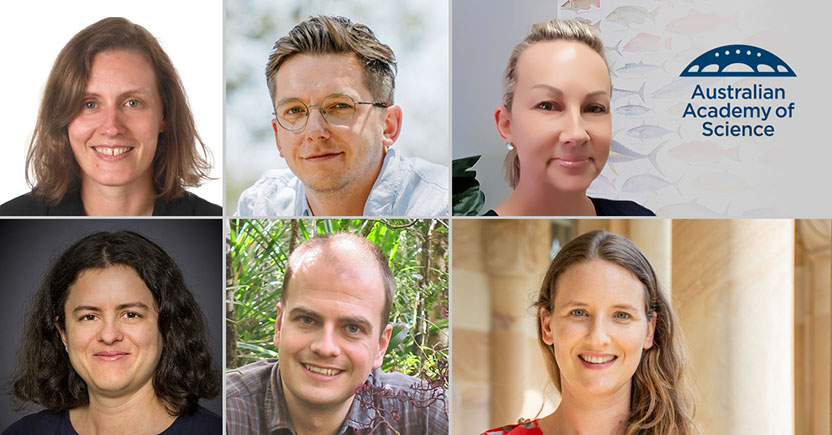
Uncovering rare metal-hoarding plants, mangrove desalination techniques and great hammerhead shark populations are the aims of some of the researchers awarded the Australian Academy of Science's 2021 Thomas Davies Research Grant for Marine, Soil and Plant Biology.
The grant is funded through a generous philanthropic bequest to the Academy from the estate of the late Thomas Lewis Davies. The fund offers annual research grants of up to $20,000 each to early- and mid-career researchers in the fields of marine, soil and plant biology.
Six researchers are recipients of research grants this year.
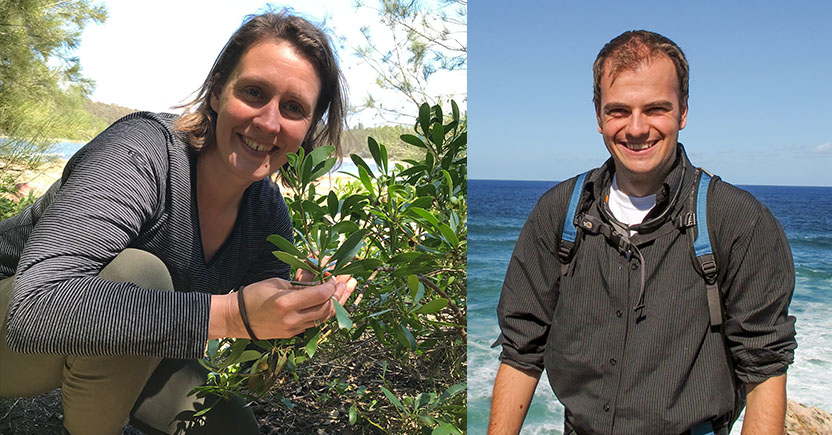
Dr Caitlin Byrt from the Australian National University will study the mechanisms that allow mangrove species (Avicennia officinalis) to separate salt and water, which could potentially help to manage freshwater resources. Recent advances in desalination technologies have drawn inspiration from biological systems, such as mangroves, to make the processes more energy-efficient and cost-effective.
Dr Byrt’s research will focus on the water and salt transport properties of mangrove aquaporins, a type of water channel protein embedded in leaf membranes. “This project will contribute to our understanding of how nature has solved the problem of separating salt and water,” said Dr Byrt.
Dr Antony van der Ent from the University of Queensland will continue the search for undiscovered hyperaccumulator plants, which have the unique ability to accumulate metal and metalloid elements. Hyperaccumulators have great potential in the fields of phytomining (harvesting metals from crops), phytoremediation of soils for agriculture and environmental management, and biofortification of crops to address human micronutrient deficiencies.
“Just 700 hyperaccumulator plant species have been identified globally, although it is expected that many more exist and await discovery,” said Dr van der Ent. He will use the innovative technique of x-ray fluorescence ionomics to extract elemental data from plant species held at the Queensland Herbarium.
Several hyperaccumulators have already been discovered in this collection in recent years, and the insights from this research will advance knowledge about their biology and physiology.
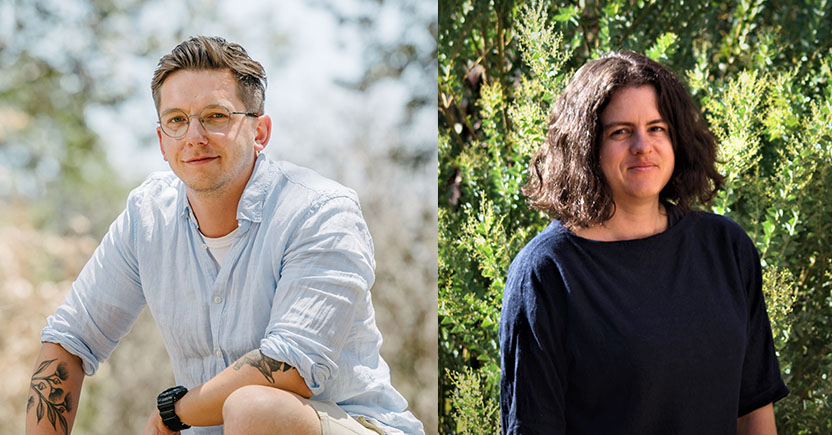
Dr Adam Frew from the University of Southern Queensland will investigate how different communities of arbuscular mycorrhizal (AM) fungi can affect defence traits in their host plants. AM fungi are sometimes used in bio-fertilisers—they promote plant growth and stress resistance, and can enhance their host plants’ immune systems. They also play a key role in maintaining soil health.
Dr Frew will investigate the role of AM fungal diversity in plant resistance to herbivores. He will study how diverse fungal communities drive defence mechanisms against root-feeding insects in three important crops: sugarcane, wheat and sorghum. This is an important step forward since most research to date has focused only on a few commonly used AM fungal species.
Dr Jana Sperschneider from the Australian National University will help uncover the mechanisms behind how rust fungi infect plants. Rust fungi are a significant threat to major agricultural crops like wheat, as well as iconic Australian plants, such as tea tree and lemon myrtle.
There is currently a lack of understanding surrounding how rusts infect plants—their unusual genomic structure is believed to be a major contributor to their virulence. Dr Sperschneider aims to shed light on how the rust genome is organised during the distinct stages of plant infection. This will help develop durable and effective strategies to protect crops and native ecosystems from rusts.
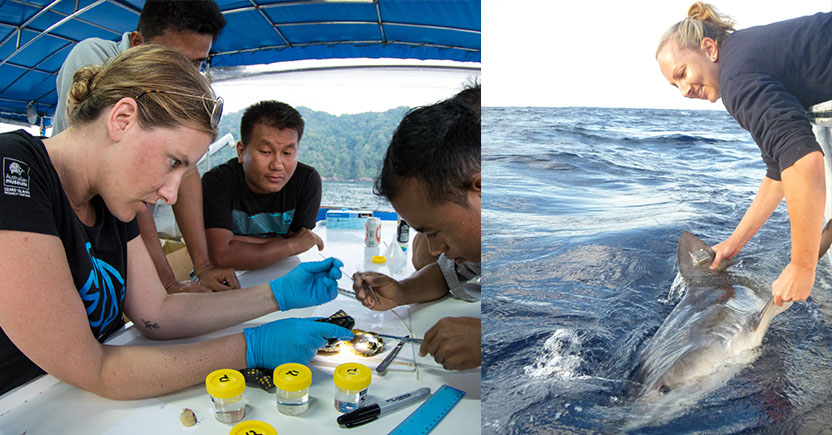
Dr Bonnie Holmes from the University of the Sunshine Coast will carry out one of the first studies to explicitly assess the distribution of great hammerhead sharks (Sphyrna mokarran) across multiple ecosystems in QLD and NSW. Her research will collect detailed ecological information on great hammerheads, including seasonal movements, fishery interaction and population genetic dynamics, particularly in the face of climate change.
Numbers of hammerhead sharks have undergone significant reductions off the Australian east coast and the species was classified as critically endangered in 2019. As keystone predators, they play a critical role in influencing the marine ecosystem, and Dr Holmes’s work will provide data that is essential for Australian management strategies.
Dr Amelia Wenger from the University of Queensland aims to develop evidence-based wastewater pollution guidelines that will preserve ecosystem health. Wastewater treatment services tend to focus on removing pathogens harmful to humans, but may not address pollutants that can harm coastal environments.
Dr Wenger’s project will draw on ecotoxicology statistics to develop wastewater pollution guidelines for tropical coastal and marine ecosystems. These guidelines will be used by conservation organisations, sanitation and health practitioners, and policymakers to implement ocean-friendly sanitation management.
Margaret Middleton Fund for endangered Australian native vertebrate animals: 2021 funding announced
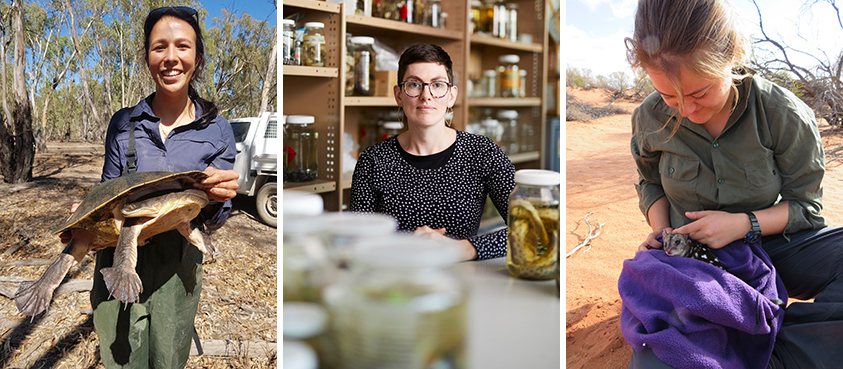
(L to R) Margaret Middleton Fund recipients for 2021: Angela Simms, Dr Jenna Crowe-Riddell and Finella Dawlings.
Three early-career researchers have been awarded funding for ecology projects in 2021 thanks to the Australian Academy of Science’s Margaret Middleton Fund for endangered Australian native vertebrate animals.
The fund provides grants to support emerging researchers with ecology projects that have tangible conservation outcomes for endangered native vertebrates.
The 2021 recipients are:
- Dr Jenna Crowe-Riddell, University of Adelaide
- Ms Finella Dawlings, Monash University
- Ms Angela Simms, La Trobe University.
From detecting creatures in grasslands and oceans to improving turtle incubation and investigating sea snakes, all three projects promise to provide valuable insights for conserving our native vertebrates.
Dr Crowe-Riddell will use the funding to research critically endangered species of Western Australian sea snakes. By analysing environmental DNA and tissue samples, she’ll investigate the population densities and distributions of two similar-looking (cryptic) sea snake species in the Exmouth area.
This data will be useful for assessing how best to protect sea snake populations and for managing environmental impact studies for oil and gas exploration or infrastructure developments proposed in the area.
Ms Dawlings’ project also involves detecting biodiversity and population numbers, but is focused on small mammals and birds in eastern Australian native grasslands. Dawlings’ project will use thermal scanners to detect the presence of endotherms (heat-emitting animals) such as the plains-wanderer and fat-tailed dunnart.
The use of this more efficient and effective thermal scanning method is likely to improve long-term monitoring projects and assist in conserving small grassland fauna.
Ms Simms received funding for a project that will investigate the conditions of river turtle egg incubation to find out how young in these vulnerable species can get the best start in life.
The findings will have direct impacts on management of captive incubation programs for endangered turtle species.
The Margaret Middleton Fund for endangered Australian native vertebrate animals was established in 2000 with Dr Margaret Middleton, who donated generously to this fund across her lifetime. Dr Middleton was a long-time supporter of the Academy and early-career scientists, with the fund supporting almost 90 projects to date.
Applications for the 2022 awards will open in early 2021.
More information about the Margaret Middleton Fund for endangered Australian native vertebrate animals
Research on the intergenerational impacts of Maralinga nuclear tests supported by Moran Award
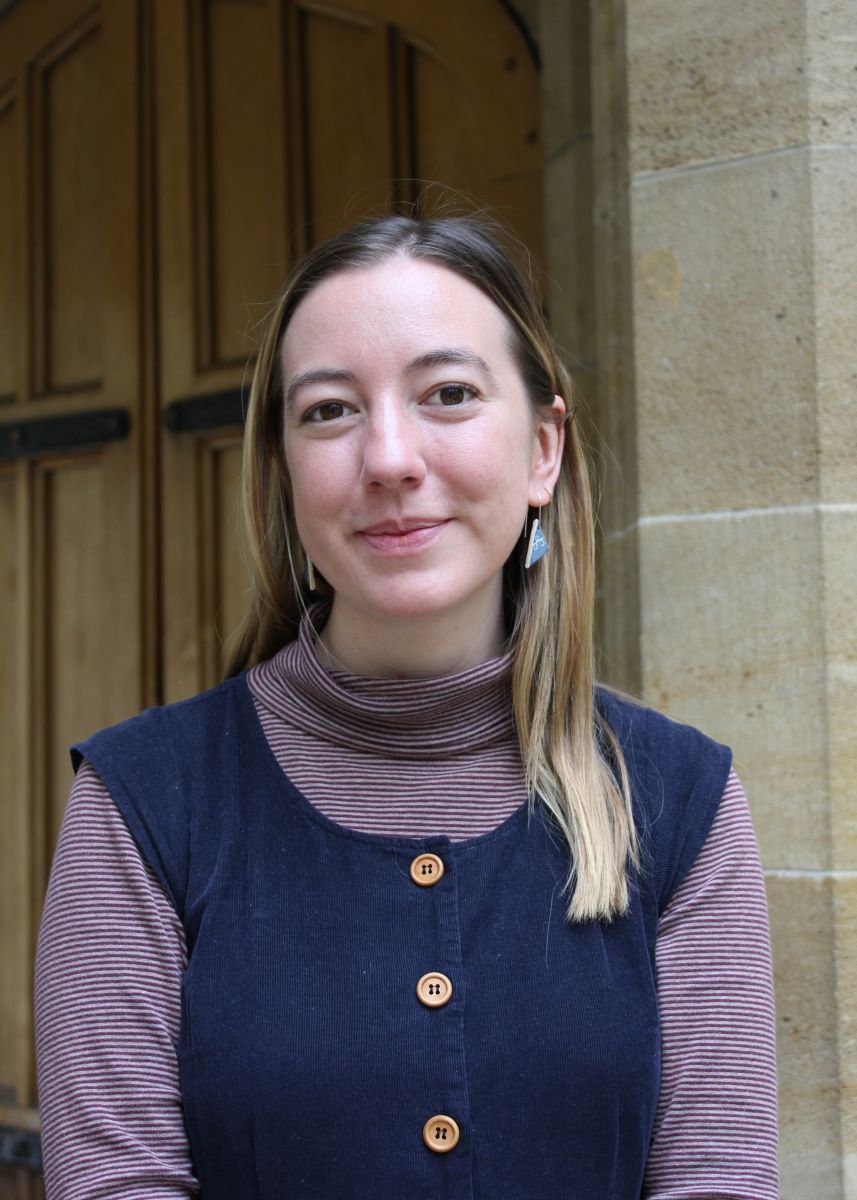
Henrietta Byrne from the University of Adelaide. Photo: supplied
Henrietta Byrne from the University of Adelaide is the recipient of the Academy’s 2021 Moran Award for History of Science Research.
She receives the award for her proposal entitled ‘Legacies of exposure: Tracing scientific and Indigenous understandings of exposures from the Maralinga atomic testing (1956–84)’.
Ms Byrne will explore how Australian science has responded to the question of intergenerational impacts of environmental exposures on bodies over time, focused around the British atomic testing conducted in Maralinga, South Australia between 1956 and 1968.
The National Archives of Australia and the Australian Institute of Aboriginal and Torres Strait Islander Studies library, as well as interviews with leading anthropologists, will inform her research.
Her work will not only provide an important examination of scientific understandings of environmental exposure, but will also focus explicitly on the Indigenous aspects of this history.
Ms Byrne said that the award will allow her to study the relationships between Indigenous knowledges, settler colonial histories and science and technology studies.
“I'm honoured to have the support of the Australian Academy of Science to undertake this study. It is a great opportunity to engage with the archives in a way that highlights the experiences and ongoing activism of Aboriginal people whose land was exposed to radiation.”
This research is part of her broader PhD project in Anthropology and Gender Studies on environmental exposures and epigenetics in Indigenous Australian contexts.
The Moran Award for History of Science Research is worth up to $5000, and is aimed at postgraduate students and other researchers with expertise in the history of Australian science. Applications for the 2022 award will open in early 2021.