




Academy Fellows awarded with Australian Laureate Fellowships

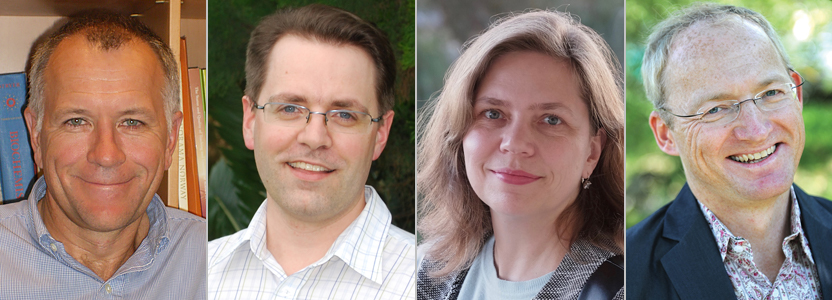
(L to R) Professor David James, Professor Harvey Millar, Professor Martina Stenzel and Professor Toby Walsh.
Four Fellows of the Australian Academy of Science are among the 2020 Australian Research Council (ARC) Australian Laureate Fellows, announced on 6 July by the Hon. Dan Tehan MP, Minister for Education.
The ARC Fellowship scheme provides funding for academics to lead research projects in priority areas of national interest. The scheme funds world-class endeavours in both basic and applied research and supports the appointment of early-career researchers.
The four Academy Fellows among the 14 recipients of the ARC funding scheme include Professor Martina Stenzel, Professor Toby Walsh, Professor David James and Professor Harvey Millar. Their research projects span diverse research areas of critical importance, including nanotechnology, artificial intelligence, the genetics of ageing and plant science.
The Fellowships have been awarded to the research leaders for the following projects:
- Professor Martina Stenzel FAA, Scientia Professor in polymer chemistry at the University of New South Wales and Chair of the National Committee for Chemistry, will develop a toolset that allows the design of very small nanoparticles that display enhanced biological activity for applications in nanomedicine, catalysis and sensors.
- Leading artificial intelligence (AI) researcher Professor Toby Walsh FAA of the University of New South Wales will work on building fairer, more efficient and trustworthy AI systems to improve the competitiveness of Australian businesses and the delivery of health services.
- At the University of Sydney, pioneering metabolic systems and cellular biology researcher Professor David James FAA will dissect how genes interact with the environment to better understand the ageing process and lay the foundation for personalised health strategies.
- Plant protein biochemist and newly elected Academy Fellow Professor Harvey Millar FAA of the University of Western Australia will study processes and genes that regulate degradation of proteins in wheat and barley plants to benefit Australia’s grain industries.
More information about the ARC’s Australian Laureate Fellowships scheme.
Review finds investment in Australian astronomy is paying dividends
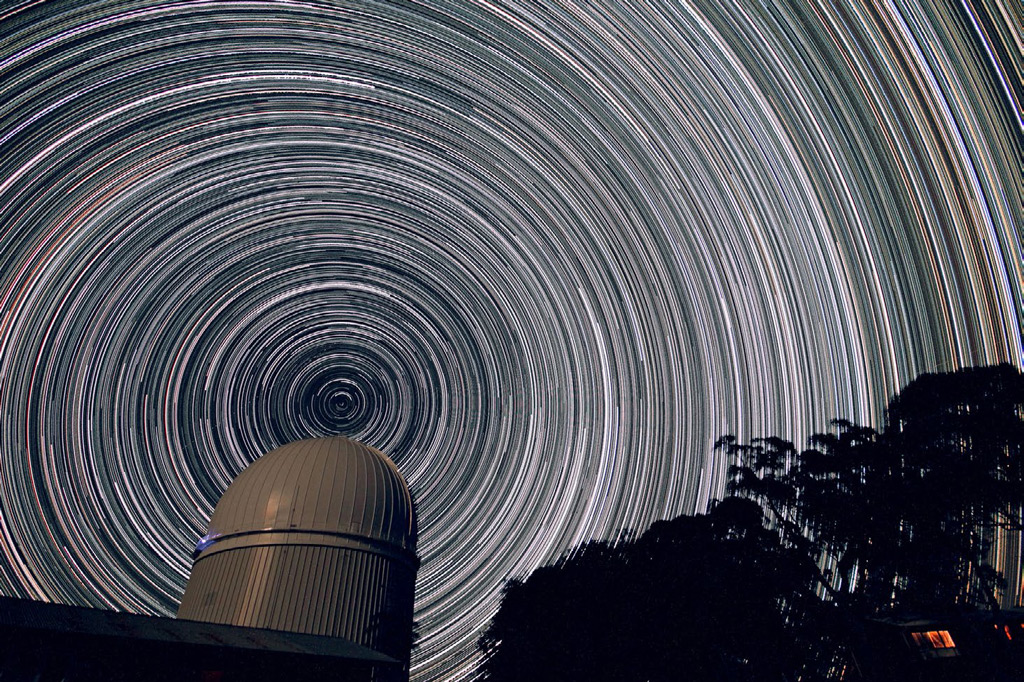
Australia’s investment in astronomy and our hosting of two of the world’s most powerful telescopes means we are well placed to contribute to more big international breakthroughs in our understanding of the universe, according to a new review.
The mid-term review of Australia’s 10-year plan for astronomy, overseen by the Australian Academy of Science’s National Committee for Astronomy, has also found Australian physicists and astronomers played a key part in some of the decade’s biggest scientific discoveries.
The plan makes nine major recommendations for the next five years and details the ongoing investment into major facilities and infrastructure required for Australian astronomers to continue to play a world-leading role in answering key questions about our universe.
The 2020 identification of the ‘missing matter’ of the universe used data on fast radio bursts collected by the Australian Square Kilometre Array Pathfinder (ASKAP) in Western Australia.
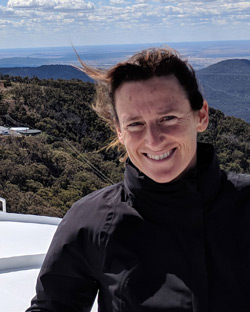
Professor Tamara Davis from the University of Queensland. Photo: supplied.
Australia is also home to the Murchison Widefield Array (MWA), which alongside ASKAP is located at the site of the future low-frequency telescope of the Square Kilometre Array (SKA), an international project headquartered in the United Kingdom and involving 13 other countries.
“The SKA is ground-breaking technology and right now we’ve got the MWA and ASKAP in operation—these are two technical demonstrations for the SKA but in their own right are the most powerful telescopes of their type in the world,” said astrophysicist and mid-term review committee member Professor Tamara Davis from the University of Queensland.
“Australia is the envy of many international astronomers, partly because of our radio-quiet skies and important southern hemisphere location. We have a natural advantage in this regard and so many countries want to be involved in telescopes in Australia,” Professor Davis said.
The review recommends Australia pursue realisation of the full Square Kilometre Array Observatory, while continuing to exploit its ASKAP and MWA pathfinders.
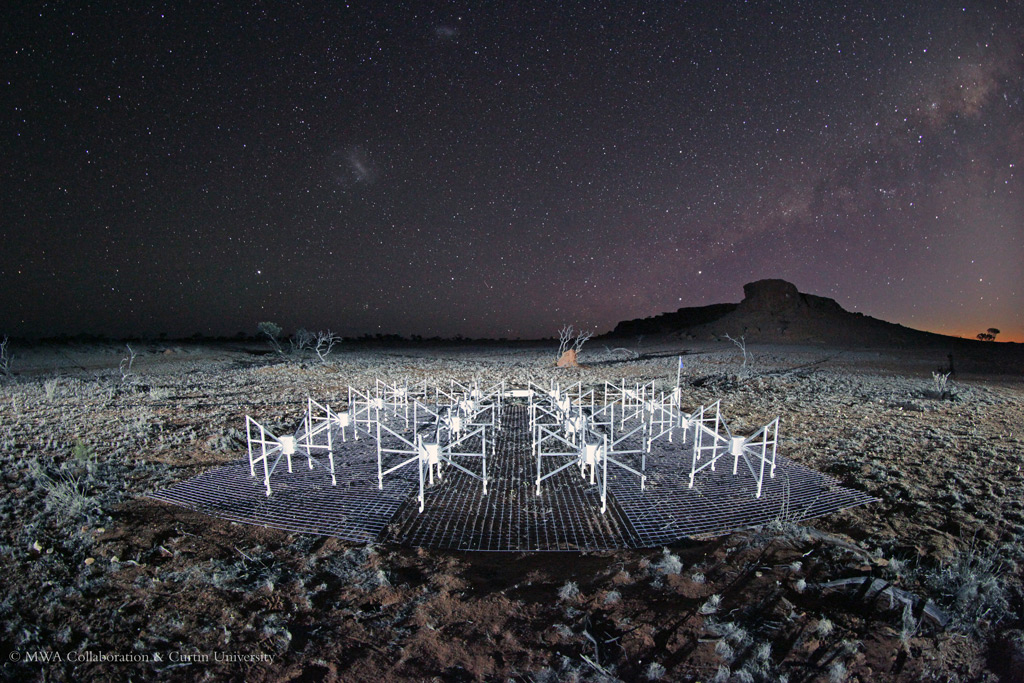
The Murchison Widefield Array (MWA) at night. Photo: John Goldsmith, Celestial Visions
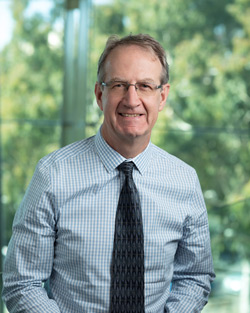
Professor Lister Staveley-Smith from the University of Western Australia. Photo: supplied

Dr Samuel Hinton, University of Queensland. Photo: supplied.
It also calls on Australia to pursue full membership of the European Southern Observatory (ESO), a 16-nation intergovernmental research organisation for ground-based astronomy.
Currently, the Australian Government has a strategic partnership with ESO until 2027, but full membership would provide ongoing access to enormous international telescopes like the Atacama Large Millimeter/submillimeter Array (ALMA) and the future Extremely Large Telescope in northern Chile.
“The Australian Government’s investment in a strategic partnership with the ESO has put the nation on the path to full ESO membership,” said the chair of the review committee, Professor Lister Staveley-Smith from the University of Western Australia.
“This partnership is unleashing major Australian-led science programs on the world’s most capable optical observatory and there’d be great benefit to see the agreement extend beyond 10 years,” said Professor Staveley-Smith.
The review makes seven other major recommendations including that Australia continue to build stronger ties between the Australian astronomy community, the wider Australian space science community, and the Australian Space Agency.
The review also highlights the contributions of the Australian astronomy community to mitigating the COVID-19 emergency. One astronomer, University of Queensland’s Dr Samuel Hinton, has been the lead data analyst for the COVID-19 Critical Care Consortium, with representatives from over 40 countries.
He constructed and maintained a data science pipeline which was responsible for ingesting raw clinical data from hospitals around the world, then cleaning, standardising and processing the data into useful products for machine learning and statistical analysis. He talks about his contribution to fighting COVID-19 in the Academy’s Latest from Science web show.
Read more about how astronomers have been able to contribute in a significant manner to mitigating the COVID-19 emergency on page four of the mid-term review.
Academy strengthens partnership with CSIRO to champion research
Scientists are encouraged to submit articles for publication in the CSIRO journals, supporting Australian science content and publishing. Photo: CSIRO
The Academy and CSIRO have signed a new five-year partnership agreement, strengthening their long-term commitment to Australian science as part of the global research enterprise.
The two organisations have long cooperated to publish the CSIRO-owned journals of scientific research which are published by CSIRO Publishing, an editorially independent not-for-profit business unit of CSIRO.
“This latest agreement recognises the joint commitment of the Academy and CSIRO in advocating for and advancing open science, and the importance of diversity and inclusion in science,” said Academy Chief Executive, Anna-Maria Arabia.
“The ongoing partnership we have with CSIRO enables the Academy to contribute to CSIRO’s journals of scientific research, and to discussions about scientific and academic publishing.”
Editorial policy for the journals is developed by a Board of Standards, which is jointly chaired by CSIRO and the Academy.
“The current chairs are CSIRO’s Professor Lynne Cobiac and Academy Fellow Professor Max Coltheart, both of whom bring enormous experience and vision to the roles,” Ms Arabia said.
Academy Fellows and other scientists are encouraged to submit articles for publication in the CSIRO journals, supporting Australian science content and publishing.
The scientific journals covered by the agreement are:
- Animal Production Science
- Australian Journal of Botany
- Australian Journal of Chemistry
- Australian Journal of Zoology
- Australian Systematic Botany
- Crop and Pasture Science
- Environmental Chemistry
- Functional Plant Biology
- Invertebrate Systematics
- Marine and Freshwater Research
- Pacific Conservation Biology
- Reproduction, Fertility and Development
- Soil Research
- Wildlife Research
Find out more about CSIRO’s journals of scientific research. CSIRO Publishing supports both ‘Green’ and ‘Gold’ Open Access to help authors reach the broadest audience and to enable unrestricted access to scholarly research. All Open Access articles undergo the same rigorous peer review as those published under a subscription model.
Expert working group appointed for Future Earth Australia’s strategy on sustainable oceans and coasts

Future Earth Australia’s Sustainable Oceans and Coasts initiative is set to develop a ten-year national strategy to ensure that our oceans and coasts remain healthy and resilient. Image: Unsplash; CC0
For many Australians, the nation’s coasts and oceans are central to our self-image. These areas are some of our busiest locations and are among the fastest growing economic sectors. However, the fragmented way we currently manage and govern the ecological and social processes that connect ocean and coastal waterways puts them under threat.
Future Earth Australia’s Sustainable Oceans and Coasts initiative is set to develop a ten-year national strategy to ensure that these areas remain healthy and resilient. This strategy will outline the steps needed to transform how we think about, govern, and protect oceans and coasts across Australia, and serve as a blueprint for the national transformational change that Australia’s oceans and coasts need.
This week, Future Earth Australia is pleased to announce the formation of an Expert Working Group that will provide strategic direction and development of the strategy. This initiative, generously supported by the Lord Mayor’s Charitable Foundation, will represent a unique, cross-sectoral, transdisciplinary effort to improve Australia’s ocean and coastal future.
The Expert Working Group, co-chaired by Dr Beth Fulton of CSIRO and Emeritus Professor Nick Harvey of the University of Adelaide, comprises a group of leading experts across ocean and coastal research, practice and policy from around Australia. This group will oversee the development of the strategy, providing their deep working knowledge of Australian oceans and coasts and contributing to the writing of the strategy.
The strategy is poised to make waves globally as well as locally, as worldwide initiatives for the decade are focused on oceans and coasts. The United Nations Decade of Ocean Science for Sustainable Development will run 2021–2030, with a strong focus on ocean health and sustainable development of the ocean. The UN Decade on Ecosystem Restoration, which will also run 2021–2030, is set to look to the oceans and coastal waters in helping to combat climate change, ensure food security and conserve biodiversity.
“To achieve a sustainable future, by meeting the Sustainable Development Goals by 2030 and focusing on ocean science for sustainable development and ecosystem restoration, we need integration across sectors and expertise,” said Director of Future Earth Australia, Dr Tayanah O’Donnell.
Our coasts and oceans are fundamental to securing futures for all Australians
The first meeting of the Expert Working Group will take place in the context of the COVID-19 epidemic. Professor Harvey noted that this crisis has demonstrated the importance of a coordinated and integrated approach across boundaries. “Our strategy should recognise that our oceans and coasts do not respect state or other jurisdictional boundaries. We need a coordinated and sustainable approach”.
The different sectors of the ‘blue economy’, the industries that operate in the ocean and along its coastal margin, are seen as an important part of future sustainable development. It is important however, that the sustainability ethic is not lost.
“If anything good can come from COVID-19, it is using the disruption as a pivot point to embed sustainability at the core of what we do going forward, to put us in a better place to deliver,” said Dr Fulton.
The Sustainable Oceans and Coasts strategy will be the second targeted strategy created by FEA, following the successful development of an urban sustainability plan that was launched in December 2019 at the State of Australian Cities Conference. This plan was developed through extensive consultation with key stakeholders across sectors and Australian cities and written by an expert reference group representing urban research, practice and policy and the FEA Secretariat.
The next steps of the Sustainable Oceans and Coasts initiative will include a series of virtual consultation workshops and interviews with key stakeholders, as well as opportunities for written submissions.
To stay updated on the Sustainable Oceans and Coasts initiative, you can visit FEA’s dedicated webpage for the strategy and follow FEA on Twitter.
Industry partnership stands true through pandemic: 3M
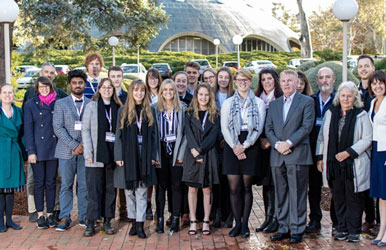
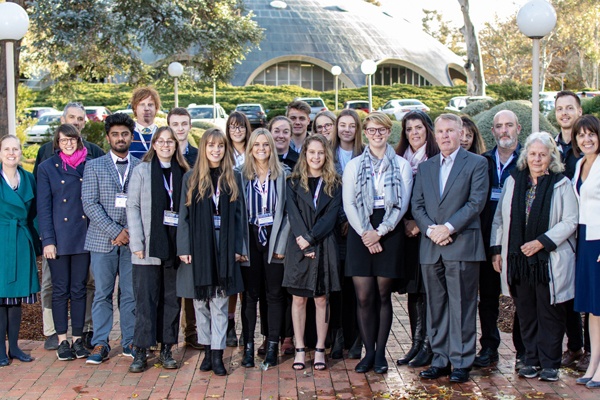
3M began collaborating with the Academy in 2019 by supporting the inaugural Science at the Shine Dome Schools Program.
Global industry giant 3M has demonstrated its commitment to supporting STEM in Australia during COVID-19 by continuing to provide funding support to the Australian Academy of Science in partnership despite planned events and activities being cancelled.
3M began collaborating with the Academy in 2019 by supporting the inaugural Science at the Shine Dome Schools Program.
The Schools Program provided an opportunity for 10 secondary students and their teachers involved in the New South Wales’ Science Extension course to attend the Academy’s Science at the Shine Dome 2019 event. This unique experience inspired the participants to become even more interested in science and research and highlighted why science matters now and into the future.
Funded by 3M, the program had intended to continue in 2020 with the partnership planned to expand into Victoria, to incorporate more diverse opportunities, wider participation and the provision of STEM education resources.
However, due to COVID-19 restrictions, Science at the Shine Dome 2020 was cancelled and the program could not occur. Despite this, 3M generously released the Academy from its partnership obligations.
Australian Academy of Science Chief Executive, Anna-Maria Arabia, said the support of industry during these unprecedented times is something to celebrate.
“3M has shown exceptional generosity and flexibility in allowing the Academy to retain the partnership support during the pandemic,” she said.
“On behalf of the entire Academy, thank you 3M for your unwavering support and intention to support the Academy in the future.”
On behalf of the entire Academy, thank you 3M for your unwavering support and intention to support the Academy in the future.Anna-Maria Arabia • Chief Executive at Australian Academy of Science
3M Australia Managing Director, Chris LeBlanc, thanked the Academy for its tireless work and support.
“We are proud to be able to support the Academy with this flexibility in use of the grant and funding,” he said.
“I hope that this outcome will support your team while focusing on ramping up to better days on the other side of this COVID-19 pandemic.”
3M’s partnership support will contribute to the provision of independent, authoritative and trusted advice to the nation.
This includes work such as the recognition of exceptional scientists and research leaders; the formulation of scientific evidence to inform decisions; and the provision of education and communication resources.
Industry partnership stands true through pandemic: 3M
Industry partnership stands true through pandemic: 3M
3 July 2020
Global industry giant 3M has demonstrated its commitment to supporting STEM in Australia during COVID-19 by continuing to provide funding support to the Australian Academy of Science in partnership despite planned events and activities being cancelled.
3M began collaborating with the Academy in 2019 by supporting the inaugural Science at the Shine Dome Schools Program.
The Schools Program provided an opportunity for 10 secondary students and their teachers involved in the New South Wales’ Science Extension course to attend the Academy’s Science at the Shine Dome 2019 event. This unique experience inspired the participants to become even more interested in science and research and highlighted why science matters now and into the future.
Funded by 3M, the program had intended to continue in 2020 with the partnership planned to expand into Victoria, to incorporate more diverse opportunities, wider participation and the provision of STEM education resources.
However, due to COVID-19 restrictions, Science at the Shine Dome 2020 was cancelled and the program could not occur. Despite this, 3M generously released the Academy from its partnership obligations.
Australian Academy of Science Chief Executive, Anna-Maria Arabia, said the support of industry during these unprecedented times is something to celebrate.
“3M has shown exceptional generosity and flexibility in allowing the Academy to retain the partnership support during the pandemic,” she said.
“On behalf of the entire Academy, thank you 3M for your unwavering support and intention to support the Academy in the future.”
3M Australia Managing Director, Chris LeBlanc, thanked the Academy for its tireless work and support.
“We are proud to be able to support the Academy with this flexibility in use of the grant and funding,” he said.
“I hope that this outcome will support your team while focusing on ramping up to better days on the other side of this COVID-19 pandemic.”
3M’s partnership support will contribute to the provision of independent, authoritative and trusted advice to the nation.
This includes work such as the recognition of exceptional scientists and research leaders; the formulation of scientific evidence to inform decisions; and the provision of education and communication resources.
3M’s partnership support will contribute to the provision of independent, authoritative and trusted advice to the nation. This includes work such as the recognition of exceptional scientists and research leaders; the formulation of scientific evidence to inform decisions; and the provision of education and communication resources.Chris LeBlanc • Managing Director at 3M Australia
Academy a top resource for COVID-19 knowledge
The Academy has been named in the top 10 most prominent sources of information during the COVID-19 pandemic by the Australian Science Media Centre (AusSMC).
The research, undertaken by media monitoring company Streem, looked at coronavirus-related media items in major metropolitan newspapers and the nation’s biggest news websites from the initial outbreak in China until the end of May.
The highest-ranked institution was the Peter Doherty Institute, closely followed by CSIRO and the Grattan Institute. The Academy ranked seventh in the list.
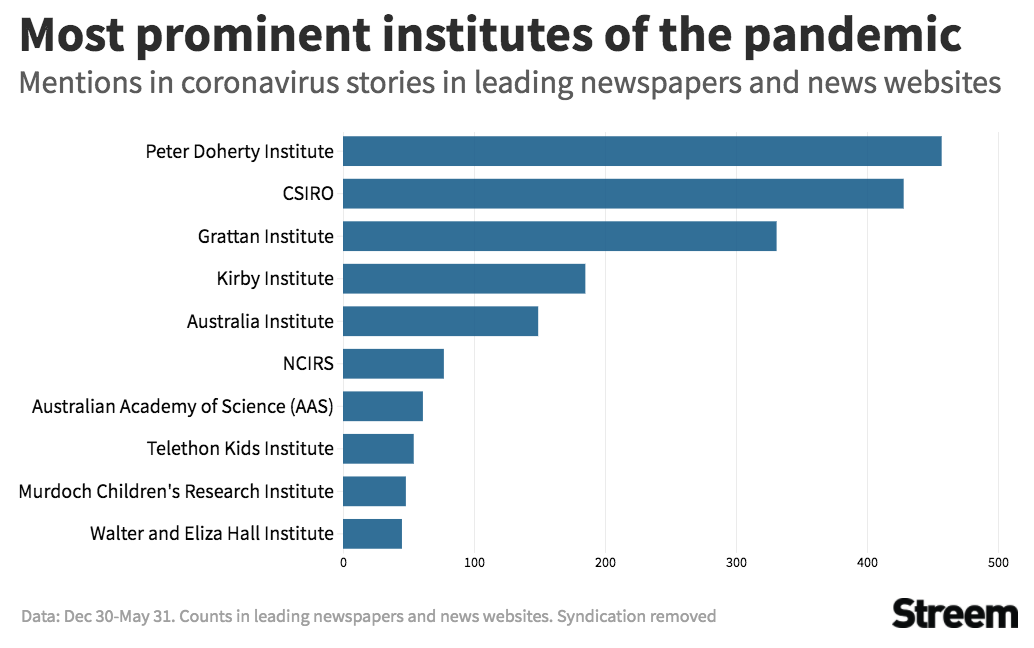
Australian Academy of Science Chief Executive, Anna-Maria Arabia, said since the outbreak of the pandemic the Academy had been working hard to provide the public with the latest and best evidence from experts regarding COVID-19.
“Not captured in this analysis are the hundreds of syndicated news stories published in regional Australian and other news outlets as a result of the extensive suite of COVID-19 videos and webinars produced by the Academy,” Ms Arabia said.
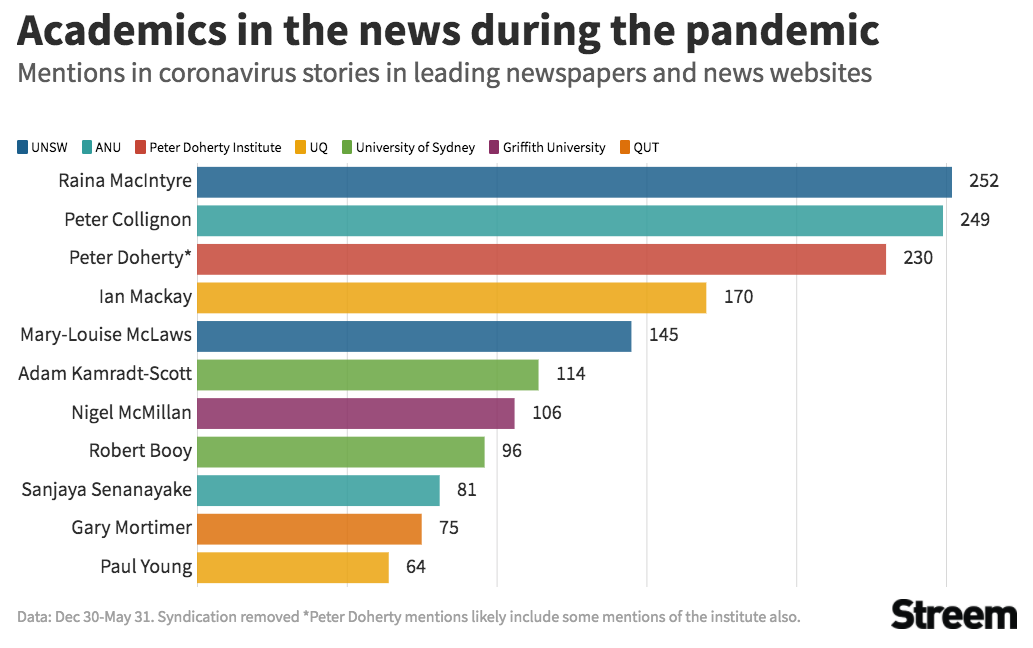
Our Fellows were also highly sought-after: Professor Peter Doherty was ranked third in media mentions of academics. He featured in Academy-produced webinars about COVID-19, along with Professors Eddie Holmes, Ian Frazer, Fiona Stanley, and Carola Vinuesa.
During the pandemic, the Academy launched a COVID-19 experts database and is leading the operations of the Rapid Research Information Forum, producing rapid evidence-based responses to questions related to COVID-19 posed directly by the Prime Minister and cabinet ministers.
The Academy is also providing free resources for home STEM education, publishing articles by experts under a new ‘Science for Australians’ banner, and supporting early- and mid-career researchers through online webinars.
The Academy has 2.3 million followers on Facebook, where Academy videos and articles about COVID-19 for a general audience remain popular. It also launched a video channel on Facebook and YouTube called Global Science TV, in partnership with the International Science Council.
Lyndal Byford, director of news and partnerships at the AusSMC, said it was reassuring to see that people qualified in immunology, virology and epidemiology had generally been the most prominent academic voices during the pandemic.
“In times of crisis, it is essential that the media can access the nation’s best scientific and medical experts so that they can share clear and accurate information with the public about what we know, but also about what we don’t know,” Ms Byford said.
See all the Academy’s content on its COVID-19 News and Resources Hub.
Funding Australian university research

Australians have put their trust in science as a way forward to set our path out of the COVID-19 pandemic and meet the challenges arising.
Science can solve the problems of the twenty-first century, but not alone. Whether it’s the quest for a COVID-19 vaccine, the emergence of artificial intelligence or the challenges of adapting to climate change, scientists worldwide are working side-by-side with colleagues of other disciplines—including the humanities—to come up with the research and solutions to the problems our world faces.
As we come to grips with the implications of the Australian Government’s Job-ready Graduates Package for universities, and the challenges of the recovery from COVID-19, the Australian Academy of Science is ready to engage with government to ensure that Australian science education and research can play the role government has outlined for it.
New places and a focus on STEM welcome
The Academy welcomes initiatives to increase university places by 39,000 within three years, boost regional research capability, uncap places for Indigenous Australians, and establish a National Priorities and Industry Linkage Fund.
Reducing the loans students will incur undertaking science and mathematics are to be commended, but it is important that the measures do not cause unintended consequences. Students must be encouraged, when selecting subjects to study, to undertake as broad a curriculum as possible.
The Australian Academy of Science stands with the nation’s other learned academies in expressing concerns about the implications of the announced package across all scientific and academic disciplines. Our society needs scientists, but it would be poorer if not for people educated in the arts, social sciences, management, commerce, law and the humanities. Scientists know that all knowledge is multidisciplinary, and a system that silos knowledge and values one sort of knowledge over another will fail Australians.
Reduced resources for science and engineering concerning
The proposed changes are complex and, ironically, while reducing fees for Australian students undertaking a science degree, thereby encouraging them to choose science subjects, they also decrease the government’s contribution, leading to an overall decrease in the funding for science and engineering. Unless this is addressed in the design of the National Priorities and Industry Linkage Fund, this has serious implications for the capacity of universities to enrol more science students.
The government’s policy ambition is for Australian universities to educate more STEM graduates. This would be a good outcome for our nation, and for individual students. However, we are concerned that the current design of the package could create perverse incentives for universities to enrol fewer STEM students, as this package asks universities to educate more new science students from 2021, for 16 per cent less funding per student.
Securing the future of scientific research is key
The pandemic has exposed multiple deficiencies in Australia’s historic approach to its economic base. One of these is that Australia’s system of funding research, and in particular funding basic or fundamental strategic research, is broken.
The Academy encourages the government to turn its attention to safeguarding the future of Australian science research post the pandemic, by:
- examining the sustainability of Australia’s funding model for research, which is overly dependent on cross-subsidies from student (domestic and international) fee revenue
- funding the full costs of research
- addressing the decline of funding for strategic fundamental, basic research
- encouraging new partnerships and cultural change to reverse a decade of decline in business investment in research and innovation
- taking action to prevent the loss of up to 7000 researchers as a result of COVID-19 revenue losses. Research careers of early- and mid-career academics cannot be turned on and off like a tap—they require constant nourishment to maintain the pipeline of essential research capacity.
As Australia comes to grips with the recovery from the pandemic, and minimising any second wave, it is imperative that the science and research system that has served the nation well is put on a more sustainable, and secure, basis.
There is an opportunity for government to develop a wholistic response to the funding of Australian research, and the Academy looks forward to assisting the government in this endeavour.
Academy commits to supporting gender equity in higher education during and after COVID‑19
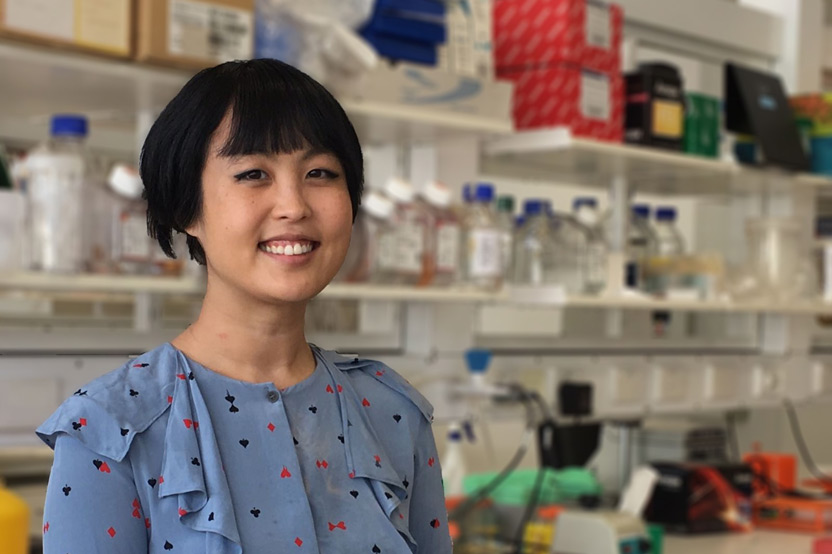
The joint statement signed by the Academy declares sector commitment to immediate and ongoing gender equity actions. Photo by Dr Sarah Ch’ng and Nicholas Lim
The Australian Academy of Science has reaffirmed its commitment to gender equity in STEM by signing the ‘Preserving gender equity as a higher education priority during and after COVID-19’ joint statement.
The statement was published recently by the Higher Education Senior Equity Practitioners Advisory Group on Gender and COVID-19.
The Academy joins a growing number of universities and other sector partners, including Science in Australia Gender Equity (SAGE) and the Australian Academy of Technology and Engineering (ATSE), in signing the statement.
The statement acknowledges the gendered impacts of the COVID-19 pandemic, including increases in caring responsibilities and family violence and reductions in workforce participation. It declares sector commitment to immediate and ongoing gender equity actions.
The statement echoes the findings of a report in May by the Rapid Research Information Forum which found hard-won gains for women’s advancement in the STEM workforce were at risk of a major setback due to the COVID-19 pandemic.
Without concerted efforts to manage and mitigate the uneven impacts on women, progress towards achieving greater participation of women and girls in STEM as recommended in the Women in STEM Decadal Plan will be jeopardised.
The Academy notes all tertiary institutions and higher education sector partners are invited to sign the statement.
At this crucial time, the Academy also calls on all STEM organisations and leaders to affirm their commitment to the vision of the Women in STEM Decadal Plan and gender equity in STEM by becoming Women in STEM Decadal Plan champions.
For further information and to sign the joint statement, contact:
- Michelle Falconer, Senior Manager, Office of Equity and Diversity, Western Sydney University
- Dr Kieryn McKay, SAGE Project Coordinator, Western Sydney University.
Marine conservationist announced as Australian nominee for 2020 APEC ASPIRE Prize

Dr Amelia Wenger is the Australian nominee for the 2020 APEC Prize.
A Queensland scientist who has led marine biodiversity conservation and sustainable coastal development projects across the world has been announced as the Australian nominee for the 2020 international ASPIRE Prize.
Dr Amelia Wenger, a marine conservationist from the University of Queensland, is one of 12 international nominees in the running for the prestigious US$25,000 Asia–Pacific region science prize, which is expected to be announced in August.
The prize recognises young scientists who have demonstrated a commitment to both excellence in scientific research while working closely with scientists from other APEC member economies. This year’s theme, chosen by 2020 ASPIRE Prize host nation Malaysia, is ‘Biodiversity for a Prosperous Economy’.
Dr Wenger collaborates with communities and researchers to produce knowledge and tools for conserving marine ecosystems. The research produces tangible outcomes for both biodiversity and economies.
A research project she led in Western Australia from 2014 to 2018 resulted in the world’s first evidence-based management guidelines for protecting coastal fisheries from dredging activities, which have been adopted by the Western Australian government.
Dr Wenger said she felt incredibly honoured to have her research recognised.
“I’ve had amazing mentors and collaborators who have inspired me to make my research as meaningful as possible for conservation efforts,” Dr Wenger said.
The Australian Government and the Australian Academy of Science ran a national competition to select three Australian finalists for the ASPIRE Prize.
The top three Australian ranked applicants from this competition receive a prize of AUS$2000 each. The highest-ranked applicant then becomes the Australian nominee for the ASPIRE Prize.
Dr Carla Eisemberg from Charles Darwin University and Dr Jeremy Simmonds from the University of Queensland were also recognised as Australian finalists for this year’s prize.
Dr Eisemberg researches sustainable harvest practices of wildlife to ensure that Indigenous communities in Northern Australia and tropical Asia continue to have a traditional food supply, but also that the endangered turtles and other species that they hunt are protected. Her results may be used in Indigenous enterprises such as sustainable turtle farming as well as health policy.
The second finalist, Dr Simmonds co-led the development of a sustainability developemnt framework for businesses to compensate for the losses to biodiversity that their activities cause. It has already had significant impact in the policy space, with several countries and jurisdictions using this framework to reconcile their development and biodiversity goals.
Professor Elaine Sadler AO FAA, Foreign Secretary of the Australian Academy of Science wished Dr Wenger the best of luck representing Australia in the next stage of the ASPIRE Prize.
“It’s exciting to see the high-calibre research of these three finalists, who early in their careers, are already making an impact for biodiversity conservation, whilst also enriching communities and economies,” Professor Sadler said.
Associate Professor Madhu Bhaskaran from RMIT University was the last Australian to be awarded the ASPIRE Prize in 2018. She is only the second Australian to win the prize since the award’s inception in 2011.
The APEC economies are: Australia, Brunei Darussalam, Canada, Chile, China, Hong Kong-China, Indonesia, Japan, Republic of Korea, Malaysia, Mexico, New Zealand, Papua New Guinea, Peru, Philippines, Russia, Singapore, Chinese Taipei, Thailand, United States, and Vietnam.
Further information about the ASPIRE Prize can be found at the APEC website.