




Academy celebrates the value of science with satellite selfie

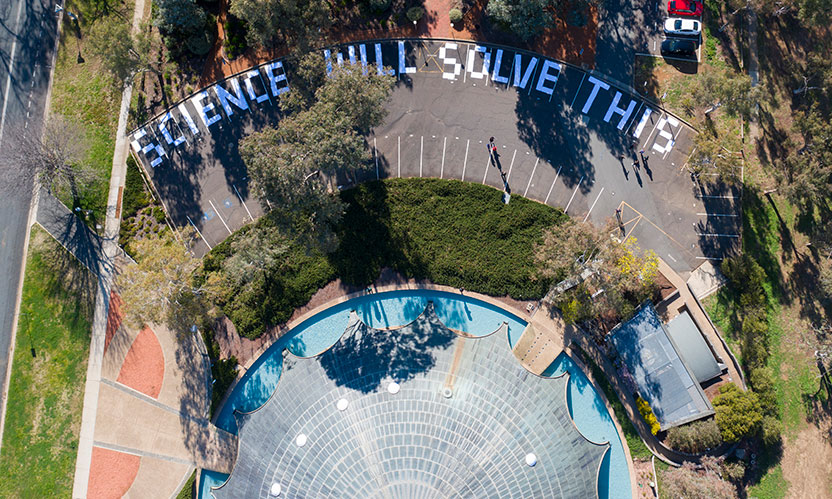
The Academy has created a message that can be seen from space to highlight the important role of scientists as the world navigates the COVID-19 pandemic and beyond.
‘Science will solve this’ is being created during National Science Week as part of Inspiring the ACT’s ‘Satellite Selfie’. The message symbolises the Academy’s commitment to support the nation by providing the latest evidence from experts on COVID-19. In June, the Academy was named in the top 10 most prominent sources of information during the pandemic by the Australian Science Media Centre. Academy Fellows have been highly sought after for comment by the media.
Using a satellite 770 kilometres above Earth, the project has given the ACT, its surrounds and the Northern Territory the unusual opportunity to take part in a massive selfie. Three planned flyovers across the week give participants the best chance to have their creations captured by the satellite.
ANU astrophysicist Dr Brad Tucker said the images would form the “ultimate, out of this world, selfie”.
“Nothing to this scale and this many people has ever been tried before in the world, let alone Australia. We are going to use a satellite to take a massive selfie that shows what Canberra, its surrounds and the NT looked like in August 2020,” Dr Tucker said.
The message symbolises the Academy’s commitment to support the nation by providing the latest evidence from experts on COVID-19.
Careful planning is required to make a design visible from that height. Each 50 cm square on the ground translates to a single pixel in the satellite image. ‘Science will solve this’ was calculated to require 276 pixels.
On the first flyover on Monday morning it took 105 towels spread across the sunny Shine Dome car park by 12 staff members to make the plan a reality. While the satellite images will not be made available until after the final flyover on Friday, Monday’s action was captured by a drone flying a little closer to the ground.
Other creative designs can be seen by searching for #SatelliteSelfie on social media.
A big thank you to Accor for lending us the towels needed to share this important message in an environmentally friendly way, and to Living Simply for supplying the rocks to hold them down.
Essay on how water shaped rural women’s experience wins Mike Smith Student Prize
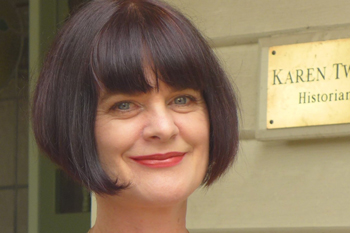
Karen Twigg’s background growing up on a farm underpins her interest in the historical experience of rural women.
Karen Twigg has won the 2019-20 Mike Smith Student Prize with an essay exploring how water availability shaped women’s experience in rural Australia in the 1950s.
Ms Twigg’s work was commended for its creative topic, strong analysis and skilled presentation. “All credit goes to Joan [Bennet née Corbett], a deeply reflective and eloquent rural woman, whose experience forms the central focus of my essay,” she said.
“My own background growing up as one of three daughters on a farm in rural Victoria underpins my interest in the historical experience of rural women.”
With a first prize award of $3000, the Mike Smith Student Prize recognises the work of students in the history of Australian science or Australian environmental history. It is awarded by the Academy’s National Committee for History and Philosophy of Science in partnership with the National Museum of Australia once every two years. The judging panel also includes an Editor of the Academy’s journal, Historical Records of Australian Science.
“I am in awe of Dr Mike Smith’s work and his skill in integrating archaeological and environmental material, so winning the prize that bears his name is very significant,” Ms Twigg said.
“The award has also encouraged me to continue to explore gender assumptions and how they shape the ways in which the environment was experienced, imagined and changed.”
Due to COVID-19 restrictions, Ms Twigg could not be presented with her award at a conference. It is hoped that her award may be presented at a future event. Her essay may be published in a book or journal in the future.
The judges of this competition thank all those who submitted essays to the 2019–20 Mike Smith Student Prize. Entries for the next round will open in late 2021.
Students thinking of preparing an entry for the next Mike Smith Student Prize may like to consider the events of 2020. How have Australian scientists handled epidemics in the past?
However, the judges will welcome any topic in the history of Australian science and in Australian environmental history.
Early- and mid-career researchers fear their careers are at risk due to pandemic
A new survey looking at the impact of COVID-19 on Australia’s early- and mid-career researcher (EMCR) workforce has found significant effects on their mental health and productivity.
The results have prompted a call for employers, governments and funding bodies to take action to support Australia’s future science leaders during this crucial time.
The nationally representative survey of 333 EMCRs was conducted by the Australian Academy of Science’s Early- and Mid-Career Researcher (EMCR) Forum.
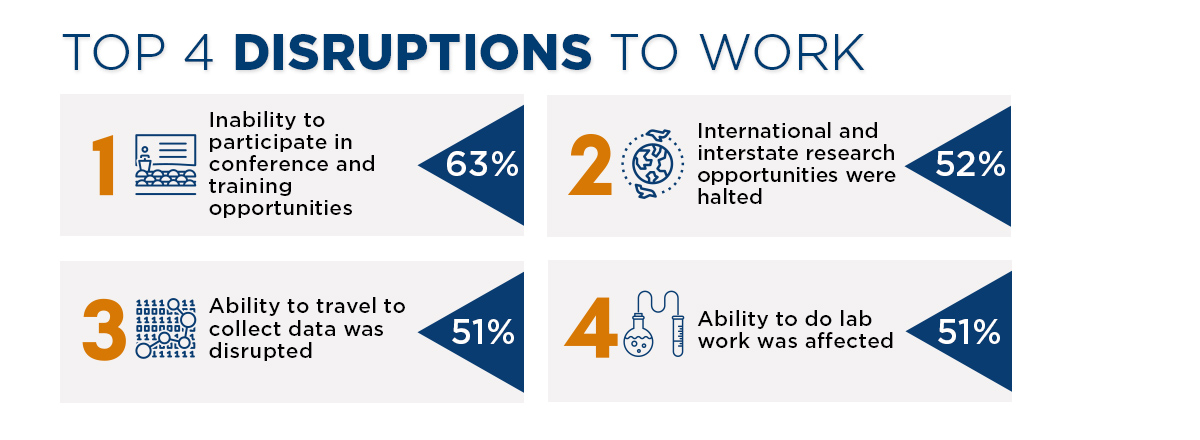
The survey found increased anxiety and strains on mental health due to employment uncertainty, the need to manage competing priorities such as caring duties, changes in the workplace, and perceived loss of career prospects. It also found COVID-19 is likely to have a lasting impact on the careers and wellbeing of much of the workforce.
The report’s recommendations for government include extending JobKeeper to the university sector and other STEM employers currently ineligible.

Associate Professor Michael Bowen, Chair of the EMCR Forum. Photo: supplied.
The survey found the shift in workloads for EMCRs poses serious challenges for universities on how they evaluate staff for internal promotions, with many early-career researchers facing disrupted track records. Survey respondents reported research activities being replaced with more teaching and administrative tasks.
The survey also found female EMCRs with caring responsibilities and those who reduced their working hours were most affected by the pandemic.
Associate Professor Michael Bowen, Chair of the EMCR Forum, said EMCRs are the lifeblood of Australia’s STEM sector.
“This sector is critical to our nation’s current and future prosperity so it is essential that government, employers and funding bodies work together to prevent the loss of a generation of EMCRs and irreparable damage to the sector,” Associate Professor Bowen said.

Associate Professor Vanessa Wong, Co-Deputy Chair of the EMCR Forum. Photo: supplied.
With over half of all surveyed researchers funded by external funding bodies, the report also recommends guidelines be put in place for assessors of research funding applications, so the impact of COVID-19 can be properly considered.
“The COVID-19 pandemic will have significant and long-lasting effects on early- and mid-career researchers now, and into the future,” said Associate Professor Vanessa Wong, Co-Deputy Chair of the EMCR Forum.
“Without rapid and continued support by government, employers and funding bodies, there will be mass exodus from STEM sectors leading to a substantial brain drain and lost future capacity and capability to provide solutions to future challenges, such as the next pandemic.”
The survey follows the publication of a report by the Rapid Research Information Forum in May which also found that women and early-career researchers are among those that will disproportionately experience negative impacts of the pandemic.
Academy gears up for National Science Week
This page was updated on 13 August
Get involved with National Science Week events
How can science help us protect our oceans and manage the threat of bushfires?
This year for National Science Week in August, the Academy will be bringing the latest from science to you with two special online events addressing these important questions. Leading researchers will reveal how science can help us in times of national crisis, now and in the future. And you won't even have to get out of your ‘working-from-home’ attire to attend!
There's also a legal angle looking at the reception, quality and evaluation of scientific evidence in Australian courts, and school students are encouraged to let their creativity show with Spot the maths. Make sure to read about the fascinating things that Academy Fellows work on, and how they found their passion for science.
We’ll be featuring engaging online content to keep your science brain ticking all week. Make sure to keep an eye out on Facebook, Instagram and Twitter.
Aiming to inspire interest and participation in science, National Science Week is Australia’s annual celebration of science and technology. Running this year from 15 to 23 August, it features more than 1000 events with more than one million people participating across the nation. This year, with online events and virtual tours from around the country and DIY Science resources, there is plenty to get involved with.
Share your stories
The Academy also encourages Australian scientists to get involved wherever they are by sharing their own stories during National Science Week on social media. Join in the #STEMsavinglives and #SolveItWithSTEM campaign by grabbing a selfie or posting a 30 second video of you in the lab or workplace and tell us how you use STEM to solve problems or save lives.
Make sure to use the hashtags and to tag the Academy (@Science_Academy) and National Science Week (@Aus_ScienceWeek) to increase your chance of a retweet.
Subscribe to receive emails about all the Academy’s events.
How will you science this #scienceweek?
Leading scientists to give evidence to Senate inquiry into Australia’s unprecedented bushfires
A Senate committee examining Australia’s bushfires will today hear how Australia must deal with extreme weather events more effectively than is currently the case.
“Scientific evidence shows that as the world warms due to human-induced climate change, we experience an increase in the frequency and severity of extreme weather events,” reports the submission by the Australian Academy of Science.
“As such [extreme weather] events become more frequent and severe, we must adapt Australia and Australians accordingly, and strengthen our mitigation efforts.
“Bushfires, along with other weather and climate challenges, pose complex and wide-ranging problems. Climate change, temperature extremes, droughts, storms, wind, and floods are intersecting and entangled. These must be addressed together.”
Academy Fellows Professor David Lindenmayer and Professor Chris Dickman will appear today before the Senate Standing Committee on Finance and Public Administration inquiry on behalf of the Academy.
They will tell the committee that the monitoring of Australian landscapes must be given the highest priority to give affected species and ecosystems the best chance of recovering from this summer’s bushfires.
Professor Dickman said Australia does not have really effective monitoring in much of the forest and woodland estate.
“The consequence is that it is very difficult now to get a handle on exactly what the fires have done,” said Professor Dickman, who is based at the University of Sydney.
“My worst fear is that some species whose ranges were largely in the path of the fires and were already in poor shape to begin will actually have disappeared—there’ll be extinction at the species level.”
Professor Lindenmayer said important monitoring work initiated by the Department of Agriculture, Water and the Environment in conjunction with other organisations and researchers—but restricted by safety concerns and interrupted by the COVID-19 outbreak—must be continued and backed up by meaningful management actions.
“The Academy is resolute that the response to the bushfires must extend beyond the immediate and essential need to rebuild and recover,” said Professor Lindenmayer, who is based at the Australian National University.
“While immediate responses are important, broader issues including habitat restoration; biodiversity and species preservation; land, water and wildlife management; agricultural practices and more will need careful and measured consideration.”
The Academy’s submission also highlights the importance for the Senate—and all Australians—to have trustworthy information and answers about impacts of the 2019–20 megafires.
It says “with much misinformation in the public domain about the cause and impacts of the bushfires, we urge Australians to continue to consult reputable sources of evidence-based information such as the Australian Academy of Science, CSIRO and the Bureau of Meteorology.”
The Academy has also today published the second in a series of expert briefs on bushfire recovery. The new brief covers the impacts of bushfire on Australian wildlife, and the role of immediate and long-term monitoring to inform protection and maintenance actions to preserve our unique ecosystems. The first brief focused on the condition of soil after bushfires.
The Academy is also currently considering the recommendations of the interim report into the review of the Environment Protection and Biodiversity Conservation Act published last week. Read the Academy’s initial submission to the review.
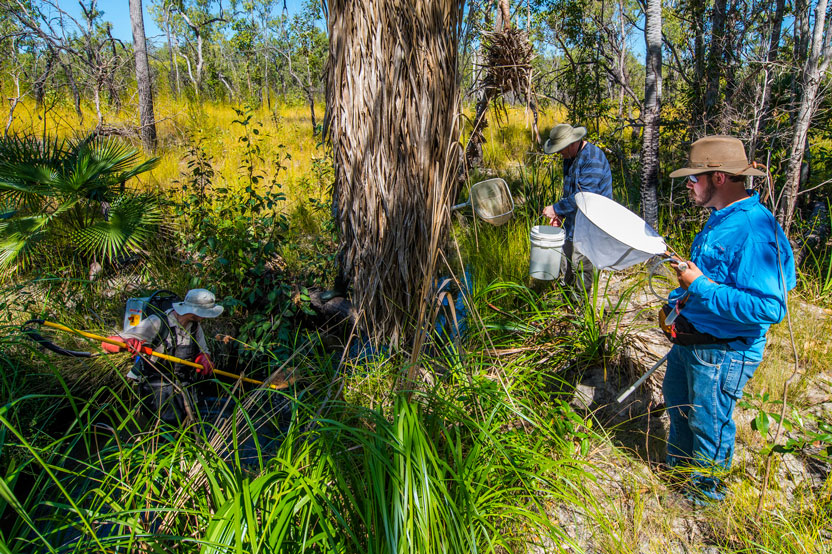
Effective wildlife monitoring, such as this Queensland BushBlitz expedition, is lacking in much of Australia's forests. Photo: Gary Cranitch/Queensland Museum
Local community needs must not be overlooked as we adapt to climate change
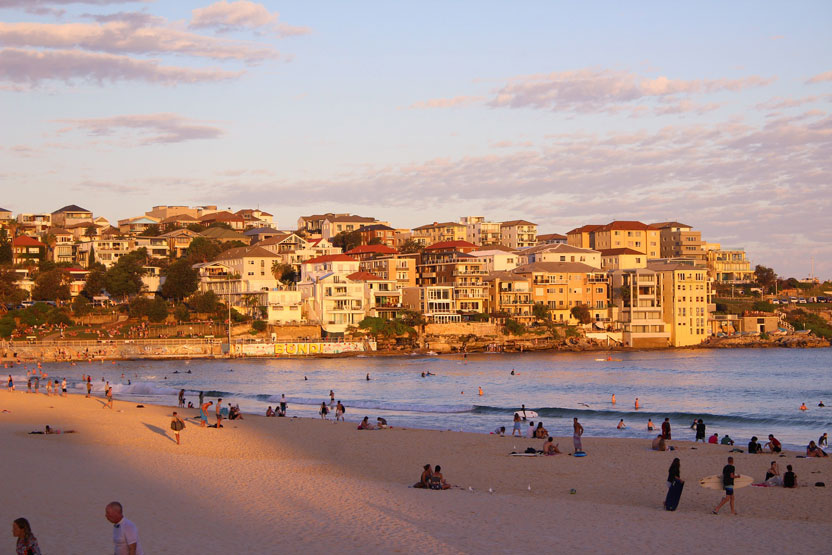
Retrofitting existing housing and preparing for coastal inundation and storms are just a few of the issues that need to be considered in community-led approaches to climate change adaptation in Australia. Photo: Pixabay
The needs of local communities are at risk of being overlooked as Australia grapples with how to adapt to climate change, according to leading climate change adaptation experts.
The finding follows a series of recent meetings of national leaders hosted by Future Earth Australia, a program of the Australian Academy of Science.
Leaders from across the private and finance sectors, all levels of government, Indigenous communities, land management, social services and universities in all states and territories gathered from 13 to 16 July 2020 for ‘Securing Australia’s Future: Reimagining Climate Adaptation’.
The meetings, which come ahead of a planned National Adaptation Summit in 2021, took stock of Australia’s successes, failures, opportunities and pathways for adapting to a changing climate, with a focus on the role of community-led approaches to adaptation.
Australian National University Emeritus Professor Stephen Dovers said there has long been a national focus on climate science, when what was needed was a shift to also prioritise the social adaptation needs for local communities.
“One example is the need to retrofit housing for variable climates,” said Emeritus Professor Dovers, who is past Chair of the Steering Committee of Future Earth Australia.
“Some local communities feel resilient and well-adapted to looming climate change shocks, but not others. We know that there is a desire among local communities to engage in the planning that is underway to adapt to a future that will see a drastically different climate and environment.”
University of Sydney Professor David Schlosberg said meeting participants found that a forward-looking approach to adaptation requires engaging community values and vulnerabilities, in addition to climate risks, and to be working towards an actionable and tangible agenda that benefits local communities.
“Good adaptation policy requires recognition of both the variety of knowledge types necessary to build adaptation pathways, and the role of different sectors—economic, social, environmental and cultural—in developing and implementing policy and action,” said Professor Schlosberg.
Meeting participants also found:
- there is a clear role for top down leadership from the Australian Government, in conjunction with well supported and financed local or regional ‘bottom up’ initiatives
- a strong policy framework is necessary from governments at all levels, to enable the necessary and broader social and community engagement.
Future Earth Australia Director, Dr Tayanah O’Donnell, said adaptation had come into sharp focus in the wake of the unprecedented bushfire season experienced in the summer of 2019–20, and now the COVID-19 pandemic, with both having ongoing, profound impacts on our wellbeing and economy.
“Effective adaptation in Australia acknowledges that increasing bushfire risk is only one dimension of climate change adaptation. Coastal inundation, storms, drought, heatwaves, business viability in a low carbon economy, biosecurity issues, and increased threats to human health, also demand coordinated attention,” Dr O’Donnell said.
“The bushfires and COVID-19 are major disruptions which have presented an unusual opportunity to consider how Australian society can prepare and act to adapt to these complex challenges.
“These roundtables are the start of a longer conversation and national agenda setting strategy being led by Future Earth Australia at the Australian Academy of Science.”
The National Adaptation Summit in 2021 will be hosted by the University of Sydney, Western Sydney University and Future Earth Australia.
Future Earth Australia has today opened public submissions on this topic. The consultation, which is open until 30 October 2020, seeks contributions on the successes, failures, opportunities and pathways for adaptation, with a particular interest in learning about community-led approaches taking place.
Australian fellowship recipients participate in Lindau Online Science Days
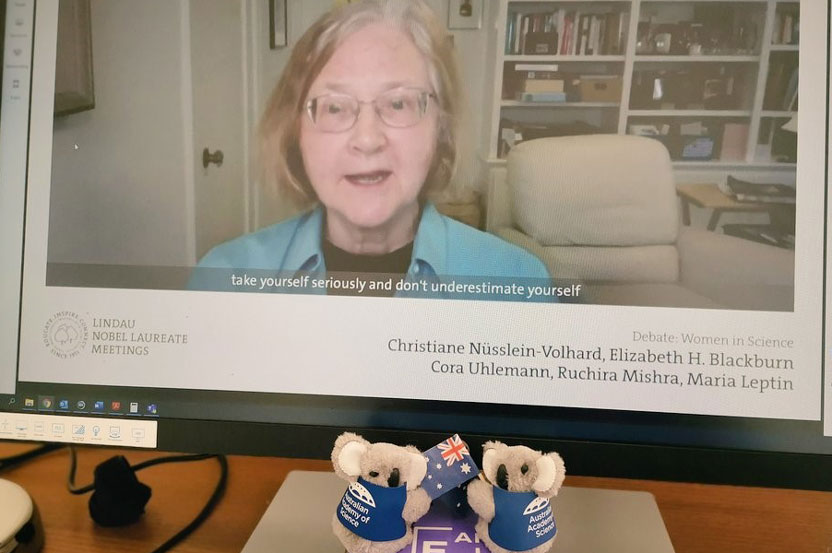
The COVID-19 pandemic has not stopped Australian delegates to the 70th Lindau Nobel Laureates Meeting participating in four days of online discussion and debates with Nobel laureates and other young researchers from around the world at the Lindau Online Science Days. The delegates are recipients of the SIEF–AAS Fellowship to the Lindau Nobel Laureates Meeting, an annual gathering of bright young researchers from around the world and dozens of Nobel prize winners in Lindau, Germany
The 2020 interdisciplinary-themed 70th meeting has been postponed until 2021 due to the pandemic but the 11 Australian participants took part in the Online Science Days from 28 June to 1 July. Five delegates additionally participated in the Sciathon, a 48 hour science marathon to tackle topics under three major themes: implementing the Lindau guidelines, capitalism after coronavirus, and communicating climate change.

Australian delegate Dr Eugene Sachkou after the announcement of the Sciathon results in the Communicating Climate Change. Photo: Eugene Sachkou.
Australian delegate Dr Eugene Sachkou from the University of Queensland was in the winning group of the communicating climate change section of the Sciathon. Their project suggests using a ‘big data approach’ to identify influencers on social media who would have the most effective reach for climate change communication.
Coastal climate researcher Ms Nicole Foster from the University of Adelaide, who posted about her experience on her blog, said “My favourite aspect of the entire experience was that I was able to make connections with scientists around the world regardless of time zones and technology. This has made me so excited for to see what can happen when we meet in person next year.”
And materials chemist Dr Wenyue Zhou from RMIT, describing the experience of meeting Nobel laureates online, said “The Online Science Days really helped me prepare myself for next year’s meeting. Before this, I was excited but very nervous about meeting the Nobel laurates…Attending the Online Science Days made them very familiar to me. Now I see they are human beings, extremely kind, intelligent, humorous human beings.”
The Academy was also featured in the Academic Partners Expo Booth, where we highlighted the experiences of past attendees and Nobel Laureate and Academy Fellow Professor Brian Schmidt in a short video, and gave a presentation followed by a Q&A session with Academy Fellow Professor Jim Williams.
The SIEF–AAS Fellowships are supported by the Science and Industry Endowment Fund. Find out more about the Lindau Aussies.
More work crucial to help our soil recover from bushfires
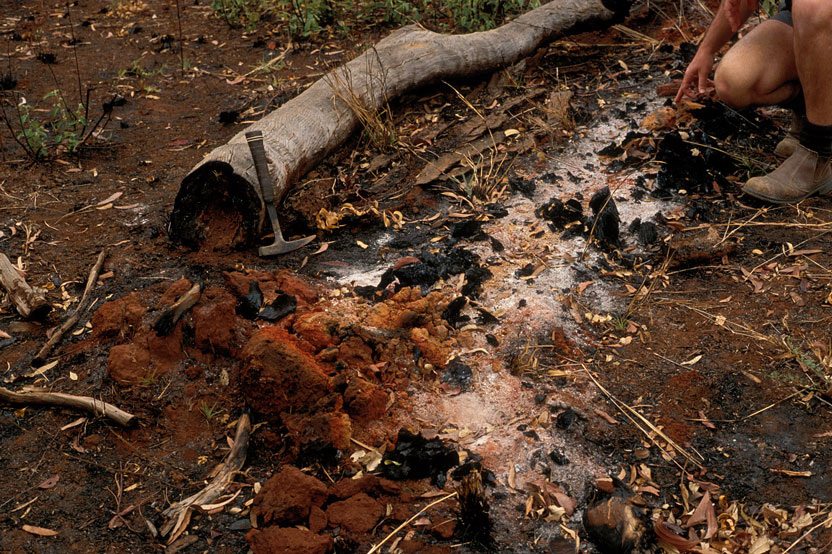
With much of the nation focused on the loss of lives and the destruction of property and wildlife from last summer’s bushfires, the significant damage to Australian soil may have gone unnoticed by many.
With our agricultural productivity and the recovery of native vegetation now at stake, soil experts say that more work is crucial to helping this essential resource recover. They are also calling for a nationally consistent approach to the way soil data is collected, stored and accessed.
The recommendations are part of a bushfire expert brief, Soil Conditions After Bushfires, published today by the Australian Academy of Science.
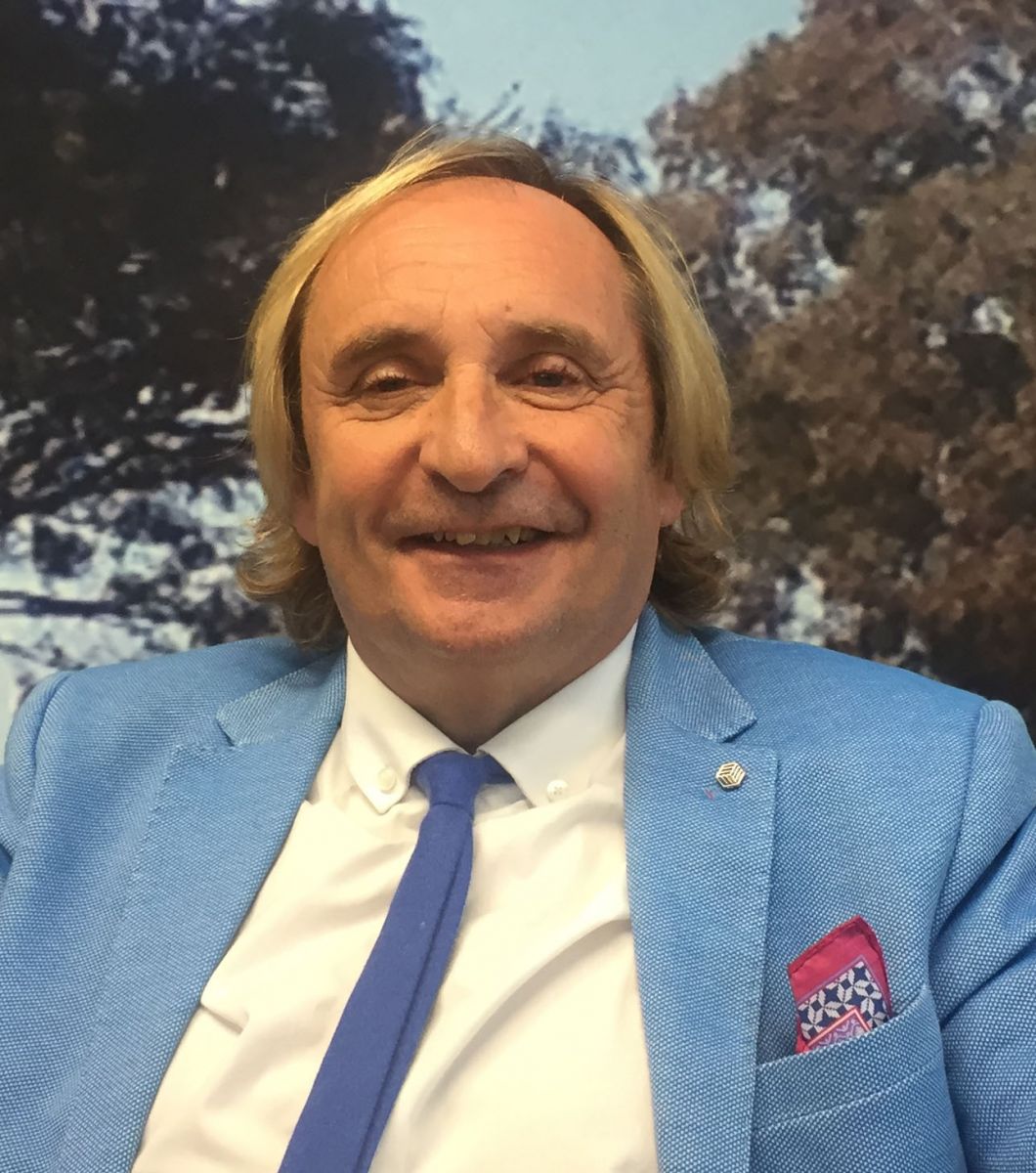
Professor Alexander McBratney. Photo: supplied
Academy Fellow Professor Alexander McBratney, was one of the experts who contributed to the document.
“The bushfires severely damaged millions of hectares of land, not just above ground but the soil beneath us. This has clear implications for soil fertility, Australia’s agricultural productivity and the recovery of native vegetation,” said Professor McBratney, who is based at the University of Sydney.
“As a nation we can do more to monitor our soils. Post-bushfires there are opportunities to improve and implement initiatives to better manage Australian soils as we develop a soils recovery plan.
“A nationally consistent framework for soil data collection, storage and accessibility is important to provide the scientific evidence that underpins policy development,” Professor McBratney said.
The expert brief discusses the effects of bushfires on soil condition. It also highlights research that has found significantly lower nutrient levels, such as phosphate and nitrate, in the soil for up to 80 years following a fire event. Changes to nutrient levels can result in severe deterioration to soil condition with major ecological and functional implications.
At a bush summit last year, Australia’s Prime Minister Scott Morrison acknowledged that Australia’s soils are under strain and highlighted the benefits and importance of good soil management.
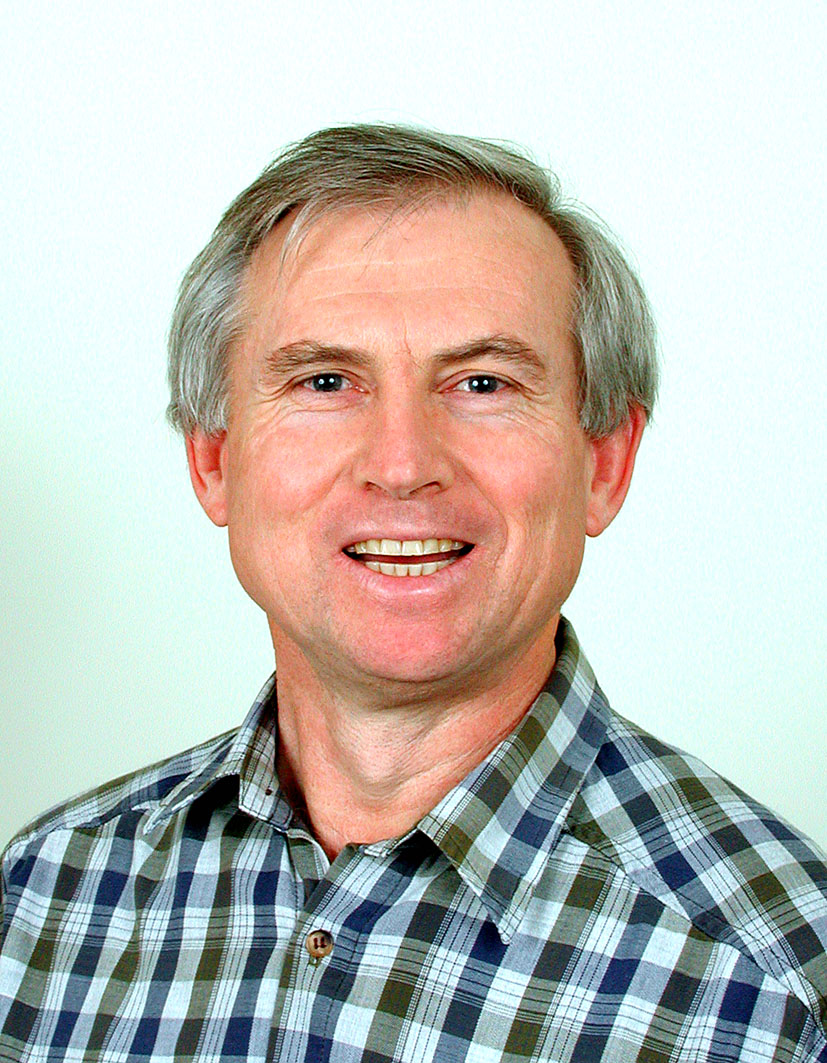
Professor Rob Fitzpatrick. Photo: supplied
Fellow of the Australian Academy of Technology and Engineering, Professor Rob Fitzpatrick from the University of Adelaide, also contributed to the expert brief.
“We need to accurately monitor our soils and ecosystems before fires, and start documenting fire intensity and severity and ensure soil assessment and management are integrated fully into bushfire recovery programs,” Professor Fitzpatrick said.
“The successful recovery of Australia’s soil condition also extends further than the immediate soil ecosystem,” he said.
“Interlinked systems such as biodiversity and conservation programs, agricultural and horticultural industries, and broader ecosystem services will also benefit from better monitoring and management of soil condition.
“We look forward to working with the National Advocate for Soil Health, Major General Michael Jeffery, state governments and other stakeholders, on initiatives to better manage Australian soils.”
The Soil Conditions After Bushfires brief is the first in a series that will be published by the Australian Academy of Science in the coming weeks. Future briefs will cover topics including wildlife monitoring, ecosystem services, human health, and remote sensing and data availability.
Academy hosts conversation with Israeli Nobel Laureate
There’s no way to rush a COVID-19 vaccine, according to Nobel Laureate Professor Aaron Ciechanover. “In the end we shall develop [a vaccine]. There is no doubt about it, but the way, it’s very long and we have to test every step and make sure before we move to the next one, because lives of people are at stake.”
Nobel Laureate Professor Aaron Ciechanover. Image supplied by Technion Australia
Professor Ciechanover made the comments in a recent Academy webinar, held in partnership with Technion Australia and the Embassy of Israel Canberra.
The webinar was held to celebrate Australia and Israel’s bilateral science, research and innovation relationship, which is underpinned by the Australia–Israel Agreement on Bilateral Cooperation in Technological Innovation and Research and Development that was announced in 2017 and came into force in 2018.
In conversation with Academy Chief Executive Anna-Maria Arabia, Professor Ciechanover discussed the future of medicine and cancer research, Israel’s unique entrepreneurial ecosystem, and his own personal journey to winning a Nobel Prize.
In 2004, Professor Ciechanover, together with Professor Avram Hershko and Professor Irwin Rose, received the Nobel Prize in Chemistry for their discovery of the ubiquitin protein. The treatment of cancers and degenerative diseases was transformed by the discovery of how ubiquitin removes unwanted proteins.
“It started with a laboratory in Israel, in some vague idea. It now has become a huge stream of knowledge, pharmaceutical company scientists work on it all over the world. [Did] we know it? No, of course not at the beginning, you’re busy with your problem. We knew that what we are finding is novel, but we didn't know that it’s important.”
Asked what he thought posed the greatest danger to the future of medicine, he replied:
“Climate change. Forget about medicine, [climate change] hasn’t taken a sabbatical during the pandemic. And if we are not going to think about it seriously and globally, we are going to destroy this planet in no time. We don’t notice it because we say, ‘It’s not my business. My children will take care of it’, but it’s coming and it’s accelerating. We should take it extremely, extremely seriously in medicine.”
He also spoke about personalised medicine and how it will change disease treatment.
“Medicine of today, with all its advantages, what I call ‘one size fits all’. It's a pyjama way of treatment … something that we buy in order to warm ourselves up. When we buy, we don’t care much about the size. When the patient comes with a cancer, either we can operate on it, or we bombard the patient with chemotherapy and radiotherapy. That goes well beyond the tissue itself [with] side effects: balding, vomiting, the bone marrow suppression. You’re shooting a fly with a cannon … And what’s happened is that we’ve now started to identify the needle that we can use to punch this fly, and the needle is called our DNA.”
The webinar was opened by Ambassador Mark Sofer of the Embassy of Israel Canberra, and Ori Danieli of Technion Australia.
Academy supports IAP communiqué on global green recovery after COVID-19
The Australian Academy of Science supports the below statement published recently by the InterAcademy Partnership (IAP). The IAP is composed of more than 140 learned academies around the world, including the Australian Academy of Science. In this communiqué, the IAP calls on the global community to ‘build back better’ during and after the pandemic, focusing on a green recovery.
Its key message is that only a low-carbon recovery will simultaneously provide for social equity, the environment, and human health.
The Academy has previously joined with other Commonwealth academies to call on governments for a sustainable recovery from COVID‑19.
Read the full statement below.
Science can ensure social equity, health, and economic benefits
July 7, 2020
The COVID-19 pandemic is imposing devastating health and social costs worldwide. At the same time, the climate emergency demands urgent and resolute action. This is why today, under the umbrella of the InterAcademy Partnership (IAP), 140 medical, scientific and engineering academies from around the world urge world leaders to focus on a green recovery when planning for economic activity after the pandemic. Their key message in their communiqué is that only a low-carbon recovery can generate co-benefits for social equity, the environment, and human health.
“It is clear that health and sustainability should be central to the post-pandemic economic response. Now it is time to make a choice. Either, societies return to the old pathways embedded in high-carbon economies that pose major threats to health and sustainable development. Or seek low-carbon socioeconomic pathways to protect and promote human health and enhance the prospects for an equitable recovery compatible with the commitments in the Paris Climate Agreement,” says Volker ter Meulen, IAP President.
IAP academy members constitute more than 30,000 leading scientists, engineers and health professionals in over 100 countries. IAP’s analysis ‘Global Green Recovery After COVID-19: Using scientific advice to ensure social equity, planetary human health, and economic benefits’ draws on previous work by academies to identify challenges and science-based solutions across multiple sectors to effect fundamental recovery transitions worldwide that support the imperative for rapid decarbonization.
“We must rapidly reduce fossil fuel use and other sources of greenhouse gas emissions, and recognise the value of ecosystem services and of the potential for climate change mitigation policy to bring significant human health benefits,” says Cherry Murray, co-chair, IAP Science. “It has been said before, but it is worth repeating: We need to ‘build back better’,” adds Murray.
“International coordination is paramount, and we must focus our attention on the needs of the most vulnerable. Our recovery actions should take into account existing strategic initiatives, in particular the United Nations’ Sustainable Development Goals and other UN Agreements on biodiversity and climate change. But these urgent priorities necessitate strengthening the capacity to support science-informed decision-making at national, regional and global levels,” says Masresha Fetene, co-chair, IAP Policy.
Noting that the COVID-19 pandemic has accentuated health inequities, with a disproportionate impact on already vulnerable populations, IAP recently joined other health organisations in an open letter to the UN calling for measures to reduce health inequity not only as this pandemic continues, but also in developing plans for preparedness and responsiveness to future threats.
As a follow-up to this letter, IAP President Volker ter Meulen recently spoke alongside the Director-General of the World Health Organization (WHO) Tedros Adhanom Ghebreyesus and others at the launch of the Global Sustainable Health Equity Movement, and IAP’s new analysis points out that also the green recovery must be rooted on fair and equitable strategies, leaving no one behind.
The new communiqué, available online at www.interacademies.org/greenrecovery, was signed by the Steering Committee members of the InterAcademy Partnership:
- Volker ter Meulen, IAP President
- Depei Liu, IAP President and Co-chair, IAP Health
- Margaret Hamburg, Co-chair, IAP Health
- Krishan Lal, Co-chair, IAP Science
- Cherry Murray, Co-chair, IAP Science
- Masresha Fetene, Co-chair, IAP Policy
- Richard Catlow, Co-chair, IAP Policy.