




Academy hosts germline editing meeting

A roundtable discussion on germline editing in humans was held at Shine Dome in Canberra, including the Minderoo Foundation and the Australian Academy of Science.
The group heard presentations from Australian Academy of Science Fellows on the scientific, medical, legal, social and ethical perspectives of germline editing.
Germline editing involves making changes to the genome of an organism that can then be passed on to offspring.
They heard of the small set of uses where germline editing would have clear therapeutic benefit, as well as numerous examples of where the boundary between genetic treatment and genetic enhancement is becoming increasingly blurred.
With the benefit of this expertise, they then considered the sufficiency of the current policy landscape on germline editing in Australia.
While research involving germline editing is currently banned in Australia, research is continuing overseas which will likely impact Australia. Also, the discussion on germline editing in Australia is likely to be reignited by the policy debate about to commence through the NHMRC on mitochondrial therapy, where the mitochondria of cells are edited to treat diseases.
Different policy options were considered, and they concluded that there is a clear need for leadership in developing science-based frameworks and principle to guide the policy debate on germline editing in Australia and the world.
Australia needs a policy and legal landscape that facilitates science to continue making critical discoveries for human well-being and progress but has the foresight to mitigate both unintended consequences and 'spoiler' events that would render the policy useless.
It is the role of the AAS to understand the science, understand the potential – whatever the perceived consequences – and enunciate a set a framework and principles that reflect the best knowledge. This will require detailed research and input from across the learned Academies in Australia.
The Australian Academy of Science intends to work with partners in social science and medicine formulate a statement of principles on germline genetic editing.
The meeting was attended by:
Academy Fellows
- Professor John Shine (Academy President)
- Professor Ian Chubb
- Professor Simon Foote
- Professor Ian Frazer
- Dr TJ Higgins
- Professor Anne Kelso
- Professor Patrick Tam
- Professor Bob Williamson.
Other delegates
- Dr Raj Bhula
- Dr Gaetan Burgio
- Dr Sara Howden
- Professor Emma Kowal
- Associate Professor Tamra Lysaght
- Associate Professor Megan Munsie
- Professor Diane Nicol
- Professor Alice Pébay
- Professor John Rasko
- Associate Professor Bernadette RichardsProfessor Julian Savulescu
- Professor Ingrid Winship
STEM Equity Monitor will help drive universal changes in gender equity
The Australian Academy of Science welcomes the Advancing Women in STEM 2020 Action Plan announced today by the Minister for Industry, Science and Technology, the Hon Karen Andrews MP.
Academy President Professor John Shine said the action plan is a key step to deliver the vision of Australia’s 10-year plan for Women in STEM. The plan was developed by the Academy in partnership with the Australian Academy of Technology and Engineering following wide ranging consultation with the STEM sector.
“The Government is clearly committed to delivering on the vision of the 10-year plan. Their action plan is focused on education, careers and visibility and a number of important initiatives on changing practice, data and evaluation,” Professor Shine said.
“If you can’t measure it, you can’t improve it. The 10-year plan for Women in STEM makes clear that most gender equity programs in STEM in Australia, apart from a handful of programs such as the Science in Australia Gender Equity initiative, lack useful performance data and formal evaluation.
“The STEM Equity Monitor will play a significant role in tracking the impacts of initiatives across the STEM sector and inform the systemic changes required to achieve gender equity,” Professor Shine said.
The Academy also welcomes:
- the development of national evaluation guidelines for projects that support girls’ and women’s participation in STEM. Directly responding to the Women in STEM 10-year plan, these guidelines will enable program and initiative owners to undertake self-evaluation that is consistent and comparable across Australia
- the Australian peer-reviewed trial of anonymised ranking in the assessment of research funding proposals, to be conducted by Women in STEM Ambassador Lisa Harvey-Smith.
“No single sector or organisation can solve the under-representation of women in STEM nor remove the barriers they face,” Professor Shine said.
“Let’s celebrate our successes this International Women’s Day but also acknowledge that we have a long journey ahead when it comes to achieving gender equity and diversity in STEM.
“We will continue to work with the Government and the STEM sector to achieve the vision of the Women in STEM 10-year plan and to keep driving this systemic change.”
Ten young scientists to represent Australia at Lindau Nobel Laureate meeting
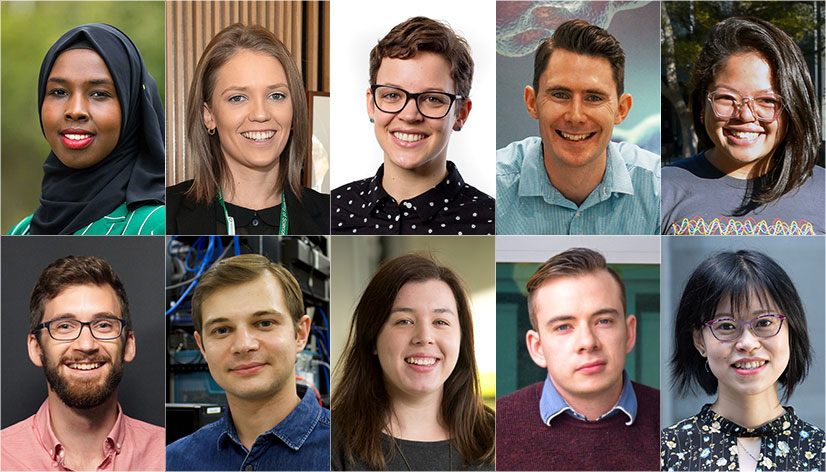
These young scientists from Australia will be part of a group of 660 young scientists and 68 Nobel Laureates at the Lindau Nobel Laureates Meeting in Germany.
[UPDATE: The 70th Lindau Nobel Laureate Meeting, scheduled for June and July 2020, has been postponed to 2021. The decision was made by the committees of the Foundation and the Council for the Lindau Nobel Laureate Meetings.]
Ten outstanding early-career researchers have been selected to attend the highly prestigious annual gathering of Nobel Laureates and emerging scientists from around the world.
The delegates will represent Australia at the 70th Lindau Nobel Laureate Meeting in Germany. They are part of a group of 660 young scientists from 101 countries who will meet with 68 Nobel Laureates from the fields of chemistry, physics, and medicine and physiology, including Academy Fellows Professor Brian Schmidt and Professor Elizabeth Blackburn.
The meeting will provide an opportunity for the young scientists to share their research, experiences and ideas with and gain inspiration from fellow emerging scientists and Nobel Laureates.
The Australian delegation will be led by renowned Australian mathematician and Academy Fellow, Emeritus Professor Cheryl Praeger.
The Australian PhD candidates and postdoctoral researchers attending are:
- Dr Ifrah Abdullahi—Postdoctoral Fellow, La Trobe University, who investigates neurodevelopmental disorders in migrant and refugee communities
- Ms Nicole Foster—PhD candidate, University of Adelaide, who develops tools for the management and restoration of coastal plant communities facing climate change
- Dr Emily Kerr—Postdoctoral Fellow, Deakin University Institute for Frontier Materials, who works on platforms for the diagnosis and management of chronic kidney disease
- Dr David Klyne— Postdoctoral Fellow, University of Queensland, whose research in neuro-immunology focuses on understanding acute to chronic pain
- Ms W. Y. Sarah Lau—PhD candidate, ARC Centre of Excellence for Engineered Quantum Systems, who studies quantum technologies for secure communication channels
- Mr Lukas Michalek—PhD candidate, Queensland University of Technology, whose research focuses on the surface characterisation of soft matter
- Dr Yauhen (Eugene) Sachkou—Postdoctoral Fellow, ARC Centre of Excellence for Engineered Quantum Systems, who researches superconducting circuits, quantum fluids and optomechanics
- Ms Kate Secombe—PhD candidate, University of Adelaide, who specialises in gastrointestinal physiology and oncology
- Mr Adam Sutton—PhD candidate, University of South Australia, who specialises in green analytical chemistry applicable to fields such as nanotechnology
- Dr Wenyue Zou— Postdoctoral Fellow, RMIT University, who focuses on applied chemistry research with applications such as sensor technologies
These researchers were nominated by the Academy and selected by the Council for the Lindau Nobel Laureate Meetings. They will receive a grant to enable their attendance at the event, which runs from 28 June to 3 July, through the generous support of the Science and Industry Endowment Fund (SIEF).
The delegates will also have the opportunity to join a SIEF Research Innovation tour visiting laboratories and businesses in Germany.
Gender equity conference demonstrates progress and inspires change
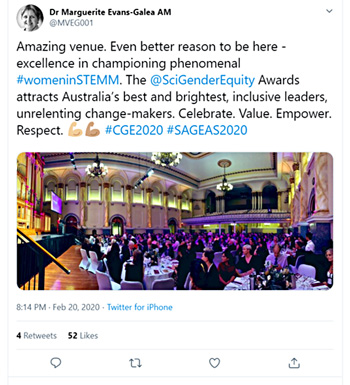
The Catalysing Gender Equity 2020 Conference, held on 20 and 21 February in Adelaide, clearly demonstrated the success, impact and growth potential for inclusion and diversity in STEM. The two-day conference was hosted by the Academy in collaboration with Science in Australia Gender Equity (SAGE).
The conference was guided by the Women in STEM Decadal Plan that was launched in April last year, and brought together representatives from across research, industry, education and government to celebrate success and highlight key action areas to achieve change.
Focus on challenging issues
Delegates participated in a variety of sessions, each focusing on progressing and implementing strategic recommendations and opportunities in the decadal plan. The 12 workshops focused on challenging and persistent issues such as merit, measuring success, impact of equity actions, engaging men and approaches to intersectionality.
Twelve inspiring and exceptional changemakers from the STEM Women online community were enabled to attend and speak at the conference, thanks to a generous donation from Academy Fellow Professor Michelle Coote.
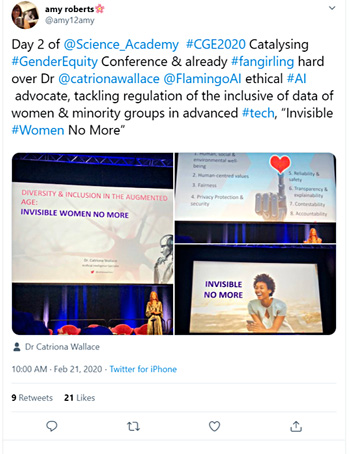
Inspiring plenary speakers included the Australian Government Women in STEM Ambassador, Professor Lisa-Harvey Smith, who spoke about the need to turn actions into equity, accountability and the critical work she is undertaking to bring about change as Ambassador. Delegates also heard from the inspiring and insightful Dr Catriona Wallace, Founder and Executive Director of Flamingo AI, on the urgent need for a gender lens in the augmented age.
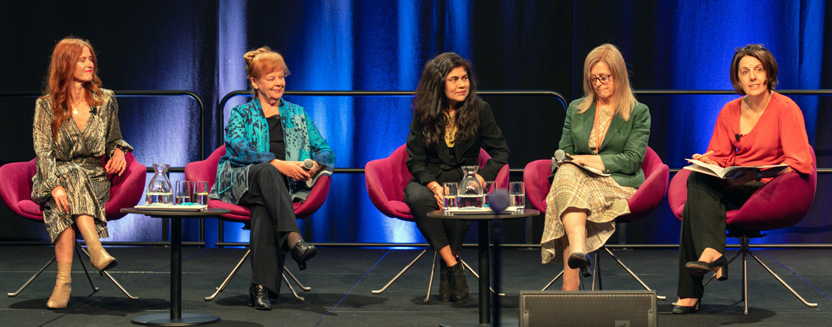
Another highlight was the panel discussion featuring inspirational stories from eminent women in STEM, including Academy Fellows Professor Jenny Graves of La Trobe University and Professor Veena Sahajwalla of UNSW Sydney, Academy Chief Executive Anna-Maria Arabia, Chief Scientist for South Australia Professor Caroline McMillen, and Dr Wallace.
Male Champions of Change founder Elizabeth Broderick facilitated a panel discussion featuring six leaders from the Male Champions of Change in STEM: Dr Adi Paterson of ANSTO, Dr Larry Marshall of CSIRO, Academy Fellows Professor Brian Schmidt of the Australian National University and Professor Tanya Monro of Defence Science and Technology, Dr James Johnson of Geoscience Australia, and Dr Bronwyn Evans of Engineers Australia. The STEM leaders discussed how leadership and accountability is key to putting equity theory into practice.
Bronze Awards for SAGE members
The conference coincided with the 2020 SAGE Awards dinner that celebrated the 11 recent recipients of the Athena SWAN Institutional Bronze Awards. These awards recognise an institution’s commitment to advancing the careers of women, trans and gender diverse individuals in science, technology, engineering, maths and medicine. Forty-five Australian higher education and research institutions have completed the SAGE pathway to accreditation so far, with 39 of these organisations being awarded the Athena Swan Institutional Bronze Award.
Catalysing Gender Equity 2020 was made possible by the generous support of the conference partners: UniBank, the Australian Government Department of Defence, Edith Cowan University, Flamingo AI and Queensland University of Technology.
In summing up, Academy Chief Executive Anna-Maria Arabia said that “Inclusion is a shared responsibility—not just the organisations and leaders and programs, but individual responsibility”. The Academy looks forward to working with all organisations to progress the outcomes from the event and fulfill the vision of the Women in STEM Decadal Plan.
Academy awards reflect the excellence and diversity in Australian science
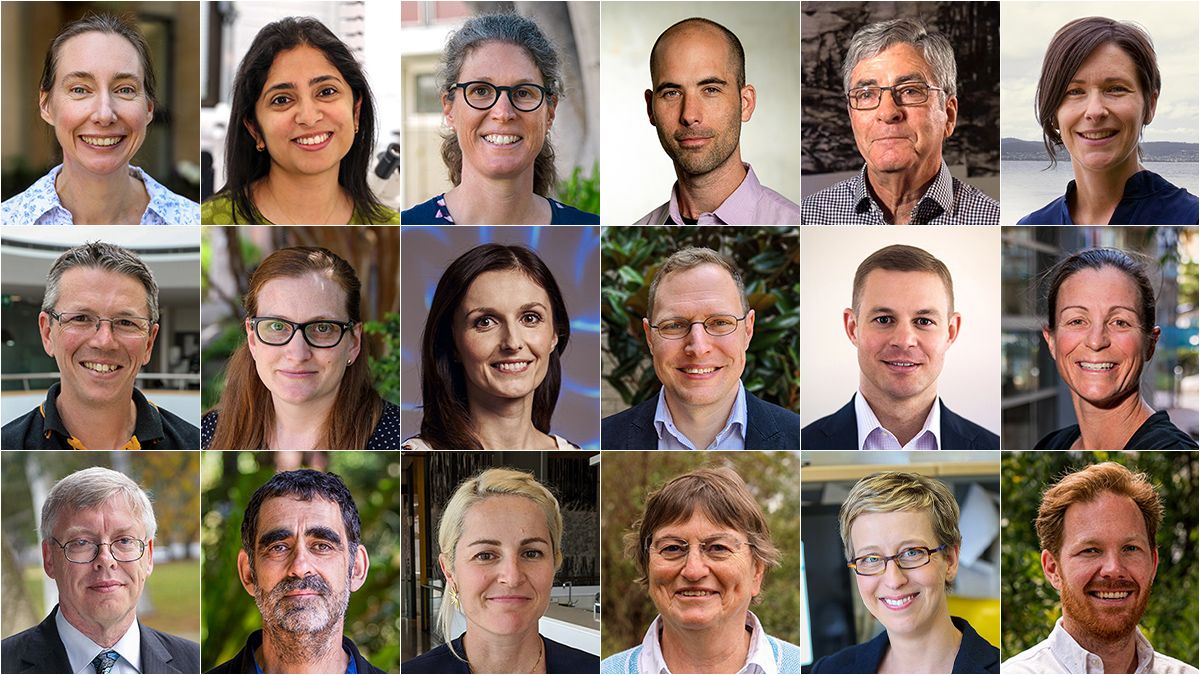
The Australian Academy of Science's 2020 honorific awardees
Outstanding contributions to science have been recognised by the Australian Academy of Science today with 18 current and future superstars receiving prestigious 2020 honorific awards.
The scientists’ discoveries cross the breadth of research including new screening approaches to catch the early signs of dementia; the differences between land-based and seafloor volcanic eruptions; and engineering solutions for the complex challenges associated with offshore oil, gas and renewable energy infrastructure.
Ten of the awards go to women while men receive eight of the awards.
Professor Allen Nutman from the University of Wollongong has been awarded one of the Academy’s top career honours, the Mawson Medal and Lecture.
He’s considered one of the leaders in understanding the evolution of early Earth and his techniques have radically reshaped our understanding of Greenland’s geology. He also spends time educating the next generation of scientists and said their work has never been more important.
“Unfortunately, we live increasingly in something called the post-truth world where a lie is given as equal weight as truth, so science matters,” said Professor Nutman.
Understanding dark matter is the ultimate challenge for many astrophysicists including Professor Nicole Bell from the University of Melbourne. The mid-career researcher and theoretical physicist is one of two recipients of the Nancy Millis Medal for Women in Science.
Her research focuses on formulating a mathematical description of dark matter.
“We have incredibly precise theories that describe five per cent of the universe but the rest of it is unknown,” said Professor Bell.
“In some sense the search for dark matter is a needle in a haystack challenge, but we’ve got more experimental tools than ever before to find that needle.”
Early-career researcher Associate Professor Marina Pajic from the Garvan Institute of Medical Research and UNSW Sydney is the recipient of the Ruth Stephens Gani Medal.
For the past decade she’s been trying to understand the genetic complexities of pancreatic cancer. Her work centres on identifying the genomic mechanism behind treatment failure and developing new personalised treatments for the disease.
Her team has shown some tumours are characterised by specific genetic signatures that may respond to agents already being used to fight some other cancers.
President of the Australian Academy of Science, Professor John Shine, congratulated all the award winners for their inspiring research.
“Recognising outstanding scientific contributions is important, as award recipients are the STEM role models for the next generation,” Professor Shine said.
“These awards shine a spotlight on the leading and diverse applied and basic research happening throughout the country.
“The Academy continues to seek to increase the diversity of nominees for all our grants and awards and this is reflected in this year’s honorific awardees.”
The Academy’s 2020 honorific awards go to:
Career honorifics (for lifelong achievement)
- David Craig Medal—Dr Graeme Moad, CSIRO
- Haddon Forrester King Medal and Lecture—Professor Ian Campbell, ANU
- Macfarlane Burnet Medal and Lecture—Professor Marilyn Renfree, University of Melbourne (as previously announced)
- Mawson Medal and Lecture—Professor Allen Nutman, University of Wollongong
Mid-career honorifics (8–15 years post-PhD)
- Gustav Nossal Medal for Global Health—Adjunct Professor Alexandra Martiniuk, University of Sydney
- Nancy Millis Medal for Women in Science—Associate Professor Kate Schroder, University of Queensland and Professor Nicole Bell, University of Melbourne (two recipients)
Early-career honorifics (up to 10 years post-PhD)
- Anton Hales Medal—Dr Jan Zika, UNSW Sydney
- Christopher Heyde Medal—Professor Ryan Loxton, Curtin University and Dr Jennifer Flegg, University of Melbourne (two recipients)
- Dorothy Hill Medal—Dr Rebecca Carey, University of Tasmania
- Fenner Medal—Associate Professor Michael Bode, Queensland University of Technology
- Gottschalk Medal—Associate Professor Muireann Irish, University of Sydney
- John Booker Medal—Associate Professor Britta Bienen, University of Western Australia
- Le Févre Medal—Associate Professor Ivan Kassal, University of Sydney
- Ruth Stephens Gani Medal—Associate Professor Marina Pajic, Garvan Institute of Medical Research/UNSW Sydney
- Pawsey Medal—Associate Professor Adam Deller, Swinburne University of Technology
- Frederick White Medal—Professor Madhu Bhaskaran, RMIT University
The majority of the honorific awards will be presented at the Academy’s annual celebration of science, Science at the Shine Dome on Thursday, 28 May 2020.
Read more about each of the Academy’s 2020 honorific awardees
Know an amazing Australian scientist? Nominate them for an award
Nominations are now open for the Academy’s 2021 honorific awards, research conferences, research awards and travelling fellowships.
Two brand new career awards are open in the Academy’s 2021 award round. These awards, the Ruby Payne-Scott Medal and Lecture and the Suzanne Cory Medal, honour two of Australia’s pioneering women scientists.
Changing our attitude to ‘waste’
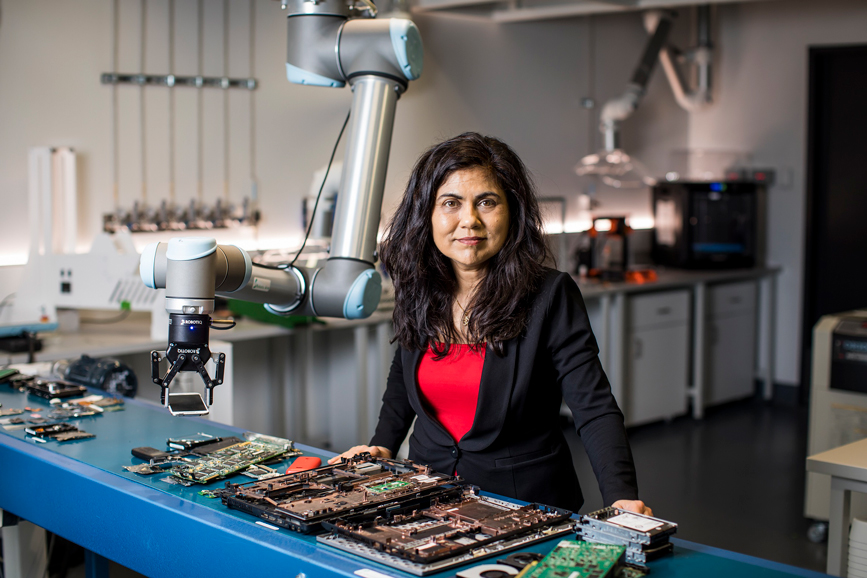
Australians must start treating waste as a resource rather than a problem, says recycling science expert Professor Veena Sahajwalla.
In a feature published today Professor Sahajwalla welcomed plans by Federal and State Governments to develop a so-called ‘circular economy’ but said Australians also need to change the way we think about waste.
The role of science to help drive a circular economy is just one of the issues that will be explored in a new initiative, Science for Australians, launched today by the Australian Academy of Science.
“Australians may be shocked to know that on average we each generate 2.7 tonnes of waste each year,” says Professor Sahajwalla, who is Director, Centre for Sustainable Materials, Research and Technology (SMART) at UNSW Sydney and Director of the NSW Circular Economy Innovation Network.
“But waste doesn’t mean rubbish! Among all that waste is an opportunity to reuse, recycle and reform the materials and products we no longer use for new applications.”
Professor Sahajwalla – who joins 200 leaders in Canberra tomorrow (Monday 2 March) for a national summit to discuss Australia’s plastic waste problem and identify new solutions to the challenge – has developed breakthrough micro-recycling technologies to reform waste into new materials and products.
Academy President Professor John Shine AC PresAA said the Science for Australians series will highlight how science benefits all Australians and how it can be used to inform policy.
“Australians are looking for trustworthy information and answers for how science can help in these challenging times we are facing as a nation. This is reflected in a record-breaking near 250,000 unique users to our website in January.”
The initiative will also include a series of features for policy makers to highlight the conditions that are needed to make science thrive in Australia.
“Globally STEM will play an increasingly important role in industry, in the economy and in the way communities shape their future. It is important that an environment is created within which we can support our scientific workforce, remain globally competitive, and ensure science and industry have the tools they need to work together and prosper,” says Professor Shine.
“As part of the initiative, the Academy will also invite discussion about issues that are important to building the capacity of science to support Australia now and into the future.”
Other topics to be explored in the Academy’s Science for Australians series include: How can science make our energy requirements more sustainable? Is gene editing food crops the only way to feed the population? How do we advance communications technologies and ensure national security is not compromised?
Academy announces Indigenous travelling scientist awards
Dr Michael-Shawn Fletcher and Mr Frank Loban are the recipients of the Australian Academy of Science Aboriginal and Torres Strait Islander Scientist Travelling Research Award for 2020.
Dr Fletcher, a senior lecturer at the University of Melbourne, will use the award to visit researchers at Udayana University in Denpasar and field sites at Lakes Buyan and Beretan in Bali. His work looks at the long-term interactions between humans and climate using environmental data.
Lake sediment cores provide a natural archive or ecological record of what happens before, during and after times of environmental change—including changes in the rainfall associated with summer monsoons over northern Australia and South-East Asia over the past 1,000 years.
Dr Fletcher is aiming to use lake sediment cores to help track the response of the East Australian Summer Monsoon to changes in solar radiation during the Little Ice Age. There is strong evidence that the monsoon failed to reach northern Australia during this time, having a profound impact on the people and vegetation of the region.
Mr Loban, a PhD student at James Cook University, will use the award to visit New Zealand. He will meet with and learn from members of Terra Moana New Zealand (the largest Maori-owned fisheries company in New Zealand) about their fisheries management and governance framework with the aim of applying this knowledge to assist in managing the Torres Strait fisheries into the future.
“The key objective of my project is to investigate existing national and international research knowledge on the management of fisheries that have recognised Indigenous interests, how this knowledge interfaces with commercial enterprises, and sustains the health of the fisheries and the cultural traditions of the Indigenous people,” Mr Loban said.
The award recognises research primarily in the natural sciences by outstanding Aboriginal and Torres Strait Islander early- and mid-career scientists and PhD students. It also supports the expansion and growth of each scientist’s research networks and international knowledge exchange, through visits to relevant international centres of research.
The award is part of the Academy’s national effort to champion diversity and inclusion in the sciences and empower the next generation of scientists. This will strengthen the voice of science and support scientific excellence.
This award recognises research primarily in the natural sciences, but also supports interdisciplinary and socio-cultural research that incorporates the social sciences and humanities. Applications are now open for the 2021 award. More information about the award.
Nominate now for the Academy’s 2021 awards
Above: Professor Laura Mackay was awarded the 2019 Gottschalk Medal by the Academy and later in the year a Prime Minister’s science prize.
Shining a light on researchers
Nominations are now open for the Academy’s 2021 honorific awards, and applications open for support for research conferences, research awards and travelling fellowships.
These awards and funding opportunities shine a light on researchers who are making outstanding contributions to science and progressing the advancement of science in Australia.
The awards recognise remarkable achievements in research fields including Earth sciences, biology, physics, mathematics, chemistry, experimental biomedicine, genetics and more.
According to Dr Lara Malins, one of many award recipients featured recently in Science Matters magazine, the JG Russell Award she received is more than just extra funding. “It was just really fantastic to have that support. Awards that recognise early-career researchers set them on a trajectory that helps them be more successful.”
The Academy is committed to celebrating and supporting diversity. It is seeking nominations of outstanding scientists from all career stages, backgrounds and genders, and strongly encourages more nominations of women for all awards, in particular the career and mid-career honorific awards.
Two new awards
Two brand new career awards are open in the Academy’s 2021 award round. These awards, the Ruby Payne-Scott Medal and Lecture and the Suzanne Cory Medal, honour two of Australia’s pioneering women scientists.
The closing date for honorific award nominations is 1 May 2020.
The closing date to apply for research conferences, research awards and travelling fellowships is 1 June 2020.
Find out more about the Academy’s awards, including how to nominate or apply.
Academy launches two new career awards for 2021
Two brand new career awards will form part of the Academy’s 2021 award round, honouring two of Australia’s pioneering women scientists.
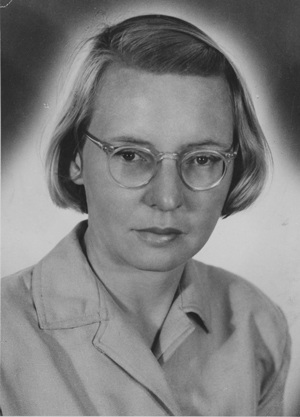
Ruby Payne-Scott (1912–1981) was a pioneer in radiophysics and radio astronomy.
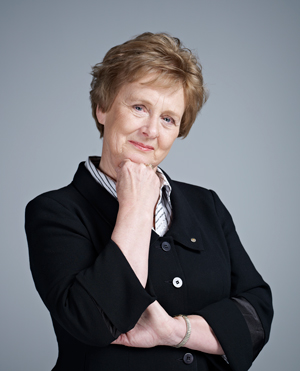
Ruby Payne-Scott (1912–1981) was a pioneer in radiophysics and radio astronomy.
Ruby Payne-Scott Medal and Lecture for women in science
The Ruby Payne-Scott Medal and Lecture for women in science recognises researchers of the highest standing in the physical and/or biological sciences.
Along with the Macfarlane Burnet and Matthew Flinders medals, it is one of the most prestigious career awards of the Academy and honours Ruby Payne-Scott’s pioneering contribution to radiophysics and radio astronomy. The lecture is given at an annual general meeting of the Academy and complements that of the other prestigious awards.
Suzanne Cory Medal for research in the biological sciences
The Suzanne Cory Medal recognises outstanding research in the biological sciences (initially excluding the applied medical sciences).
It is a career award that honours the contributions made to science by Professor Suzanne Cory AC FAA FRS who, as a molecular biologist, made major contributions to understanding the genetic causes of cancer. Professor Cory was President of the Academy from 2010 to 2014.
“I am thrilled that the Academy has named this new medal in my honour. The award enables the Academy to highlight the truly remarkable advances being made by the life sciences in our understanding and appreciation of our extraordinary world,” Professor Cory said.
Both awards are made annually, and are restricted to candidates who are normally resident in Australia and for research conducted mainly in Australia.
Find out more about the Academy's awards, including how to nominate.
2020 J G Russell and Douglas and Lola Douglas awardees
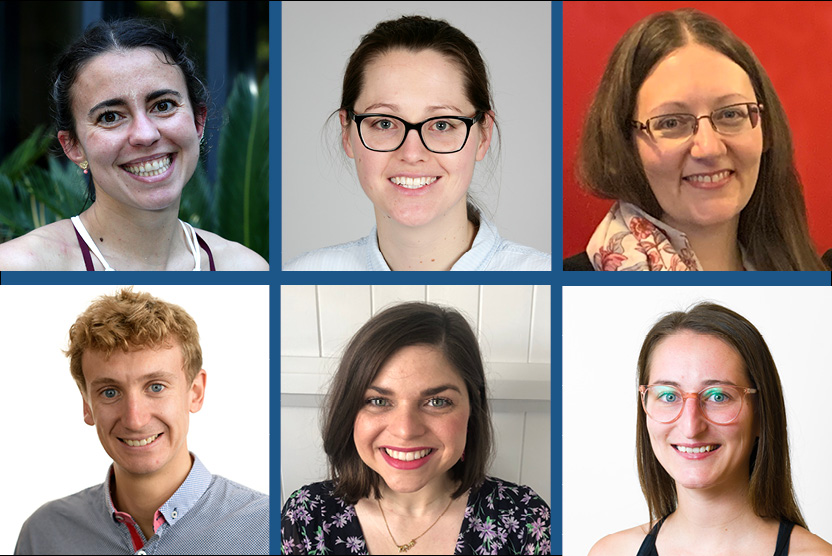
(From L-R) Recipients of the 2020 J G Russell award: Dr Blanca del Rosal Rabes, Dr Annie Colebatch, Dr Laura Grogan, Dr James Baker. Winners of the 2020 Douglas and Lola Douglas Award: Dr Emily Papadimos, Ms Roxanne Jones
The Academy is proud to announce the recipients of two prestigious top-up awards, the J G Russell Awards and the; Douglas and Lola Douglas Scholarships in Medical Science
The 2020 J G Russell Awardees
The J G Russell Award is for highly ranked Australian Research Council Discovery Early Career Researcher Awardees, topping up their existing funding. It is aimed at financially helping talented younger researchers in the basic sciences as a token of the community’s regard for them. It recognises the costs involved in experimental research, and can be used towards the costs of equipment, maintenance, and travel.
Dr Blanca del Rosal Rabes, Swinburne University of Technology
$7000
Dr del Rosal's research aims to develop a contactless method based on near-infrared (NIR) light to get real-time maps of the temperature of the nervous system in living animals, to reveal the links between local heating and neural function. She will use the award to improve and expand her spectroscopy system to use laser sources, allowing her to study different fluorescent nanomaterials for use in research.
Dr Annie Colebatch, Australian National University
$7000
Dr Colebatch's research focuses on using liquid organic hydrogen carriers (LOHCs), which can release energy on demand and be “refuelled”, to meet the challenge of clean energy. She will use the award to purchase a second pressure reactor to facilitate multiple students conducting experiments concurrently, allowing flexibility in project design and improving productivity.
Dr Laura Grogan, Griffith University
$7000
Dr Grogan's research aims to model the relationship between tolerance, and resistance of, chytridiomycosis (an infectious disease that affects amphibians worldwide) in Fleay’s, Great and Giant Barred frogs. She will use the award to genetically sequence the tissues that are involved in immune response, allowing her to examine a greater range of genes related to immunity.
Dr James Baker, University of Sydney
$6940
Dr Baker studies soil erosion driven by flowing fluids with the aim of predicting, and ultimately preventing, intense soil loss or problematic build-up of sediment. He will use the award to fund a two-day collaboration of Australian researchers, as well as for new X-ray equipment for measuring 3D velocities and real-time positions of eroded particles.
The 2020 Douglas and Lola Douglas Awardees
The Douglas and Lola Douglas Scholarship in Medical Science for PhD candidates awarded a National Health and Medical Research Council (NHMRC) Postgraduate Scholarship, topping up their existing funding to cover costs of small items of equipment, research materials, travel, or research assistance. It was made possible through a generous bequest made by Lola Rachel Maude Douglas, a philanthropist with a keen interest in medical research. One of her great wishes was to support young researchers and this bequest enables the Academy to help to fulfil this wish.
Ms Roxanne Jones, Australian National University
$14,000 (over two years)
Ms Jones' research aims to understand the health and wellbeing of Aboriginal and Torres Strait Islander children admitted to paediatric intensive care units, through a quantitative analysis of a national dataset and supplemented by interviews with parents of those children admitted. She will use the award to attend an international conference, undertake professional development, and travel to interview study participants across Australia.
Dr Emily Papadimos, Menzies School of Health Research
$7,000 (with possibility of second year $7,000 funding, if requested)
Dr Papadimos' research looks at understanding the impact of in-utero diabetes exposure on early childhood growth outcomes and cardio-metabolic risk, which could help identify Aboriginal and Torres Strait Islander children who would benefit from early intervention. She will use the award to fund critical research equipment, training and travel in order to collect better data and perform health assessments.