




Institutions recognised for work to eliminate gender bias

Thirteen Australian institutions have been recognised for their work to eliminate gender bias.
Thirteen Australian institutions have been recognised today for their efforts to improve gender equity and diversity, receiving Athena SWAN Institutional Bronze Awards as part of the Science in Australia Gender Equity (SAGE) initiative.
SAGE is a partnership between the Australian Academy of Science and the Australian Academy of Technology and Engineering.
The awardees, listed in alphabetical order, are:
- Australian National University
- Deakin University
- Federation University
- Flinders University
- La Trobe University
- Macquarie University
- Royal Melbourne Institute of Technology
- South Australian Health and Medical Research Institute
- The George Institute for Global Health
- University of Queensland
- University of South Australia
- University of Sydney
- Western Sydney University
Minister for Industry, Science and Technology Karen Andrews congratulated members of the second cohort to achieve accreditation.
“Our Government is committed to increasing the number of women in STEM, and our universities and institutions must be at the forefront when it comes to setting an example,” Minister Andrews said.
“SAGE’s work is an important part of our Women in STEM Strategy and Women in STEM Decadal Plan and that’s why we included a further $1.8 million toward the SAGE initiative in the 2019-20 Budget.”
Executive Director, SAGE, Dr Wafa El-Adhami, said this is the second group of the 45-strong SAGE member institutions from the higher education and research (HER) sector to complete the Athena SWAN Institutional Bronze process.
“The Bronze Award recognises an institution’s work to set solid foundations for their journey to transformative change; it sets them on the course to Silver and Gold awards,” Dr El-Adhami said.
“This follows the inaugural accreditation of 15 organisations in December last year, and I extend my sincere congratulations to all awardees for their commitment to gender equity in the higher education and research sector in Australia.”
Bond University, Burnet Institute, James Cook University and the University of Tasmania were also recognised for their progress to date towards Bronze Award accreditation and their continued commitment to SAGE.
For more information visit the SAGE website. www.sciencegenderequity.org.au
Dr Jia Wu awarded Heidelberg Laureate Forum Fellowship 2019
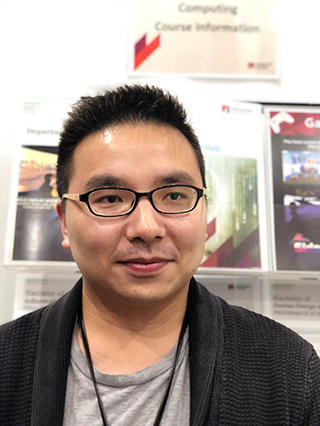
Dr Jia Wu of Macquarie University was selected by the Academy to attend the prestigious Heidelberg Laureate Forum in Germany this month
Dr Jia Wu, an early-career computer scientist from Macquarie University has been selected by the Australian Academy of Science to represent Australia at the highly prestigious 7th Heidelberg Laureate Forum in Germany from 22–27 September.
The Forum brings together 200 young researchers in mathematics and computer science for a week of scientific exchange with the recipients of the disciplines’ most prestigious prizes: the Abel Prize, ACM A.M. Turing Award, ACM Prize in Computing, Fields Medal and the Nevanlinna Prize.
Dr Wu’s work on artificial intelligence and mining data with complex structures has earned international recognition in the field. In his research, he aims to solve long-term problems such as protecting the cybersecurity of Australian business, industry, and society.
In his short career, Dr Wu has proved to be a talented and energetic researcher. He has won a number of awards for his work including the Best Paper Award in Data Science Track (SIAM International Conference on Data Mining 2018) and Best Student Paper Award (IEEE International Joint Conference on Neural Networks 2017). He also serves as the Associate Editor for the top-tier data mining journal ACM Transactions on Knowledge Discovery from Data.
Dr Wu sees the Forum in Germany as “a good opportunity to establish international collaboration with world-class researchers and institutions and will allow young researchers to share and stay abreast of international knowledge and expertise, increasing the competitive advantage of early career research networks.”
The Academy’s Heidelberg Laureate Forum Fellowship is open to young researchers at all phases of their careers: undergrad, PhD or postdoc.
Lawyers and scientists come together to discuss climate change
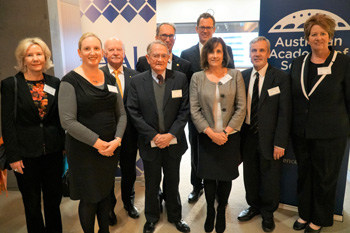
Panel moderator and speakers with the Presidents of the Australian Academy of Science and the Australian Academy of Law.
The Australian Academy of Science and the Australian Academy of Law jointly sponsored a symposium on climate change and the law at the Federal Court Sydney on 22 August.
It was based on a hypothetical set of facts. The moderator was Justin Gleeson SC, who questioned a panel of three Fellows from each Academy.
Below are some extracts of the panellists' responses to questions posed during the discussion:
University of Sydney Law Professor Rosemary Lyster:
“So it really is a question of why governments continue to approve new coal mines because governments signed up in 1992 under international law to the United Nations framework convention on CC where they agreed to do everything possible to bring down greenhouse gas emissions and to adapt to the impacts of climate change.
“What decision makers need to do, when they are considering whether or not to grant permission to new coal mines is to take into account international law, the scientific evidence and they need to interpret the statutes under which they are either going to grant or not grant consent.
“Most statutes have a legal requirement that decision makers take into account, in one way or another, the principles of ecologically sustainable development.”
Australian National University Emeritus Professor Will Steffen:
“If Australia was serious about the Paris target no new fossil fuel developments, be it coal, gas, unconventional gas or oil are permissible. We already have far more carbon facilities in operation today than we need to blow the Paris budget.”
Macquarie University Pro Vice-Chancellor (Research) Professor Lesley Hughes:
“To argue that you can ship off coal somewhere else to be burnt and therefore absolve oneself of responsibility is morally unacceptable.”
The Panel consisted of:
- Professor Lesley Hughes, Pro Vice-Chancellor (Research), Macquarie University
- Professor David Karoly FAA, Leader of the NESP Earth Systems and Climate Change Hub, based in CSIRO
- Professor Rosemary Lyster, Professor of Climate and Environmental Law, University of Sydney Law School
- Professor Jacqueline Peel, Professor of Law, University of Melbourne Law School
- Professor Will Steffen, Emeritus Professor, Australian National University
- Professor Erika Techera, Professor of Environmental Law, University of Western Australia Law School
Watch a 10-minute summary of the discussion or watch the full symposium.
‘Adults-Only Science’ night a roaring success
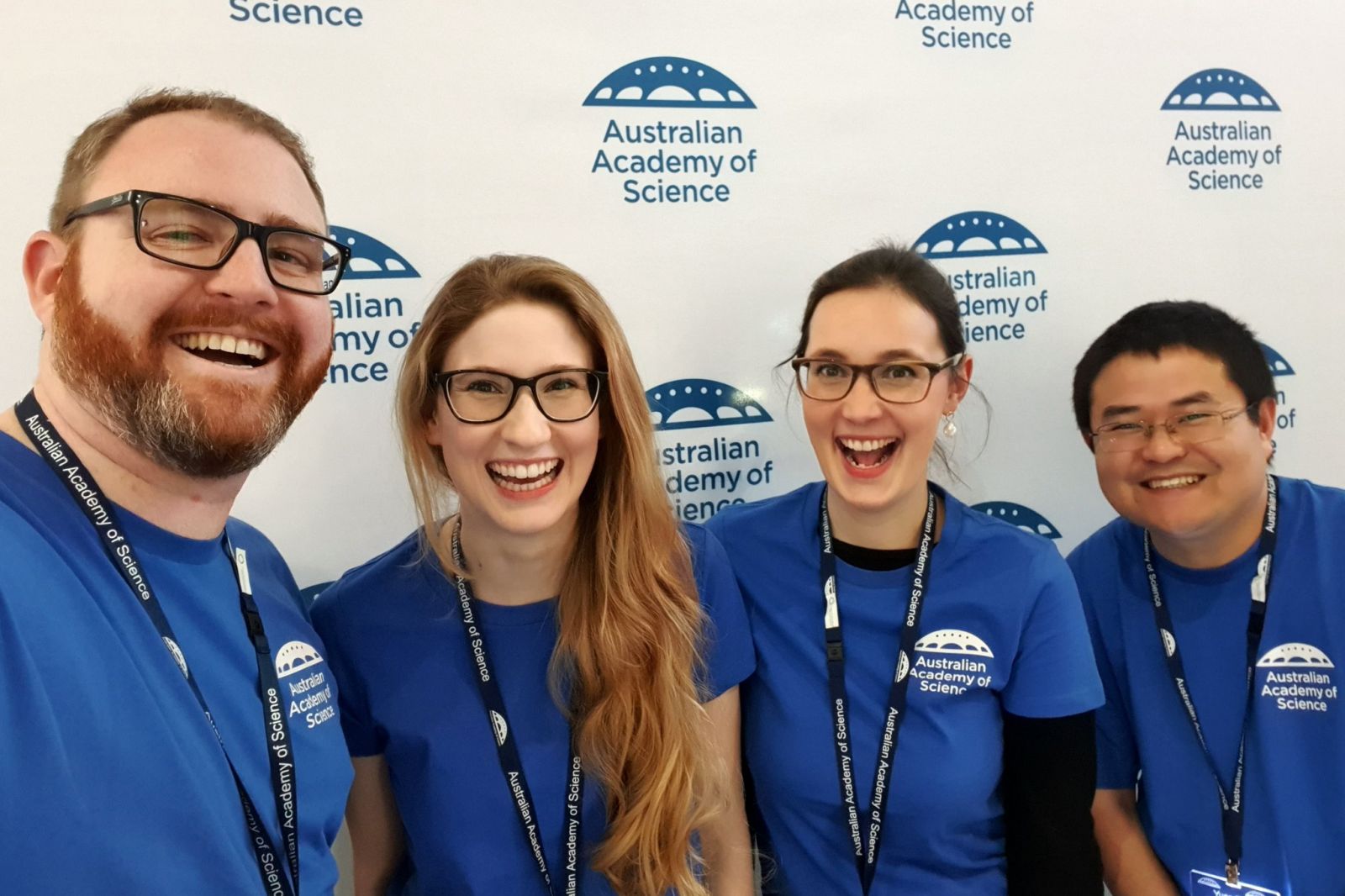
Some of the Lindau Aussies who presented their science to almost 2000 people at Questacon
The Australian Academy of Science discovered a winning formula for its latest science outreach event, with record numbers attending its Adults-Only Science night.
Close to 2000 tickets were sold for the event held at Questacon, Australia’s National Science and Technology Centre in September.
The Academy partnered with Questacon for the first time to invite the public to experience pop-up science, interactive displays and live music without children, guided by 30 of Australia’s emerging leaders in chemistry, physics and medicine, fresh from mentorship with Nobel prize-winners in Germany*.
The Academy’s Secretary for Education and Public Awareness, Professor Hans Bachor, said he’d never seen so many people come together to celebrate science.
“Young ones, old ones, everybody was there. I really loved it,” Professor Bachor said.
Exit surveys found that many attendees enjoyed the variety of science on offer during the evening.
For some the drawcard was the opportunity to see Academy Fellow and Nobel Laureate Professor Brian Schmidt in conversation with The Bachelor’s Dr Matt Agnew to discuss astrophysics. Dr Agnew recently graduated with his PhD.
Watch Dr Agnew and Professor Schmidt in conversation
What an incredibly humbling experience. Absolutely wonderful to chat with Nobel prize winner @cosmicpinot about science, rockets and some of the exciting questions in astrophysics! https://t.co/t5sy6pjdqb
— Matt Agnew (@DrMattAgnew) 2 September 2019
The evening by numbers
- 1934 tickets sold
- 30 Lindau alumni engaging with hundreds of guests
- 1 Bachelor
- 1 Nobel Laureate
- Countless selfies at the selfie wall
*About the Lindau alumni
Every year, the Australian Academy of Science and the Science and Industry Endowment Fund (SIEF) send top early-career scientists to Lindau, Germany, to spend a week with Nobel laureates. For the first time, we brought these remarkable researchers back together for a unique social event at Australia’s National Science and Technology Centre.
Three emerging innovators to represent Australia at Falling Walls Lab in Germany
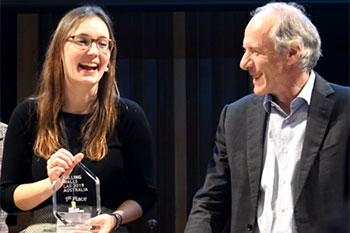
Falling Walls Lab Australia first place winner Dr Elena Schneider-Futschik with jury chair Dr Alan Finkel, Australia's Chief Scientist.
Research Fellow Dr Elena Schneider-Futschik from the University of Melbourne is the winner of the fourth Falling Walls Lab Australia event, hosted yesterday by the Australian Academy of Science.
Second place was awarded to Ms Kate Secombe, a PhD candidate at the University of Adelaide, with University of Queensland PhD candidate Mr Rhys Pirie in third place.
Twenty emerging innovators gathered at the Shine Dome in Canberra to present their ideas, research and initiatives on the theme ‘Which walls will fall next?’.
Each participant had just three minutes to make their pitch in front of a jury of eminent academics and leaders from government, business and finance, chaired by Australia’s Chief Scientist Dr Alan Finkel.
Dr Schneider-Futschik spoke about ‘breaking the wall’ of pharmacology for cystic fibrosis (CF) patients. She has developed a technique for measuring drug concentrations in CF patients’ blood plasma and an accompanying model to evaluate and predict patient outcomes.
Ms Secombe is investigating the gut microbiome’s role in personalising cancer treatment to prevent debilitating intestinal toxicity.
Mr Pirie has developed a chemical recycling process for the more than 60 million tonnes of glass that ends up in landfill because it is too small to be sorted by traditional recycling methods. [UPDATE: Rhys Pirie took out the international prize in Berlin]
The three winners will travel to Berlin to represent Australia at the Falling Walls Lab Finale. They will present their three-minute pitch alongside 100 other finalists selected from more than 55 Labs across the globe.
Falling Walls, this year on 8 and 9 November, is an annual conference held in Berlin. It fosters discussion on research and innovation and promotes the latest scientific findings among a broad audience from all parts of society. The Lab is an international forum for the next generation of outstanding innovators and creative thinkers.
In addition to a larger cohort of Lab participants from Australia, the Academy's role will be expanded at this year's Falling Walls event in Berlin. Director of Communications and Outreach Paul Richards has been invited to join the jury for the Falling Walls Engage competition.
The Academy will also be holding an exhibition stall and presentation during Berlin Science Week at the Museum of Natural History on 6 and 7 November.
Falling Walls Lab Australia is organised by the Australian Academy of Science in association with the Embassy of the Federal Republic of Germany in Australia.
Chris Anderson to head up Academy’s policy team
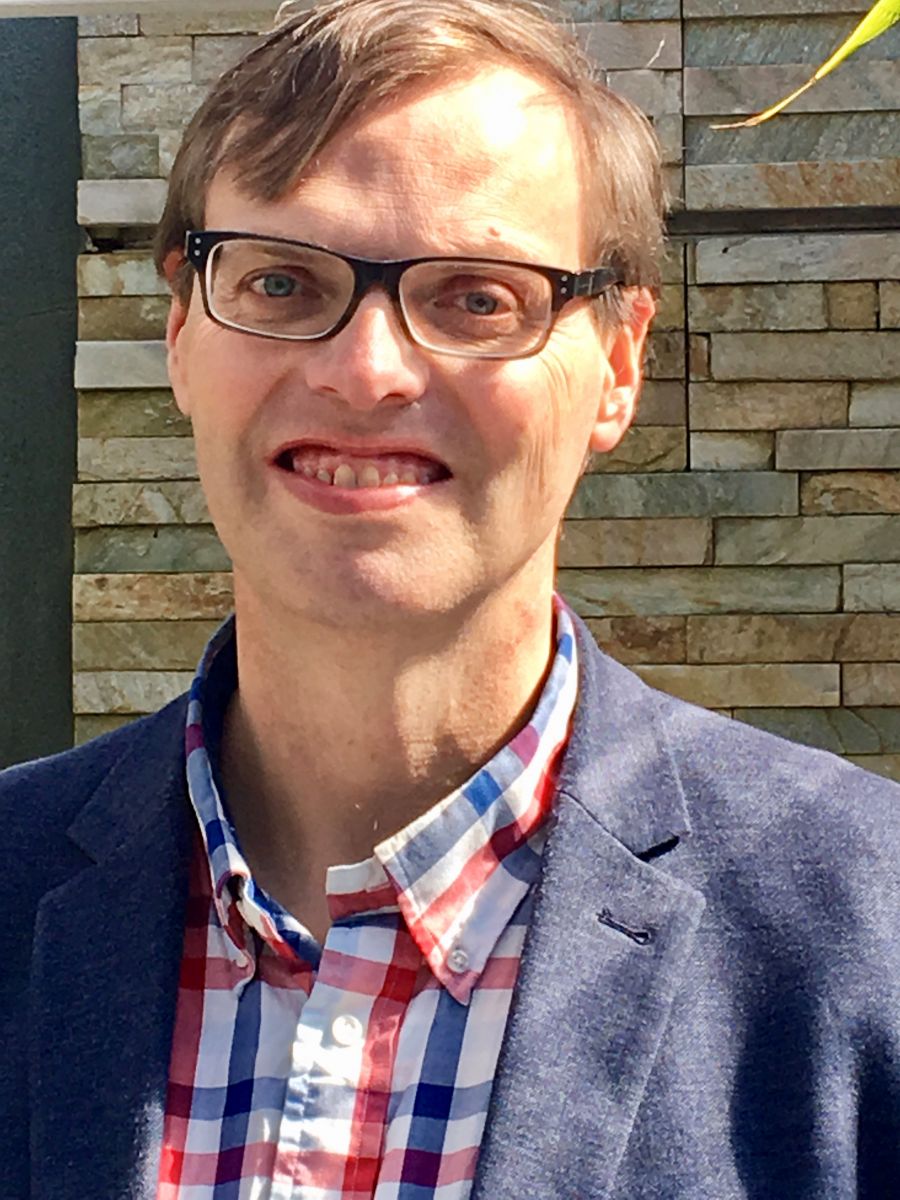
Incoming Director of Science Policy, Chris Anderson
The Australian Academy of Science welcomes Chris Anderson who will commence in the role of Director—Science Policy effective Monday 30 September 2019.
Academy Chief Executive Anna-Maria Arabia said Chris has outstanding knowledge of the STEM sector, with strong expertise in strategic planning, policy analysis and research.
“Chris has built excellent relationships, over many years, with STEM sector stakeholders and government agencies,” Ms Arabia said.
“Chris has held senior policy positions in the science and education sectors. In these roles, Chris was the lead advisor on science and research issues, and he developed many high-level policy briefings, reports and submissions.”
Mr Anderson said he was honoured to join the Australian Academy of Science and work with its Fellows, our nation’s top researchers.
“The Academy is the go-to place for independent, high quality scientific advice in Australia,” Mr Anderson said.
“I look forward to working with the Fellows and staff at the Academy to continue to place science at the centre of public policy.”
Mr Anderson holds a Bachelor of Arts (Hons) from Monash University and a Master of Public Policy from the University of Melbourne.
He replaces Chris Hatherly who has taken up a role as Executive Director at the Academy of the Social Sciences in Australia.
Bring science and industry together for a better digital future
The plan calls for closer partnerships between industry and the research sector. Photo credit: Alex Knight/Unsplash
Australia is not in the driving seat when it comes to the digital transformation currently underway worldwide, with scientists today calling on researchers and industry to work together to ensure Australia benefits from a rapidly expanding sector.
That’s the conclusion of a major new plan, Preparing for Australia’s Digital Future, released today by the Australian Academy of Technology and Engineering and the Australian Academy of Science.
Australian success stories in digital technology include Atlassian, Technology One, Vitalcare, VPI Photonics and Aconex—but research investment in digital technology is only a tiny fraction of its potential contribution to Australia’s future prosperity.
The plan calls for action on promoting closer partnerships between industry and the research sector to ensure Australia is best placed to realise and capitalise on opportunities in digital technology over the coming decade and beyond.
Professor Glenn Wightwick FTSE, a Fellow of the Academy of Technology and Engineering and co-chair of the steering committee that drew up the plan, said: “Digital transformations are continuously and rapidly evolving, driven by aggressive technology progress and accelerating uptake—and Australia is not driving.
“It is essential that, through strategic actions outlined in this plan, we are able to chart our own course.”
Professor Rod Tucker OAM FAA FTSE, a Fellow of the Academy of Science and co-chair, said: “This strategic plan is designed to help Australia do better. Numerous success stories demonstrate our ability to turn excellent science and research into commercial technologies and services that benefit Australia.
“Yet to realise our potential, we need a plan to help Australians recognise, act on and derive as much benefit as possible from opportunities in our digital research and innovation sectors.”
Dr Ziggy Switkowski AO FAA FTSE, Chairman of NBN Co and Chancellor of RMIT University, will join Professors Wightwick and Tucker in speaking at the launch of the report on Wednesday morning.
Dr Switkowski said: “Everywhere we look we see evidence of digital transformations that are shaping Australian society and our economy and which will change this country in the decades ahead.
“In this timely report on digital innovation from two of the Learned Academies, we now have an overarching strategic plan that will help Australians act on and derive as much benefit as possible from opportunities in our digital research and innovation sectors.
“I’m confident this plan can position Australia as a successful, forward-thinking digital nation—one with an enhanced ability to translate our public and private sector ICT research into skills, innovation, public benefit, careers and jobs, and commercial success.”
The plan includes 32 recommendations grouped under five priority areas:
- Encouraging digital leadership in industry
- Fostering research and industry partnership for our digital future
- Safeguarding and strengthening our digital workforce and capability pipeline
- Ensuring whole-of-government action for our digital future
- Delivering research sector reforms
$1 million in new funding connecting young scientists to Nobel Laureates
With Nobel Prize winners feted as global celebrities in the science world, it is no surprise that Dr Deepak Jain felt nervous when he approached Professor Donna Strickland at this year’s Lindau Nobel Laureate meeting.
The annual meeting in Germany provides an opportunity for the next generation of leading scientists from all over the world to be mentored by Nobel Laureates.
Dr Jain was one of thirteen Australian-based physicists awarded Lindau Fellowships this year by the Australian Academy of Science, thanks to funding from the Science and Industry Endowment Fund (SIEF). The ‘Lindau Aussies’ are well known at these meetings, in part due to the handing out of mini koalas to Nobel Laureates each year.
Dr Jain had been dreaming of visiting Strickland’s lab in Canada for some time. This dream only became stronger when Jain realised Strickland was attending the 2019 meeting, after she became only the third woman to win the Nobel Prize in Physics in 2018.
“At the meeting I plucked up the courage to speak with Professor Strickland and asked if I could visit her lab for a few months, to work under her mentorship,” said Dr Jain, who is a Research Fellow at the University of Sydney.
“To my surprise she said yes and now I am planning for the trip, but still need funding to get me there. To work with a Nobel Laureate would be a dream come true. I am really thankful to the Academy and SIEF for giving me this fantastic opportunity, which will add tremendous value to my research career and which I hope comes to fruition.”
SIEF has funded 80 young researchers to attend the annual Lindau Nobel Laureate meeting since 2013. Today the future of the program has been secured with the announcement of $1 million from SIEF to continue funding the Lindau Nobel Laureate meeting Fellowships and Heidelberg Fellowships for an additional 10 years.
The announcement comes as 32 alumni of the Lindau Nobel Laureate meetings from the past six years gather for a reunion in Canberra today.
Science leaders welcome funding
Australian Academy of Science President, Professor John Shine, welcomed the funding.
“The impact that this funding will have on the next generation of young scientists is best highlighted by the feedback of those alumni that have attended past Lindau Nobel Laureate Meetings,” said Professor Shine.
CSIRO Chief Executive and SIEF Trustee, Dr Larry Marshall, said SIEF and CSIRO shared a mission to invest in the STEM leaders of tomorrow.
“When we invest in developing talented young scientists at the stage in their career where they are most creative, it is an investment in Australia’s future, and plants a seed, stirring them to win Nobel Prizes of their own,” said Dr Marshall.
“So it’s a genuine pleasure to extend SIEF’s support for the Lindau Nobel Laureate Fellowships and Heidelberg Fellowships with another $1 million over ten years, empowering early career researchers to do the science that will change the world.”
PhD candidate Melanie Hampel is researching nuclear astrophysics at Monash University. She also attended this year’s Lindau Nobel Laureate Meeting and sat in on a lecture with Professor Strickland.
“In the open exchange that followed Professor Strickland’s lecture, she answered the questions of many curious young researchers by sharing more anecdotes and stories, from both her professional career and her personal life,” Ms Hampel said.
“To me it was very encouraging and inspiring to be in the presence of such a successful researcher, who is also a mother of two, and who left traditional academia to prioritise her private life before returning to an inspiring career in physics.”
“Meeting so many interesting and talented people has definitely sparked a lot of enthusiasm and inspiration in me, which I have brought back to Australia for my own research.”
Nominations for 2020 now open
Nominations are now open for young researchers to attend the 2020 Lindau Nobel Laureate Meeting. Applications close 27 September 2019.
Lemberg and Caughley travelling fellowships awarded
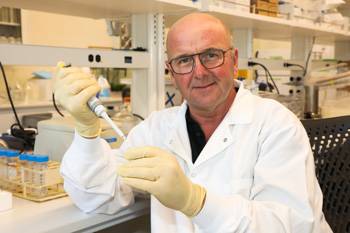
Professor Robert Edwards from San Diego State University will present his research in Australia and teach a one-week microbiome analysis workshop. Photo: Scott Hargrove
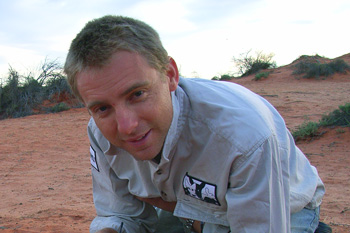
Dr Benjamin Allen will share recent Australian advances in best-practice wildlife management with his overseas colleagues.
The Academy has announced the recipients of two travelling fellowships to support outstanding scientists to exchange scientific ideas. The Rudi Lemberg Travelling Fellowship has been awarded to Professor Robert Edwards and the Graeme Caughley Travelling Fellowship has gone to Dr Benjamin Allen.
Professor Robert Edwards is Professor of Computer Science and Biology, and Director of the Biological and Medical Informatics program at San Diego State University. With funding from the Rudi Lemberg Travelling Fellowship he will present his research in Sydney, Perth and Adelaide, and teach a one-week microbiome analysis workshop. Professor Edwards has published leading papers on computer science, biology and bioinformatics, and has developed software that is widely used and cited by researchers around the world.
The Rudi Lemberg Travelling Fellowship commemorates the contributions of Professor Max Rudolph Lemberg FAA FRS to science in Australia. The Fellowship is financed through the generous bequest of Mrs Hanna Lemberg and the Australian Society for Biochemistry and Molecular Biology.
The Graeme Caughley Travelling Fellowship will enable Dr Benjamin Allen, Senior Research Fellow at the University of Southern Queensland’s Institute for Life Sciences and the Environment, to travel to Sri Lanka, Nepal and South Africa. Dr Allen is a highly respected wildlife ecologist who specialises in invasive species and wildlife management, particularly in wild dogs in Australia. On this tour he will share recent Australian advances in best-practice wildlife management with his overseas colleagues.
The Graeme Caughley Travelling Fellowship is offered every two years to an ecologist in Australia or New Zealand, with the purpose of sharing their expertise outside the Fellow’s own country. The Fellowship commemorates the work of Dr G.J. Caughley, FAA in ecology and wildlife management. It is financed through the generosity of his friends and colleagues.
Applications for the Academy’s travelling fellowships will re-open in early 2020.
Become a Women in STEM Decadal Plan Champion
“No sector can solve this alone. Leadership is required and it must be accompanied by accountability. We have much to learn from each other.”
ANSTO, Raytheon Australia, Science and Technology Australia and the University of Sydney have heeded this gender equity call and today become the inaugural Champions of the Women in STEM Decadal Plan.
The call for greater accountability and leadership was made by the Australian Academy of Science and the Australian Academy of Technology and Engineering at the launch of the decadal plan earlier this year.
The decadal plan provides a framework to guide the actions of government, industry, academia and the education sector over the next ten years, to achieve gender equity in science, technology, engineering and mathematics (STEM).
Manager of Diversity and Inclusion at The Australian Academy of Science, Louise Moes, said organisations can become a champion by aligning their gender equity activities to the six opportunities outlined in the decadal plan and committing to providing an update on progress in their gender equity journey in 12 months.
“Our inaugural champions have shown they are committed to make the step changes required to realise the vision of the decadal plan, have begun taking action to achieve change and want to share their journey with others,” Ms Moes said.
Minister for Industry, Science and Technology Karen Andrews called on more organisations to become Women in STEM Decadal Plan Champions.
“Women make up sixteen percent of the STEM workforce in Australia, so help is needed to encourage more women to the STEM sector and keep them there,” Minister Andrews said.
“We need your support and we want to know what your organisation is doing and how we can help you bring about this much needed change.
To discover and collaborate with champions’ activities, to become a champion or for more information visit: www.science.org.au/womeninstemchampions
The Academy will host champion responses on the STEM Women website, to provide a platform to share knowledge, act, evaluate and create accountability.