




Recipients of EMCR mobility grants for France and Europe announced

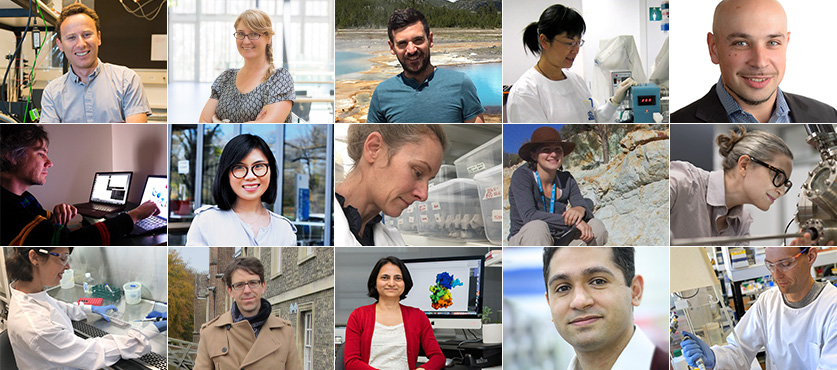
The Academy has announced the recipients of the France and Europe early- and mid-career (EMCR) mobility grants for 2019, who have been awarded a share of the total $71,785 in funding. These grants are intended to strengthen international research networks, providing support of up to $5000 for Australian researchers to travel to France and Europe and work with leading researchers at major science and technology organisations for a period of between 14 and 28 days.
The Rod Rickards Fellowship, which supports researchers to travel to Europe for collaborative research in chemistry or biology, has been awarded to 11 Australian early- and mid-career researchers. The recipients are:
- Dr Jessica Allen, University of Newcastle
- Dr Ryan Burrows, Griffith University
- Dr Xiaoying Cui, University of Queensland
- Dr Tim Gould, Griffith University
- Dr Meiling Han, Monash University
- Dr Clarissa House, Western Sydney University
- Dr Jennifer Macleod, Queensland University of Technology
- Associate Professor Alister Page, University of Newcastle
- Dr Onisha Patel, Walter and Eliza Hall Institute of Medical Research
- Dr Mohammad Pourkheirandish, University of Melbourne
- Dr Christian Rinke, Australian Centre for Ecogenomics.
Additionally, four Bede Morris Memorial Fund grants have been awarded to support researchers to travel to France for research in any field of natural sciences. The 2019 recipients of the Bede Morris grants are:
- Professor Igor Aharonovich, UTS
- Dr Kirill Glavatskiy, University of Sydney
- Dr Margaux Le Vaillant, CSIRO
- Dr Peta Neale, Griffith University.
These mobility grants are possible due to the generous support of the Rod Rickards Fellowships and the Bede Morris Memorial Fund, which continue the legacy of two outstanding scientists, Professor Bede Morris FAA (1927–1988) and Professor Rod Rickards FAA (1934–2007).
More information on the France and Europe EMCR Mobility Grants
Academy welcomes new leaders for communication and diversity
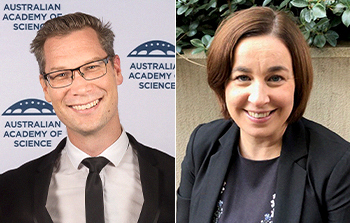
The Australian Academy of Science welcomes Louise Moes to the role of Manager Diversity and Inclusion, and the appointment of Paul Richards as Director Communications and Outreach.
Louise Moes brings significant experience having developed diversity and social inclusion strategies, policy and solutions across not for profit, government and education sectors in Australia and the UK. Louise has undertaken work in relation to Indigenous and gender national policy, health and domestic and family violence and has led strategies focusing on economic development, education and the future of work.
Academy Chief Executive Anna-Maria Arabia said Louise has a strong track record of effecting change at a national level and has much experience in engaging with a wide range of stakeholders.
“Louise will play a key leadership role as the Academy aims to be a national leader in diversity and inclusion in the science sector,” Anna-Maria Arabia said.
Paul Richards steps into his new role from July, having previously managed the Academy’s digital strategy and video production capability. He replaces Dr Melanie Bagg who will commence as CEO of the National Youth Science Forum.
Paul joined the Academy two years ago after a 17-year journalism career including 10 years at Channel Seven’s Sunrise program, which remained Australia’s number one breakfast TV program while Paul was in the role.
Ms Arabia said Paul has played an integral role in the success of the Academy’s communications and outreach initiatives since joining the organisation.
“Our online audience has exploded in the past two years from 9000 followers on Facebook to over 1.5 million. Paul has seamlessly meshed his deep experience in journalism with scientific excellence and will lead further growth of the Academy’s outreach activities.
“The Academy extends its gratitude to Melanie Bagg for her outstanding contribution and wishes her every success in her next chapter,” Anna-Maria Arabia concluded.
Queen’s Birthday honours for seven Academy Fellows
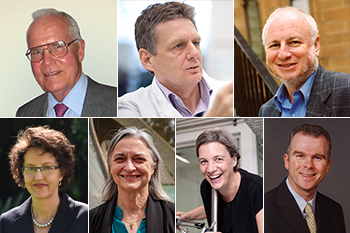
Seven Academy Fellows have been recognised in this year’s Queen’s Birthday honours list, including three who have received Australia’s highest accolade for their work, named as Companions in the General Division of the Order of Australia.
Professor David Burke AC FAA FTSE has been named a Companion for his eminent service to neurophysiology, to innovative treatments for spinal cord and brain trauma injuries, and to professional medical organisations.
Professor Alan Cowman AC FAA FRS has been honoured for his eminent service to the biological sciences, notably to molecular parasitology, to medical research and scientific education, and as a mentor.
Emeritus Professor Leo Radom AC FAA has been recognised for his eminent service to science, particularly to computational chemistry, as an academic, author and mentor, and to international scientific bodies.
Four Academy Fellows have also been recognised as Officers in the General Division of the Order of Australia.
Professor Linda Richards AO FAA has been recognised for her distinguished service to medical research and education in the field of developmental neurobiology, and to community engagement in science.
Professor Frances Separovic AO FAA has been awarded for her distinguished service to science education, particularly to biophysical chemistry, as an academic, and to young women in science.
Professor Michelle Simmons AO FAA FRS FTSE has been acknowledged for her distinguished service to science education as a leader in quantum and atomic electronics, and as a role model.
Professor Mark von Itzstein AO FAA has been recognised for his distinguished service to medical research and education in the field of structural biology and glycochemistry, and as a mentor.
Transcript: Science at the Shine Dome President’s Address 2019, Professor John Shine
Delivered 9 am Wednesday 29 May 2019, Shine Dome, Canberra
Check against delivery
Australian Academy of Science President, Professor John Shine
Fellows of the Academy, colleagues. distinguished guests, friends
Welcome to Science at the Shine Dome 2019.
Before I begin, I too would like to acknowledge the traditional custodians of the land on which we meet, the Ngunnawal people.
I would also like to add my personal thanks and acknowledgement to the sponsors mentioned by Anna-Maria whose generosity has made this event possible and allowed it to reach more people.
It is customary for the President to deliver an annual address at Science at the Shine Dome.
In this 65th anniversary year of the Academy and 60th year of the Shine Dome I would like to use the opportunity to reflect on the Academy’s beginnings, the role it has played in the science sector and to raise awareness of the Academy’s priorities going forward.
From its inception, the Academy was critical in shaping the architecture that supports scientific research practice as we know it today.
By way of example, as early as 1958, just four years after the Academy was established and before this very building existed, the Academy’s Council discussed the idea of establishing an Australian National Science Trust to fund scientific research.
It took two years for those discussions to materialise into a formal proposal which was handed to then Prime Minister Menzies in 1960.
Eventually, in 1965 the Prime Minister wrote to the Academy President to announce the establishment of an Australian Research Grants Commission, a body analogous to the National Science Trust that has been proposed by the Academy some 5 year earlier.
The Australian Research Grants Commission was to become the modern-day ARC—a fundamental component of our research ecosystem.
From its earliest days the Academy has been concerned with science policy in Australia.
In this area too, the Academy played a fundamental role in shaping the research landscape familiar to us today.
In 1967, the Academy recommended the establishment of an Advisory Committee on Science and Technology.
Finally, five years later, in 1972 Prime Minister William McMahon announced the formation of such a body.
Subsequent governments changed the composition of the Committee and its Terms of Reference with the Howard Government transitioning this body to the Prime Minister’s Science and Technology Council.
Today, this committee is known to you all as the National Science and Technology Council.
Much has changed, but much has remained the same.
Through the advent of electronic communications, we have become less patient and more expectant of rapid change—but in reality, we would be wise to remember that it still takes decades for structural change to occur in the science sector.
We should also take comfort in the things that remain the same.
Not in the least, the Academy, 65 years on, still seeks to influence decision makers so as to ensure the foundations of scientific endeavour are robust and enable and facilitate the work of scientists across the country and across the globe.
And 65 years on the Academy’s commitment to excellence is as strong as it was amongst its founding fathers.
Provision of independent scientific advice
In addition to providing advice on the practice of science, much like in its early years, the Academy continues to provide independent scientific advice on a range of policy matters.
Such matters in the early years were described as ‘political’—issues such as Antarctica, international relations, climate change and preservation of the biosphere.
In early 1970, when nuclear tests in the Pacific were planned by the French Government, Prime Minister Whitlam wrote to the Academy on 12 February seeking the Academy’s advice on the actual and potential harm to Australia from the explosions by France in the Pacific. The report was requested by the end of March—a six-week period.
The full account of this policy request is eloquently outlined in the Frank Fenner-edited book ‘The First Fifty Years’ of the Academy of Science.
I encourage you to read it.
Upon close inspection the policy request challenged the Academy much as similar requests do today.
At the time, the Academy vehemently protected its independence. As it does today.
In the early 1970s, the Academy was powerless to stop the politicisation of the advice it provided but it concluded that injection of the scientific evidence base into the controversial topic of nuclear testing in the pacific was not just necessary but a fundamental role of the Academy.
Today the Academy still seeks to provide independent and influential scientific advice.
For example, I am particularly proud of the scientific advice the Academy was able to provide earlier this year to shed light on the causes of the mass fish deaths in the Darling River in NSW.
This issue was also mired in political controversy, but Fellows of this Academy in collaboration with Fellows of the other learned academies were able to remain focused and provide the necessary independent scientific evidence base in a four-week timeframe that allowed it to inform deliberations and drive policy changes.
Broadly, the principles that guide all advice provided by the Academy are clearly articulated and this advice is always made public on the Academy website.
We are dispassionate, disinterested, apolitical and founded in expertise, and our advice follows standards of excellence, quality, independence and transparency.
I am pleased to say that the Academy enjoys a direct relationship with many ministers in government and across the parliament.
We operate in an environment where evidence and track record are questioned and challenged, institutions are given less credence and individual opinion is amplified more than ever before.
In this often confused and conflicting environment, I would argue that the role of national academies as independent advisers to government and to the broader parliament has never been more important.
Academies must use their convening power to bring to the table the voice and expertise science can and must provide to inform decision making.
Excellence and diversity
There is one aspect of the Academy which I am pleased has evolved significantly—our approach to diversity.
Many accounts of the early years spoke of the need to develop the Fellowship such that it comprised all scientific disciplines in both basic and applied science. The founding fathers were concerned with equipping the Academy with excellence and expertise such that it could adequately represent Australian science.
Today we know that we also make better decisions when the fellowship reflects the depth, breadth and diversity of the scientific sector. Diversity of discipline, geography, gender, culture, and more.
We cannot be excellent if we are not diverse and truly represent the diversity in the broader community.
I congratulate the 22 new Fellows and two Corresponding Members who were admitted to the Academy yesterday evening and who we will hear from this morning.
And I congratulate the award recipients who we will learn more about tomorrow.
Over the past five years, we have focused on diversity and inclusion, looking to ensure barriers and biases are removed and that the Academy applies and models best practice in nominating and electing Fellows and in conferring its awards.
I am pleased that the culmination of those efforts has seen that of the 22 Fellows elected this year, 36 per cent are women. This is a result of a unified and committed effort by all in the Academy, including the Council, the Equity and Diversity Reference Group, and our 20 ‘Champions of Diversity’—Fellows who have identified, encouraged and mentored diverse nominees for Fellowship and awards.
I am also delighted that the Academy will confer the inaugural Aboriginal and Torres Strait Islander Scientist Travelling Research Awards tomorrow.
Under-representation of senior women in the science pipeline remains one of the sector’s biggest challenges.
And it remains a challenge for the future election of diverse Fellows to the Academy.
But we know that the Academy’s Fellowship can only be as diverse at the science pipeline.
I encourage leaders in this room to do what they can to actively address the under-representation of women and minorities in the science pipeline and to nominate women and under-represented groups for awards and fellowship.
[Diversity video plays]
To focus the efforts of all parts of the science or STEM (science, technology, engineering, mathematics) ecosystem in addressing under-representation of women in STEM, in April this year the Academy delivered the Women in STEM Decadal Plan, a 10-year roadmap for achieving sustained increases in girls’ and women’s STEM participation and retention from school through to careers.
I pause to thank the University of Sydney who once again have supported accessibility, childcare and carer grants to enable participation by all here at Science at the Shine Dome.
We know participants with caring responsibilities, whether they are caring for a young family, elderly parents or indeed managing any other circumstance, benefit from this support. We know because they tell us.
School STEM education
The Academy has had a long and fulfilling association with science education in schools.
From its inception, the Academy had a desire to assist science teachers to carry out research projects. These initial attempts proved to be unsustainable and led to the Academy developing a textbook for year 11 and 12 science students, The Web of Life, which adopted the inquiry approach to teaching.
In its day The Web of Life was the most successful curriculum development project in the world.
It exerted a deep influence on the teaching of secondary biology and at the time was the most significant source of income for the Academy, enabling many of the Academy’s activities.
I recount this history, because today I am thrilled that in our audience we have 10 NSW Science Extension course students and their teachers. The Science Extension course is an innovative NSW course for year 12 students with an interest in scientific research. Many of the students collaborate with practicing scientists and undertake research projects.
Importantly they learn critical problem solving and analysis skills.
The student’s own words say it best. An attending student from Gosford High School, in response to the question ‘Why are you interested in research?’ answered:
“Until beginning year 11 science courses, I was unaware of the full scope of academic and research sciences; however, through undertaking self-guided and self-chosen research, I have developed an appreciation for the process of science. Further, through participating in research I have identified my own curiosity and seen it manifest into a desire to question and understand the unknown.
Asking a question is inspiring but seeking the answer is what motivates me. Research sates curiosity, no matter the nature nor the person.”
The Academy has warmly welcomed the introduction of the NSW Science Extension Course and commends it for adoption by other states and territories.
In many ways, it realises the original education vision of the academy—to assist teachers carry out research projects for their students.
I would like to thank 3M, the STEM Education presenting partner, who has made this initiative possible.
International engagement
I also welcome international early- and mid-career (EMCR) researchers from Malaysia and Indonesia to this year’s Science at the Shine Dome. In the past year, the Academy has facilitated access to global science and technology and promoted strategic partnerships between Australian and overseas researchers, supported the formation of the International Science Council, and delivered international science activities on behalf of the Australian Government.
Australia continues to play a significant role internationally due to its strong representation on inter-Academy bodies and international scientific societies and unions.
Last month the Academy launched a report outlining the economic and scientific benefits of Australia’s membership of major global science organisations.
Unsurprisingly to many in this room, the direct economic benefits to Australia by hosting scientific meetings is significant, as are opportunities created by international research collaboration.
Scientific literacy
In the area of scientific literacy, the Academy continues to build public awareness and understanding of science both locally and internationally.
Our digital content is not only engaging and reaching large audiences across social and mainstream media, but importantly all of our content is rigorously fact checked by at least five Fellows.
We are informing the general public about the science that matters in their lives as well as presenting an integral source of information and truth to combat the global fight against fake news.
On Facebook alone, 1.5 million people have opted to follow the Academy as a credible source of scientific information after connecting with our engaging videos, compelling articles and eye-catching images.
I thank the many Fellows who have been crucial to the success of the Academy’s video production capability, with 188 Fellows having either featured in or reviewed Academy digital content.
Close
In closing I would like to acknowledge the contribution made by outgoing member of the Executive Committee, Dr TJ Higgins, Secretary for Biological Sciences, and welcome the incoming secretary Professor Helene Marsh.
I also acknowledge outgoing Council members Professors Sam Berkovic, Steve Rintoul, and the late Scott Sloan who very sadly and suddenly passed away last month, and welcome incoming members Professors Ivan Marusic, Malcolm Sambridge, Carola Vinuesa and Bob Williamson
I also thank Professor Sue O’Reilly and Professor Ian Chubb for their continuing service.
Last but not least I would like to acknowledge and thank all of our partner organisations for this event.
Without their support, Science at the Shine Dome would not be the dynamic meeting of minds that it is today.
One of the unique aspects of this event is the dedicated EMCR program. I would like to thank our EMCR Engagement Partner, UniBank, and the many organisations who have sponsored individual EMCRs to attend.
Partnerships are deeply important for the future of the Academy, with many of our core activities only possible with the support of likeminded, independent organisations and individuals.
That ends my formal 2019 address.
‘Role models count’—students inspired by Australia’s top scientists
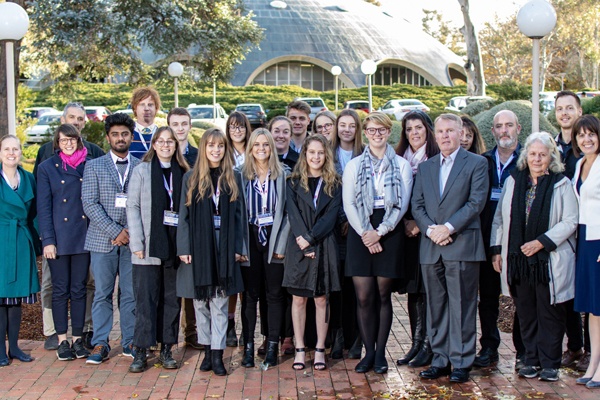
The science students and their teachers with retired Astronaut Dr Andy Thomas and Academy Chief Executive Ms Anna-Maria-Arabia.
Ten of New South Wales’ brightest science students converged on Canberra in May to meet leading Australian scientists.
The new STEM education initiative by the Australian Academy of Science saw the group of Year 12 HSC Science Extension students and their teachers attend the Academy’s annual showcase of science, Science at the Shine Dome, for the first time.
Science Extension is a NSW Higher School Certificate course designed for Year 12 students with an interest in scientific research. It is the only science course of its type in Australia. Students undertake scientific research, in collaboration with a practising scientist to develop research and critical analysis skills and to apply evidence-based decision making.
The Academy’s Secretary for Education and Public Awareness, Professor Hans Bachor, said picking only ten students from 67 applications was no easy task.
“It is clear from meeting with this group of students that they are absolutely passionate about science, and after spending three days with some of Australia’s top scientists they have left with plenty of inspiration,” Professor Bachor said.
“What young people see of STEM professionals shapes their beliefs and career aspirations. The Academy’s Women in STEM 10-year plan published last month highlights the importance of role models.”
The students got the chance to have a Q&A session with Dr Andy Thomas, the first Australian-born citizen to fly as a NASA astronaut in space.
The ten students and their teachers attended Science at the Shine Dome thanks to the generous support of the Academy’s STEM education partner 3M. It’s Australia Managing Director, Makoto Itoh congratulated the Academy on creating a fantastic program to inspire Australia’s future scientists.
“By providing equal opportunity to all NSW Science Extension students and including their science teachers, we’re creating a winning formula for success and the advancement of science in Australia,” Mr Itoh said.
“In future careers, these students could make their own scientific discoveries and apply them to solve some of life’s biggest problems. They could change the world—and that alone is worth its weight in gold.”
The ten students are:
Regional NSW
- Elijah Kinnane, Bateman’s Bay High—researching alternative recycling methods for PET plastics
- Ella Stephens, Great Lakes College, Forster—researching genetic technology and the role of PRioN proteins in the development of disease
- Jade Dedomenico, Bomaderry High—researching the efficiency and sustainability of algae biodiesel as an alternative to petroleum diesel
- Liam Flew, Gosford High—researching the product standards of carbon monoxide detectors
- Rochelle Hensley, Aurora Virtual College (Narrabri)—researching how the orientation of solar panels can impact on their efficiency.
Sydney Metropolitan
- Syed Taimoor Mansoor, East Hills Boys High—researching the effects of childhood maltreatment on interpersonal relationships during adolescence
- Katherine Willetts, Meriden School, Strathfield—researching published data on synaptic activity in the mouse brain
- Sarah Nelson, Northern Beaches Secondary College—researching the effect of citrus on the red worm’s ability to reproduce in household worm farms
- Caitlin Wartho, Pymble Ladies College—researching the effects of urban environments on local water systems
- April Abela, Glenmore Park High School—researching the available evidence on the consumption of processed meat and the link to colorectal, prostate or pancreatic cancer.
The Academy acknowledges the generous support of 3M.

Academy celebrates great Australian science at the Shine Dome
View the Science at the Shine Dome Gallery
Premiere annual event
The Academy’s premiere annual event, Science at the Shine Dome, brought together more than 500 attendees for a three-day event featuring 36 speakers. The event hashtag #ShineDome19 trended on Twitter in Australia, garnering 3,480 tweets with a combined reach of nearly 28 million impressions.
This year we had even more reasons to celebrate, as we marked the 65th anniversary of the Academy and the 60th anniversary of the Shine Dome.
The event kicked off on Tuesday 28 May with a one-day symposium ‘Power up Australia, the sustainable way’. Australia’s Chief Scientist Dr Alan Finkel delivered a keynote address on ‘Scaling up to meet the energy challenge’ in which he outlined how we can ‘imagine a world which is still magnificent’. This was followed by a series of presentations exploring the role of science in a sustainable energy future.
New Fellows
On Tuesday evening, 22 newly elected Fellows were formally admitted to the Academy in recognition of their outstanding achievements in science. Each new Fellow inscribed their names in the Charter Book, joining previous signatories and science luminaries.
The new Fellows then presented their work on Wednesday 29 May, starting with Professor Alexander Zelinsky, Vice-Chancellor and President of the University of Newcastle. Attendees also heard from Professor Maria Byrne about the impact of warming and acidifying oceans on marine invertebrates.
Wednesday also saw Australia’s ten delegates to the 65th Lindau Nobel Laureates Meeting gather for a breakfast briefing in preparation for their upcoming travels in June. ‘It has been wonderful to meet Australia's leading scientists and to see the incredible breadth of research being done in Australia today,’ said Fiona Panther, a Lindau delegate and astrophysics researcher at UNSW Canberra.
Honoured guests
The celebrations continued into the night with the annual gala dinner at the National Museum of Australia, where the (Academy) blue carpet was rolled out for special guests His Excellency the Honourable Sir Peter Cosgrove AK MC (Retd) and Dr Andrew Thomas AO, retired NASA astronaut.
On the final day, the inaugural Aboriginal and Torres Strait Islander Scientist Travelling Research Awards were presented over breakfast. Awards presentations continued with 17 remarkable scientists receiving honorific awards in recognition of their outstanding research.
More about the 2019 Honorific award winners
Watch the 2019 Honorific videos
The event finished up with workshops for early- and mid-career researchers on topics such as leadership development and grant writing.
Diversity and inclusion were recurring themes throughout the event, as the Academy and the science sector as a whole continues to prioritise equity. 'We cannot be excellent if we are not diverse,' Professor John Shine AC PresAA said in his address, 'I encourage leaders to do what they can to actively address the under-representation of women and minorities in the science pipeline and to nominate women and under-represented groups for awards and fellowship.'
For the first time, Science at the Shine Dome hosted 10 NSW Science Extension students and their teachers as part of our STEM education program, with support from 3M. ‘We are so fortunate to be at an event of this magnitude,’ said April Abela from Glenmore Park High School, ‘My eyes have been opened up to the work being done around sustainability and renewables.’
Partners
The Academy is grateful to the following organisations that partnered with us to make Science at the Shine Dome 2019 such a successful event.
Scientists to work across the Morrison Ministry to ensure science informs policy development
The Australian Academy of Science welcomes the reappointment of the Hon Karen Andrews to Cabinet as the Minister for Industry, Science and Technology.
Academy President, Professor John Shine, said Minister Andrews’ strong and ongoing commitment and advocacy for science, technology, engineering and mathematics (STEM) is clear.
“A STEM-skilled MP in this portfolio provides the new Morrison government with a minister who has a deep understanding of the issues facing the sector,” Professor Shine said.
“We look forward to working with Minister Andrews to implement the STEM measures announced in the Federal Budget in April, including $3.4 million in new funding to support women in STEM.”
The Budget announcement included new funding for the Science in Australia Gender Equity (SAGE) initiative, which is led by the Australian Academy of Science and the Australian Academy of Technology and Engineering.
“Science underpins so many portfolios—health, water, agriculture, cities, environment, energy, cyber safety, emissions reduction and defence industry,” Professor Shine said.
“We will work across the ministry to encourage an evidence-informed approach to policy development in these areas and more.”
The Academy also looks forward to working with Education Minister Dan Tehan on STEM education in schools and Foreign Affairs Minister, Senator Marise Payne on the completion and release of the Soft Power Review.
The Academy congratulates Warren Entsch on his appointment as special envoy for the Great Barrier Reef—a world heritage listed Australian treasure that needs close attention.
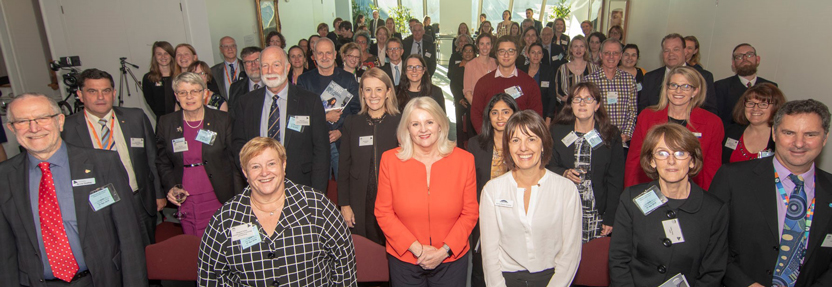
The Hon Karen Andrews (centre left) at the launch at Parliament House of the Women in STEM Decadal Plan in early April.
Australian scientist in the running for APEC Science Prize

Dr Nicholas Murray is Australia’s nominee for the APEC Science Prize for Innovation, Research and Education (ASPIRE).
A researcher whose work assesses the conservation challenges and management risks associated with sea level rise has been chosen as Australia’s nominee for the US$25,000 APEC Science Prize for Innovation, Research and Education (ASPIRE).
Dr Nicholas Murray from UNSW Sydney was selected by an expert panel convened by the Australian Academy of Science. He will compete with 20 other scientists from APEC economies for the award.
Dr Murray’s work, combining cloud computing and machine learning to analyse vast archives of satellite data, has helped to conserve ecosystems across the Asia-Pacific.
His research on the global distribution of tidal flats – one of the primary costal ecosystems that fringe the Pacific rim - has led to world-heritage listing nominations, the identification of endangered costal ecosystems and the improved protection of species that move through the Asia-Pacific during their annual migrations.
Dr Murray, along with runner-up Dr Peter Macreadie from Deakin University, and the third placed winner, Dr Jenny Fisher from the University of Wollongong, will receive $2,000 each.
Dr Macreadie was recognised for his work on carbon sequestration in coastal vegetated ecosystems (“blue carbon”) and Dr Fisher for her work on predicting how atmospheric pollutants respond to environment change.
ASPIRE is an annual award which recognises scientists under the age of 40 from the 21 APEC economies who have demonstrated excellence in scientific research, as well as cooperation with scientists from other APEC nations. Chile is hosting the award this year and chose “Natural Laboratories” as the nominating theme. The winner is expected to be announced in August.
Last year’s ASIRE Prize was won by Associate Professor Madhu Bhaskaran from RMIT University. She became only the second Australian to win the prize since the award’s inception in 2011.
Australia’s top scientists elected as Fellows of the Academy
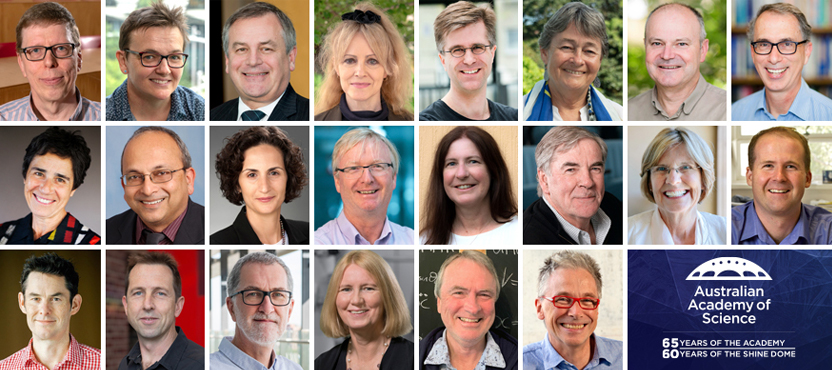
An Australian scientist whose research changed international food laws and set infant nutrient recommendations worldwide is among a group of scientists who are being acknowledged for their outstanding contributions to science.
Nutrition researcher, Professor Maria Makrides, is one of eight women among 22 scientists elected a Fellow of the Australian Academy of Science.
This list also includes neuroscientist Professor Lyn Beazley, who has made a major contribution to the advancement of Australian science and was the first female to hold a Chief Scientist role nationally. She joins genetic statistician Professor David Balding, who co-developed a probability formula that has been used in hundreds of criminal cases worldwide to interpret DNA profile evidence.
The new Fellows’ pioneering contributions also include research that has underpinned the safe and cost-effective construction of offshore oil and gas platforms; increased our understanding of why people move differently in pain; and provided new insights into the role of DNA that is unrelated to its genetic function.
Australian Academy of Science President, Professor John Shine, congratulated the new Fellows for making significant and lasting impacts in their scientific disciplines.
“These scientists were elected by their Academy peers following a rigorous evaluation process. What stands out among the new Fellows elected this year is the collective impact of their science on an international scale,” Professor Shine said.
“As the Academy celebrates its sixty-fifth anniversary, we are committed to acknowledging excellence in science, but we recognise that to achieve this we must celebrate and embrace diversity and inclusion in all its forms.
“We have adopted a range of best-practice measures to ensure that the outstanding contributions of our female scientists are properly recognised. These measures are working with 36% of Fellows elected in the past five years being women, but there is more to do.
“We call on the leaders of the science and research sector to help us identify diversity candidates who have made an outstanding contribution to science, so that they may be considered for election to the Academy in 2020,” Professor Shine said.
The new Fellows for 2019 are:
- SOUTH AUSTRALIA
- Professor Maria Makrides – South Australian Health and Medical Research Institute (nutrition researcher)
- WESTERN AUSTRALIA
- Professor Lyn Beazley – Murdoch University (neuroscientist)
- AUSTRALIAN CAPITAL TERRITORY
- Dr Surinder Singh – CSIRO (plant scientist)
- Professor David McClelland – Australian National University (physicist)
- QUEENSLAND
- Professor Christopher Barner-Kowollik – Queensland University of Technology (polymer chemist)
- Distinguished Professor Peter Corke – Queensland University of Technology (roboticist)
- Professor Debra Bernhardt – University of Queensland (chemist)
- Professor Paul Hodges – University of Queensland (medical researcher)
- VICTORIA
- Emeritus Professor David Karoly – CSIRO (atmospheric scientist)
- Professor David Balding – University of Melbourne (genetic statistician)
- Professor John Hamilton – University of Melbourne (medical researcher)
- Professor Kerry Landman – University of Melbourne (mathematical biologist)
- Professor Mark Cassidy – University of Melbourne (civil engineer)
- Professor Warren Alexander – Walter and Eliza Hall Institute of Medical Research (medical researcher)
- Professor Joanne Etheridge – Monash University (physicist)
- Professor James Whelan – La Trobe University (plant scientist)
- NEW SOUTH WALES
- Professor Maria Byrne – University of Sydney (marine biologist)
- Professor Alex Molev – University of Sydney (pure mathematician)
- Professor Catherine Stampfl – University of Sydney (physicist)
- Professor Cynthia Whitchurch – University of Technology Sydney (microbiologist)
- Professor Ian Wright – Macquarie University (plant ecologist)
- Professor Alexander Zelinsky – University of Newcastle (engineer)
Australia’s leading scientists look to the future with the Morrison Government
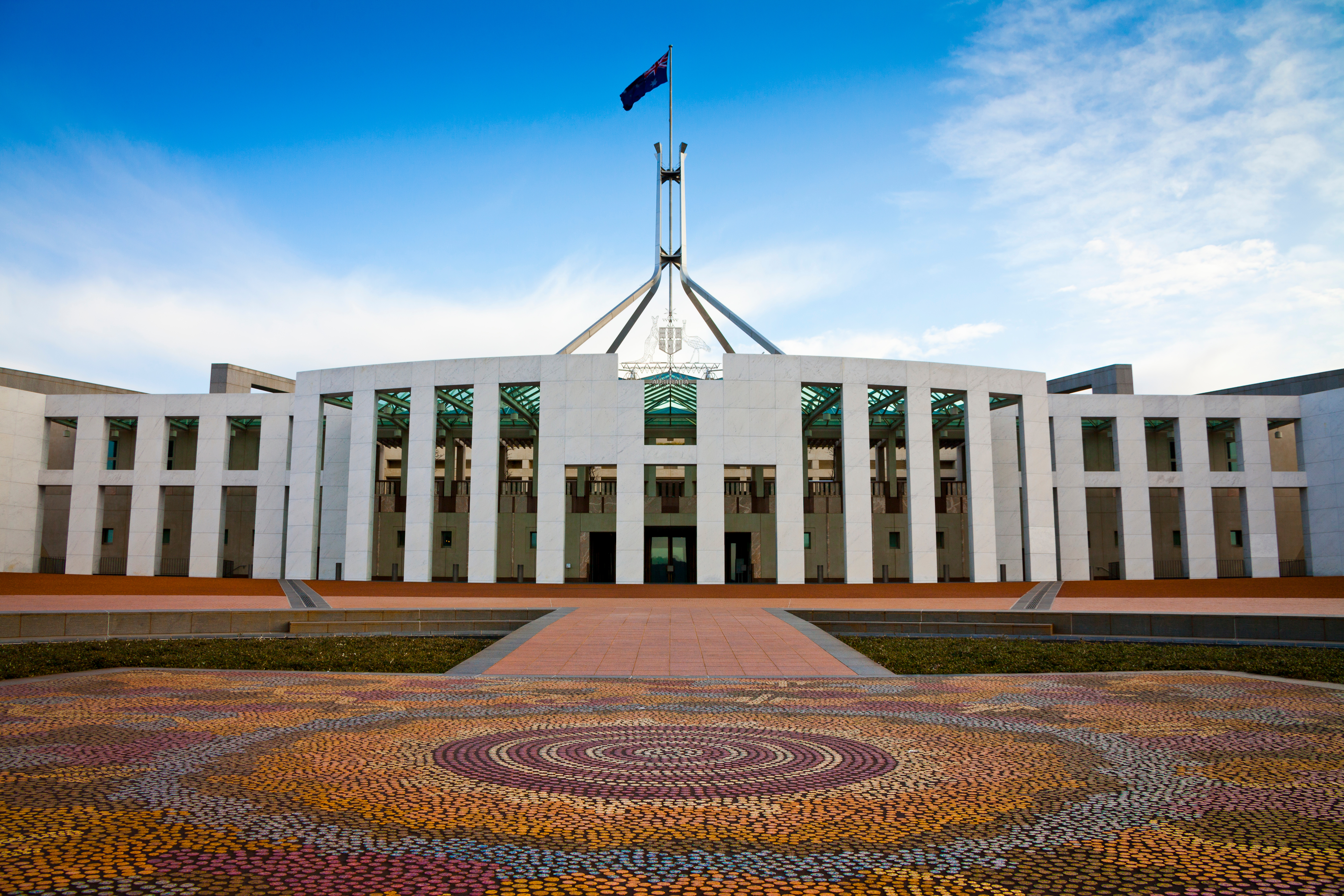
Australian Parliament House in Canberra Adobe Stock Image.376570162
The Australian Academy of Science welcomes the newly elected Morrison Government and will work with it to ensure the economy and workforce can benefit from advances in science and technology of the highest quality and intensity.
Academy President, Professor John Shine AC, said the Academy is a Fellowship of the nation's most distinguished scientists who stand ready to provide independent, timely and relevant science advice to government and to the parliament.
The Academy welcomes the Morrison Government’s ongoing commitment to have a Science Minister in Cabinet and to their 2017 National Science Statement.
“Science can help inform almost every policy challenge—from solving major national and global challenges to spawning new industries, keeping existing ones competitive, and creating jobs,” Professor Shine said.
“Some of these opportunities are laid out in the Academy’s 10-year plans for agricultural sciences, geography, women in STEMand geosciences, all published within the past 12 months.
“Science offers solutions on adapting to climate change and identifying ways all Australians and the economy can benefit from reducing emissions and meeting Australia’s global emissions targets.”
The Academy welcomed the government's Advancing Women in STEM strategy published in April which committed $1.8 million to deliver the next phase of Science in Australia Gender Equity (SAGE), the only national transformative gender equity program of its kind. The Academy looks forward to working with the Morrison Government to progress this important agenda.
The government strategy responds to the issues outlined in the Women in STEM 10-year plan released on 1 April 2019 by the Australian Academy of Science and the Australian Academy of Technology and Engineering.
“We look forward to meeting with the government to discuss science, research and technology priorities,” Professor Shine said.