




Fellows awarded NSW Premier’s Prizes

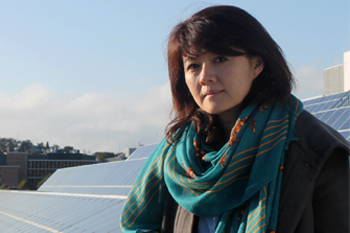
Professor Rose Amal is the 2019 NSW Scientist of the Year.
Three Academy Fellows have taken out NSW Premier’s Prizes with chemical engineer Professor Rose Amal named the 2019 NSW Scientist of the Year.
Mathematician Professor Nalini Joshi received the Prize for Excellence in Mathematics, Earth Sciences, Chemistry or Physics, while molecular biologist Professor Susan Clark received the Prize for Excellence in Medical Biological Sciences.
Professor Amal is recognised as a pioneer and leading authority in the fields of fine particle technology, photocatalysis—a chemical reaction that involves the absorption of light—and functional nanomaterials, having made significant contributions to these related areas of research over the past 25 years.
Her current research focuses on designing nanomaterials for solar and chemical energy conversion applications, including photocatalysis for water and air purification, and water splitting, and engineering systems for solar-induced processes, using the sun’s energy to generate clean fuel.
“When I first came to Australia over 35 years ago, I never dreamt that I would be named the NSW Scientist of the Year. I am extremely honoured to have been considered for this esteemed award, which I receive with great humility,” said Professor Amal.
“Scientific research contributes significantly to many everyday societal aspects and it has been a joy to be able to help improve people’s quality of life.”
Congratulations to the NSW Scientist of the year Professor Amal AC, a brilliant engineer whose work in solar and chemical energy conversion is changing lives, by providing clean water & sustainable energy. pic.twitter.com/BXSTWO9g42
— Gladys Berejiklian (@GladysB) October 29, 2019
The NSW Chief Scientist and Engineer, Academy Fellow Professor Hugh Durrant-Whyte, said this year’s winners illustrated both the diversity and strength of NSW research.
“This year’s entry contained the highest number of female nominations ever. Gratifyingly, this has translated into an equal number of female and male prize recipients, while also revealing a rich depth of talent, from our two exciting early-career researchers, right through to some of the most respected researchers in the state, including Scientist of the Year Professor Rose Amal,” said Professor Durrant-Whyte.
“I offer my sincere congratulations to all our winners and thank them for the outstanding and continuing contribution they make to science, engineering and education in NSW.”
Environmental historian will use Moran Award to study climate science past in Australia
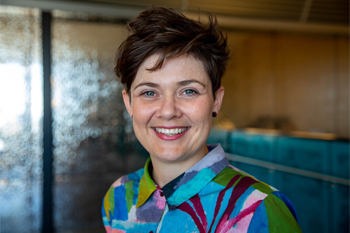
Dr Ruth Morgan from Monash University
Dr Ruth Morgan from Monash University is the recipient of the Academy’s 2020 Moran Award for History of Science Research.
She receives the award for her proposal entitled “A History of Australian Climate Science, 1970–2000”.
Dr Morgan will examine the role of Australian climatologists and meteorologists in advancing the state of scientific knowledge about the causes and mechanisms of climate change and variability in the Southern Hemisphere over this time period.
Dr Morgan will pursue her pilot study using the holdings of the Australian Academy of Science Basser Library, the National Library of Australia and the National Archives of Australia.
Compared to the Northern Hemisphere, the large ocean mass in the Southern Hemisphere means that few regions south of the equator develop continental climates and instrumental and paleoclimatic data is relatively limited.
Dr Morgan said that Australia’s geopolitical position and environmental sensitivity to climatic change encouraged Australian scientists and policymakers to take a leading role in the study of global environmental change.
“I'm delighted to have the opportunity to study Australia's contributions to climate science, which have been vital to understanding climate change in our region and the Southern Hemisphere,” Dr Morgan said.
The Moran Award for History of Science Research is aimed at postgraduate students and other researchers with expertise in the history of Australian science. More information about the Moran award. Applications for the 2021 award will open in early 2020.
Education Investment Fund closure a loss for Australia
The Australian Academy of Science is disappointed with the Australian Parliament's decision to abolish the $4 billion Education Investment Fund.
Funding for emergency response and natural disaster recovery is clearly very important but it should not come at the expense of crucial long-term science & research infrastructure funding.
The abolition of the fund means a key long term and ongoing mechanism to support research infrastructure in Australia is now lost.
The Education Investment Fund has supported many transformative projects important to Australia’s national interest. Among them are the Square Kilometre Array Telescope, the Australian Synchrotron, a climate high performance computer capability at the National Computational Infrastructure and nuclear science facilities at ANSTO.
The abolition of the fund not only reduces Australia's capacity to be scientifically competitive in future, but also limits our ability to participate in future international big science projects.
Academy reaches two million Facebook likes in two years

What is genetic modification? What does travelling overseas have to do with the measles? What’s the best exercise for losing weight?
In the fast-paced world of today, the public wants credible and trusted sources of information. The Academy is engaging millions of social media followers through videos and web articles that cover science as it happens.
The Academy’s content is accurate and well-researched—and is fully checked by Fellows and other leading scientists before it is published.
Two million likes on the Academy’s Facebook page to date shows there is a public appetite for the content.
The Academy’s Facebook likes surpass other prominent online science and news sources. BBC Science News has around 800,000 likes, ABC Science nearly one million and news.com.au has just over one million.
Academy President, Professor John Shine, said the online videos and articles allow the public to engage with accurate and engaging science, and in addition are routinely used by mainstream media in their online articles.
Watch the videos and read the articles on our website and like and follow us on social media for more engaging science stories:
Mathematics trailblazer and role model wins Prime Minister’s Prize for Science
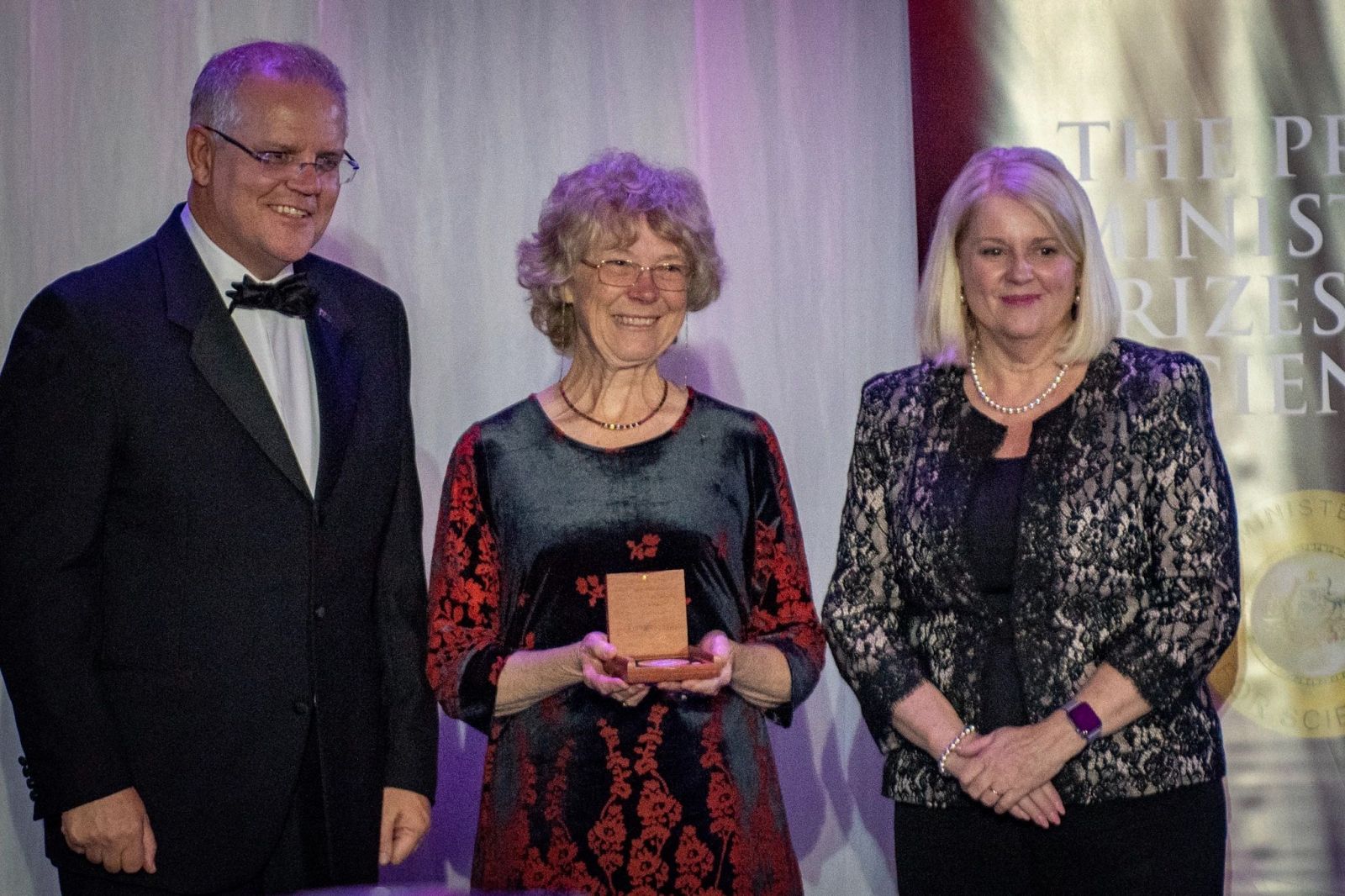
Emeritus Professor Cheryl Praeger is the 2019 recipient of the Prime Minister’s Prize for Science. Academy Fellows have featured each year since the prizes’ inception in 2000.
Emeritus Professor Praeger, who was elected to the Academy in 1996, received the $250,000 prize for her fundamental contributions to research in pure and applied mathematics. Her work explains the complex mathematics required for applications such as secure digital communication and encryption for the web.
Australian Academy of Science President, Professor John Shine, congratulated Emeritus Professor Praeger on her achievement during a Prime Minister’s Prizes for Science breakfast hosted at the Shine Dome the morning after the prize night. The breakfast was attended by past prize winners, parliamentarians and the science community.
“Cheryl, you have been, and continue to be a trailblazer and role model for girls and women in mathematics and beyond, across the globe,” Professor Shine said.
“As a Fellow of this Academy we are thrilled that you have been awarded the nation’s most prestigious prize for your contribution.”
Emeritus Professor Praeger spoke with ABC Radio National’s Breakfast program about her achievement.
“To receive the award, I find it a wonderful statement about the importance of mathematics and such a recognition of the achievements of myself, my colleagues and students in the research on the mathematics of symmetry,” Emeritus Professor Praeger said.
Search engines on the world wide web make use of symmetrical networks to store information so that on a request, the nodes where the information is stored can be searched quickly and effectively.
“I believe that we need many more people in the maths and STEM disciples to solve and face the new changes that will be facing us. We need creative and critical thinkers to be able to make progress,” Emeritus Professor Praeger said.
Emeritus Professor Praeger also has a long history of involvement with international scientific organisations as well as representing Australia through the Australian Academy of Science at international forums, particularly during her term as the Academy’s Foreign Secretary from 2014 to 2018. She is a board member of the Association of Academies and Societies of Sciences in Asia (AASSA) and since 2017 has chaired the Women in Science and Engineering Special Committee of AASSA.
She is currently a member of the International Science Council Standing Committee for Freedom and Responsibility in Science which deals with freedom and responsibility of science matters at the global level.
Two recipients of the Academy’s 2019 honorific awards were also Prime Minister’s Prizes for Science winners.
The $50,000 Frank Fenner Prize for Life Scientist of the Year went to Associate Professor Laura Mackay from the University of Melbourne for her breakthrough work in identifying the role of tissue-resident T cells in protecting the body from infection and cancer.
Associate Professor Mackay was awarded the Academy’s Gottschalk Medal earlier this year.
The $50,000 Malcolm McIntosh Prize for Physical Scientist of the Year went to Associate Professor Elizabeth New from the University of Sydney for pioneering the development of new chemical imaging tools to observe healthy and diseased cells.
Associate Professor New was awarded the Academy’s Le Fèvre Medal earlier this year.
See the full list of the Prime Minister’s Prizes for Science recipients.
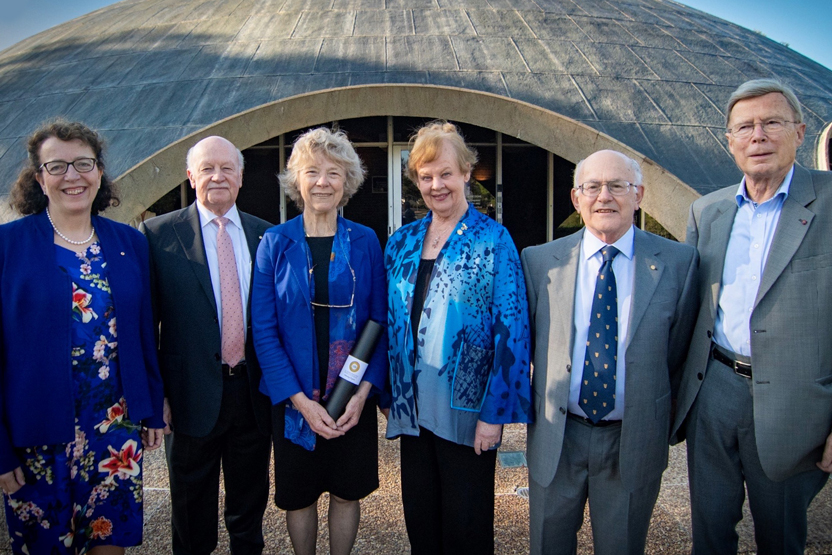
Outstanding Australians recognised for contributions to science
How do we get science into Australia’s culture and more connected with the business community? It’s a question that Australian businessman Peter Yates AM continues to pursue since noticing that science was largely missing from mainstream media and parts of the business community 15 years ago.
He joins Australian Space Agency Head Dr Megan Clark AC as the joint 2019 recipients of the prestigious Australian Academy of Science Medal. These two trailblazers in Australian science have worked across industries to advance the cause of science and technology through the public domain.
Dr Clark has led innovation in science nationally, as the first female chief executive of CSIRO, and now due to her ambitious leadership of the Australian Space Agency Australia is making exciting waves in space research and future space exploration.
President of the Australian Academy of Science, Professor John Shine, said the medal recognises outstanding contributions to science by means other than research.
“The medal is awarded to a person outside the Fellowship who has, by sustained efforts in the public domain, significantly advanced the cause of science and technology in Australia or who has made a substantial contribution to the Academy,” Professor Shine said.
Previous recipients of the medal include Bob Hawke (1990), Dr Norman Swan (2004), Professor Sue Serjeantson (2008) and Professor Ian Chubb FAA (2016).
In 2004 Mr Yates noticed that science was missing from the mainstream media.
“It struck me that given how important science is and the decision making around science for our community, that if the leading television station in the country (Channel Nine at the time) didn’t really have any focus on science in any of its program meetings, I felt we had a problem,” said Mr Yates.
In 2005 Mr Yates helped found the Australian Science Media Centre and later the Royal Institution of Australia. His objective was to change the way Australia looked at science. Today he hopes that science can be an even broader influence on society.
“The biggest surprise for me has been the disconnect between the business and science communities in Australia and I think that gets to a deeper issue for our community but also a tremendous opportunity,” said Mr Yates.
“It’s improving a lot and the Academies have done a tremendous job in reaching out to businesspeople, who are starting to learn more about why they need to be involved in that conversation.
“In that regard I am honoured to have received this award and thank all of the scientists and businesspeople as well as the amazing teams at the RiAus and the AusSmc for their tremendous encouragement and support over the past 15 years.”
Dr Megan Clark AC is an Australian geologist with an extensive career in both the private and public sector. Starting as a mine and exploration geologist, she subsequently worked in mineral exploration, mine geology, R&D management, venture capital and technical strategy areas.
In 2009 she was appointed Chief Executive of the CSIRO. Under her leadership CSIRO was credited for several new ventures, including wireless research.
Dr Clark is also currently a director of Rio Tinto, CSL Limited and CARE Australia and recently chaired the Expert Working Group into the Review of Australia’s Space Industry Capability.
Dr Clark said it is a surprise and an honour to be awarded the Academy Medal.
“My career has been dedicated to using breakthrough science to create value for our nation and everyday lives: whether it was using geological science to discover mines or understanding how primitive archaea (single-celled microorganisms) could create a new way to make copper at BHP or new animal vaccines or gene technology for cotton at CSIRO,” Dr Clark said.
“Now I am lucky enough to be building an amazing team working to transform and grow Australia's space industry. I can only accept this wonderful award from the respected Australian Academy of Science on behalf of these extraordinary team members.”
Heading overseas? Measles is one of your risks. Get vaccinated.

Measles outbreaks are happening across the globe and are reaching Australia. In the past month, there have been confirmed cases in Perth, Sydney, the Gold Coast and Cairns. In light of these outbreaks, the Australian Academy of Science is urging Australians heading overseas, for business or pleasure, to make sure their measles vaccinations are up to date.
According to the Australian Department of Health’s National Notifiable Diseases Surveillance System there have been 172 notifications of measles in Australia so far in 2019, compared to 103 cases in 2018.
The call comes as the Australian Health Department, in partnership with the Academy, releases educational and promotional materials to inform consumers and health professionals about the highly contagious and sometimes deadly disease.
Public health expert Professor David Durrheim from the University of Newcastle, who features in the materials, said most measles cases are Australians who are unprotected from the disease, travelling overseas to places where measles is spreading, and bringing it back.
“The Philippines has had a very large outbreak with large numbers of deaths in young children. There have been outbreaks in Thailand, Vietnam, and Indonesia,” Professor Durrheim said.
While measles is more common in developing countries where vaccines are less widely available—particularly in parts of Africa and Asia—outbreaks have also occurred in destinations that a lot of Australians might consider ‘low-risk’ for getting sick including parts of Europe, the United States and New Zealand.
“It’s not just the unvaccinated who pose a risk to public health: many people in Australia may be under-vaccinated without realising it,” said Professor Frazer, who also features in the materials.
The latest immunisation coverage data for two-year old children in Australia shows coverage of more than 93% for the measles mumps and rubella (MMR) vaccine.
“Those most at risk of developing complications tend to be the same people who are unable to be vaccinated against the disease so it’s crucial that others in the community are fully immunised to prevent the spread of disease to the most vulnerable in our society,” Professor Frazer said.
“Two doses of the MMR vaccine provide lifelong protection. Check your vaccination records and if in doubt about whether you’ve had two doses speak with your GP. It is safe to have another MMR vaccine if you don’t have evidence of a second dose. This ensures you’ve got the best possible protection.”
People under 20 years of age, refugees and other humanitarian entrants of any age, can get measles vaccines for free through the National Immunisation Program if they did not receive the vaccines in childhood.
The Department of Health recommends measles immunisation for specific groups of people.
Academy videos and articles
The Academy has produced four short videos and four articles to help people understand the importance of vaccinations to protect against measles.
See all the videos and articles
The new initiative includes:
- consumer videos on the following topics:
- Measles alert
- Are you protected?
- Travelling? Get vaccinated
- a video for health professionals to raise awareness of increased notifications and the importance of talking to patients about their vaccination status and the availability of catch up vaccines (where appropriate).
- feature articles on the following topics:
- Who is most at risk of measles
- Measles: what you need to know
- Measles info for travellers
- How measles impacts your immune system
The videos and articles have been rigorously fact-checked by Academy Fellows and feature some of Australia’s leading experts in the field including Professor Karin Leder from Monash University and Royal Melbourne Hospital, and Dr Sonya Bennett from Queensland Health.
Michelle Tapper receives Churchill Fellowship to study science communication

Michelle Tapper will travel across the US, UK and Europe with her Churchill Fellowship to study science video production
Michelle Tapper of the Academy’s Communications and Outreach team has received a Churchill Fellowship to support her to travel across the US, UK and Europe to study science video production with high profile organisations around the world.
A Churchill Fellowship provides an opportunity for talented Australian citizens to travel overseas to investigate inspiring practices that will benefit Australian communities. These Fellowships are delivered by the Churchill Trust in the memory of Sir Winston Churchill, providing an opportunity for Australians to conduct research in their chosen field that is not readily available in Australia.
Michelle’s Fellowship will allow her to visit and make connections with a range of science, media and not-for-profit organisations including NASA, National Geographic, the BBC, the Alan Alda Center for Communicating Science and the World Health Organization, among others. With 22 years of journalism experience and as Supervising Producer for the Academy’s Communications and Outreach team, her particular area of interest is science video production and digital media. The Academy has focused strongly on this in recent years, creating content designed for a broad audience on social media.
“Our video project at the Australian Academy of Science has garnered more than 1.7 million followers in less than two years, which shows that people have a desire to learn about science when it’s presented in an engaging way,” Michelle said.
When she returns, Michelle will share her learnings with the Academy and her networks across the science and media sectors, further ensuring that Australia will excel at communicating engaging science messages through digital media.
“It’s a huge honour to be awarded a Churchill Fellowship and I’m grateful for the opportunity to improve my knowledge and develop international connections in science video production,” Michelle said.
“Everyone should have access to science information which should inspire, inform and improve lives.”
Australian Academy of Science welcomes Australia–US bilateral science and technology initiatives
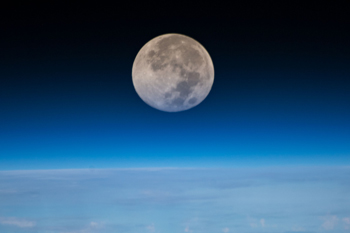
New initiatives will support NASA's mission to return to the moon and travel to Mars. Photo: NASA
The Australian Academy of Science welcomes a range of Australia–US bilateral science and technology initiatives announced by Prime Minister Scott Morrison during his meetings in Washington.
The initiatives include significant investment of $150 million into local Australian businesses, researchers and new technologies to support NASA’s mission to return to the moon and travel to Mars, representing a boost for the Australian Space Agency.
“The Government’s space investment builds on a long history of cooperation between Australia and the US in space missions and will have a lasting impact on the growing space industry and workforce in Australia,” said Professor John Shine, President of the Academy of Science.
The Academy also applauds a range of other science related initiatives announced by the Prime Minister that will boost cooperation between Australia and the US including:
- an agreement to hold high-level discussions in Washington, DC in November to develop a critical minerals action plan and increase trade in rare earths between the US and Australia. Rare earth minerals are essential to support our high-tech future
- an agreement to work together on reducing /eliminating marine plastic debris and to support efforts on improved waste management, recycling and innovation, which is both timely and essential
- opportunities for Australian scientists to provide advice on lithium-ion recycling and on hydrogen safety, which build on Australia’s strengths
- cooperation between the National Science Foundation and Australian researchers on research projects of mutual and strategic interest.
“The bilateral agreements between Australia and the US provide opportunities for Australian scientists to contribute their expertise to a number of issues of global importance, where science will be critical to finding environmental and technology solutions,” Professor Shine said.
“The announcements are a reminder of the importance science plays as a soft power asset in international engagement.”
Australia cannot afford to compromise the principles underpinning scientific research
STATEMENT FROM THE NATIONAL RESEARCH AND INNOVATION ALLIANCE
The National Research and Innovation Alliance resolutely takes the view that benefits to the nation and the advancement of knowledge are best served by a culture where researchers can put forward views and present data for discussion and scrutiny free from interference and without fear of reprisal.
As organisations representing researchers across the nation, we commit to the Principle of Universality (freedom and responsibility) of Science (see background note).
In return for scientific freedoms, researchers must ensure they conduct their work responsibly and ethically, respecting regulations and laws. Researchers recognise they have a duty to contribute to the public good by placing societal benefits ahead of personal gain, acknowledging risk and uncertainty, and being accountable for responsible and honest communication of their work.
Principles that guide the scientific enterprise include posing testable and refutable hypotheses; designing studies that test competing counter-hypotheses, using transparent methods that enable other scientists to verify their accuracy, and recognising the importance of independent replication across studies.
Research knowledge forms the basis of innovations and advances that serve the well-being of society, however, it is acknowledged that they can also do harm. Given this, researchers take seriously their obligation to critically reflect upon how their expertise is used, particularly when asked to support decision-making and policy processes.
Peer review as a foundation for dependable and quality research
An important element that unites scientific inquiry is disclosing findings and subjecting them to scrutiny and critique by peer review. Peer review provides evaluation of work by people who are qualified to judge the matter under consideration and who have current or recent research experience and are therefore exposed in turn to the same form of scrutiny.
Peer review is widely regarded as the scientific seal of approval, denoting quality, validity, and importance. This allows knowledge to be generated, compared, tested and refined over time.
This mechanism helps ensure that the scientific record represents the best available knowledge and it is the responsibility of all researchers to participate in this process.
Researchers will not consider a scientific finding as valid unless it has been approved by the process of peer review. In its absence, researchers consider any findings presented as preliminary and potentially flawed.
Those who disagree with peer-reviewed findings should participate in the scientific process and subject their findings to the same level of scrutiny and review.
Attempts to bypass peer review allow unqualified individuals and organisations to compare their often ad hoc views with findings derived from well-controlled analyses of available data and experimental investigations. This has the potential to subject science to political interference.
Peer review is to the governing of the scientific enterprise what democracy is to the governing of the country. The concept of peer review retains the confidence of the majority of researchers and the Australian research funding agencies, assuring that they support the highest quality research.
The confidence of the research community, and of the taxpayer, that the public investment in the national research base is well managed, can be sustained only if an effective form of peer review holds.
The fundamental principles and processes outlined in this statement have underpinned knowledge generation for centuries and are essential to inform decision making by policy makers as well as by members of the broader community. Any attempt to undermine them erodes decision making in our nation.
National Research and Innovation Alliance members:
- Academy of the Social Sciences in Australia
- Association of Australian Medical Research Institutes
- Australian Academy of Science
- Australian Society for Medical Research
- Australian Technology Network of Universities
- Group of Eight Australia
- Innovative Research Universities
- Professionals Australia
- Research Australia
- Rural Research and Development Corporations
- Science and Technology Australia
Background note
Principle of Universality (freedom and responsibility) of Science:
“The free and responsible practice of science is fundamental to scientific advancement and human and environmental wellbeing. Such practice, in all its aspects, requires freedom of movement, association, expression and communication for scientists, as well as equitable access to data, information, and other resources for research. It requires responsibility at all levels to carry out and communicate scientific work with integrity, respect, fairness, trustworthiness, and transparency, recognising its benefits and possible harms. In advocating the free and responsible practice of science, the International Science Council promotes equitable opportunities for access to science and its benefits, and opposes discrimination based on such factors as ethnic origin, religion, citizenship, language, political or other opinion, sex, gender identity, sexual orientation, disability, or age.” (Freedom, Responsibility and Universality of Science, International Science Council, Statute 5.)