




Primary Connections features at international conference on children's STEM education

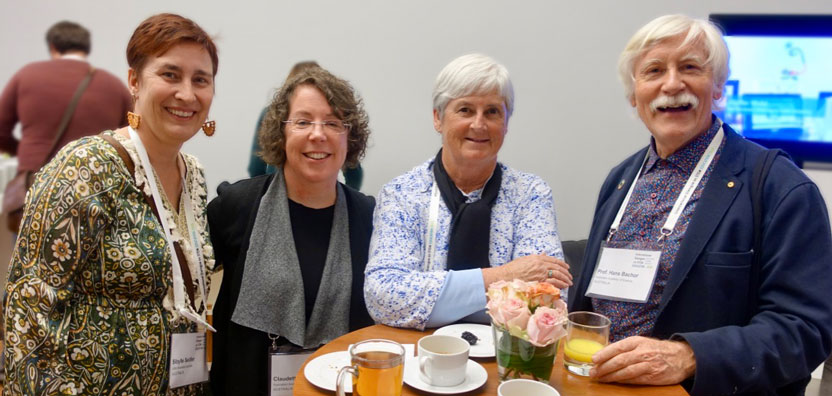
Australians at the conference included (from left) Project Director of Little Scientists in Australia, Sibylle Seidler; Academy Education Director Claudette Bateup; Associate Professor Coral Campbell from Deakin University; and Academy Fellow Emeritus Professor Hans Bachor.
Two education experts from the Academy promoted the Primary Connections program at an important international conference on children’s STEM education in Berlin recently.
The Academy’s Secretary Education and Public Awareness Emeritus Professor Hans Bachor, and Director Education Claudette Bateup, represented the Academy at the International Dialogue on STEM Education 2019, the second in a series of biennial conferences on early STEM education. Professor Bachor was co-chair of the event program committee.
The event on 5 and 6 December brought together 100 scientists, representatives of leading STEM initiatives, and decision-makers in politics, economics, civil society and culture, all focusing on early childhood STEM education for sustainable development.
According to the conference organisers, global developments such as digitisation, climate change, increasing social inequality and migration will impact the lives of people still in pre-school today. The aim of early education should be to help children become self-determined adults who can help shape global challenges.
Primary Connections was one of seven education programs from six continents—and the only Australian one—specifically selected as highlights of the conference. Ms Bateup presented a workshop on ‘Not just numbers—how can we make the most of monitoring and measurement to drive change and improvement in STEM education for sustainable development?’
“Our hope is that the young generation, starting at just a few years old, will be better informed and develop a healthy critical but constructive and positive attitude to our rapidly changing world,” Emeritus Professor Bachor said.
“At the conference we discussed how this can be achieved across the world. We showcased and compared examples with great impact, including Primary Connections from Australia.”
The International Dialogue on STEM Education 2019 was a joint conference of the Haus de kleinen Forscher Foundation and Siemens Stiftung. It took place under the auspices of the German Commission for UNESCO.
Research on Australia’s cities and regions: siloed, lacking vision and underfunded
The sustainable transformation of Australia’s cities and regions is being hampered by institutional silos, perennial underfunding and lack of a national vision according to a new report by Future Earth Australia, a program of the Australian Academy of Science.
The report, developed through an extensive consultation process and overseen by leading urban research, practice and policy experts from around Australia, is being launched today at the State of Australian Cities conference in Perth.
It lays out a 10-year plan to transform Australia’s cities and regions and to address urban problems including transport congestion, inflated housing markets, the loneliness crisis, inequity in opportunities and biodiversity loss.
The report responds in part to the CSIRO National Outlook 2019 report, which identified cities and regions as critical sites for change.
Director of the Centre for Urban Research at RMIT University, Professor Jago Dodson, chaired the report’s Expert Reference Group.
Professor Dodson said that conversations with stakeholders highlighted the rich variety of local transformation and innovation taking place in suburbs and cities around Australia that is driven by individuals, small businesses, community groups and local government.
“However, these groups felt disconnected from each other across sectors and disciplines,” Professor Dodson said.
“Meanwhile Australia’s urban researchers are stifled by institutional silos and disciplinary or sector-specific remits.
“The report recommends that Australia sets a national vision for cities and establishes a national network of knowledge hubs to empower local innovation."
It also recommends the establishment of new partnerships across urban sectors and capacity building among researchers, practitioners and policy makers.
“Implementing this strategy would set Australian cities on track for future prosperity and sustainability, Professor Dodson said.
The report makes eight recommendations (see page nine of the report) for addressing the barriers preventing Australia’s urban and regional areas from achieving sustainable development.
Project lead and Director of Future Earth Australia, Dr Tayanah O’Donnell, said each Australian city and region has a distinct character, as well as strengths and challenges when it comes to delivering wellbeing for its inhabitants.
“These distinct qualities help us understand what drives sustainable development in different urban contexts. Future Earth Australia held workshops around the country to make sure the plan reflects Australia’s diversity and innovation,” Dr O’Donnell said.
“The report is a bottom-up, cross-sectoral plan for achieving sustainable cities and communities across Australia by 2030. Government, industry, the research sector, peak bodies, the philanthropic sector and civil society all have parts to play in driving this change.
“We're clever enough, there's enough science and enough knowledge to say: ‘We can have green spaces and affordable, plentiful housing, and thriving cities and regions’ so that everybody benefits from that.”
Read the report.
Researchers to study ‘fairy circles’, tree rings and smoke signals with Academy support
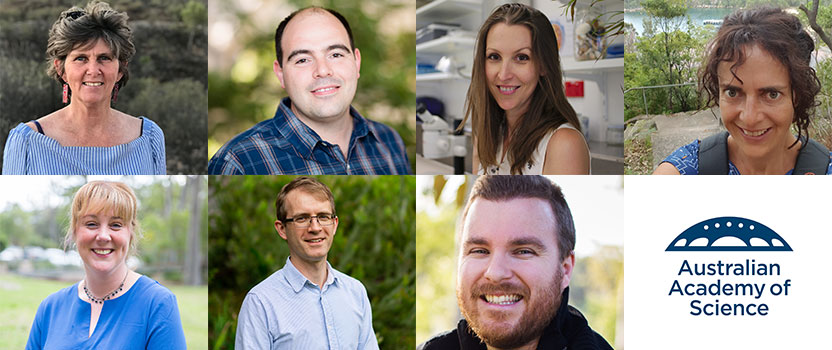
Recipients of the Thomas Davies Research Grant in 2019. Top (from left): Dr Fiona Walsh, Dr Edwin Lampugnani, Dr Jennifer Lavers and Dr Elisabeth Strain. Bottom (from left): Dr Danielle Verdon-Kidd, Dr Mark Waters and Dr Simon Williams.
Unlocking climate secrets in tree rings, understanding smoke signals and unearthing ‘fairy circles’ are the aims of some of the researchers awarded the Australian Academy of Science's 2020 Thomas Davies Research Grant for Marine, Soil and Plant Biology.
Seven researchers are recipients of the award this year.
Dr Danielle Verdon-Kidd from the University of Newcastle will use mangroves (Avicennia marina) to help reconstruct the climate record in east coast Australia. While Australia only has a short history of instrumental climate data, it does have natural archives—such as corals, tree rings and cave formations—that can be exploited to show our past climate.
Mangroves can live for hundreds of years and record environmental information in their wood, including wood density, vessel arrangement and isotopic composition. By studying the species, scientists have the potential to reconstruct the pre-instrumental record of rainfall and streamflow events and help unlock the flood and drought history of Australia’s east coast.
Dr Mark Waters from the University of Western Australia will study interactions between light and smoke signals in plant development, using mutant seedlings of rockcress, a small flowering plant related to cabbage and mustard.
“This project is fundamental in nature and will increase our knowledge of how plants sense changes in their environment and respond accordingly,” said Dr Waters.
Dr Fiona Walsh, consultant ethno-ecologist from the Northern Territory, will investigate the patterns of bare circular patches known as ‘fairy circles’. Widespread across desert spinifex grasslands, these patches are pavements over the top of active or inactive termite colonies.
Desert termites are fundamental to the structure of soils, grasslands and the ecology of deserts. Termites convert dry spinifex and bulk grasses to animal foods and are described as the ‘krill of the desert’ as food for reptiles, echidnas, birds and small mammal species.
The project draws on ecological methods and the knowledge of Aboriginal desert people, who used termites and termite pavements in many complex ways.
Dr Elisabeth Strain from the University of Melbourne will investigate the role of kelp in mitigating ocean acidification and its capacity to dampen nearshore waves—a key ecosystem service that could help reduce coastal erosion.
Dr Jennifer Lavers from the University of Tasmania will study the role of seabirds as vectors for both soil nutrients and pollutants on islands, and how a decline in seabird population can affect ecosystem processes in these remote locations.
Dr Edwin Lampugnani from the University of Melbourne will study plant cell wall biology using the common liverwort Marchantia as a model for how flowering plants make cellulose—the main substance that gives plant cell walls strength and stiffness and is also used to make paper and cloth.
Dr Simon Williams from the Australian National University aims to establish a system using the bacterium Escherichia coli to produce multiple plant immunity proteins that help plants detect and provide protection against infection by plant diseases.
The Thomas Davies Research Grant for Marine, Soil and Plant Biology is funded through a generous philanthropic bequest from the estate of the late Thomas Lewis Davies to the Academy.
The award will open for applications for the 2021 round early next year. Science grants of up to $20,000 are available for early- and mid-career researchers in the fields of marine, soil and plant biology.
Academy Fellows awarded 2019 CSL Florey Medal
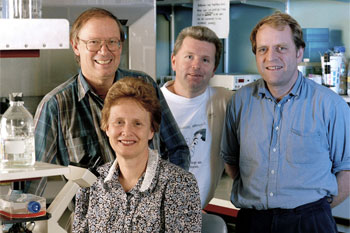
The role of BCL-2 in cell survival was explored in the early years by a research team including Jerry Adams, Suzanne Cory, Andreas Strasser and David Vaux.
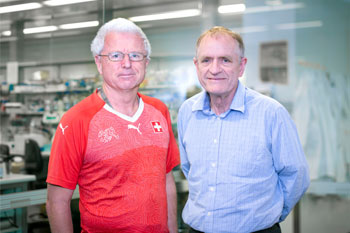
Academy Fellows Professor Andreas Strasser and Professor David Vaux.
Academy Fellows Professor David Vaux and Professor Andreas Strasser have been awarded the 2019 CSL Florey Medal for their research toward understanding the role of programmed cell death, knows as apoptosis, in cancer and autoimmune disease.
The molecular biologists work at the Walter and Eliza Hall Institute of Medical Research where they have been making important discoveries over the last 30 years into the control of apoptosis and how this knowledge can be exploited to develop new medical treatments for cancer and other diseases.
Apoptosis ensures that old or damaged cells die and don’t remain to cause disease. It is an important process in living organisms, both during development and for ensuring homeostasis.
Work by the researchers identified that the function of a protein named Bcl-2 was to stop apoptosis and keep cells alive. By studying the role and regulation of Bcl-2, they showed that not all cancer is caused by uncontrolled cell multiplication, it can also be caused by cells that do not follow the normal program of cell death—effectively they ‘fail to die’.
New field of investigation
The findings of Professor Vaux and Professor Strasser have sparked a whole new field of investigation into apoptosis and the origins of cancer and autoimmune disease. Their work has also led to the development of new treatments based on drugs designed to inhibit Bcl-2 and its relatives and thus encourage normal cell death.
On the basis of their findings, a potent new inhibitor of Bcl-2, developed by others at the Walter and Eliza Hall Institute in collaboration with US pharmaceutical companies Genentech (a member of the Roche Group) and AbbVie, is now being used to treat leukaemia around the world. Other group leaders at WEHI who were also involved in the generation of this powerful new treatment for cancer include Jerry Adams, Suzanne Cory, David Huang, Philippe Bouillet, Peter Colman, Keith Watson, Guillaume Lessene, Andrew Roberts, Ben Kile and Peter Czabotar.
The Australian Institute of Policy and Science established the Florey Medal in 1998, named in honour of Sir Howard Florey, the Australian Nobel Prize-winning scientist who developed penicillin. Academy Fellows feature strongly: the inaugural award in 1998 was made to Professor Barry Marshall and Professor Robin Warren, who since became Academy Fellows and Nobel Laureates. Another six Fellows have also received the award.
The medal is awarded biennially to an Australian researcher or researchers for significant lifetime achievement in biomedical science or human health advancement. In addition to the silver medal, there is a prize of $50,000 thanks to the support of CSL Limited.
Fellowship recipients for 2020 Australia–India research collaborations announced
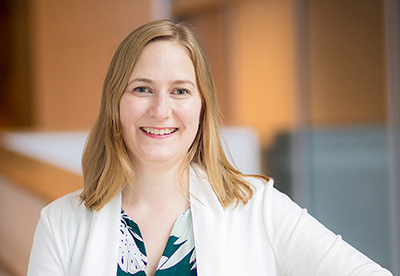
Dr Alison Pearce of the University of Sydney is one of the recipients of the 2020 AISRF fellowship recipients announced by the Academy.
The Academy has announced the successful recipients of the Australia–India Strategic Research Fund Early- and Mid-Career Researcher 2020 Fellowships.
Each recipient receives up to $16,500 in funding to conduct research at some of India’s leading research institutions.
The fellowship opens doors for connections with global experts within an early- or mid-career researcher’s field, provides leadership opportunities and paves the way for long-term international collaborations.
Fellowship recipients work on a diverse range of subject areas. The Australian National University’s Dr Sergey Kruk is one of the researchers heading to India next year. He is working on developing new technologies in photonics to create miniaturised optical systems for use in the telecommunications industry, collaborating with scientists at the Tata Institute in Mumbai.
Deakin University’s Dr Fiona Mckay will investigate the roles of Punjab women in food production, and the wider issue of global food security. Dr Mckay is interested in how people from different groups across the world react to adversity, and her research and collaborations in India with researchers at Chitkara University will build on this. The long-term aim of her work is to influence policy changes to improve food security and gender equity.
Dr Alison Pearce from the University of Sydney has previously led a research project on the impact of cancer across a range of nations. With the fellowship funding she will study the loss of productivity that results from cancer in an Indian population. She will collaborate with the Healis Public Health Institute in Mumbai and the Public Health Foundation India.
The full list of 2020 recipients are:
- Dr Sumeet Walia, RMIT University – Harness atomically thin materials for pollution sensors and efficient industrial lubricants
- Dr Nagendrakumar Singanallur Balasubramanian, CSIRO – Systems-immunology based approach to study early immune responses to foot-and-mouth disease vaccination in Asian buffalos
- Dr Ravinesh Deo, University of Southern Queensland—Developing resilience to climate change and variability for water resources management and food security with artificial intelligence
- Dr Sergey Kruk, Australian National University—Photonics at the nanoscale: new disruptive ways to control light with nanotechnology
- Dr Morteza Saberi, University of Technology Sydney—Scholarly solution support system
- Dr Fiona Mckay, Deakin University—Documenting the food insecurity experiences and nutritional status of women in India
- Dr Suvash Saha, University of Technology Sydney—Respiratory particle transport: ageing effect and targeted drug delivery
- Dr Jegadesan Subbiah, University of Melbourne—In-situ vibrational spectroscopic studies on the electrode interfacial process for renewable energy storage devices
- Dr Alison Pearce, University of Sydney—The cost of cancer in India: local estimates of lost productivity due to premature cancer mortality
- Dr Shuaifei Zhao, Deakin University—Closing the CO2 loop in biogas production by innovative membrane technology
- Dr Siva Krishna Karuturi, Australian National University—New-generation materials for low-cost and high efficiency solar hydrogen generation
- Dr Thanh Thi Nguyen, Deakin University—A human–machine teaming framework based on deep reinforcement learning for disaster management
- Dr Sonika Tyagi, Monash University—Using machine learning to develop robust and reproducible miRNA biomarkers to detect preterm labour
- Dr Sanjay Nimbalkar, University of Technology Sydney—Sustainable performance of future high-speed rail and heavy haul freight corridors: effect of climate change and mitigation measures
- Dr Christina Aggar, Southern Cross University—A mobile digital learning program to support nurses’ leadership and communication skills in chronic disease management: a primary healthcare initiative
- Dr Rebecca Zwart, University of Southern Queensland—A genomics approach to understanding root-lesion nematode resistance in chickpea
- Dr Jency Thomas, La Trobe University—Metabolic syndrome influencing neurodegenerative disorder (MIND project)
- Dr Ashmita Sengupta, CSIRO—Developing functional environmental flows framework to enhance resilience and improve water security under climate change and urbanisation scenarios
- Dr Kaya Klop Toker, University of Newcastle—Identification of frog and disease diversity in a remote part of India (Nagaland).
This program is supported by the Department of Industry, Innovation and Science.
New resource for increasing diversity in awards
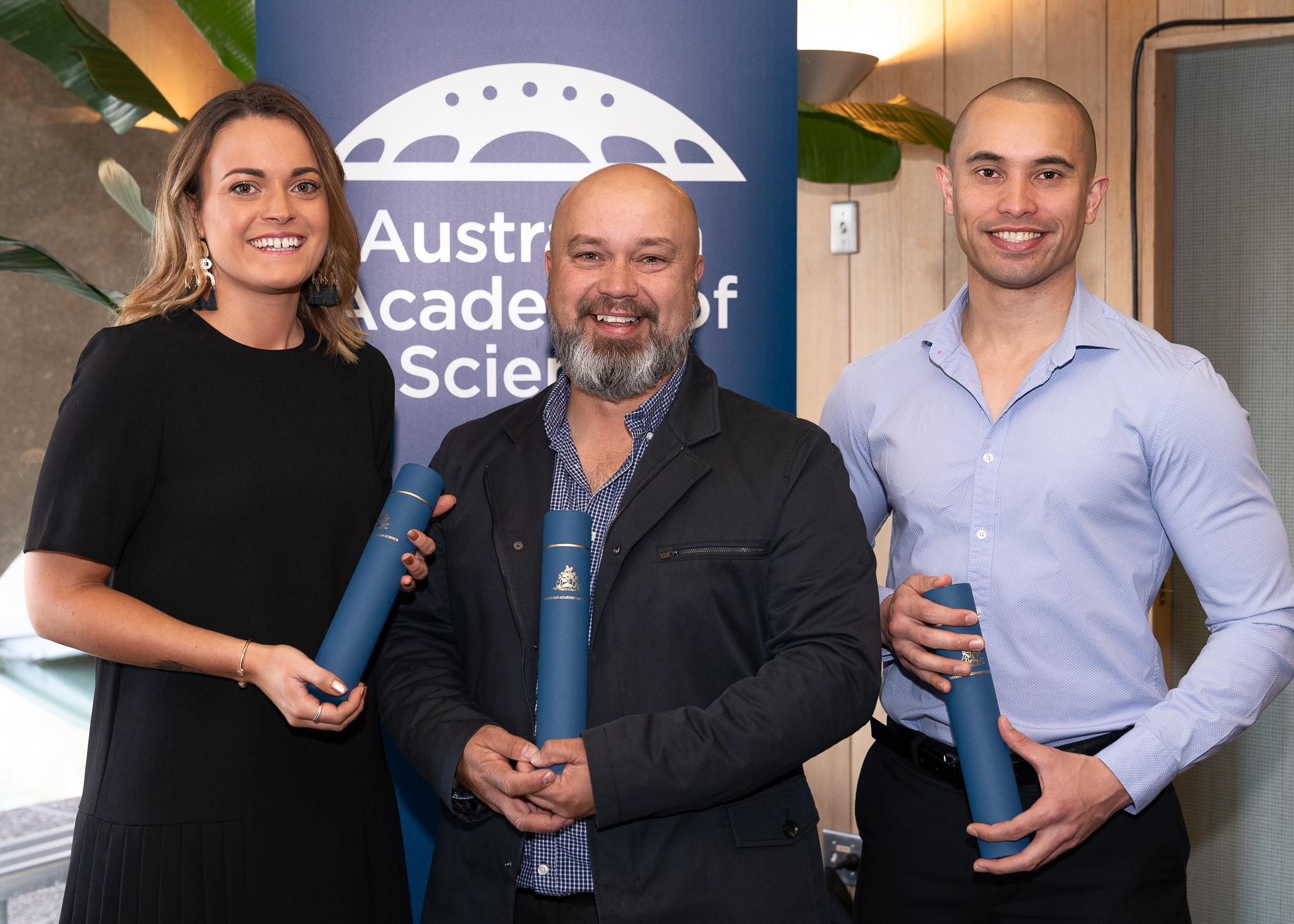
Inaugural recipients of the Academy's Aboriginal and Torres Strait Islander Scientist Travelling Research Award (L–R) Amy Searle, Bradley Moggridge and Tui Nolan (see video below). Photo: Bradley Cummings.
A new resource published by the Academy aims to increase the diversity of prize and award recipients in the Australian science, technology, engineering and mathematics (STEM) sector.
Prepared by the EMCR Forum, Australia’s voice for early- and mid-career researchers, the comprehensive publication identifies barriers faced by under-represented groups and provides solutions to overcome them.
It is a practical guide to assist awarding organisations improve their practices and increase diversity among both applicants to and recipients of prizes and awards.
“We are really excited about the positive responses we have received so far,” says the Academy’s Manager Diversity and Inclusion, Ms Louise Moes. “This resource demonstrates the Academy’s leadership and its commitment to supporting the next generation of science leaders.”
The seven-page guide and a one-page summary are available on the Academy website.
Prizes and awards are an important component of a scientist’s career, potentially affecting their chances of promotion, recruitment and general career progression.
But many awards schemes across Australia display low diversity compared to the broader STEM sector, with women and minority groups consistently under-represented.
“The persistent exclusion of women and minority groups in research cultures has led to an image of successful scientists with which people from diverse backgrounds do not identify,” write the authors of the guide.
Key recommendations include:
- reaching a diverse pool of applicants with advertising and messaging that is visually inclusive and avoids elitist language
- using diverse role models and ‘champions’ to encourage applicants
- ensuring the call for applications is timed appropriately
- incorporating questions about career interruptions into the standard application form
- ensuring selection criteria is sufficiently flexible and that the selection panel is diverse.
The paper arose out of a series of workshops at the EMCR Science Pathways conference and Science at the Shine Dome in 2018, and was a collaborative effort of the EMCR Forum Executive and the Australian Academy of Science.
Read ‘Increasing diversity in prizes and awards’
Read the one-page summary
Margaret Middleton Fund supports innovative ecology projects
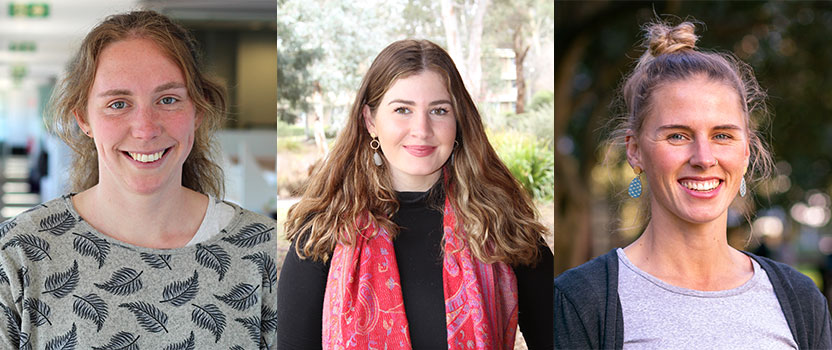
Three early-career ecology researchers have been awarded funding for 2020 projects thanks to the Australian Academy of Science’s Margaret Middleton Fund for endangered Australian native vertebrate animals.
The recipients are:
- Dympna Cullen, PhD candidate, UNSW Sydney
- Jackie O’Sullivan, PhD candidate, Australian National University
- Penelope Pascoe, PhD candidate, University of Tasmania
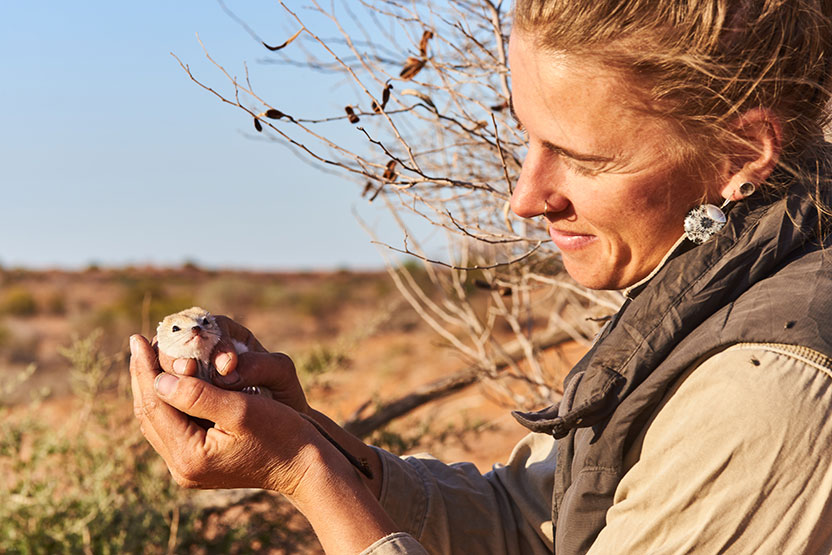
Ms Cullen’s research focuses on a desert-dwelling mammal species, the crest-tailed mulgara. She will use the grant to conduct surveys in the Strzelecki Dunefields to figure out where mulgaras find refuge during periods of drought—knowledge that will inform management of this threatened species.
"I feel very privileged to have the support of of the Margaret Middleton Fund," Ms Cullen said. "The funding will contribute considerably to the scope of my research and I am excited by the potential of what I am now able to accomplish."
Ms O’Sullivan is studying the role of surface rocks as reptile habitat in agricultural landscapes. Many threatened species, such as the striped legless lizard, rely on rocky habitats for survival. However, rocks are often removed from grazing paddocks. Ms O’Sullivan’s experiments will investigate the effects of restoring surface rocks on reptile abundance and diversity.
“The funding will allow me to collect additional environmental data to maximise the scientific and practical value of this restoration experiment,” Ms O’Sullivan said. “I feel incredibly honoured and grateful for the opportunity and recognition.”
Ms Pascoe is undertaking a large-scale evaluation of ecosystem recovery on islands where rodents have been eradicated. She plans to gather data from 30 islands across Australia and New Zealand to assess changes in the whole ecosystem.
“The funding will enable me to collect data from some study sites more regularly, and to include more sites,” said Ms Pascoe. “It was a nice surprise to get it and very beneficial at this early stage in my project.”
Rodent eradication programs are expensive, so monitoring effectiveness is important to ensure the best conservation outcomes. “Islands are both biodiversity and extinction hotspots, which means island conservation efforts have the potential to disproportionately benefit global biodiversity.”
The Margaret Middleton Fund for endangered Australian native vertebrate animals provides grants to support emerging researchers with ecology projects that have tangible conservation outcomes. The fund was established in 2000 with Dr Margaret Middleton, a long-time supporter of the Academy and early-career scientists, who passed away in March this year.
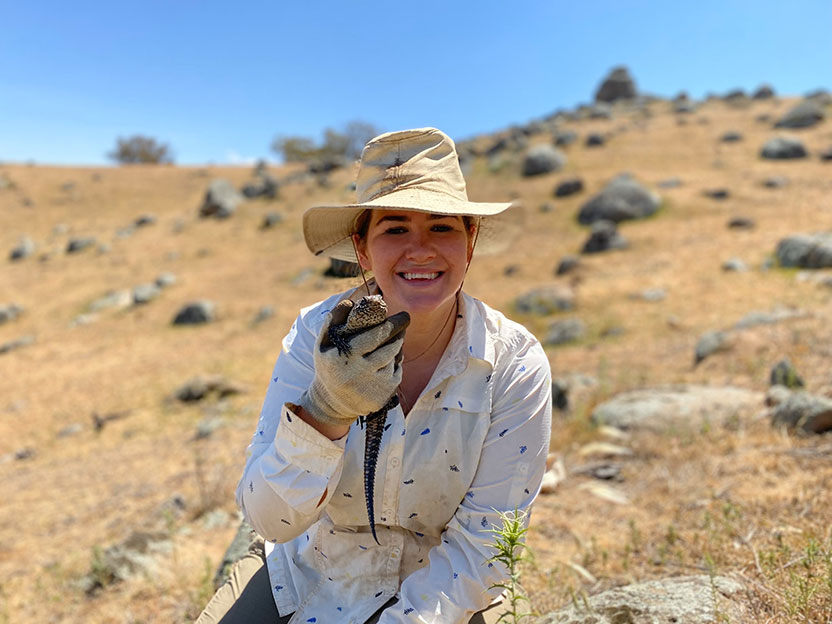
Jackie O'Sullivan holds a Cunningham's skink. Photographer: Jason Drinkwater
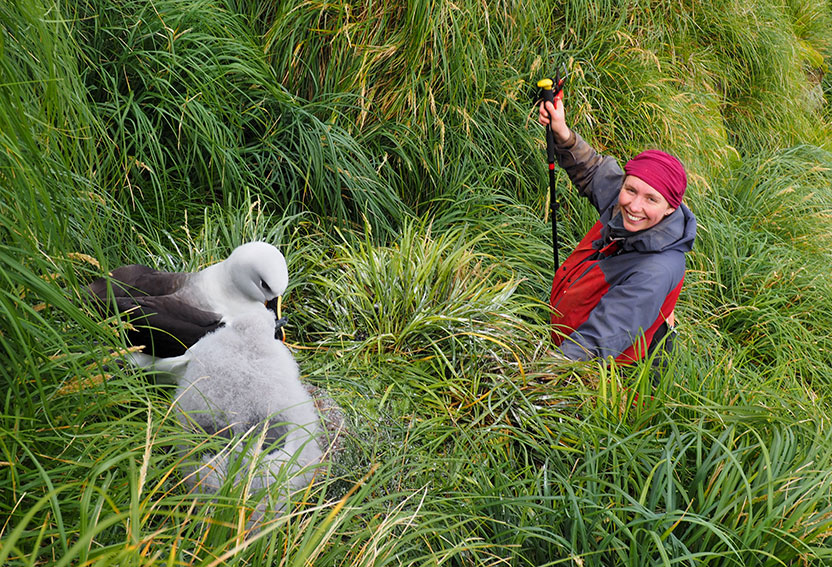
Penelope Pascoe monitoring a grey-headed albatross parent and chick on sub-Antarctic Macquarie Island. Photographer: Andrea Turbett
Department of Health reaches millions with the Academy
Department of Health reaches millions with the Academy
When the Australian Government Department of Health wanted to create a public awareness campaign about immunisation, it partnered with the Academy. Together, the organisations designed a public health message with impact, distributed to an audience of millions.
The ‘Science of immunisation’ campaign, which commenced in October 2018, included six short-form videos and five articles designed to engage the unengaged. Topics included the safety of vaccines and a look at the ingredients that make up a life-saving shot. As with all of the Academy’s outreach content, each piece of communication went through a rigorous fact check and review by independent experts.
The immunisation campaign was so successful, it inspired the Department of Health to partner with the Academy for campaigns specifically about meningococcal disease and measles. The meningococcal campaign, in November 2018, encouraged the public to get vaccinated for the different strains of the disease.
The measles campaign was launched in early October 2019 with five videos and four articles. It has generated significant mainstream media coverage, while numbers from social media distribution are still building.
The meningococcal and measles campaigns also included videos with specific messages for health professionals.
By combining scientific accuracy and excellence with a brilliant in-house video production and writing team, the partnership has generated a suite of compelling communication outputs with powerful messages. Then, by tapping into the social media distribution expertise and our Facebook audience of two million, these important public health messages have reached huge numbers of people and continue to be shared online.
Find out why Academy videos stand out and how you can partner with us to reach millions and develop unique science communication video campaigns.
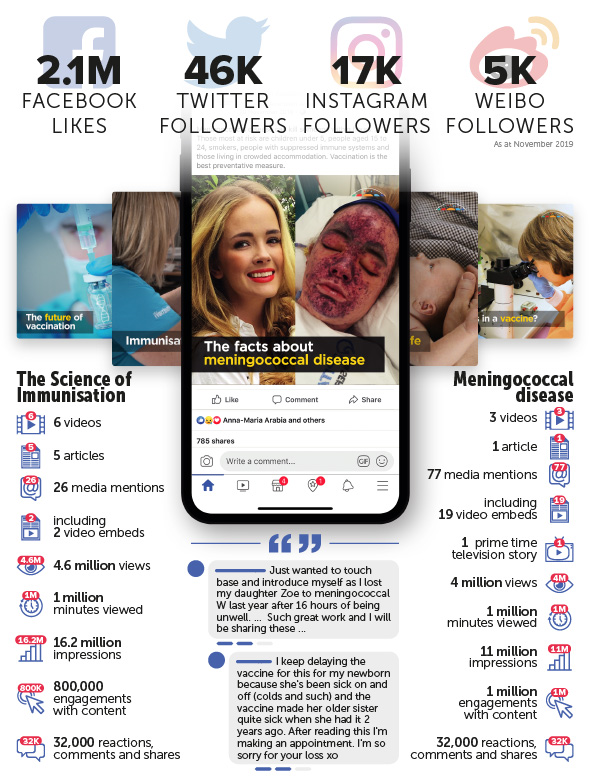
“Just wanted to touch base and introduce myself as I lost my daughter Zoe to meningococcal W last year after 16 hours of being unwell. ... Such great work and I will be sharing these ...”
“I keep delaying the vaccine for this for my newborn because she's been sick on and off (colds and such) and the vaccine made her older sister quite sick when she had it 2 years ago. After reading this I'm making an appointment. I'm so sorry for your loss xo”
Academy features at Berlin Science Week
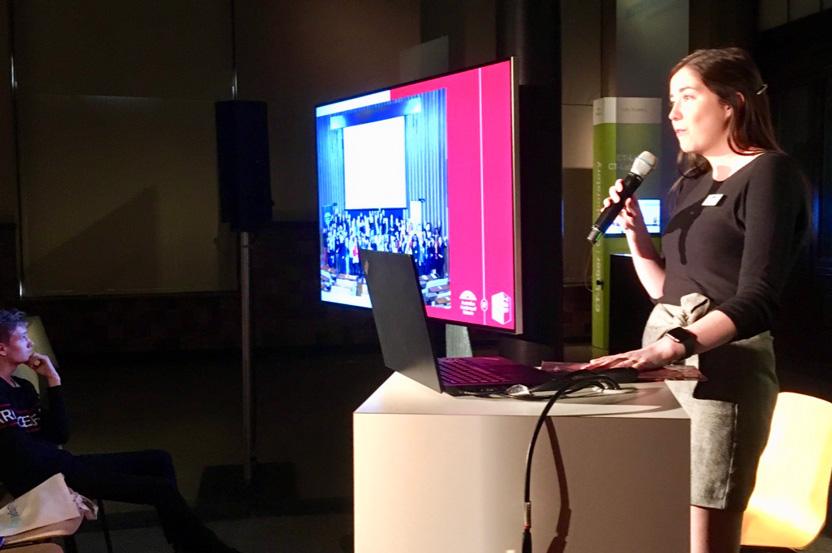
There was standing room only at the talk about the Academy's secret to creating engaging science communication, with Dr Hayley Teasdale one of the presenters
A team from the Academy travelled to Germany in early November to participate in Berlin Science Week. Berlin Science Week spanned 130 events, featuring the best in science from across Europe and around the world. The team was also in Germany to participate in and support the Falling Walls Lab and Falling Walls Engage events.
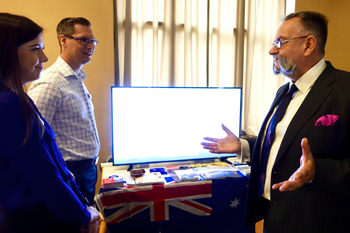
Dr Hayley Teasdale and Paul Richards with Museum Director General Professor Johannes Vogel
The Academy held an exhibition for two days at the Museum für Naturkunde Berlin (the Museum of Natural History.)
The exhibit featured videos from the Academy's ongoing successful communication strategy, which were played on a large-screen TV to engage visitors to the museum. Copies of the Academy's ten-year plans and Q&A documents were also displayed and visitors were given the chance to sample some Vegemite to take home. The Academy's exhibit was one of 14 set up throughout the museum.
Visitors to the exhibition ranged from Museum Director General Professor Johannes Vogel and colleagues from the European Research Council to members of the public.
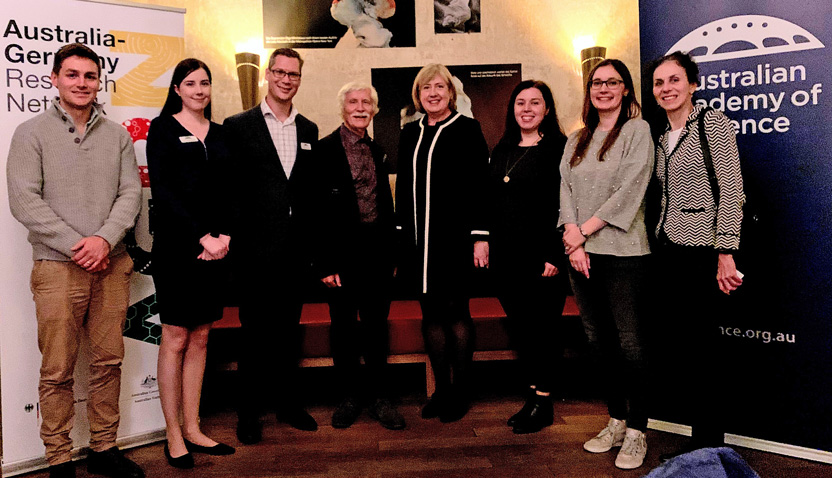
Australia's Ambassador to Germany H.E. Ms Lynette Wood (centre right) with Australian participants and Academy representatives at the ‘Science in the Pub’ networking event
The Australian Embassy in Germany hosted a ‘Science in the Pub’ networking event one evening, with more than 40 members of the Berlin science community taking part. Australia's Ambassador to Germany H.E. Ms Lynette Wood introduced the Academy team and each Falling Walls Lab presenter was given the opportunity to explain their science. Professor Hans Bachor also interviewed National Committees Project Manager Dr Hayley Teasdale and Director of Communications and Outreach Paul Richards about their work at the Academy.
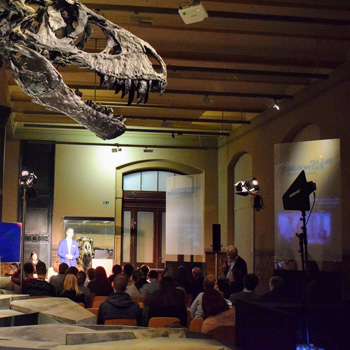
Paul Richards with a captivated audience in the Museum für Naturkunde Berlin
On the second day of the Berlin Science Week exhibition, Professor Bachor, Dr Teasdale and Mr Richards gave a presentation to an audience of more than 70 visitors. There was standing room only to hear about the Academy's secret to creating engaging science communication. The team spoke for an hour with a further 30 minutes of questions from the audience.
After a successful exhibition at Berlin Science Week, the Academy team switched focus to Falling Walls Lab where three young Australian scientists presented at the Lab competition with Australian Rhys Pirie winning the competition. Professor Hans Bachor led the team, having helped to establish the Academy's relationship with Falling Walls five years ago. Dr Teasdale presented at Falling Walls last year and was invited back to support and advise the Australian team. Mr Richards was invited to judge entries to Falling Walls Engage as a member of the jury.
Australian scientist claims Young Innovator of the Year at Falling Walls Berlin
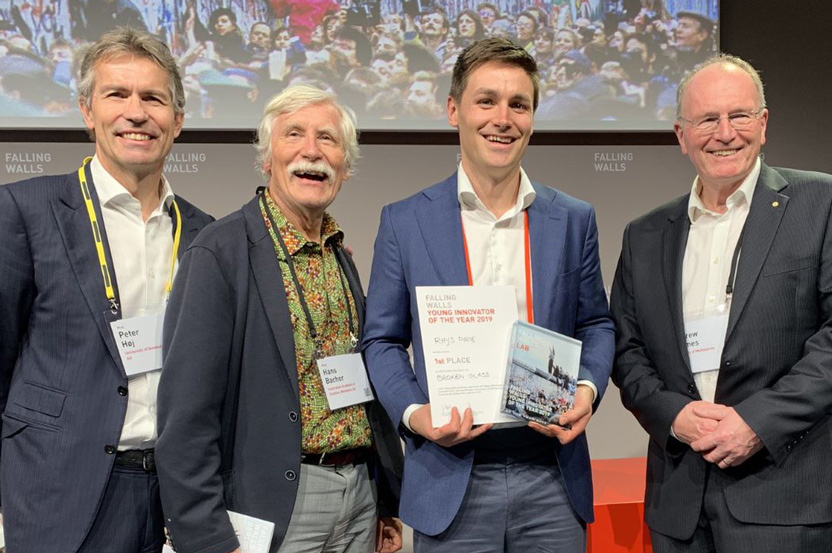
An Australian scientist has won Young Innovator of the Year at one of the world’s premier conferences for research and innovation, the first time an Australian has won the Falling Walls Lab award.
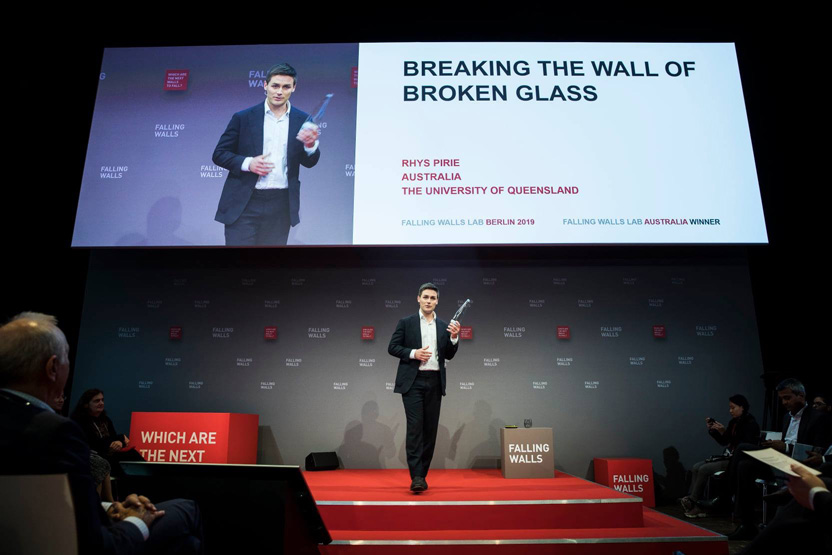
Rhys Pirie from the University of Queensland won the prestigious competition with his presentation ‘Breaking the wall of broken glass’. In his winning pitch, Rhys explained how his work took the broken glass currently unable to be recycled and headed to landfill to create the valuable product sodium silicate.
The Falling Walls Conference is a global gathering of innovators and scientists, brought together to share their breakthroughs and plans to impact science and society. Each year the conference is held on the anniversary of the fall of the Berlin Wall, with this year celebrating the 30th year since the wall fell. On the first day of the conference, Falling Walls Lab showcased 100 young innovators from more than 60 countries, who presented their ideas to the high-level jury in just three minutes. This year, Falling Walls Lab featured three Australian innovators.
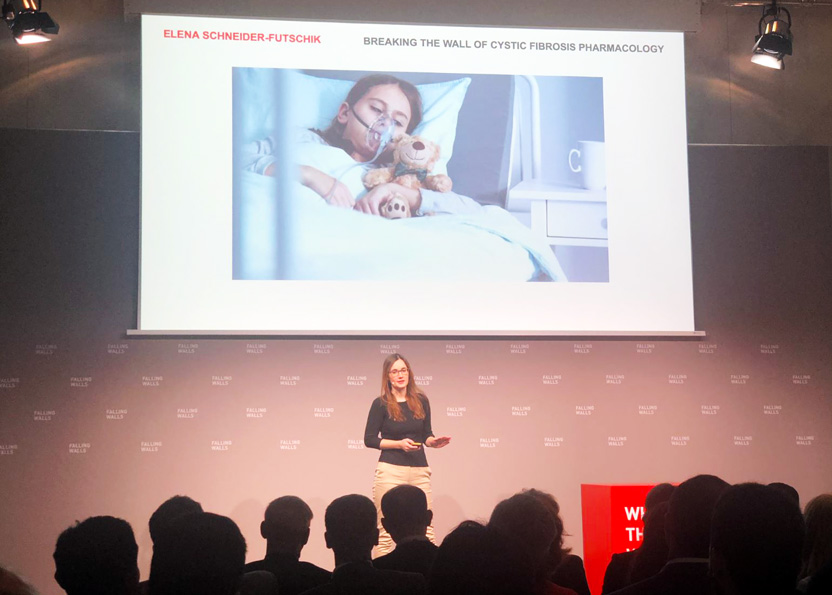
Dr Elena Schneider-Futschik from the University of Melbourne presented her talk titled ‘Breaking the wall of cystic fibrosis pharmacology’. Elena riveted the audience with her work in developing a test which can monitor medication interactions for patients with cystic fibrosis, who take as many as 40 different medications every day.
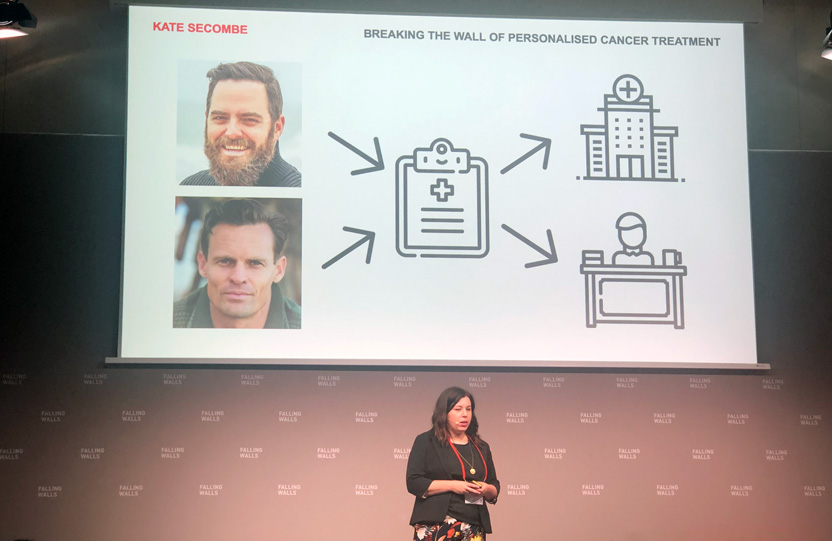
Kate Secombe from the University of Adelaide challenged the audience to think about the value of their poo in her talk ‘Breaking the wall of personalised cancer treatment’. Kate’s work looks at the gut microbiome of patients receiving chemotherapy treatment, with the aim of reducing side effects that can reduce quality of life and prevent patients from being able to work.
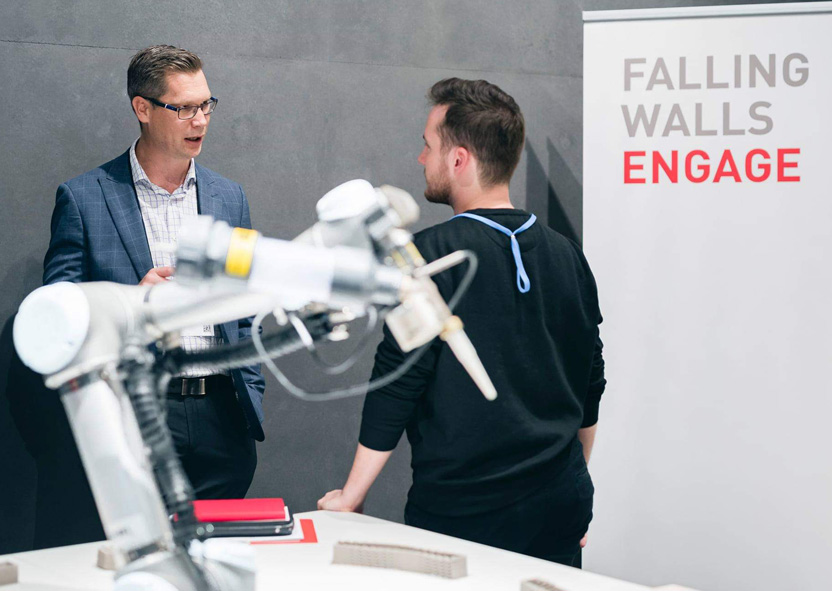
In a separate event, Paul Richards, Director of Communications at the Australian Academy of Science, was selected as a judge for Falling Walls Engage, the international forum for breakthroughs in science engagement. Paul was selected as a result of the unique success of the Academy in communicating science to the general public.
Past President of the Academy, Professor Andrew Holmes, noted that what makes Falling Walls unique is “the opportunity to meet and discuss challenging topics in the physical, mathematical and social sciences with world leaders”. Secretary Education and Public Awareness Professor Hans Bachor sees the event as “a powerful gathering of minds. I saw so many stimulating ideas and was filled with a sense of urgency to act. Falling Walls presents many ideas and techniques for change.”
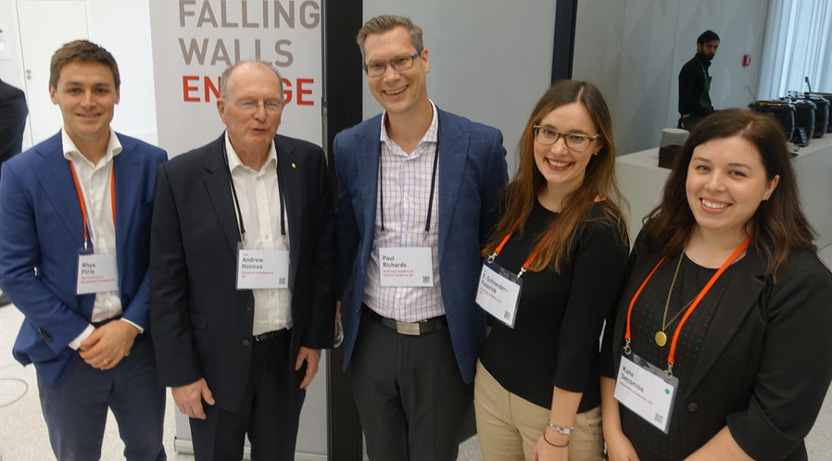
The conference had a huge impact on the young Australian researchers, Dr Schneider-Futschik said. “The days we got to spend here felt like a rapid bootcamp where like-minded creative and innovative people get to compete but also motivate and support each other. We were able to show how we tackle scientific problems and Falling Walls gave us an international platform to share our ideas. This truly was an incredible experience.”
Each year, the Academy hosts Falling Walls Lab Australia to select the Australians to participate in the international finale in Berlin.