




National Science Week shows that science is for everyone

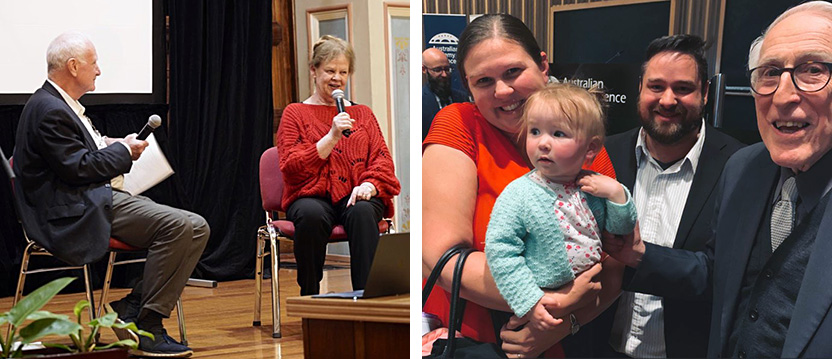
(from left) Professor Robyn Williams in conversation with Professor Jenny Graves in Hobart, and Professor Clark meets some of the people whose lives his research has touched.
What do patting a Thylacene, life-changing science, bees’ eyes and a Spinosaurus have in common? They were all part of the Academy's celebration of National Science Week, which engaged thousands of people across the country at events and online.
For the first time the Academy joined forces with BeakerStreet@TMAG, a pop-up science bar in Hobart which merged science with music, food and drinks, art and entertainment. Four talks featuring Academy Fellows were held on Friday 16 August at the Hobart Town Hall as part of the Beaker Street festivities.
Academy Fellows Professor Martina Stenzel, Dr Steve Rintoul, Professor Jenny Graves and Professor Mike Archer each spoke in conversation with Fellow Professor Robyn Williams or Natasha Mitchell of the ABC. The scientists fascinated their audiences with stories of their work: the many uses for the elements of the periodic table, resurrecting extinct species, genes that determine sex in animals, and the warming of the Southern Ocean. Almost 400 people attended these engaging talks.
The Academy hosted a Canberra Speaker Series event highlighting the science of the cochlear implant also during National Science Week. Speakers and Academy Fellows Professor Graeme Clark, developer of the cochlear implant, and Professor Jennie Brand-Miller, renowned food scientist whose life was changed by cochlear implants, told the story of how this science changes lives.
School students took up the challenge and got creative with the periodic table and the elements in the scienceXart competition hosted by the Academy’s National Committee for Chemistry, with the winners experiencing a ‘behind the science’ tour of Canberra. Year 2 student Makan Wang even created a dinosaur using sulfur, phosphorus, indium, oxygen, gold and ruthenium—a Spinosaurus!
To further shine a light on scientific excellence, the Academy profiled three exceptional Australian scientists and Academy Fellows on the National Science Week blog: Professor Kerrie Mengersen, Professor Toby Walsh and Professor Mandyam Veerambudi Srinivasan. Read about their research and achievements
The Academy’s Shine Dome also played host to InterACTive, a family-friendly afternoon of captivating science-related talks, performances, workshops, exhibits and discussions. Over 3000 people attended this weekend event in Canberra, engaging in topics from drones to the Moon and exploring the heritage-listed building.
National Science Week ran from 10–18 August and involved more than 1 million people in 2000 events across Australia. More about National Science Week
Leading scientists say fears about GM products are unjustified
GM technologies used to date pose no greater risk to human health or the environment than similar products derived from traditional breeding and selection processes.
It was a stunning admission by one of the leaders in the global fight against genetically modified food.
“As an environmentalist, and someone who believes that everyone in this world has a right to a healthy and nutritious diet of their choosing, I could not have chosen a more counterproductive path and now I regret it completely.”
The dramatic about-face by leading British author, journalist and environmental activist, Mark Lynas, who is now a Visiting Fellow at Cornell University, was brought about by understanding the science.
To help more people understand the evidence, the Australian Academy of Science is today releasing a Q&A on genetic modification (GM) that tackles some of the big questions.
The release of the booklet comes as South Australia plans to lift its ban on growing GM crops on the mainland, and Tasmania extends its moratorium for another 10 years. Meanwhile, the Australian Greens have moved to disallow proposed amendments to the Gene Technology Regulations 2019.
The Academy has written to the crossbench, Greens, Labor and Government MPs to indicate it does not support the disallowance motion, which is expected to come to a vote in the September sitting weeks.
Academy Fellow and plant scientist, Dr TJ Higgins, said many in the Australian community are looking for answers to the questions about the science of genetic modification.
“The latest research by the Office of the Gene Technology Regulator found knowledge about what foods in Australia are genetically modified is generally poor. A simple google search demonstrates just how much conflicting and inaccurate information there is out there on genetic modification,” said Dr Higgins.
“This research also shows that while only 13% of Australians said they supported GM foods, 50% also gave conditional support. The conditional support of those who stated ‘Yes but…..’ relied on a desire to be assured GM products are regulated, or to know whether they have environmental or health benefits.”
The booklet provides a clear, concise description of genetic modification technology and draws on the knowledge and expertise of the Academy’s distinguished Fellows and the Australian science community.
It highlights the benefits of GM products which include: a significant reduction in the use of chemical insecticides and improved productivity of existing agricultural land, which both contribute to reduced CO2 emissions; improved nutritional value from enriched crops; and increased farm incomes.
Academy Fellow and biochemist Professor Marilyn Anderson said one of the most common questions around genetic modification covered in the booklet is ‘are GM products safe?’
“The international scientific consensus is that after 20 years of commercial use, GM technologies used to date pose no greater risk to human health or the environment than similar products derived from traditional breeding and selection processes,” said Professor Anderson.
“Regulators are confident that the GM organisms and products approved so far are as safe as their conventional counterparts.”
Read the Q&A here: www.science.org.au/genetic-modification
Fellows shortlisted as Eureka Prize finalists

Professor Branka Vucetic is one of four Academy Fellows shortlisted for Eureka Prizes.
Four Academy Fellows have been announced as finalists for the 2019 Australian Museum Eureka Prizes.
Professor Terry Hughes is part of the National Coral Bleaching Taskforce, which is a finalist in the NSW Environment, Energy and Science (DPIE) Eureka Prize for Environmental Research.
Professor Stephen MacMahon and Professor Branka Vucetic are finalists in the CSIRO Eureka Prize for Leadership in Innovation and Science.
Professor Michelle Coote is part of the Invisible Catalyst team, which is a finalist for the UNSW Eureka Prize for Scientific Research.
50 entries were shortlisted for 17 Australian Museum Eureka Prizes this year. Read about all the Eureka Prize finalists.
Winners will be announced on Wednesday 28 August.
Academy launches vision for reconciliation
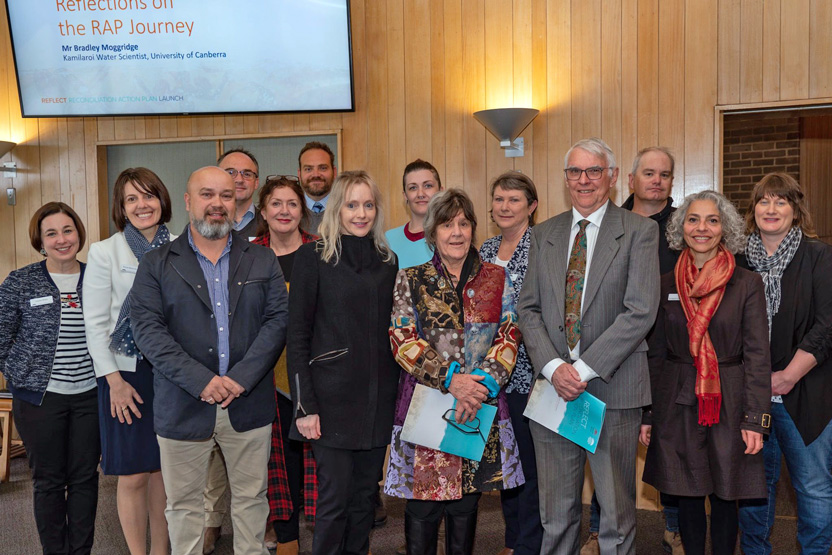
The Academy's working group that created the plan included Fellows Professor Wendy Hoy (centre front, holding booklet) and Professor John Patrick on her left, and external advisers Mr Bradley Moggridge (third from left) and Associate Professor Jason Sharples (third from right).
A nation where the traditional knowledge and cultures of Australia’s First Peoples are highly valued and respected by all Australians is the vision for the Australian Academy of Science’s Reconciliation Action Plan, launched today.
Australian Academy of Science President, Professor John Shine, said reconciliation is a journey the Academy is proudly committed to taking.
“Our nation’s future, based on a knowledge economy, will be driven by embracing skills, knowledge and experience from a diverse range of people,” Professor Shine said.
“It is important that this includes and recognises that for tens of thousands of years, Aboriginal and Torres Strait Islander peoples have had a strong connection to and knowledge of this land, its waterways, oceans and abundant flora and fauna.
“It is crucial that we create opportunities to work respectfully with Aboriginal and Torres Strait Islander peoples to address issues that impact them and to support their participation in the Academy’s scientific, policy, international and communication activities.
“The Reflect Reconciliation Action Plan commences a journey where, as one, we can use science to create a better nation and a better world.
“This, our first Reconciliation Action Plan, outlines the practical steps we will take to support positive change and facilitate reconciliation. In adopting better practices within the Academy, we hope that the Academy can model, encourage and influence greater diversity and inclusion across the STEM sector nationally,” Professor Shine said.
Kamilaroi Water Scientist Bradley Moggridge from the University of Canberra said it had been great to watch a group of committed people and an organisation grow, accept, question itself, develop and hopefully thrive in a space outside of the normal science box.
“With RA’s support this RAP is a perfect start to change,” said Mr Moggridge, who was part of the Academy’s Reconciliation Action Plan Working Group.
The Academy’s Reconciliation Action Plan acknowledges work already underway including:
- an Aboriginal and Torres Strait Islander scientist award launched in 2018 to support emerging scientists
- continued support of the Douglas and Lola Douglas Scholarship in Medical Science; awarded to a top-ranked PhD candidate in Indigenous health research
- the Academy’s school education programs, which have provided professional learning to hundreds of teachers around Australia and have reached many Aboriginal and Torres Strait Islander teachers and students.
Future actions and opportunities outlined in the plan include:
- investigating how the Academy’s national reach and influence may be able to support the involvement of Aboriginal and Torres Strait Islander people in science, though initiatives such as a professional mentoring program that involves Fellows and National Committee members
- exploring different perspectives of science with Aboriginal and Torres Strait Islander peoples and cultures
- implementing policies to support Aboriginal and Torres Strait Islander employment, including developing and implementing a policy to attract, develop, and retain Aboriginal and Torres Strait Islander staff to the Academy, incorporating the Indigenous Traineeship Program.
Academy Fellow recognised for gender equality leadership
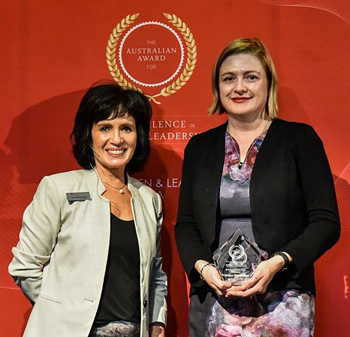
Women and Leadership Australia’s Suzi Finkelstein with Professor Tanya Monro FAA.
For her contribution to the advancement of gender equality across Australia, Academy Fellow Professor Tanya Monro is the South Australian recipient of the 2019 Australian Award for Excellence in Women’s Leadership.
The Awards for Excellence in Women’s Leadership recognise the contribution of women at a National and State/Territory level. More specifically the awards ‘recognise individual women that have, through their actions, improved the likelihood of other women within their field of endeavour having greater access to leadership equality.’
Professor Monro said she was honoured to receive the award.
“Organisations that can create cultures where talent of a diverse workforce can contribute and where people thrive, will ultimately deliver the best outcomes,” Professor Monro said.
In January Professor Monro became the first woman to lead Australia's Defence Science and Technology, replacing newly elected Academy Fellow Professor Alex Zelinsky as Chief Defence Scientist. When she was elected in 2012 Professor Monro became one of the youngest living Fellows of the Academy.
Throughout her career the physicist has also been an advocate for diversity and inclusion and a champion of the Academy’s Science in Gender Equity (SAGE) initiative.
See the full list of 2019 Australian Award for Excellence in Women’s Leadership recepients.
New database to boost the visibility of women in STEM

Australian women in STEM will be more visible thanks to a new resource showcasing the depth of talent of those working in the field.
STEM Women is an online directory of women in Australia working in science, technology, engineering and mathematics (STEM).
The Australian Academy of Science developed the directory in partnership with the CSIRO, Science & Technology Australia, and the Australian Science Media Centre, with financial support from the Australian Government.
Academy President, Professor John Shine said seeing and hearing from women in STEM is a priority.
“When women from diverse STEM careers speak in the media, at public events, and in boardrooms and classrooms, they can inspire girls and women to follow in their footsteps,” Professor Shine said.
“I’d like to see more women in STEM being part of the public discourse. It’s good for gender equity, science communication and it’s good for the next generation of would-be scientists coming up through the ranks.
“And if you’re in the media looking to interview a woman in STEM or you are organising a conference or event, I urge you to use this resource.”
STEM Women links a diverse range of women with opportunities to progress their careers and personal capabilities such as speaking at conferences, being part of committees and boards, being nominated for awards and being interviewed in the media.
Users of the database can search for women in STEM based on their expertise, location and other search fields. Users can create their own shortlist and then message experts directly.
Minister for Industry, Science and Technology Karen Andrews urged Australian women in STEM to take part.
“To all the talented Australian women in STEM out there, I say hop online and sign up to STEM Women,” Minister Andrews said.
“You would be a visible STEM role model and a positive force for inspiring more women and girls into STEM.”
Australia’s Women in STEM Ambassador, Professor Lisa Harvey-Smith said the great scientific and technological transformation Australia is currently experiencing belongs to STEM professionals of all genders and backgrounds.
“Let’s tell those stories in full, without prejudice—to inspire all Australians,” Professor Harvey-Smith said.
For more information: stemwomen.org.au
Action needed to better understand Australian diets
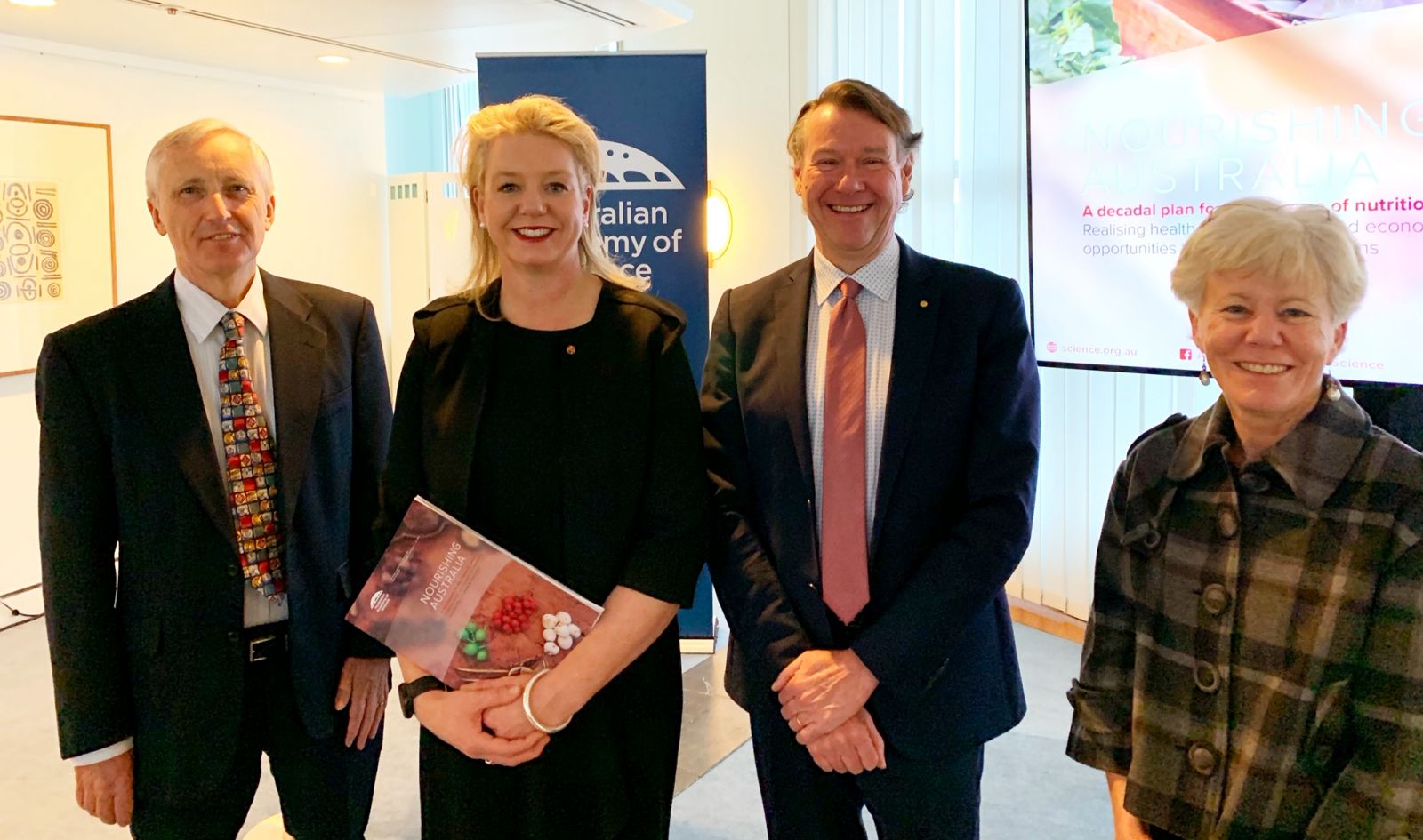
Professor Mike Gidley, Senator Bridget McKenzie, Professor Stephen Simpson and Professor Therese Jefferson.
Nutrition science offers huge untapped potential to boost the health and wealth of the nation. But what does the typical Australian diet look like? How can it be improved—from paddock to plate—to target health and wellbeing for all Australians, at all ages? And how can consumers make sense of the blizzard of unreliable and conflicting nutrition advice?
These and other major questions are addressed in Nourishing Australia: a decadal plan for the science of nutrition, developed by the Australian Academy of Science.
The 10-year plan, launched today at Parliament House by the Minister for Agriculture, Senator Bridget McKenzie, outlines four essential areas where the science of nutrition will contribute to enhancing the health of Australians:
- social factors that determine dietary choices
- nutrition mechanisms underpinning healthy and productive lives
- precision and personalised nutrition that account for differences between people
- education and research training to ensure that Australians are empowered to make knowledgeable dietary choices.
The plan outlines how these four pillars will generate a greater understanding of why individuals make dietary choices and how we can develop and incorporate new knowledge of nutritional genomics and individualised nutrition therapies. It recognises that Australians are hungry for information about nutrition, foods and dietary patterns and the effects they have on the body.
Chair of the Academy’s National Committee for Nutrition, Professor Mike Gidley from the University of Queensland, said Australia does not currently have large-scale longitudinal data on food intake, nutrition status and relationships with societal determinants and health outcomes for its population.
“National nutrition surveys are infrequent and irregular, resulting in a lack of current information on the relationship between food intake and health outcomes for Australians,” Professor Gidley said.
“There is an urgent need to utilise new tools and digital technologies to assess the national diet on a population-wide scale,” Professor Gidley said.
“Bringing nutrition data together from a range of new data sources, such as citizen science, national surveys, prospective cohort studies, clinical trials and more, has the potential to provide much richer datasets and will give us a clearer picture of how diet relates to health outcomes over time.
“Indeed, without a strengthened contribution from the social, economic and environmental disciplines to the science of nutrition, traditional approaches will not deliver their potential benefits in translating all this new knowledge into improvements in our health.”
Co-chair of the plan’s Expert Working Group, Professor Stephen Simpson from the University of Sydney, said Australia enjoys a global reputation for its nutrition science, one of many disciplines where we punch above our weight.
“In combination with established strengths in our agrifood industry, medical technology, social sciences and higher education sectors, Australia is entering an era of opportunity to be a regional and global leader in broadening the science of nutrition and linking it to health, social, and economic outcomes for the benefit of all Australians,” said Professor Simpson, who is also a Fellow of the Australian Academy of Science.
“Nourishing Australia outlines steps that need to be taken over the next ten years to secure our future.”
The Academy acknowledges the financial support from the Australian Research Council’s Linkage Learned Academies Special Projects fund to develop this plan. The plan is aspirational and further consultation is needed prior to implementation.
Australian scientists recognised at international geophysics meeting
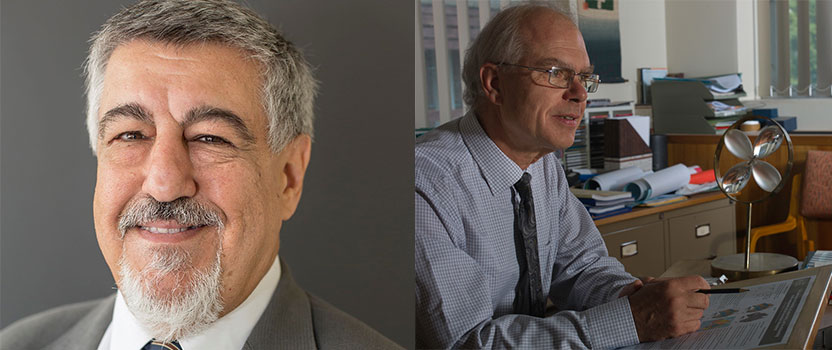
Emeritus Professor Chris Rizos (left) and Professor Brian Kennett AO FAA FRS.
Emeritus Professor Chris Rizos, an observer on the Academy’s National Committee for Earth Sciences, was voted in as President-Elect of the International Union for Geodesy and Geophysics (IUGG) during the General Assembly on 16 July.
The IUGG is a non-profit global organisation dedicated to promoting international cooperation in earth sciences.
Through his new role, Professor Rizos hopes to raise visibility of IUGG and communicate its continued relevance for global science, as well as increase engagement with early-career scientists in developing countries.
Professor Elaine Sadler AO FAA, the Academy’s Foreign Secretary, commended Professor Rizos on his election and its impact on science in Australia.
“Professor Rizos’s appointment is an excellent example of Australia’s reputation as an active and valuable member of the international science community,” she said, “His service will enhance Australia’s authority on the international stage and cultivate relationships that can facilitate meaningful research.”
Professor Rizos is the second Australian President in the union’s 100-year history. He is a professor of geodesy and navigation at UNSW Sydney, a member of the bureau of the IUGG, and previously served as Chair on the union’s Visioning Committee and the Strategic Planning Committee.
The IUGG meeting also saw Academy Fellow Professor Brian Kennett AO FAA FRS awarded the International Association of Seismology and Physics of the Earth’s Interior (IASPEI) Medal 2019 for his contributions to seismology and to IASPEI.
The medal, presented on 13 July, recognises his scientific achievements and efforts to sustain IASPEI goals and activities.
Professor Trevor McDougall AC FAA FRS was also elected President of the International Association for the Physical Sciences of the Oceans (IAPSO), the primary body responsible for maintaining and improving oceanographic standards and practices. Professor McDougall was previously Vice-President of IAPSO and he is Scientia Professor at the UNSW School of Mathematics and Statistics.
The Academy’s involvement in the IUGG General Assembly included a networking reception to celebrate Australian geodesy and geophysics, commemorate the IUGG’s centenary and recognise Australia’s role as one of the union's nine founding members.
Academies call on health ministers to resolve health data issues
Regulatory barriers that limit timely access to population and health data must be resolved to achieve better health outcomes for Australians, according to leading scientists and medical health researchers.
The Australian Academy of Science and the Australian Academy of Health and Medical Sciences are calling for the COAG Health Council to address health data availability and linkage as a priority at its next meeting later this year.
The call follows a roundtable convened by the two academies that brought together some of Australia’s leading health and medical researchers, clinicians and other experts to identify areas for improvement.
President of the Australian Academy of Health and Medical Sciences, Professor Ian Frazer, said that there is a real opportunity to harness the power of data to drive improvements in health outcomes—by creating an environment in which the safe and secure use of patient data is balanced with the rights and interests of individuals.
“The intelligent use of health data gathered from the community is a critical part of moving towards better and more cost-effective health systems. Research studies using aggregated data revealed, for instance, the link between smoking and lung cancer, and the unfortunate consequences of iodine deficiency in infants.
“There are some valuable initiatives in Australia that are improving data access and linkage for legitimate research purposes, but more needs to be done to make data available and hence broaden the impact of such efforts.
“There remains a plethora of complex jurisdictional, legal and ethical regulations that limit the ability of researchers and clinicians to effectively access and use aggregated health data to improve care. Access to health data for research can lead to interventions that have real and immediate impact on community health, and can also potentially avert unwanted rare but significant health problems associated with drugs and implanted devices” said Professor Frazer, who is also a Fellow of the Australian Academy of Science.
A 2018 ‘Flying Blind’ report by the Digital Health Cooperative Research Centre and CMCRC cites a NHMRC-funded study which took three years to gain Commonwealth approval. In the study cancer notifications were linked with de-identified Medicare Benefits Schedule (MBS) data. Researchers found an increased cancer risk for some individuals exposed to CT scans. The case study is explained further below.
The Australian Academy of Science’s Professor Michael Barber said recent advances in health and medical technologies and research methods means there is a significant opportunity for Australia to realise innovation and improvement in preventative health, medicine and healthcare.
“Australia, led by action from federal and state and territory health ministers, needs to build on existing efforts to enable efficient, rigorous, safe and secure use of data for research, while protecting the rights and interests of individuals,” Professor Barber said.
The academies are calling for renewed and expanded action in the following areas:
- Resolve regulatory barriers limiting timely access to existing population and health data collected at state and national levels. In this context, Australia can learn from jurisdictions such as Scotland, Canada and New Zealand. In addition, better access to private sector held data will help resolve inefficiencies.
- Enhance medical and community understanding of, and protocols for safe and ethical collection, storage, synthesis and analysis of health data.
- At Commonwealth level build upon successful state-based linkage programs such as the Public Health Research Network.
- Develop new approaches to accessing and utilising data from novel sources, including the Internet of Things, social media and wearables.
- Ensure continued engagement with and respect for Indigenous data sovereignty.
- Further improve the quality and reliability of health and medical data collections.
- Bolster efforts to generate a data-skilled clinical and research workforce through expanded professional and post-graduate training programs.
Background information—Flying Blind Case Study
In 2008, researchers at the University of Melbourne received funding from the National Health and Medical Research Council (NHMRC) to investigate whether CT scans increased the risk of cancer by linking cancer notifications (held by the states and territories) with de-identified Medicare Benefits Schedule (MBS) data. However, the study was seriously delayed: Commonwealth approval took three years to gain. After linking the necessary data, the researchers found that cancer risk was increased by an average of 24% for individuals exposed to CT scans before the age of 20; for those exposed at ‘very young ages’, the risk was 200% higher. The results were published in the British Medical Journal in 2013 (39) and led to the development of educational materials a year later aimed at making both radiologists and the public aware of the risks. The delays encountered by the researchers may well have led to a number of unnecessary exposures to CT radiation, and, in the longer run, unnecessary cancers. Source
ARC Linkage grants awarded to Fellows
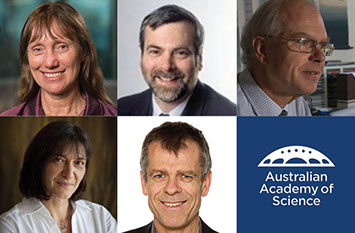
Five Academy Fellows have been awarded funding in the latest round of ARC Linkage grants.
Five Fellows of the Australian Academy of Science are among the recipients of the Australian Research Council’s Linkage Projects scheme, announced today by the Hon. Dan Tehan MP, Minister for Education.
The Linkage Projects scheme supports university researchers to find practical solutions to problems and challenges in real-world, industry-based settings.
The funding for research partnerships includes:
- $484,189 for Queensland University of Technology to lead a project to revolutionise water-quality monitoring in the information age with automated low-cost sensors and novel statistical methods. The research will be led by Professor Kerrie Mengersen FAA and collaborators.
- $442,000 for the Australian National University to research more comprehensive 3D models of the seismic structure of Southwest Australia to enhance assessment of seismic activity and improve understanding of the mineral resource potential. The research will be led by Associate Professor Meghan Miller, Professor Brian Kennett AO FAA FRS and colleagues.
- $664,511 for UNSW Sydney to improve productivity in emergency services personnel by evaluating a program that reduces stress reactions and increases cognitive functioning in high-stress work environments. The research will be led by Professor Richard Bryant AC FAA and Associate Professor Samuel Harvey.
- $206,100 for Deakin University to research next-generation solid-state batteries to drive an automotive revolution. The project seeks to generate new knowledge in battery materials and design. The research will be led by Associate Professor Patrick Howlett, Professor Maria Forsyth FAA and colleagues.
- $612,074 for the University of Melbourne to research high-fidelity, long lasting, single-neuron brain machine interfaces—knowledge that is critically important to the development of technologies that interface electronics with the human body. The research will be led by Professor Steven Prawer FAA and colleagues.
More information about the grants and awardees from previous rounds of funding who are Fellows of the Academy