




National conversation of science and research priorities is important and timely

The Australian Academy of Science has welcomed the announcement by the Minister for Education, Dan Tehan, of a review of Australia’s science and research priorities.
Academy President Professor John Shine said that the current science and research priorities and the associated practical challenges have been useful in informing research directions.
“Our existing nine priorities were developed by former Chief Scientist and Academy Fellow Professor Ian Chubb through an extensive process of consultation,” said Professor Shine.
“At the time of their announcement in May 2015 there was an intention that they would drive increased research investments in areas of immediate and critical importance to Australia, and that they would be reviewed every two years.
“A great deal has happened in the Australian research policy landscape since 2015 and it is both important and timely that we have a new national conversation about our priorities going forward.”
The review panel announced by the Minister will be chaired by Australian Research Council Chief Executive Professor Sue Thomas and will include experienced Vice Chancellors and senior executives from Australia’s research and innovation sector.
Also included on the panel are Australia’s Chief Scientist Dr Alan Finkel and National Health and Medical Research Council CEO Professor Anne Kelso AO, both Fellows of the Australian Academy of Science.
Academy welcomes focus on Great Barrier Reef climate impacts
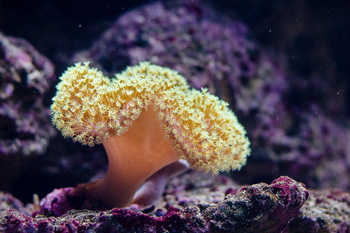
The Academy has consistently called for a more strategic focus on improving the resilience of the Great Barrier Reef to climate change. Image source
The Australian Academy of Science has welcomed the findings of the Senate Committee Inquiry into the Great Barrier Reef 2050 Partnership program; particularly its recommendation that government address the impact of climate change on the reef and on Australia more broadly.
Academy President Professor John Shine AC said that it was pleasing to see a clear focus in the report on effectively tackling climate change and linking public investments in the reef to the Australian and Queensland governments’ Reef 2050 Plan.
“The key priorities for protecting and preserving the reef are to improve our understanding of the stressors and the best interventions through rigorous, peer-reviewed research, to improve water quality and to address climate change.
Professor Shine noted that Australia has a number of major institutions with established expertise in reef research and management, including CSIRO, the Australian Institute of Marine Studies, the Great Barrier Reef Marine Park Authority and a number of universities.
“The Academy has consistently called for a more strategic focus on improving the resilience of the Great Barrier Reef to climate change. The bottom line is that to preserve the reef for future generations, Australia will need to make significant additional investments over the coming years, whether through the Great Barrier Reef Foundation or through our other agencies.
“Without such efforts, the Reef 2050 Plan will fail to meet its objectives, and we’ll lose all or part of one of our major natural treasures,” Professor Shine said.
Scientists lay out new plan to save the Darling River
Scientists asked to investigate the fish kills in the Murray-Darling River system in NSW say a failure to act resolutely and quickly on the fundamental cause—insufficient flows—threatens the viability of the Darling, the fish and the communities that depend on it for their livelihoods and wellbeing.
The multidisciplinary panel of experts, convened by the Australian Academy of Science, also found engagement with local residents, Indigenous and non-Indigenous, has been cursory at best, resulting in insufficient use of their knowledge about how the system is best managed.
The scientists say their findings point to serious deficiencies in governance and management, which collectively have eroded the intent of the Water Act 2007 and the framework of the Murray-Darling Basin Plan (2012).
Chair of the expert panel, ANU Professor Craig Moritz FAA, said the sight of millions of dead fish from the three fish kills was a wake-up call.
“To me, it was like the coral bleaching event for the mainland,” Professor Moritz said.
“Our review of the fish kills found there isn’t enough water in the Darling system to avoid catastrophic outcomes. This is partly due to the ongoing drought. However, analysis of rainfall and river flow data over decades points to excess water extraction upstream.”
The expert panel recommends that urgent steps can and should be taken within six months to improve the quality of water throughout the Darling River.
“That should include the formation of a Menindee Lakes restoration project to determine sustainable management of the lakes system and lower Darling and Darling Anabranch,” Professor Moritz said.
The panel also recommends a return to the framework of the 2012 Murray Darling Basin Plan to improve environmental outcomes.
“The best possible scenario is water in the Darling all the way to the bottom and in most years. We are hopeful that this could be achieved if the panel’s recommendations are implemented,” Professor Moritz said.
Australian Academy of Science President, Professor John Shine, said the scientific advice of the expert panel is a synthesis of the best available knowledge.
“In undertaking this body of work the multidisciplinary expert panel has collaborated with other relevant experts as required and received extensive data from a number of Federal and State agencies,” Professor Shine said.
These agencies include the Murray-Darling Basin Authority, the Land and Water Division of the NSW Department of Industry, the NSW Office of Environment and Heritage, the NSW Department of Primary Industries, the Queensland Department of Natural Resources, Mines and Energy, and the Commonwealth Environmental Water Office, in addition to data and information provided by researchers in many related fields. The expert panel wishes to acknowledge the cooperation of these bodies and individuals in promptly providing data.
The expert panel also operated closely with the Independent Panel to Assess Fish Deaths in the Lower Darling, initiated by the Government and chaired by Professor Robert Vertessy, including sharing data and a reciprocal review of findings.
The expert panel report
Read the report: Investigation of the causes of mass fish kills in the Menindee Region NSW over the summer of 2018–2019
The main findings and recommendations are in the executive summary. The report was independently assessed by seven independent peer reviewers, including one international reviewer.
Related media releases
- Academy to provide science advice on fish kill (21 January 2019)
- Panel of experts to review fish kill announced (23 January 2019)
- Academy welcomes independent assessment of fish deaths (23 January 2019)
- Wealth of data triggers revised reporting date for Academies’ expert advice on fish kills (7 February 2019)
Academy welcomes pragmatic approach to Defence Trade Controls

Australia’s international trade and security obligations should be balanced with the need for our researcher workforce to engage collaboratively with partners around the world.
The Australian Academy of Science has welcomed the findings of an independent review of the Defence Trade Controls Act.
Academy President Professor John Shine AC said that the review by Dr Vivienne Thom AM confirmed the original intent of the Bill to balance Australia’s international trade and security obligations with the need for our researcher workforce to engage collaboratively with partners around the world.
“The Academy of Science was very concerned at proposals put forward by defence officials in 2015 to introduce sweeping new powers to restrict the international exchange of knowledge and ideas,” said Professor Shine.
“Further restrictions would effectively have limited Australian researchers’ ability to engage in international research collaboration and to benefit as a nation from the many international research collaborations and expertise on which a substantial proportion of our economy relies.
“We’re very pleased that these concerns have been heard and believe that the recommendations in the review strike the right balance in Australia’s national interests.
“We trust that the Australian Government will heed the recommendations of the review to continue strengthening and streamlining the administration of this legislation.
Background
The Defence Trade Controls Act was introduced in 2012 to regulate the international supply or exchange of certain technologies with potential military applications.
The Act was amended in 2015 following an extensive consultation process led by then Chief Scientist Professor Ian Chubb AC FAA FTSE, with a provision for a review of operation after two years.
Academy welcomes Australian Future Mines Centre commitment
The Australian Academy of Science has welcomed the Federal Opposition’s commitment to establish an Australian Future Mines Centre to co-ordinate exploration work and lead the scientific research and development necessary to explore under deep cover, funded by a $23 million Australian Research Council Special Research Initiative.
The Academy of Science is well positioned to provide input into this initiative as it meets many of the strategic goals laid out in the UNCOVER Roadmap, a blueprint launched by the Academy and AMIRA International in August 2017 to unlock Australia’s enormous potential mineral wealth.
The roadmap, supported by 53 organisations coordinated by AMIRA International, is based on the vision of the UNCOVER AUSTRALIA initiative, established by the Australian Academy of Science in 2012.
The UNCOVER AUSTRALIA initiative identifies what is required to transform Australia’s ability to find non-bulk mineral resources such as copper and gold under the majority of Australia’s landmass.
The Academy also welcomes Labor’s commitment to build the future workforce needed to support Australia’s high-tech mining and resource sector. It is encouraging to see a commitment to providing $2 million for 100 scholarships to address the decline in mining engineering enrolments, half of which will target women.
Academy Fellow and Chair of UNCOVER AUSTRALIA, Dr Phil McFadden welcomed the commitments by Labor.
“Australia needs new geoscience, technology and infrastructure to boost the rate of discoveries for base and precious metals and deliver Australia’s major new mines of the future.
“Funding key elements of the UNCOVER roadmap will allow Australia to build on our scientific knowledge and develop new technologies that are necessary to increase the chances of finding economic deposits in the 70% of Australia that is covered by moderate or deep sediment.
“With the growth in renewable energy for example, we’ll need more copper in the next 15 years than we’ve used in all of human history,” Dr McFadden said.
Academy Fellow and UNCOVER Implementation Committee member, Professor Sue O’Reilly, said the evolution of the UNCOVER initiative is a template for how high-quality science can assist Australian industry.
“Since its inception, the UNCOVER AUSTRALIA initiative has seen strong cooperation across various sectors who have strategically focussed on understanding how we can use knowledge of how the planet works for successful mineral exploration in the covered areas of Australia,” Professor O’Reilly said.
“This funding commitment puts Australia in a good position to re-establish itself as a world leader in minerals exploration and ensure strong economic growth for our future.”
Academy welcomes priority investment in critical minerals projects
The Australian Academy of Science has welcomed the Australian Government’s measure to prioritise funding for critical minerals projects in the next round of the Cooperative Research Centres Project (CRC-P) Grants to help grow the resource sector.
The CRC-P program was identified as a useful mechanism to undertake the research and technology development needed to support the exploration of critical minerals in the UNCOVER Roadmap.
The UNCOVER Roadmap is a blueprint launched by the Academy and AMIRA International in August 2017 to unlock Australia’s enormous potential mineral wealth.
The Roadmap, supported by 53 organisations coordinated by AMIRA International, is based on the vision of the UNCOVER AUSTRALIA initiative, established by the Australian Academy of Science in 2012.
The UNCOVER AUSTRALIA initiative identifies what is required to transform Australia’s ability to find non-bulk mineral resources such as copper and gold under the majority of Australia’s landmass.
Academy Council Member Professor Sue O’Reilly AM said that Australia is thought to be rich in renewable energy minerals such as copper, cobalt and rare earth metals, but that these can’t be easily found using conventional exploration approaches.
“Demand for cobalt just from the electric vehicle industry is expected to exceed global supply within just a few years,” said Professor O’Reilly.
“Investments in research and development that will help find these metals will be enormously beneficial to Australia with the potential to create jobs, reduce emissions and revitalise regional communities.”
Academy President Professor Shine AC congratulated the Minister for Industry, Science and Technology the Hon Karen Andrews and the Minister for Resources and Northern Australia the Hon Matthew Canavan for prioritising investment in this area.
Wealth of data triggers revised reporting date for Academies’ expert advice on fish kills
The Expert Panel convened by the Australian Academy of Science to investigate the fish kills in the Murray-Darling River system in NSW has requested an additional week to deliver their independent science advice on this important issue.
The additional time is allowing the Expert Panel to:
- Thoroughly analyse the extensive data that has been provided by a number of Federal and State agencies including the Murray-Darling Basin Authority, the Land and Water Division of the NSW Department of Industry, the NSW Office of Environment and Heritage, the NSW Department of Primary Industries, the Queensland Department of Natural Resources, Mines and Energy, and the Commonwealth Environmental Water Office, in addition to data and information provided by researchers in many related fields. The Expert Panel wishes to acknowledge the cooperation of these bodies and individuals in promptly providing data.
- Continue to consult as widely as possible, including with Indigenous water experts. It is in the national interest to ensure all the available multidisciplinary knowledge is brought to bear in assessing this concerning situation and to help inform the scientific advice being prepared for this review.
The Expert Panel chair Professor Craig Moritz FAA and Expert Panel member, Professor Sue Jackson, this week visited Menindee to meet with the local Mayor, Indigenous elders and other stakeholders. They also toured affected areas, witnessing firsthand several large Murray cod in dire condition in the Darling River. This visit provided a wealth of information to help inform their review. - Allow the Expert Panel’s final report to be independently peer-reviewed, including by international scientists.
- Consider the additional fish kill events that have occurred since the Expert Panel was first assembled.
A verbal progress update will be provided to the Leader of the Opposition by the Chair of the Expert Panel before the parliamentary sitting fortnight and the final report will now be provided by 17 February and it will be made public.
Media note: Expert Panel members will not be conducting media interviews on the Panel’s work while they conduct the review but will be available to speak to media once the final report is made public.
Media contact: Dan Wheelahan – dan.wheelahan@science.org.au – ph: 0435 930 465
Fellows recognised in Australia Day honours
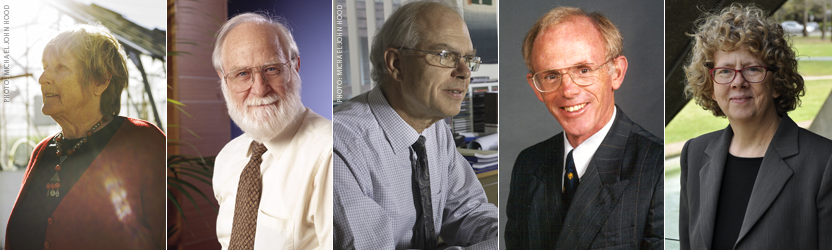
Five Academy Fellows are among the Australians recognised in the 2019 Australia Day Honours List.
Dr Liz Dennis received the highest honour, appointed a Companion in the General Division of the Order of Australia (AC), which recognises ‘eminent achievement and merit of the highest degree in service to Australia or to humanity at large.’
Companion of the Order of Australia (AC)
Dr Liz Dennis AC FAA FTSE—For eminent service to science as a researcher and academic in the area of genomics and plant development, and to professional organisations.
Officer of the Order of Australia (AO)
Professor Ron Ekers AO FAA FRS—For distinguished service to science as a radio astronomer, to scientific education, and to international astronomical organisations.
Emeritus Professor Brian Kennett AO FAA FRS—For distinguished service to the earth sciences as a leading academic and researcher, particularly in the field of seismology.
Professor Bruce Kemp AO FAA FRS—For distinguished service to biomedical research, particularly to the study of protein phosphorylation.
Professor Elaine Sadler AO FAA—For distinguished service to science as an astrophysicist, in the field of galaxy evolution, and to gender equality.
Academy Fellow appointed Chief Defence Scientist

Australia's new Chief Defence Scientist, Professor Tanya Monro, will take up her position in March.
Academy Fellow Professor Tanya Monro has become the first woman to lead Australia's Defence Science and Technology. She takes up her new position as Chief Defence Scientist in March, replacing Professor Alex Zelinsky.
Professor Monro is currently Deputy Vice Chancellor Research and Innovation and an ARC Georgina Sweet Laureate Fellow at the University of South Australia.
In 2012 she became one of the youngest living Fellows of the Australian Academy of Science elected for ‘exceptional scientific contributions of international significance to optical glass materials and fibres, photonics and optical physics, most notably in nanophotonics for nonlinear optics and sensing’.
In the same year Professor Monro also won the Academy’s Pawsey Medal. Throughout her career the physicist has also been an advocate for diversity and inclusion and a champion of the Academy’s Science in Gender Equity (SAGE) initiative.
Professor Monro was the inaugural Director of the Institute for Photonics and Advanced Sensing (IPAS) from 2008 to 2014 and was also the inaugural Director for the ARC Centre of Excellence for Nanoscale BioPhotonics (CNBP) at the University of Adelaide.
Her awards include the Prime Minister's Malcolm McIntosh Prize for Physical Scientist of the Year (2008), South Australian Scientist of the Year (2010), South Australia's Australian of the Year (2011), and the Eureka Prize for Excellence in Interdisciplinary Scientific Research (2015).
Academy welcomes independent assessment of fish deaths
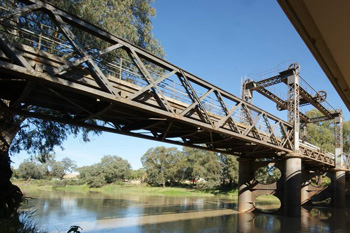
Many communities rely on the Darling River. Photo: Wilcannia NSW. Ian Sutton (Flickr, CC BY 2.0)
The Australian Academy of Science welcomes the announcement by Minister David Littleproud to appoint an expert panel to assess the deaths of fish in the lower Darling River.
The Academy is pleased that the final report of the independent panel will be released publicly, as will the Academy’s own report, developed in collaboration with the other learned Australian academies.
The Academy strongly urges all parties to work collaboratively so that we can bring to bear all the available knowledge to inform decision making.
The fish kill is a multifactorial issue and it is in the national interest to ensure all the available knowledge is brought to bear in assessing this concerning situation.
It is also important that the information is received in a timely way so that it can be considered by the Parliament.
Decisions to maintain and improve Australia’s river system based on the best available science is something all Australians want to see.
Read the Academy’s other statements on this issue: