




Academy welcomes Labor’s commitment to science

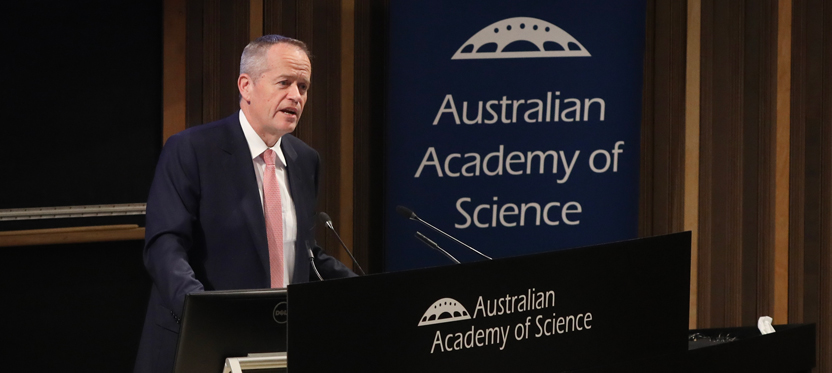
Leader of the Opposition Bill Shorten outlined his vision for science in a speech at the Shine Dome
The Australian Academy of Science has welcomed the Federal Opposition Leader’s commitment to science and his plan for working with Australia’s science and research sector if elected in 2019.
Bill Shorten outlined his vision for science in a speech at the Shine Dome in Canberra this evening.
Academy President Professor John Shine said he was pleased to see Bill Shorten commit to a number of the Academy’s recommendations put forward in its science priorities for the federal election.
The Academy welcomes Labor’s commitment to establish a Charter that recognises the mutual obligations of scientists and government and to establish meaningful national priorities.
The Academy welcomes the restoration of the Prime Minister’s Science and Innovation Council (PMSIC) and is honoured by the proposal that Labor, if elected, would partner with the Australian Academy of Science to establish a National Scientific Expert Panel to work directly with the PMSIC.
“In our election statement we called for a review to look at how effectively research is being supported because only then can we know that maximum benefits are being returned. So we are pleased Labor has committed to holding an inquiry to build a long term framework for the research sector,” Professor Shine said.
“We note and applaud that Academy Fellow Professor Ian Chubb AC FAA will Chair the review and other members will include former Academy President, Professor Andrew Holmes AC FAA as well as other leading scientists, such as Professor Emma Johnston AO and Professor Karen Hussey.
The Academy also welcomes the announcement by Labor to:
- lead a national effort to encourage more women and girls to study and work in STEM;
- recognise the important contribution and role of early and mid-career researchers;
- lift Australian spending on R&D to three per cent by 2030;
- legislate that ministerial changes to Australian Research Council funding recommendations be tabled in Australian Parliament; and
- increase collaboration between public and private industry R&D.
The Academy looks forward to further policies from Labor as well as the Government on how they will deliver a coherent and visionary plan for science to drive the nation’s future.
Earning Our Future—Science priorities for the federal election
The Australian Academy of Science today outlined science priorities for the 2019 federal election so Australia can earn its future.
To thrive in an increasingly uncertain world, the future economy and workforce will be underpinned by science of the highest quality and intensity.
Earning Our Future: the platform of the Australian Academy of Science:
- recommends that the mutual obligations of scientists and government be made clear
- provides measures to build national capacity
- keeps community benefit at the heart of all we do.
Academy President Professor John Shine said as the countdown begins to the federal election, Australians deserve a coherent and visionary plan for science.
“Australia has a choice: determine our future and develop the science plan to drive it or be swept along trailing the decisions of other nations,” Professor Shine said.
The Academy’s election statement includes 10 recommendations that provide a clear vision for science in Australia.
- A charter between scientists and government—to establish a relationship built on trust, respect, and mutual obligation.
- A formal structure for science advice—to provide independent science information to politicians, government and the Commonwealth Science Council. Australia would benefit from formal structures that produce independent, timely and relevant science advice to government and to the parliament.
- Boosted commitment to STEM education—all Australian schools, teachers and students should have access to the Academy’s proven science and maths education programs.
- Increase gross national R&D spending to three per cent of GDP over a decade—with longer and more ambitious research grants and greater security for early- and mid-career researchers. Australia cannot afford to let careers for researchers drift.
- State-of-the-art science infrastructure—acknowledging the government's existing research infrastructure commitments, a further investment of $1.85 billion is required through a long-term mechanism such as an Australian National Research Infrastructure Investment Fund.
- A new international engagement strategy—that allows Australia to meet its agreed Sustainable Development Goal obligations, and that strategically positions Australia and its STEM capabilities.
- A stronger commitment to equity in science—Australia needs access to all its available talent regardless of who or where they are, and we must ensure everyone takes action through the Women in STEM Decadal Plan.
- Pursue national research priorities—with a focus on Australia’s strategic advantages and where no other country could or would address our nation’s research challenges.
- Develop a best practice framework for responsible research and innovation—to ensure research is in step with community expectations.
- Review how effectively research is being supported—only then can we know that maximum benefits are being returned.
Geography: Shaping Australia’s Future
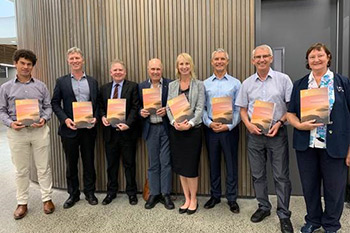
A strategic plan for Australian Geography was launched by the Australian Academy of Science’s National Committee for Geographical Sciences.
Australia should enhance and capitalise on its existing skills and expertise in geographic information systems (GIS) and big data to address thesocial, economic and environmental challenges of our region and the emergence of the ‘China Century’.
The recommendation is one of several in a strategic plan for Australian Geography launched today by the Australian Academy of Science’s National Committee for Geographical Sciences.
Chair of the Committee, Adjunct Professor Stephen Turton from CQ University, said Australian geography focuses on solving issues and threats affecting the wellbeing of people and places in Australia and our Asia–Pacific neighbours.
“The plan explains the contribution that geography makes to the social, economic and environmental wellbeing of Australia through research, education, training, skills, expertise and engagement with industry and the community,” Adjunct Professor Turton said.
“It also offers a research, teaching and industry engagement framework strategically aligned with contemporary challenges of our region. Indeed, addressing sustainable development, climate change, regional development, environmental degradation and biodiversity loss, requires an increasingly whole of government, industry and academia approach.
“The breadth and depth afforded by geographical understandings to such problems places Australian geographers in a strong position to provide evidence‑based research informing and advancing innovative policy and practice.
“We invite policy‑makers, senior managers in universities and research organisations, fellow academic and practicing geographers and interested members of the public to review the rich material covered in this strategic plan.
The National Committee for Geographical Sciences acknowledges the support of the following organisations in the development of this plan: The Institute of Australian Geographers, Australian Geography Teachers Association, Royal Geographical Society of South Australia, Royal Geographical Society of Queensland and the New South Wales Geographical Society.
Meningococcal disease spike prompts vaccination call

The Australian Academy of Science is urging parents to vaccinate their children against all strains of meningococcal disease, after a recent spike in cases in Adelaide and the death of a seven-year-old boy in south-west Sydney.
The call by the Academy comes as it releases a new video campaign, developed in partnership with the Australian Department of Health, to educate consumers and medical professionals about the disease.
Spring is a peak time for the disease with babies and children up to the age of five years and teenagers and young adults aged from 15 to 24 years among those at most risk of contracting the disease. People with suppressed immune systems, smokers and those living in crowded accommodation are also at greater risk.
Professor Robert Booy, from the National Centre for Immunisation Research, University of Sydney, who features in the campaign, said there are five common strains of meningococcal disease in Australia—A, B, C, W and Y—with an increase in cases over the last few years.
“We had a surge in W (strain) leading to nearly 150 cases last year and a surge in Y (strain) leading to 75 cases last year,” Professor Booy said.
Professor Allen Cheng from Melbourne’s Alfred Hospital, who also features in the campaign, said there are very few bacteria that can kill someone in hours, but this is one of them.
The videos also feature the stories of meningococcal disease survivors including Ms Eliza Ault-Connell, who became an amputee after contracting meningococcal disease when she was 16.
“When you consider my case—I was in an intensive care unit for 110 days and had over 60 operations—the financial burden of the diseases is so great. When we look at the cost of a vaccination, it’s safe and effective; I can only see prevention as being better than cure,” said Ms Ault-Connell, who is also the Director of Meningococcal Australia.
The videos have been rigorously fact-checked by Academy Fellows and feature some of Australia’s leading experts in the field, including Professor Jodie McVernon from the Doherty Institute.
Watch the video for consumers (also below)
Watch the video for health professionals
Find out more via the Department of Health.
Watch the six-part video series of the Science of Immunisation.
Academy responds to Minister Tehan’s regional higher education funding announcement
Regional and remote students are underrepresented in higher education—particularly Aboriginal and Torres Strait Islander people. The Academy welcomes the Australian Government acting to improve access and equity through new scholarships and support for regional universities.
However, the Academy is very concerned at the Minister’s comments on radio this morning that he intends to fund these new measures by reallocating research support funding for universities.
University research plays a critical role in developing the knowledge and skills that benefit all Australians. Australia cannot afford to let our intellectual edge slip as we prepare for the challenges and opportunities of the coming decade.
Academy hosts conference to examine the latest science on the impacts of feral horses
A national conference was held at the Academy’s Shine Dome in November to present and discuss the latest research and observations of the impacts of feral horses on the Australian Alps.
The Kosciusko Science Conference, involving 145 scientists and other stakeholders, followed an open letter from Fellows of the Academy and other researchers published in June. The letter made the point that the Kosciuszko Wild Horse Heritage Act 2018 passed by the NSW Government effectively gave priority to the feral horse over many native species and ecosystems, some of which are found nowhere else on Earth.
The peer-reviewed research presented at the conference covered water catchments and water, alpine and sub-alpine native animals, and threatened native flora in Kosciuszko National Park, the Victorian Alpine National Park and Namadgi National Park.
Pioneering alpine ecologist and Academy Fellow, Dr Alec Costin AM, aged 93, was due to open the conference but was unable to attend due to ill health.
According to Dr Dick Williams from Charles Darwin University, who presented research at the conference, Dr Costin took on the on the alpine grazing industry in the Kosciuszko area in the 1950s and 1960s and with the help of the Australian Academy of Science, won.
In his preface in the conference booklet, Dr Costin asked: ‘Why legislate through the Kosciuszko Wild Horse Heritage Act 2018 in favour of the feral horse, undoing 75 years of catchment-healing investments by multiple governments?’ Read Dr Costin's speech, delivered at the conference by Associate Professor Graeme Worboys.
The conference also saw 90 scientists sign a Kosciuszko Science Accord that called on the NSW Government to acknowledge the damage being done to Kosciuszko National Park by feral horses, to repeal the Kosciuszko Wild Horse Heritage Act 2018 and cooperate with Victoria and the ACT to help remove feral horses from alpine and subalpine protected areas, among other things. Read Associate Professor Worboys' speech introducing the Accord.
Read the Kosciuszko Science Conference booklet, including abstracts of peer-reviewed research presented at the conference.
Academy wins national award for science communication
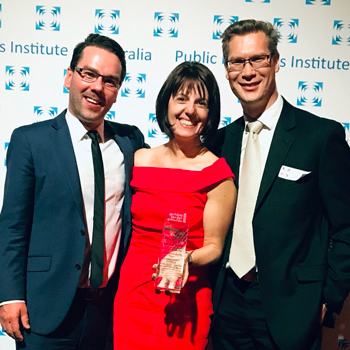
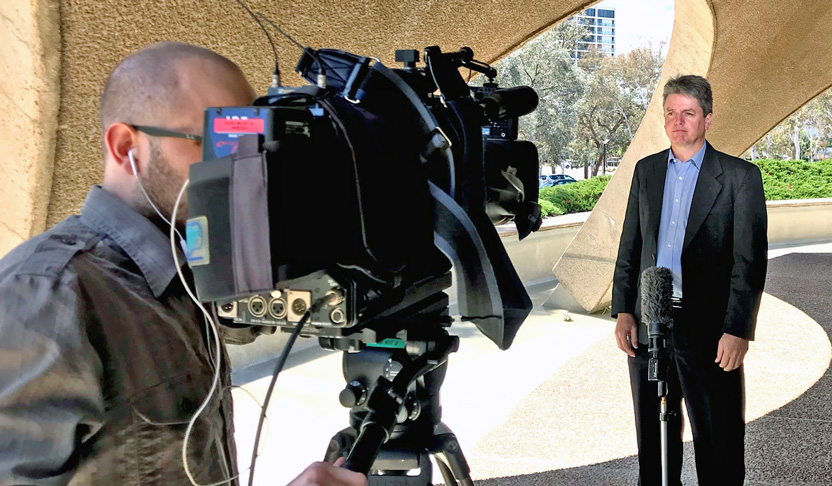
Academy Chief Executive, Anna-Maria Arabia, with team representatives Dan Wheelahan (left) and Paul Richards.
The Australian Academy of Science has won the Public Relations Institute of Australia’s (PRIA) Golden Target Award for Not-for-Profit In-House Team of the Year.
The Academy’s entry, titled “Science entry Credible Clickbait: Outshouting fake news & supplying factual, entertaining science” was among a number of award winners announced at the PRIA’s annual awards dinner in Sydney on 30 October.
The award comes after the Academy celebrated reaching one million likes on its Facebook page earlier this month, from a starting point of 9,000 one year earlier.
Academy Chief Executive, Anna-Maria Arabia, said the award not only recognises the achievements of the Academy’s Communications and Outreach team, but also the public’s appetite for trusted and credible scientific information.
This is backed up by the University of Canberra’s Digital News Report: Australia 2018, which found 65% of Australians are concerned about what’s real and what isn’t when it comes to online news.
“The Academy is uniquely positioned to draw on the expertise and excellence of its Fellowship, comprising Australia’s most distinguished scientists, to inform the scientific information we distribute on social media. This means the Academy’s content is a source of accurate, trustworthy and credible science designed to engage audiences far and wide” Ms Arabia said.
“The Academy’s impact is global and is one of a select group of organisations to be verified as a trusted education account on China’s social media platform, Weibo. Its Chinese language content has been viewed nearly 13 million times.”
According to the PRIA, the Golden Target Awards are ‘the PR and Communication industry’s longest running and most prestigious awards, celebrating the accomplishments of PR and Communication Professionals nationwide’.
Independent selection of research grants essential for integrity of Australia’s research system
The Academy strongly supports independent selection of research grants in Australia.
The Australian Academy of Science expresses its concern that Ministerial veto has been made on eleven grant applications recommended for funding by the Australian Research Council (ARC).
Grants for research must be allocated according to the scientific merit of the proposal as judged by peer review. Political review is inappropriate, as it gives the appearance of political interference in the internationally accepted practice of peer review in science said Academy President Professor John Shine.
‘Appropriately, governments align funding schemes with national priorities and strategic objectives and they are able to indicate such criteria when calling for proposals. However, within those criteria, scientific merit, as identified by independent peer review, should remain the central basis for allocating research support.’
‘In exchange for responsible and socially-conscious conduct in research, academic researchers should be free to pursue lines of enquiry they consider meaningful and important. Indeed researchers are trained to identify problems or gaps in the academic literature and determine the best and most rigorous way to investigate that problem.’
‘Much of the value provided by research to policy makers and the public is due to its unbiased and independent nature and this should not be eroded,’ Professor Shine concluded.
Former Academy President wins PM’s Prize for Science
Former Academy President Emeritus Professor Kurt Lambeck AO FAA FRS has been awarded the $250,000 Prime Minister’s Prize for Science for ‘transforming our understanding of our living planet’.
Professor Lambeck received the prize for his research that has revealed how our planet changes shape and the influence this has on sea levels, the movement of continents and the orbits of satellites.
His original work in the 1960s enabled accurate planning of space missions. It led him to use the deformation of continents during the ice ages to study changes deep in the mantle of the planet. It also led to a better understanding of the impact of sea level changes on human civilisation in the past, present and future.
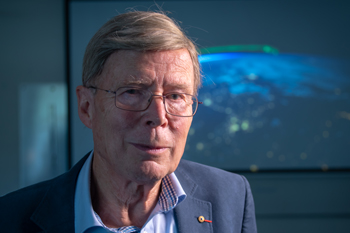
Emeritus Professor Kurt Lambeck has been awarded the Prime Minister’s Prize for Science for ‘transforming our understanding of our living planet’. Photo: Prime Minister’s Prizes for Science/WildBear
“The Earth is remarkable,” Professor Lambeck said.
“It has this wonderful record of its history going back to almost its very beginning. Almost everywhere you look, you learn something new about what's been going on in our planet. It's a constant journey of discovery.”
Professor Lambeck guided the development of a comprehensive geodetic monitoring system called the AuScope network. Established with the support of the National Collaborative Research Infrastructure Strategy (NCRIS), the network consists of about 100 GPS stations, radio telescopes and laser tracking systems, and enables us to track our location with sub-centimetre accuracy across the country.
Professor Lambeck is now working with archaeologists in Europe, and with precision carbon dating equipment at the Australian National University, to piece together a more precise understanding of past sea levels.
See the full list of recipients of the 2018 Prime Minister’s Prizes for Science
Academy breakfast for prize winners
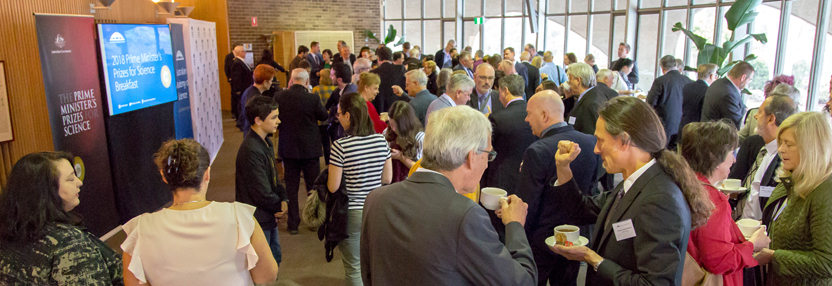
In line with its annual tradition, on the morning following the Prime Minister's Prizes the Academy hosted a breakfast for the prize winners at the Shine Dome. There was no sign of a late night: conversations were energetic and convivial. Attendees included Academy President Professor John Shine, the Minister for Industry, Science and Technology Ms Karen Andrews, and several of her parliamentary colleagues. Congratulations to all the prize winners!
Downward-looking telescope will unlock Australia's mineral wealth
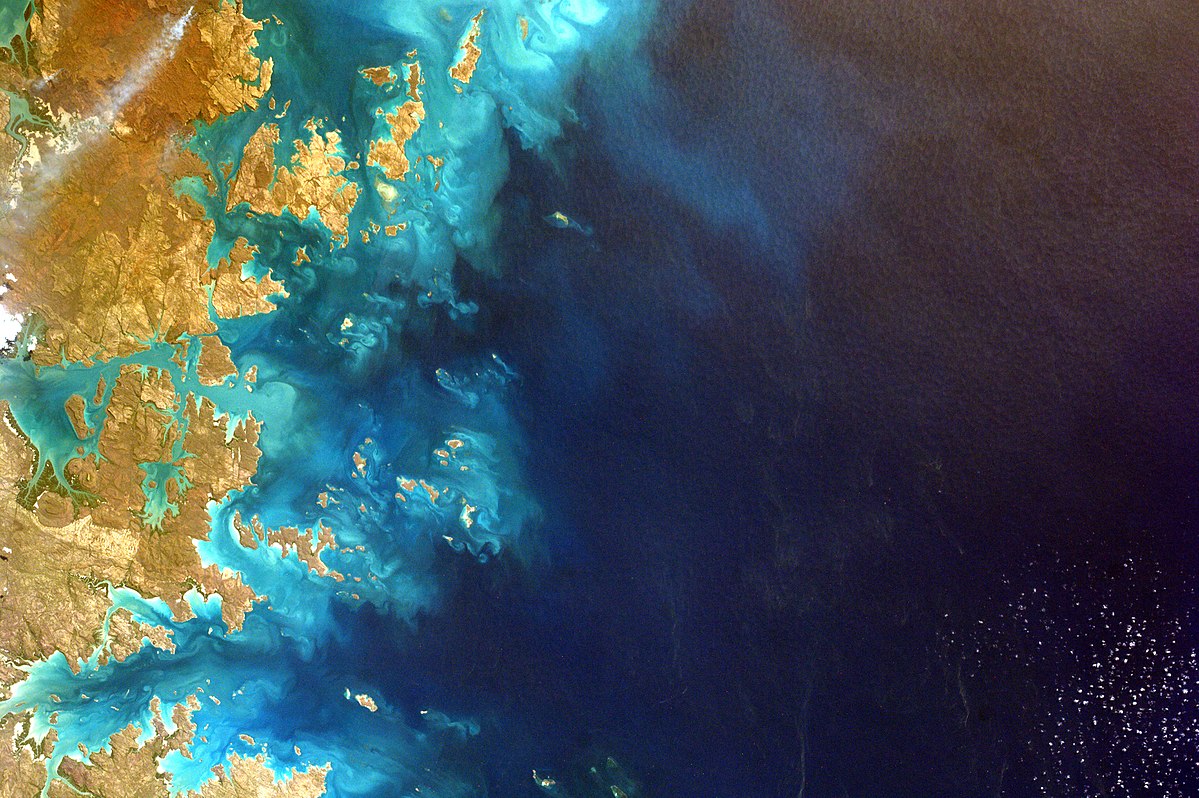
Prince Regent National Park, WA – Credit: NASA/Earthkam.org
The Australian Academy of Science is proposing the development of a new ‘downward-looking telescope’ that could look at least 300 km beneath Earth’s surface to unlock Australia’s hidden mineral wealth.
The proposal is one of several in a 10-year plan for Australian Geoscience (2018–27) launched today by the Academy’s National Committee for Earth Sciences.
The 10-year plan highlights how the world’s shift towards mobile device technology, renewable energy sources and electric cars will involve massive increases in demand for copper, cobalt, gold, rare-earth elements and other specialty metals.
The Committee’s Chair, Professor Sue O’Reilly AM FAA, said one of the challenges for Australian geoscience in the coming decade is to ensure the right infrastructure is in place to know how and where to explore for the critical resources needed for Australia’s future.
“This is where the downward-looking telescope comes in,” Professor O’Reilly said.
“A piece of infrastructure like this would transform our minerals sector by making deep Australia visible. It would give us a new understanding of the vertical makeup of the continent and allow us to direct our mineral exploration efforts in the two-thirds of Australia that aren’t currently cost-effective to explore.”
“By 2030, global demand for cobalt will be 47 times what it was in 2016 so unless we can become self-sufficient in this strategic metal, Australia may be held to ransom with massive price increases and chronic shortages,” Professor O’Reilly said.
“This exemplifies the need to generate new geoscience knowledge that will allow us to explore successfully in the covered areas of Australia.”
The plan also draws attention to the weakness in geoscience in Australia’s education system.
“Geoscience is largely absent in Australia’s school system because of a lack of teachers with qualifications in geoscience. Geoscience should be embedded as a core subject within every level of Australian STEM education and earth science graduates should be incentivised to obtain education qualifications,” Professor O’Reilly said.
The plan also calls for an expansion of Australia’s national computational capability to ensure that Australia retains and extends its lead in geoscience simulation and modelling capability.
The National Committee for Earth Sciences acknowledges the support of the Australian Research Council, Geoscience Australia, the University of Melbourne, the University of Queensland, Macquarie University and the Australian Geoscience Council in the development of the plan.