




Fellows update—July 2018

Honours and awards to Fellows
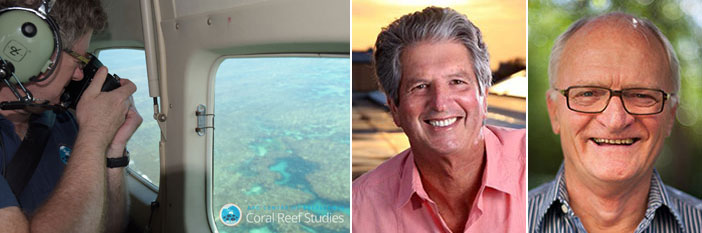
- Professor Martin Green AM FAA FRS FTSE—Global Energy Prize
- Professor Terry Hughes FAA—Prince Albert II of Monaco Foundation Award for Climate Change
- Dr Brian Walker FAA FTSE—Blue Planet Prize
STEM graduates important but let’s support existing teachers as well
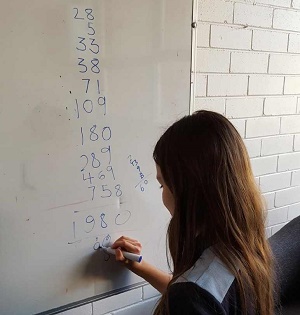
The Academy is committed to developing and delivering inquiry-based science curriculum resources and teacher professional learning programs, including a maths learning program.
The Australian Academy of Science has welcomed Federal Education Minister Simon Birmingham’s statement about the importance of qualified science and maths teachers in Australian schools.
The Academy said there aren’t enough well-trained and well-supported science and maths teachers to be placed in all Australian schools and pointed to alarming decreases in student enrolments in advanced science and maths subjects, particularly among girls.
Attracting more STEM graduates into teaching and ensuring better STEM training for teacher trainees is part of the solution, however, only about five per cent of the teaching workforce turns over each year so this is a long-term strategy—we need to do a much better job supporting our existing teachers in the meantime.
With support from the Australian government, industry, philanthropists and some state governments, the Australian Academy of Science is committed to developing and delivering inquiry-based science curriculum resources and teacher professional learning programs, recently expanding to a national maths learning program.
The Academy has engaged with over 70% of Australian science teachers, and delivered professional learning workshops to over 23,000 teachers over the past decade.
This has taught us that targeted professional development for existing teachers—particularly those without formal training in their disciplines, and those teaching in regional and remote areas—is critical and urgent if we are to give all teachers the skills and confidence to engage and inspire their students to pursue maths and science.
Evidence shows that programs like the Academy’s Primary Connections, Science by Doing and ReSolve: Maths by Inquiry work, however, they have not been implemented in all schools. The Academy stands willing and able to work with state governments and the Federal Government to do more.
One scientist’s journey in advanced materials and product development in Australia
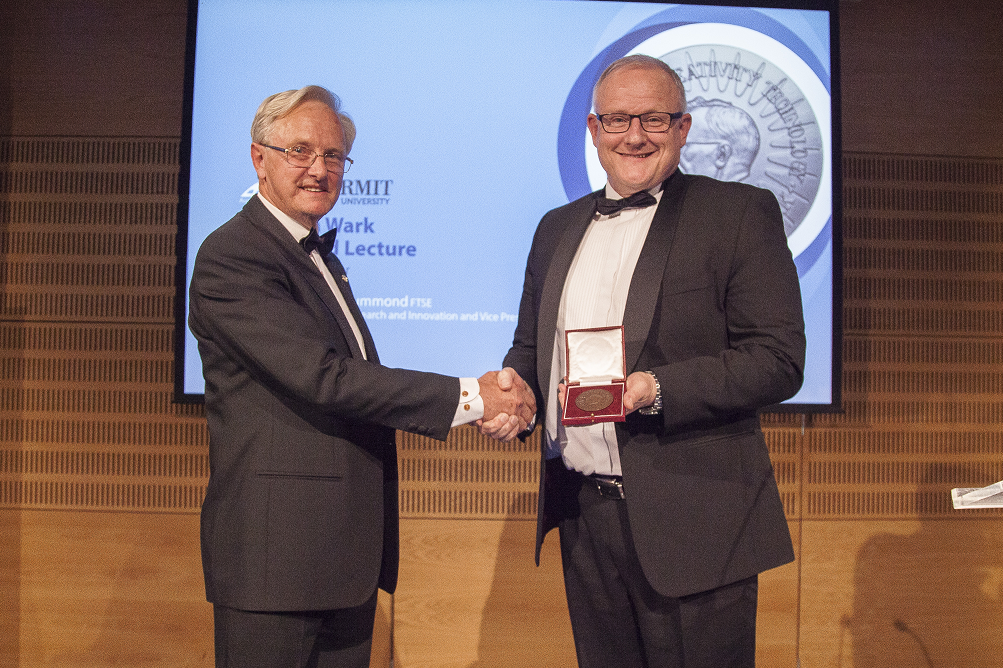
Professor Calum John Drummond FTSE accepting the Ian Wark Medal
The contributions to Australian science and industry by the late Sir Ian William Wark CMG CBE FAA FTSE were commemorated this month with the Australian Academy of Science’s Ian Wark Medal and Lecture.
The award was inaugurated in 1987, two years after Sir Ian’s death, and was created by the Academy through a legacy received from Sir Ian and donations by his friends. It recognises research which contributes to the prosperity of Australia through the advancement of scientific knowledge and its application.
This year the Ian Wark Medal was awarded to Professor Calum John Drummond FTSE, Deputy Vice-Chancellor Research and Innovation at RMIT University.
Professor Calum Drummond has made outstanding contributions to advancing the fundamental understanding of the key factors governing molecular assembly, and particle and surface interactions in liquids.
A hallmark of his research has been the use of sophisticated high-throughput preparation and characterisation techniques to fast track the creation of materials, and the determination of the structure and properties of materials, at the nanoscale.
This fundamental research in chemistry has enabled the development and commercialisation of advanced high-performance materials for economic and societal benefit. The materials have been applied in diverse areas including energy storage, medical therapy and diagnosis, household consumer and industrial large-scale uses.
Seventy-five people attended the presentation dinner in Melbourne to hear Professor Drummond’s lecture titled: ‘One scientist’s journey in advanced materials and product development in Australia.’
Watch a video about Professor Drummond's award
More information about the Ian Wark award
Nominations will be open in early 2019 for the 2020 award.
Queen’s Birthday honours for seven Academy Fellows
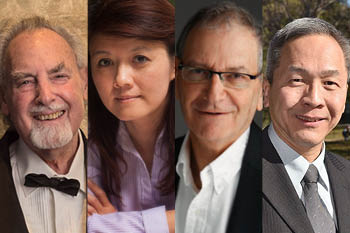
Geoffrey Burnstock, Rose Amal, the late David Cooper and San Thang were named as Companions of the Order of Australia in this year’s Queen’s Birthday honours list.
Seven Academy Fellows have been recognised in this year’s Queen’s Birthday honours list, including four who have received Australia’s highest accolade for their work, named as Companions in the General Division of the Order of Australia.
Professor Rose Amal AC FAA FTSE has been named as a Companion for her eminent service to chemical engineering, education as a researcher and academic, and to women in science as a role model and mentor.
Professor Geoffrey Burnstock AC FAA FRS has been recognised for eminent service to biological sciences in the field of pharmacology and toxicology as an academic, author and mentor.
Professor San Thang AC FAA FTSE has been honoured for eminent service to science, and to higher education, particularly in the fields of polymer chemistry and materials science, as a research innovator and mentor.
The late Professor David Cooper AC FAA FRCP was awarded a posthumous accolade for his eminent service to medicine, particularly in the area of HIV/AIDS research, including the development of treatment therapies, and to health programs in South East Asia and the Pacific.
Three Academy Fellows have also been recognised as Officers in the General Division of the Order of Australia.
Professor Sever Sternhell AO FAA FRACI was named for his distinguished service to education in the field of organic chemistry, as an academic and researcher, and to scientific institutions.
Professor Halina Rubinsztein-Dunlop AO FAA was recognised for her distinguished service to laser physics and nano-optics as a researcher, mentor and academic, to the promotion of educational programs, and to women in science.
Professor James McCluskey AO FAA was acknowledged for his distinguished service to medical education, as an academic in immunology, and through research into immune systems response to viruses.
RMIT scientist’s ‘electronic skin’ recognised
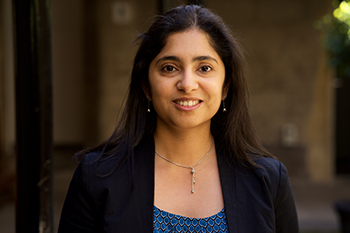
Associate Professor Bhaskaran is Australia’s 2018 nominee for ASPIRE.
A talented local scientist’s work to develop a form of ‘electronic skin’ that monitors the environment and the human body has been recognised by the Australian Academy of Science.
The Academy nominated Associate Professor Madhu Bhaskaran from RMIT University for the prestigious APEC Science Prize for Innovation, Research and Education (ASPIRE), valued at US$25,000. The ASPIRE Prize will be announced at the 12th APEC PPSTI Meeting in Papua New Guinea in August 2018.
ASPIRE recognises young scientists from Asia–Pacific Economic Cooperation (APEC) member economies who have demonstrated a commitment to excellence in innovation, research and education.
Associate Professor Bhaskaran is Australia’s 2018 nominee for ASPIRE for her work in developing stretchable electronics and sensors with applications such as detecting dangerous gases in mines, reducing skin cancer with widespread use of UV sensors or smart contact lenses which can analyse tears for biomarkers.
The Academy also recognised the work of two runners up: Professor Michael Milford from the Queensland University of Technology (QUT) and Professor Igor Aharonovich from the University of Technology Sydney (UTS).
Professor Milford’s research covers robotics, neuroscience and computer vision. His work looks at how the brain performs tasks like navigation and perception, with his findings leading to applications across intelligent transport, mining and space exploration.
Professor Aharonovich’s breakthrough research on next generation technologies spans healthcare, energy, communications and information. His work on atomically thin materials will support the development of revolutionary techniques to enable early detection of many diseases.
Since 2011, ASPIRE has recognised scientists under the age of 40 who are working in APEC member economies and have demonstrated a commitment to excellence in scientific research and cooperation with other APEC scientists.
Academy launches Aboriginal and Torres Strait Islander Scientist Travelling Research Award
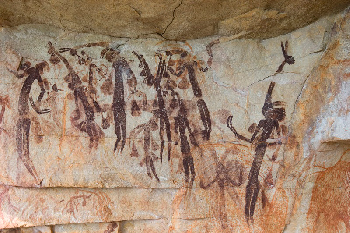
Image courtesy of Kimberley Foundation Australia and Grahame Walsh Archive—Copyright owner reserves all rights.
The Australian Academy of Science has launched an award to recognise research in the natural sciences by outstanding Aboriginal and Torres Strait Islander PhD students and early- and mid-career scientists.
The Aboriginal and Torres Strait Islander Scientist Travelling Research Award aims to support the expansion and growth of each scientist’s research networks and international knowledge exchange, through visits to relevant international centres of research.
Australian Academy of Science President, Professor John Shine said he was committed to increasing the Academy’s cultural and gender diversity.
“Two annual awards of $5,500 are available, with additional support provided to attend the Academy's Annual Science at the Shine Dome event,” Professor Shine said.
Aboriginal medical doctor and researcher Professor Alex Brown, Chair in Aboriginal Health at the University of South Australia, also welcomed the award.
“It’s a really good start. I’d be disappointed if that was as far as it went, however it’s something that I’d be happy to continue to strongly encourage (as it’s) an investment in the next generation of Aboriginal scientists,” Professor Brown said. He made the comments at the Academy’s Science at the Shine Dome gala dinner, where the award was officially launched.
“We are out there. There are a lot of Aboriginal and Torres Strait Islander people coming through the ranks. Some of them early in their careers. Some are advanced but unknown and not talked about because they are busy getting on with the job.”
Applications close on Friday 27 July 2018. Successful applicants will be announced in November for projects/travel to be carried out in 2019.
Fellow appointed NSW Chief Scientist and Engineer
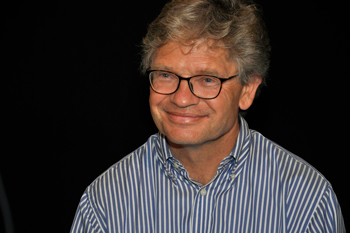
Academy Fellow Professor Hugh Durrant-Whyte will be the next NSW Chief Scientist and Engineer.
Academy Fellow and world leader in field robotics Professor Hugh Durrant-Whyte has been appointed the next Chief Scientist and Engineer for New South Wales.
Professor Durrant-Whyte is currently Chief Scientific Adviser for the UK Ministry of Defence. He will start his new role in September.
He is a pioneer in autonomous robotics who is known for his work in delivering automated container terminals at Port Botany, and he has also been involved in developing autonomous solutions for mine sites.
One of his major tasks will be to draw together business, research and government to drive innovation in the New South Wales, while also providing independent advice.
Professor Durrant-Whyte was recently Director of the Centre for Translational Data Science at the University of Sydney, formerly Chair of the NSW Government’s Innovation and Productivity Council, and formerly head of National ICT Australia, now CSIRO’s Data61.
He has won numerous awards for his work including being named the 2010 NSW Scientist of the Year.
Professor Durrant-Whyte was elected a Fellow of the Academy in 2009. He is also a Fellow of the Royal Society and of ATSE.
Professor John Shine commences as President of Academy
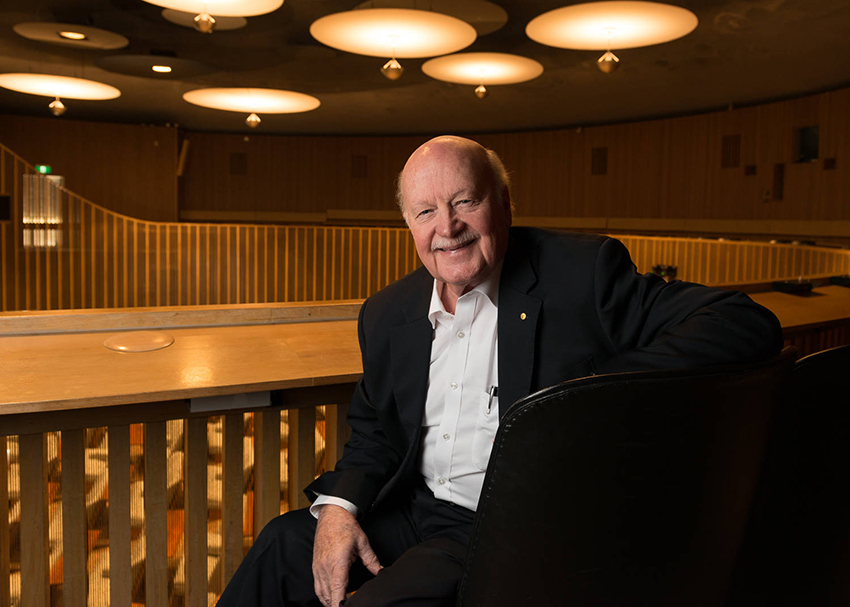
Professor John Shine AC PresAA in the Ian Wark Theatre at the Shine Dome. Image: Bradley Cummings Photography
Pioneering biochemist and molecular biologist Professor John Shine AC PresAA has commenced today as President of the Australian Academy of Science.
Professor Shine becomes the 19th President of the Academy. The founding President was Sir Marcus Oliphant AC KBE FAA FRS FTSE, elected in 1954.
“It’s a great honour to be elected as President of a very prestigious organisation,” Professor Shine told ABC Radio National when his Presidency was first announced.
“It’s also a daunting task to help coordinate the Australian scientific effort, to advise government on sensible scientific policies and to be a source for government, policy makers, the community and business of unbiased, clear scientific facts,” Professor Shine said.
“The outcomes from basic research being translated into something of real value for the community are often long time frames, and those times frames are much longer than the political cycle. So often our political leaders require sudden instant answers to big, important questions and these take a long time.
“We need to develop a good consistent dialogue where there is mutual respect between all parties. We need to make sure we communicate science and the developments happening in science to the broader community because our political leaders follow what the broader community is telling them. If we have strong base community support then that will translate into the political response science needs,” Professor Shine said.
Outgoing President, Professor Andrew Holmes AC FRS FTSE FAA welcomed Professor Shine as he handed over the Presidency.
“As with all roles of this nature, I conclude my presidency with some unfinished business. Our work to improve engagement with our political leaders and the Fellowship will never be done,” Professor Holmes said.
About Professor Shine
Professor Shine became world-renowned for a series of discoveries he made between 1975 and 1985 that furthered our understanding of genes. He cloned the first human hormone genes, and in the process developed sophisticated gene cloning techniques that helped transform the world of biotechnology.
In his earlier roles in the US biotechnology industry and as Chairman of CSL for the past six years, Professor Shine has a long-standing commitment to the translation of research discoveries into advances in health care for the social and economic benefit of the community.
Professor Shine was elected to the Academy in 1994. The Academy’s home, previously known as Becker House, was named the Shine Dome in 2000 in recognition of a $1 million donation made by Professor Shine to help restore the building, one of the most iconic and distinctive in Australia.
Professor Shine was also Executive Director of the Garvan Institute of Medical Research from 1990 to 2012. He still runs his own lab at the institute, investigating the gene mutations responsible for inherited kidney disorders.
Transcript: Science at the Shine Dome President’s Address 2018, Professor Andrew Holmes
Delivered 9 am Thursday 24 May 2018, Shine Dome, Canberra
Australian Academy of Science President, Professor Andrew Holmes
Before we begin the proceedings, I would like to acknowledge and pay respect to the traditional owners of the land on which we meet—the Ngunnawal people of the Wiradjuri Nation. It is upon their ancestral lands that the Australian Academy of Science is built.
As we share our own knowledge, teaching, learning, and research practices may we also pay respect to the knowledge embedded forever within the Aboriginal Custodianship of Country.
Fellows of the Academy, distinguished guests, award recipients including our early- and mid-career researchers, family members and ladies and gentlemen: welcome to the Shine Dome and to this 64th annual gathering of the Australian Academy of Science.
I, too, would like to add my personal thanks and acknowledgement to the sponsors mentioned by Anna-Maria who have not just made this event possible, but have allowed it to be more inclusive and to reach more people.
Yesterday we heard and again today we will hear from some of Australia’s most distinguished researchers, some of the best young scientists, mathematicians and teachers working in the STEM sector.
Before we move to the Academy’s Award presentations, on this occasion it is customary for the President to give an account of events over the past year and to raise awareness of topics that are of interest to the scientific community.
Our Foundation Stone
I would like to start by providing a historical context. Sixty years ago, on 2nd May 1958, the then Prime Minister the Rt Hon R G Menzies MP laid the Foundation stone of this remarkable building. During his speech he described the origin of the stone as follows:
“This is like me, it comes from Melbourne and has been planted now here and it is one of the old piers of the Melbourne Observatory, dating back to 1870. …..I read (the history) with immense pleasure”
Later in the speech Mr Menzies went on to say …
“the boundaries of knowledge to the activities of scientists will have been pushed back to places as yet unseen and unimagined, and in all that in our own country this Academy, established by the finest body of scientists this country has ever had, adding as it will in the future to its own numbers men of corresponding faculty, men and women of corresponding gifts and enthusiasm, is going to make a contribution to the body of scientific knowledge in the world, which won’t be just confined to Canberra, but will extend over the world.”
This spirit of discovery is ongoing, and we can confidently agree with Mr Menzies that sixty years later the scientists of Australia—both women and men alike—have certainly ‘contributed to the scientific knowledge of the world and the boundaries of knowledge have been pushed back to places then unseen and unimagined.’
It is useful to look at the year in retrospect with this background in mind.
Among the great recent scientific discoveries, we must count detection of gravitational waves and the subsequent observation at spectroscopic wavelengths of the collision of two neutron stars—an event that involved an enormous number of scientists all round the world, including Fellows of this Academy and one who was elected as a Fellow this year.
Many other breakthroughs in science and technology have been made by our Fellows. They are able to achieve these discoveries through the opportunities created by government and other sources of research funding.
Funding that is directed by the roadmaps for research laid out by our National Committees for Science.
Science Projects
In the last twelve months we have released 10-year strategic plans that guide science in the areas of:
- Agricultural Sciences;
- Space Science and Technology; and
- Taxonomy and Biosystematics.
The Vision for Space Science and Technology in Australia has already had an impact on policy-making with the establishment of an Australian Space Agency announced in the recent Federal Budget.
Similarly, the Decadal Plan for Astronomy has contributed to the signing of Australia’s Strategic Partnership in the European Southern Observatory.
The Academy’s advocacy efforts are important. Our steadfast commitment to providing the best available evidence base and high quality and independent advice to government has paid off.
This year’s Federal Budget provided support for a significant number of scientific activities which were warmly welcomed by the Academy.
This included:
- a long term National Research Infrastructure pipeline that had been guided by the review led by Chief Scientist Dr Alan Finkel, a Fellow of this Academy and past President of the Academy of Technology and Engineering;
- an initial investment of $26 million in a national space agency, strongly influenced by the abovementioned decadal plan as well as individual input from members of the National Committee (and mentioned by current Health Minister and former Science Minister Greg Hunt as ‘his secret legacy’);
- A 10-year $1.3 billion National Health and Medical Industry Growth Plan that included $500 million in a Genomic Health Futures Mission—a direct response to the informative Australian Council of Learned Academies Horizon Scanning Report on Precision Medicine, so ably led by Professor Bob Williamson FAA.
- $4.5 million in new measures to encourage girls and women to pursue STEM education and careers, including the development of a decadal plan for women in STEM that will see the involvement of Fellows of the Academy.
There were also areas in which the budget fell short—funding for the ARC, CSIRO, university research funding and the Education Investment Fund—the Academy will continue to make the case for investment in these areas.
The Chief Scientist, writing in The Conversation on 9th May, stated “We can’t assume that the broad public support for science will translate into support for specific proposals unless we do the work to explain the benefits, including more jobs and better health. It’s important for politicians to see the outcomes of public investment. They see the dollar figures in the budget papers but they don’t necessarily connect the research breakthroughs they read about in the newspapers years later to the programs that made them possible. It is important to help local members, irrespective of their party, recognise the impact of previously funded programs working for Australians.”
It is also important to acknowledge the efforts of Fellows of the Academy who, through their membership of the Commonwealth Science Council, routinely engage with Cabinet Ministers. In this regard we thank Professors Ian Frazer and Nalini Joshi, Ms Catherine Livingstone, and Professors Tanya Monro and Brian Schmidt.
In looking back over the numerous activities that the Academy has undertaken I’d like to highlight just a few examples from each of the “pillars” listed in the Academy’s Strategic Plan.
Influential Voice
One of the highest priorities of the Academy is to act as an independent and influential voice in matters scientific in Australia. While this has been achieved in a number of ways including numerous submissions to government, reports and many conversations in the so called “corridors of power”, I would like to highlight three notable achievements in the policy and projects area.
Firstly, the bringing together of some 30 organisations under the umbrella of the Australian Brain Alliance who speak with one voice in championing the establishment of an Australian Brain Initiative. These efforts have been led by the formidable Professor Linda Richards FAA, who has also seen to the formation, in this very theatre, of the Canberra Declaration to establish the International Brain Initiative. We thank Linda and her team for their vision and leadership.
Secondly, our Academy was also invited by the Royal Society to lead the development of a Consensus Statement on Climate Change agreed and launched by 22 national academies and societies of science from around the Commonwealth, in advance of the recent Commonwealth Heads of Government meeting in London, and this was supported by an informative Academy video that has been widely circulated and viewed.
Finally, Professor Trevor McDougall led a working group that assessed Australia’s climate science capabilities that was delivered to the Department of the Environment and Energy, after the reduction of CSIRO’s effort in the area. The document informed the deliberations of the National Climate Science Advisory Committee and the Academy received an invitation from the Department of Environment and Energy to prepare an International Climate Mapping Report “to provide information about the interactions and dependencies of Australian climate science with the international climate research effort”.
Notwithstanding these wonderful achievements, to my mind the initiative that has enabled us to have the greatest influence has been the production of our Academy science videos delivered through social media to the general community (www.science.org.au/curious).
Many of you would have had advance viewing of one or two of these videos at Science at the Shine Dome in May last year. By October, the production team was fully geared and able to launch its capability at the Prime Minister’s Prizes for Science Dinner.
At that time the Academy’s Facebook following was about 9,000. Today more than 300,000 people across the globe follow our Facebook page and every day they sample a slice of science, through videos, photographs and articles. Content is distributed across a range of social media platforms. It brings me immense joy to know that the hard work of Fellows of the Academy can be reached by more people than ever before, and that we are doing our part in inspiring audiences who may have otherwise never been attracted to or interested in science. In the last 8 months the Academy has been able to reach and influence audiences it had never reached before.
Today, literally millions of people have viewed, shared and enjoyed our content. And today, this in-house capability is able to support every aspect of the Academy’s work including communication of scientific discoveries; highlighting the achievements of our Fellows, promotion of our education programs, calls for nominations for awards; campaign and advocacy support, and event support.
Additional and complementary outreach activities include our growing National Speaker Series and our public lecture series in Canberra. These activities have provided an important engagement opportunity with both members of the public and with Fellows.
Scientific Literacy
Under the pillar of scientific literacy, we have our three major education initiatives, Primary Connections, Science by Doing, and reSolve: Mathematics by Inquiry which are due for renewal this year, and we have combined the oversight of the activities in education under an Education Committee chaired by Professor Ian Chubb.
Education activities have been overseen by Professor Pauline Ladiges who has done a magnificent job in unifying the themes, in overseeing all the projects and in identifying new sources of funding for various projects. We also acknowledge the service of Professor Denis Goodrum who leads Science by Doing and who has been associated with the Academy education projects from the very start.
The Academy’s longstanding commitment to science and maths education, supported by government and generous donations has enabled us to reach more than 23,500 primary school teachers, and engage two in every three high school teachers. We have developed 38 curriculum resources for primary school and a further 18 for secondary. Our maths modules cover every strand of the mathematics curriculum from foundation to year 10.
Above all, every independent evaluation of our programs has shown that they work. It is a legacy many have contributed to and that we can all be proud of.
International Engagement
The Foreign Secretary, Professor Cheryl Praeger, has kept Australia at the forefront of international activities. The International Programs Section of the Academy supports many types of international engagement of Australians in activities abroad. Some of the recent highlights include the Commonwealth Science Conference in Singapore, the Falling Walls meeting in Berlin, and the Nobel Laureates’ meeting in Lindau.
Cheryl has most ably represented the Academy at various InterAcademy Partnership gatherings and at Association of Academies and Societies of Sciences in Asia meetings, while Michael Barber and TJ Higgins served on special IAP working groups, and several of us attended the International Council for Science General Assembly in Taipei. I also attended the STS Forum in Kyoto, the Korean Academy of Science and Technology in Seoul and the Royal Society of Edinburgh where we exchanged a Memorandum of Understanding.
Operational Excellence
The Academy is fortunate to have an outstanding Secretariat under the leadership of the Chief Executive, Ms Anna-Maria Arabia. Through the dedication of the staff there has been strong support for all the programs, including an extensive investment in the Early- and Mid-Career Researcher Forum. Members of this Forum are now represented on most of our national committees and a representative attends Council meetings as an observer. I am delighted that so many EMCRs have been supported to participate in Science at the Shine Dome this year and can engage in networking and training opportunities here.
Excellence in Science
The most evident recognition of excellence in science in Australia is through the Academy’s annual election of its 21 Fellows and 2 Corresponding Members. I congratulate all those newly elected Fellows. It is through the service of the Fellows and the members of the Secretariat that we can implement all the other aspects of our Strategic Plan that I have already described. We strive to elect a diverse range of Fellows and award recipients in the Academy.
In this regard, we have been guided by an excellent Equity and Diversity Reference Group jointly chaired by Professors Sue O’Reilly and Peter Koopman. In the election of Fellows, we seek to broaden nominations to reflect the diversity of the scientific community in Australia, and our call to DVCs (Research) for suggestions has been fruitful.
Our efforts to elect more women require constant attention. We shall be discussing this again later today at our AGM. Some of the measures we have taken are the development of Champions of Diversity, and reaching out to decision makers in universities, Medical Research Institutes, and Publicly Funded Research Agencies encouraging them to nominate women for Fellowship.
We have also assisted our Council and Sectional Committee Chairs to recognise unconscious bias. This year, thanks to the University of Sydney, we have made available childcare and carer grants to delegates at this event. We have also launched assertive social media campaigns encouraging women to apply for the Awards the Academy administers. I am pleased to report that this year we have received double the number of applications for the two honorific awards that are specific to women: the Nancy Millis Medal for Women in Science and the Dorothy Hill Medal.
Code of Conduct
About eighteen months ago the Council began developing a Code of Conduct for Fellows, the Secretariat and participants in Academy meetings. It has taken time to establish best practice in this area and consider all the legal implications of such a Code. We expect the Code to be ratified by Fellows of the Academy at today’s AGM and then made available on our website. This is a challenging area for organisations whose members are volunteers.
I’d like to illustrate this with the example of Professor Sir Anthony Blunt. Who was Anthony Blunt? He was a leading art historian, director of the Courtauld Institute of Art and Surveyor of the Queen’s Pictures. He was a Fellow of the British Academy. After being offered immunity in 1964 he confessed to having been a Soviet spy along with Philby, Burgess and Maclean. The British Government agreed to maintain this as an official secret. However, on 15 November 1979 the relatively new Prime Minister, Margaret Thatcher, revealed Blunt’s treason in the House of Commons. The British Academy faced the dilemma of how to deal with this situation, and the story was related to some of us at a Royal Society Te Apārangi (New Zealand) meeting by the Chief Executives of the British Academy and the Royal Society of Edinburgh. On the one hand Professor Blunt was an eminent art historian who happened to be a traitor, while on the other hand he had not committed an offence against the British Academy. At the eleventh hour the British Academy agreed to accept Blunt’s resignation, although Wikipedia reports that he was dismissed.
As far as I am aware the Australian Academy of Science has not had the problem of spies, but most definitely we need a Code of Conduct to encourage appropriate behaviour and to deal consistently and fairly with behaviour that falls short of expectations. The Academy’s Code of Conduct is designed to allow this to happen in future situations and we hope it will encourage other STEM organisations to adopt best practice in this challenging area.
Next, I should like to acknowledge the contribution made by outgoing members of the Executive Committee. I should like to thank the outgoing Foreign Secretary, Professor Cheryl Praeger, and Secretary for Education and Public Awareness, Professor Pauline Ladiges, for their outstanding service on the Executive Committee, and to acknowledge the dedicated Council service of Professors Ian Hume, John Mattick, Sue O’Reilly and Mandyam (Srini) Srinivasan who will step down after the AGM today.
This represents my last Science at the Shine Dome as President of the Academy and I especially look forward to Professor John Shine’s Presidency that will formally commence later today.
Fellowship
The Academy extends its warmest congratulations to the seven Fellows recently elected to The Royal Society—Professors Jill Banfield (Corresponding Member), Frank Caruso, Graeme Jameson, Ingrid Scheffer, Michelle Simmons, Peter Vischer and Geordie Williamson (who was elected FAA this year). We also offer heartfelt congratulations to Professor Ron Ekers who has been elected a Foreign Associate of the National Academy of Sciences.
Unfinished Business
As with all roles of this nature, I conclude my presidency with some unfinished business. We set out with some lofty ambitions. Our work to improve engagement with our political leaders and the Fellowship will never be done and we should always strive to do better.
I had hoped to see the Academy increase its formal links with distinguished Australian academicians abroad, either through expanded Corresponding Membership or some new class of Fellowship.
We had ambitions to establish a public dialogue on Science for the Public Good, but discovered the theme was not sufficiently enticing for the National Press Club. Neither was the issue of Sexual Harassment in Academia. My hope is that alternative platforms for the Academy to show national leadership in both of these areas will become available in the future.
We are well on the way to holding our first joint event with members of the judiciary associated with the Academy of Law on the theme How can you be sure? This is to be held in the late afternoon on Friday 24 August at the Federal Court in Sydney.
We agreed that we need to do more in the Pacific region, and the early focus will be on Papua-New Guinea.
However, all this is unfinished business.
What we have achieved is due to the excellence of the members of Council, other engaged Fellows, and the Secretariat.
So, if we return to Mr Menzies we can definitely confirm that “science has an enormous capacity to expand its boundaries” and we can confidently predict that this will continue for the remainder of this century and further.
That brings me to the conclusion of my address.
Academy to deliver new initiatives for women and girls in STEM
From left: Ms Julia Banks MP, the Hon Kelly O’Dwyer MP, Professor Karen Hapgood from Deakin University, Academy Fellow Professor Maria Forsyth from Deakin University, Minister for Jobs and Innovation, Senator Michaelia Cash, and Ms Margaret Hansford from Girl Guides Victoria
The Australian Academy of Science has welcomed a commitment of $600,000 from the Australian Government to develop a 10-year roadmap for sustained increases in engagement and participation of girls and women in science, technology, engineering and mathematics (STEM).
The funding commitment was made by Senator Michaelia Cash and Kelly O’Dwyer MP this week at Deakin University.
“The Government is funding the Academy of Science to now put together that decadal plan. And Kelly and I look forward to receiving it by the end of this year,” said Senator Cash.
Academy President, Professor Andrew Holmes, said Australia still has a long way to go as a nation when it comes to achieving equity in opportunities for girls and women to pursue STEM education and careers.
“The barriers to equity in STEM are compounded by the gendered portrayal of science in the media, and a preponderance of male scientists on STEM committees and boards across government, academia and industry,” he said.
“Therefore, we strongly welcome this initiative, along with the $250,000 Women in STEM and Entrepreneurship grant that will enable us to deliver a national ‘#WomenInSTEMOnline' online portal for female STEM professionals,” Professor Holmes said.
“The Academy has a strong track record of delivering long term strategic plans for a range of science disciplines. We look forward to delivering a plan for women and girls in science that will identify and set priorities for the next decade and outline strategies to achieve them.”
The '#WomenInSTEMOnline' project will promote gender equity by improving female participation in STEM conferences and panels, science and technology media, government and industry committees and boards and STEM award nominations and applications.
The online portal will comprise a curated directory of 1000+ industry, academic and professional women in STEM, training and support for women on presentations, media appearances, and award applications, a national Women in STEM symposium and a gender equity toolkit for conference organisers, businesses and agencies.
The Australian Academy of Science will deliver the #WomenInSTEMOnline project in collaboration with the CSIRO, Australian Science Media Centre and Science & Technology Australia.