


Panel of experts to review fish kill announced

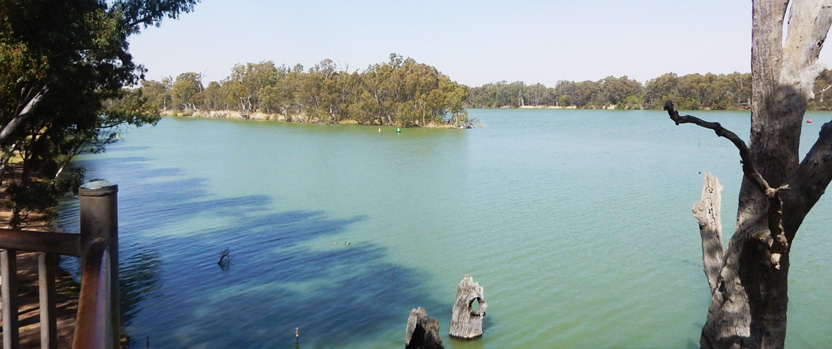
A group of experts will provide scientific advice to the federal Leader of the Opposition on the fish deaths in the Murray–Darling river system. Photo: The Darling (left) meets the Murray (right) at Wentworth, NSW. Michael Coghlan (CC BY-SA 2.0)
In response to a specific request from the Leader of the Opposition, The Australian Academy of Science, in consultation with the other learned academies, has convened a group of experts to provide scientific advice on the fish deaths in the Murray–Darling river system.
The expert panel will commence work immediately to prepare advice to support decision making aimed at creating and maintaining a healthy river system in Australia. Independent scientific advice will be prepared by the following expert panel members:
Panel Chair
- Professor Craig Moritz FAA—Director, Centre for Biodiversity Analysis, Australian National University
Expert panel members
- Professor Linda Blackall—Director, Environmental Microbiology Research Initiative, University of Melbourne
- Professor Jenny Davis—Head, School of Environment Charles Darwin University, Member of the Academy's National Committee for Ecology, Evolution and Conservation
- Professor Tim Flannery FAA—Melbourne Sustainable Society Institute, University of Melbourne
- Professor Lee Godden, FASSA—Director, Centre for Resources, Energy and Environment Law, University of Melbourne
- Professor Lesley Head FAHA—Head, School of Geography, University of Melbourne
- Professor Sue Jackson—Australian Rivers Institute, Griffith University
- Professor Richard Kingsford—Director, Centre for Ecosystem Science, UNSW Sydney
- Professor Sarah Wheeler—Centre for Global Food and Resources, University of Adelaide
- Professor John Williams FTSE—Crawford School of Public Policy, Australian National University
Australian Academy of Science President, Professor John Shine, said the expert panel is multidisciplinary in nature and is drawn from the distinguished fellowships of the four learned academies.
“The knowledge that the expert panel brings to bear will enable the various aspects of this matter to be explored and comprehensive advice to be prepared,” Professor Shine said.
“Over the course of their careers the expert panel members have collaborated with scientists in Australia and abroad, including scientists within state and federal agencies and authorities.
“In undertaking this body of work the expert panel will collaborate with other relevant experts as required and will seek to consult with the Murray–Darling Basin Authority and relevant state and federal bodies.
“Their advice will be a synthesis of the best available knowledge and will be presented in a way that makes it accessible to decision makers and the Australian people.”
The advice from the expert panel will be provided to the Opposition Leader by 10 February 2019. The Academy is pleased that the advice provided will be made public.
Expert panel members will meet with the Shadow Minister for Environment and Water, the Hon Tony Burke, as soon as is practical.
Background information
The expert panel will provide written advice to the Opposition on five key areas:
- How the fish kills took place and what caused the magnitude of the event
- Whether water diversions and/or water management practices in the Murray-Darling system have caused or exacerbated the scale of this disaster
- Whether chemical and fertiliser use may have contributed to the event
- What immediate steps can be taken to improve the River system’s health and management within the Basin Plan framework
- Whether there has been a step change in inflows due to climate change or whether more work is required in this research area.
Academy to provide science advice on fish kill
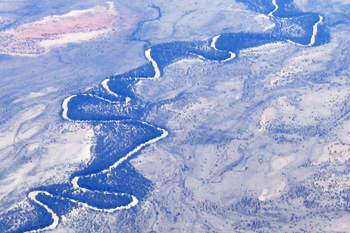
The Academy will lead the provision of independent scientific advice to support decision making for healthy river systems. Photo: Darling River near Menindee, NSW. Tim J Keegan (CC BY-SA 2.0)
The Australian Academy of Science has been concerned about the fish kill in the Murray-Darling River system in NSW and welcomes the opportunity to provide independent scientific advice to the federal Leader of the Opposition.
Science is critical to support decision making in creating and maintaining a healthy river system in Australia.
The Australian Academy of Science will commence work immediately by consulting with the other learned academies to convene a group of multidisciplinary experts to provide independent scientific advice on this matter.
This advice will be provided by 10 February 2019.
The Academy of Science is pleased that the advice provided will be made public.
The fish kill is a multifactorial issue and the multidisciplinary panel of experts the Academy of Science will assemble will be knowledgeable across a range of matters that will allow it to respond to the request by the Leader of the Opposition.
A commitment to using science from independent expert sources to inform policy decisions is crucial for effective decision making in Australia.
It is common in other comparable countries for governments to routinely seek formal independent scientific advice from their respective national academy. For example in the UK, the Royal Society is an independent scientific adviser to government and in the US the National Academies of Science perform this role.
Scientists call on NSW Premier to inspect feral horse damage in Kosciuszko
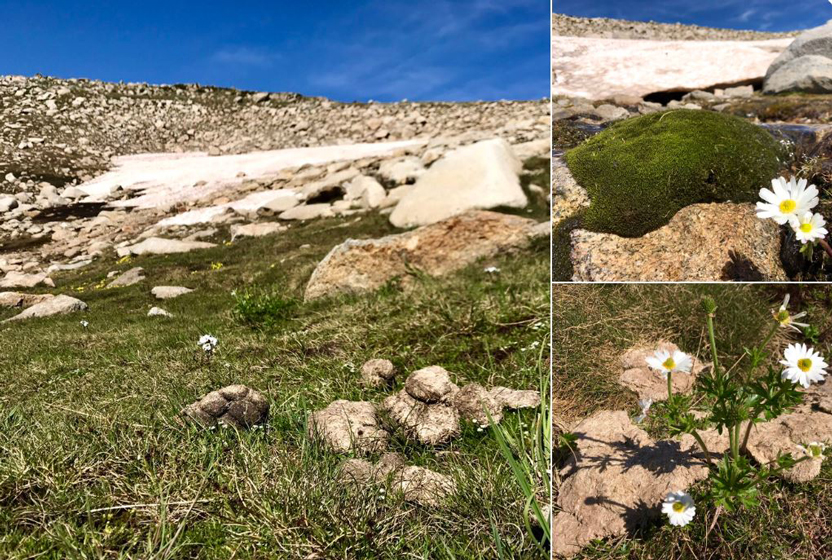
Feral horse dung piles near a snowpatch herbfield at the top of the Snowy River. Image: Casey Gibson
Australian scientists are calling on NSW Premier Gladys Berejiklian to visit Kosciuszko National Park to see firsthand the damage inflicted by feral horses on the natural environment.
Australian Academy of Science Secretary for Science Policy, Professor David Day, said leading research on the impacts of feral horses locally provides clear scientific evidence of environmental damage done by this invasive species.
"Feral horses are impacting Kosciuszko’s endangered alpine animals, its wetlands and streams and the headwater catchments of the Murray, Murrumbidgee and Snowy rivers. The Premier needs to see this for herself and take decisive action to halt the damage,” Professor Day said.
Professor Jamie Pittock of the ANU’s Fenner School of Environment and Society said the NSW Government has failed to acknowledge the overwhelming scientific evidence of Australia’s leading alpine researchers and scientists.
“The evidence presented at the Kosciuszko Science Conference in November last year was unequivocal,” Professor Pittock said.
“Even small numbers of feral horses cause damage to the park and the only realistic way to bring the thousands of feral horses under control is to use a mix of methods, including aerial culling, particularly for the Kosciuszko summit alpine area and rugged and remote parts of the park.
"The impacts of these feral horses are mounting, and the cost of getting on top of the problem and then restoring the landscapes is rising.
"There is no established heritage benefit of having feral horses in the national park, but already, millions of dollars will be needed to restore the damage these horses have done to the catchments, and that amount increases the longer they are left unchecked.
“It is now critical for the Premier to visit Kosciuszko National Park this summer to see for herself the damage caused by feral horses and to instigate action that will stop the damage and restore these iconic landscapes," said Professor Pittock.
Professor Pittock said the government’s credibility as a defender of NSW’s natural environments and catchments at Kosciuszko and its respect for scientific evidence was seriously under question.
“In 1944, another NSW Premier, Sir William McKell observed for himself the impacts of years of stock grazing to the catchments of Kosciuszko and in his words was so ‘outraged’ with the severity of the erosion that he immediately took action to establish protection through the creation of Kosciusko State Park,” Professor Pittock said.
“For the past 75 years, Liberal Governments have had a proud history of protecting the Kosciuszko National Park. There is still an opportunity for the Premier to maintain that proud tradition,” Professor Pittock said.
Fellows receive international awards and NHMRC grant
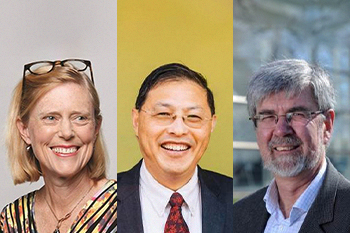
From left: Professor Melissa Little, Professor Min Gu and Professor John Church
Academy Fellow and UNSW Professor John Church is the first Australian awarded the BBVA Foundation Frontiers of Knowledge Award in Climate Change for his work in detecting, understanding and projecting sea-level rise due to climate change.
He shares the prize and €400,000 prize money with French space geodesist Anny Cazenave, a specialist in satellite altimetry (the measurement of the form and dimensions of Earth) and British climate scientist Professor Johnathan Gregory, an expert in ocean heat uptake and climate sensitivity.
The prize is rated as one of the world’s 99 major science awards by IREG List of International Academic Awards, with a reputation score of 0.59 (a Nobel Prize has a score of 1.0). Read more about the prize on the UNSW Newsroom website.
Academy Fellow and RMIT Distinguished Professor Min Gu has been awarded a top international prize, the 2019 Dennis Gabor Award in Diffractive Optics, named in honour of the Nobel-winning inventor of holography, Dennis Gabor.
The award, announced by the International Society for Optics and Photonics (SPIE), is presented annually in recognition of outstanding accomplishments in diffractive wave front technologies, especially those that further the development of holography and metrology applications.
Internationally renowned for his expertise in 3D optical imaging theory, Gu’s discoveries are helping drive the development of solutions to some of our biggest challenges in renewable energy, information technology and big data storage. Read more about the prize on the RMIT News website.
Meanwhile Academy Fellow and Murdoch Children’s Research Institute Professor Melissa Little will receive $936,221 from the National Health and Medical Research Council.
The funding will be used to further her research into the use of human stem cells to develop kidneys with functioning tissue as an alternative for renal replacement. The research will focus on the molecular basis of kidney development, renal disease and repair.
The funding was announced by the Minister for Health, Greg Hunt, in January. Read the NHMRC media release.
Australian researchers to collaborate with India on science projects
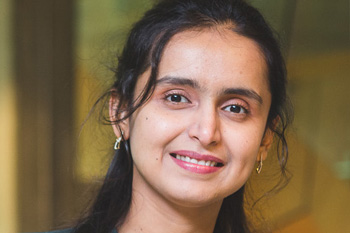
Dr Vini Gautam, from the Australian National University, is one of 11 EMCRs to collaborate with India through fellowships.
The Australian Academy of Science has announced the successful recipients of the Australia–India Strategic Research Fund (AISRF) Early- and Mid-Career Researcher (EMCR) 2019 Fellowships.
The recipients have been selected by the Academy from a competitive field of applicants to conduct research in 2019 at some of India’s leading research institutions. They are:
- Dr Julie Ardley, Murdoch University—Investigation the role of tRAN modification and other molecular determinants of root nodule bacteria tolerance to environmental stresses;
- Dr Yixiang Gan, University of Sydney—Optimising thermal energy storage with phase change materials: with applications to solar energy storage in Australia and India;
- Dr Ulf Schmitz, University of Sydney—Establishing an Australian-Indian alliance to find cures for haematological diseases;
- Dr Sridevi Sureshkumar, Monash University—Molecular mechanisms of epigenetic silencing caused by intronic repeat expansions;
- Dr Chandan Karmakar, Deakin University—Wearable sensor devices for monitoring chronic disease;
- Dr Gregory Martin, University of Melbourne—Intensified primary production of protein feed and oils from microalgae;
- Dr Nisa Salim, Deakin University—Multi-functional carbon fibre composites towards quality assurance, predictive maintenance and in-service damage detection;
- Dr Sambasivam Periyannan, Australian National University—Building food security in India through rapid incorporation of resistance to devasting cereal rust diseases;
- Dr Douglas Tait, Southern Cross University—Quantifying the role of groundwater nutrient inputs into the Indian Ocean;
- Dr Vini Gautam, Australian National University—Nanotechnology meets Neuroscience: novel scaffolds that engineer growth and function of neurons to understand brain disorders; and
- Dr Vaibhav Shah, UNSW Sydney—Investigating molecular biology of HIV-1 subtype C: implications for the increasing global diversity of HIV-1 subtypes.
The Australia–India EMCR fellowships provide support (up to A$16,500) for Australian scientists to travel to India and work with leading researchers at major Indian science and technology organisations for between one and three months.
The fellowships also facilitate long-term science, technology and innovation collaboration between Australia and India by developing researchers’ expertise in international collaboration and fostering long-term relationships between Australian and Indian researchers.
This increases Australian researchers’ understanding of Indian culture, particularly science and research practices and systems, while developing leadership skills as future ‘science ambassadors’ for Australia.
The EMCR fellowships are a component of the AISRF, a platform for bilateral collaboration in science jointly managed and funded by the governments of Australia and India.
This program is supported by the Department of Industry, Innovation and Science.
Australian environmental scientists receive Max Day awards
Dr Tim Doherty from Deakin University and PhD student Ms Nicole Foster from the University of Adelaide are the 2019 recipients of the Australian Academy of Science Max Day Environmental Science Fellowship Award.
The award provides up to $20,000 for early-career researchers working on the conservation of Australia’s flora and fauna, the ecologically sustainable use of resources and the protection of the environment and ecosystem services.
It is named in honour of Academy Fellow, the late Dr Maxwell Frank Cooper Day AO FAA, who spent a lifetime championing entomology, conservation and forestry, as well as helping other scientists. He died in 2017 aged 101.
Dr Doherty will use the award to study the environmental consequences of removing the predators of the large native Australian monitor lizard, Varanus gouldii. Also known as the racehorse or sand goanna, it can cover up to 20 km/hour.
The research will be conducted at Wild Deserts - a fauna reconstruction project at Sturt National Park in north-west New South Wales. Two 20 km2 fenced enclosures have been constructed from which introduced cats and foxes will be eradicated by early 2019.
“We will obtain baseline data on goannas inside the fenced predator-free ecosystem before ecosystem changes accumulate such as increased plant growth, the reintroduction of threatened mammals and changes in invertebrate communities,” Dr Tim Doherty said.
“The project will determine how sand goannas change their movement behaviour and habitat use in response to the removal of mammalian predators, and also produce new knowledge on the ecological outcomes of erecting predator-free enclosures in Australia.”
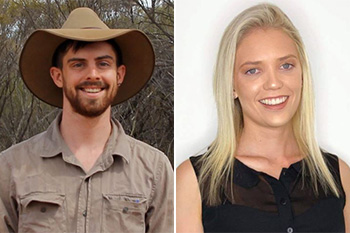
Dr Tim Doherty and Ms Nicole Foster are the 2019 recipients of the Max Day Environmental Science Fellowship Award.
Ms Foster will use the award to study innovative approaches to the management of coastal environments
Ms Foster will look at environmental DNA buried in sediment profiles of coastal environments to understand changes in coastal vegetation through time.
“Mangroves, salt marshes and sea grasses capture large amounts of carbon from the atmosphere and this actually helps to prevent global warming. They also provide a large amount of habitat for marine life and birds and stabilise the coastlines against erosion and storm events,” Ms Foster said.
“Through this environmental DNA analysis we will be able to see what the natural state of this system is and then tailor conservation goals towards the natural environment.”
Three researchers were also ‘highly commended’ for the Max Day Environmental Science Fellowship Award:
- Ms Anita Perkins from Southern Cross University for her project: Fungi as degraders of kelp detritus: unravelling the role of fungi in coastal carbon cycling and storage;
- Dr Jose Lahoz-Monfort from the University of Melbourne for his project: Acoustic monitoring: new technologies and analytical tools for large-scale monitoring of the threatened Sarus crane; and
- Dr Alexandra Carthey from Macquarie University for her project: - Microbially-mediated olfactory communication in the Anthropocene: a key to the lockbox of problematic captive breeding for conservation?
More information about the Max Day Environmental Science Fellowship Award
Four Fellows appointed to National Science and Technology Advisory Council
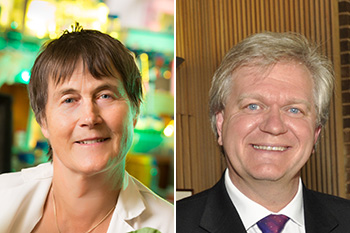
Fellows Professor Barbara Howlett and Professor Brian Schmidt (above), with Fellows Professor Geordie Williamson and Professor Ian Frazer, have been appointed to the board of the National Science and Technology Council.
The Academy welcomes the appointment of six new board members to the National Science and Technology Council including four Academy Fellows: Professor Barbara Howlett, Professor Geordie Williamson, Professor Brian Schmidt and Professor Ian Frazer.
The other new board members are Professor Genevieve Bell and Professor Debra Henly.
The Council was announced recently by the Federal Government.
Announcing the appointments, the Minister for Industry, Science and Technology Karen Andrews said the members bring an impressive range of expertise to the council.
“The six new members have outstanding records in areas that show how much science and technology matters to our lives—from understanding our universe, to cutting-edge artificial intelligence and productive agriculture, as well as high quality education and healthcare,” Minister Andrews said.
Other members of the Council are Prime Minister Scott Morrison (Chair of the Council), Minister Andrews (Deputy Chair), Australia’s Chief Scientist Dr Alan Finkel (Executive Officer), and Dr Larry Marshall, the Chief Executive of the CSIRO.
The Academy looks forward to the first meeting of the new National Science and Technology Council in 2019.
Emerging Aboriginal and Torres Strait Islander scientists recognised
Bradley Moggridge, Tui Nolan, and Amy Searle are the inaugural recipients of the Australian Academy of Science Aboriginal and Torres Strait Islander Scientist Travelling Research Award.
The award recognises research primarily in the natural sciences by outstanding Aboriginal and Torres Strait Islander PhD students and early- and mid-career scientists. It also supports the expansion and growth of each scientist’s research networks and international knowledge exchange, through visits to relevant international centres of research.
The award is part of the Academy’s national effort to improve diversity and inclusion in the sciences.
The award will allow Mr Moggridge, a PhD candidate at the University of Canberra, to visit New Zealand to learn how Maori culture has incorporated Indigenous knowledge and values into their water management practices.
“I’ll be looking at what advantages they have from some of their Treaty settlements. But also, from a legal point of view, from a cultural point of view, what methodologies they've considered to actually make their management of water benefit their tribe,” said Mr Moggridge.
Mr Tui Nolan, a PhD student at University of Technology Sydney, will use his award to visit the Alan Turing Institute in London, one of the world-leading centres in data science. There he will study computational methods that have applications in public health and education.
Mr Tui said he has a passion to share what he learns with the next generation of Indigenous scientists.
“Even more than motivation and pride it's really about responsibility. Encouraging the next generation of Indigenous students to study at university,” Mr Nolan said.
Amy Searle, a PhD student at the Baker Heart & Diabetes Institute, is inspired by the impact her work will have for all Australians, especially Indigenous peoples.
“The new therapies that we're developing here might be able to be used in a more rural and remote setting as well. It's reaching Indigenous populations, which is a big driving force for my research,” Ms Searle said.
Amy Searle is unable to take up the research and travel component of her proposal but will be attending Science at the Shine Dome in 2019, the annual signature event of the Academy, where she will meet with internationally acclaimed scientists. All awardees are provided support to attend this event to network and attend the various workshops and activities.
This award recognises research primarily in the natural sciences, but also supports interdisciplinary and socio-cultural research that incorporates the social sciences and humanities. More information about the award.
Image of the Shine Dome in the above video by Stuart Lindenmayer, CC BY-SA 4.0

Recommended summer reading from Australia’s top scientific minds
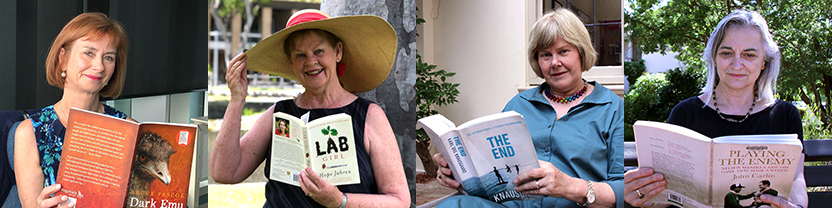
There’s nothing like fully immersing yourself in a good book—so what do Australia’s top scientific minds recommend you read this holiday season?
The Australian Academy of Science’s third Annual Christmas Reading List, released today, contains 55 favourite reads submitted by the Academy’s Fellows.
Academy Chief Executive, Ms Anna-Maria Arabia, said while some Fellows recommend good reads for exploring science, there are plenty of suggestions for escaping it altogether.
“From politics and history through to spy thrillers and murder mysteries, there’s something for everyone on this year’s list,” Ms Arabia said.
Here’s a selection of the recommended reads:
Lab Girl, Hope Jahren
Recommended by Professor Jenny Graves FAA
Brutally honest, passionate and wry account of the author’s rather eccentric life and career as a geobiologist. Her insider observations on the secret life of plants parallel her growth as a scientist, her struggles with officialdom, budgets, pregnancy and mental disease. I really empathised, groaned, laughed and cried with her.
The Righteous Mind: Why Good People Are Divided by Politics and Religion, Jonathan Haidt
Recommended by Professor Karl Glazebrook FAA
An extremely interesting take (from 2013) on the ‘moral divide’ between right and left in politics—and why good people on both sides seem to simply talk past each other. Includes an interesting, controversial claim that people on the left have a more limited moral palette. Not sure I am persuaded by that, but it is thoughtfully argued.
The Cellist of Sarajevo, Steven Galloway
Recommended by Emeritus Professor Cheryl Praeger FAA
The book is a profoundly moving account of life in Sarajevo while under siege in the 1990s, from the viewpoint of several residents of the ruined city. The cellist, whom we meet in the first chapter, symbolises the soul of the city as he plays to commemorate those killed.
Scrublands, Chris Hammer
Recommended by Professor Ian Frazer FAA
A murder mystery set in an Australian town, and with more twists than the average murder story. Difficult to put down once you get started. It will keep you guessing right to the end pages.
Old School, Tobias Wolff
Recommended by Professor Wendy Hoy FAA
I need to read this book yet another time to further grasp its subtleties. These are the reflections of a young man on his journey as an aspiring writer competing for acknowledgement in an elite educational environment. The smooth low-key narrative belies the profundity and complexity of content: deliberations on personal morality, class issues at several levels, great human empathy. It is, to quote the review of Entertainment Weekly, ‘emotionally devastating’.
Dark Emu, Bruce Pascoe
Recommended by: Professor Jennie Brand-Miller FAA
This book will change forever how you think about Australia and its traditional owners. Pascoe argues forcefully that Indigenous Australians were thriving in an environment that was semi-settled in many parts of the country, with villages of thousands of people and huts up to 15 meters in diameter. The description of a ‘fairy-like’ burying-ground by the explorer Thomas Mitchell brought me to tears (see page 100).
Other recommendations include:
The Book of Why: The New Science of Cause and Effect, Judea Pearl and Dana Mackenzie
Recommended by Professor Dacheng Tao FAA
How Does Government Listen to Scientists? Dr Claire Craig
Recommended by Anna-Maria Arabia, Chief Executive, Australian Academy of Science
Who We Were, Lucy Neave
Recommended by Professor Peter Doherty FAA
Read the complete Annual Christmas Reading List.
Fifteen institutions recognised for gender equity and diversity efforts
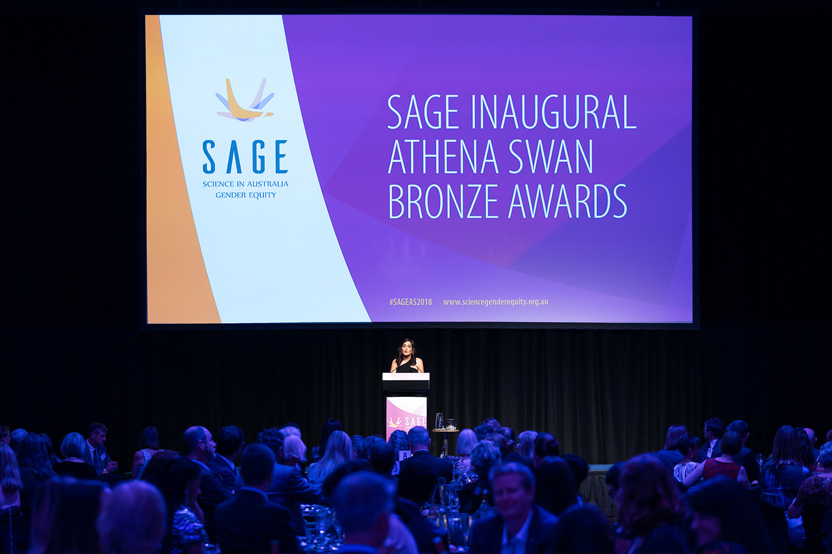
Fifteen Australian institutions have been recognised for their efforts to improve gender equity and diversity, receiving the inaugural Athena SWAN Bronze Awards from Science in Australia Gender Equity (SAGE).
The awardees are:
- Australian Nuclear Science and Technology Organisation (ANSTO)
- Baker Heart and Diabetes Institute
- Charles Sturt University
- CSIRO
- Curtin University
- Edith Cowan University
- Griffith University
- Monash University
- Swinburne University of Technology
- Queensland University of Technology
- University of New South Wales
- University of Newcastle
- University of Technology Sydney
- University of Wollongong
- Walter and Eliza Hall Institute
Members of the first SAGE cohort to achieve accreditation were presented with their award at a gala dinner at Parliament House in Canberra.
The South Australian Health and Medical Research Institute, Southern Cross University, University of Canberra, University of Melbourne and University of Western Australia were also recognised for their progress to date towards Bronze Award accreditation and their continued commitment to SAGE.
Cohort One members are the first group of the 45 institutions from the higher education and research (HER) sector to complete the Athena SWAN Bronze process. The remaining institutions are due to complete their accreditation in 2019.
SAGE—a partnership between the Australian Academy of Science and the Australian Academy of Technology and Engineering—was set up to pilot the UK’s Athena SWAN Charter and accreditation framework in Australia.
Australia is the third jurisdiction after the United Kingdom and Ireland to implement the Athena SWAN Charter program. Australia has taken a leadership role by piloting the Athena SWAN Charter program, with countries such as Canada and the United States now following Australia’s example.