




Fellows awarded Eureka Prizes

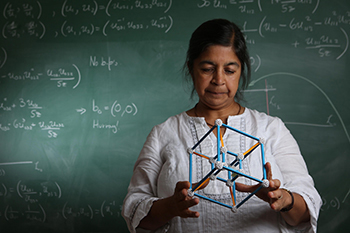
Professor Nalini Joshi FAA AO from the University of Sydney
Three Fellows have been rewarded for their excellence in research/innovation and leadership at the 2018 Australian Museum Eureka Prizes.
Professor Nalini Joshi FAA AO from the University of Sydney received the 2018 University of Technology Sydney Eureka Prize for Outstanding Mentor of Young Researchers.
Professor Nalini Joshi ‘has been instrumental in training and mentoring dozens of individual researchers and countless others through the broader mechanisms that she has established. A strong advocate for gender equality, her influential actions have transformed the research landscape and supported young female scientists across Australia’ according to the prize citation.
Professor Thomas Maschmeyer FAA from the University of Sydney was awarded the CSIRO Eureka Prize for Leadership in Innovation and Science.
Professor Maschmeyer is ‘a world leader in the chemistry of catalysis. He aims to generate and translate new knowledge into commercial solutions as part of his vision for a more sustainable world. His discoveries allow widespread use of renewables and recyclables in the chemical, material and energy spaces. His discoveries have resulted in 23 patents and the foundation of four companies.’
Professor Halina Rubinsztein-Dunlop FAA AO was part of the Optical Physics in Neuroscience team from the University of Queensland that won the UNSW Eureka Prize for Excellence in Interdisciplinary Scientific Research.
The Optical Physics in Neuroscience team ‘has devised cutting-edge methods for studying how our brains work to detect gravity and motion. Using optical trapping and novel microscopes, they successfully imaged the functioning brain circuits that process gravity and motion and combine this information with other senses.’
Science back in Cabinet where it belongs
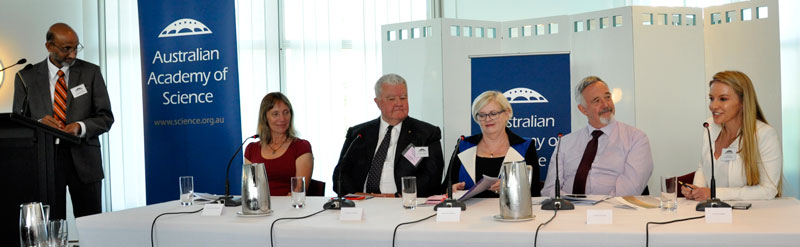
The Hon. Karen Andrews MP (fourth from left) attended the launch of the Academy’s mathematics decadal plan in 2016.
The Australian Academy of Science welcomes the appointment of the Hon. Karen Andrews MP to Cabinet as the Minister for Industry, Science and Technology.
Academy President, Professor John Shine, said the appointment aligns with the Government’s National Innovation and Science Agenda (NISA), which promised to place science at the heart of Australia’s policy agenda.
“It’s good to see science back in Cabinet where it belongs. One dollar in every seven of Australian economic activity is estimated to rely directly on advanced physical and mathematical sciences and advanced biological sciences,” Professor Shine said.
“Minister Andrews brings a wealth of knowledge and experience to the portfolio. As an engineer before entering the Parliament, she has previously held the position of Assistant Minister and Parliamentary Secretary for Science and has co-convened the Parliamentary Friends of Science group since its inception.
“We look forward to working with Minister Andrews and the Government to ensure scientific evidence fully informs their major policy decisions.”
The Academy also acknowledges Minister Andrews’ strong commitment and advocacy for science, technology, engineering and mathematics (STEM) in her previous portfolio role.
“The Academy has a strong track record of delivering long term strategic plans for a range of science disciplines. We look forward to delivering a decadal plan for women and girls in STEM to Minister Andrews that will identify and set priorities for the next decade and outline strategies to achieve them,” Professor Shine said.
The Academy welcomes the Hon. Dan Tehan MP as the new Education Minister, the Hon. Melissa Price MP as the Minister for the Environment and the Hon. Greg Hunt MP’s continuing role as Minister for Health. We also thank the Hon Michaela Cash MP and wish her well in her new portfolio.
Academy Fellow wins ANZAAS Medal for her scientific achievements
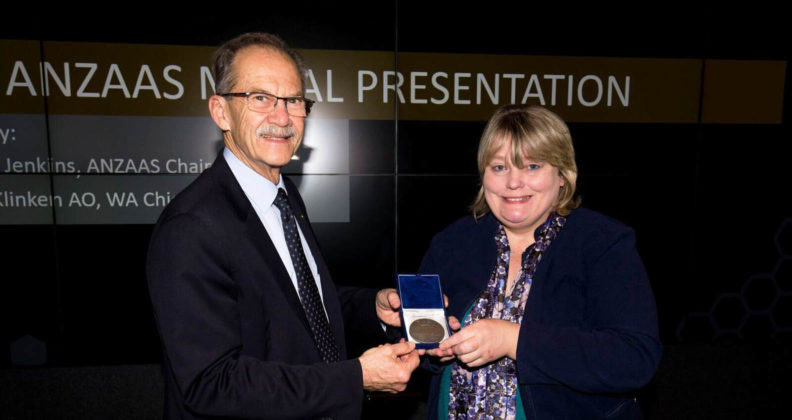
Chief Scientist of Western Australia, Professor Peter Klinken AC presents Professor Kliti Grice with her ANZAAS Medal.
Newly elected Fellow and organic geochemist Professor Kliti Grice has been named the 2018 recipient of The Australian and New Zealand Association for the Advancement of Science (ANZAAS) Medal for her extraordinary contribution to science.
Professor Grice, who is founding Director of the Curtin-based Western Australian Organic and Isotope Geochemistry Centre, was presented the medal by Chief Scientist of Western Australia, Professor Peter Klinken AC.
Professor Grice is a world-leading authority on molecular fossil and stable isotope geochemistry. Her research into modern and ancient environments has greatly enhanced the understanding of Earth’s early life, microbial ecosystems of the past, aspects of plant and algal physiology and food webs.
Grice pinpointed sulfide toxicity as an underlying cause of rapid biological turnover, by identifying the frequent presence of green sulfur bacteria in mass extinction sedimentary records. She also established the role of microbial activity in exceptional preservation of fossils.
Professor Grice said she was honoured to be the recipient of the ANZAAS Medal and acknowledged the contributions of a large cohort of Australian and international researchers she has collaborated with.
“The many inspiring students and early career researchers at Curtin who bring such enthusiasm and energy to our research program have also played an important role in any individual achievement of mine,” Professor Grice said.
Professor Grice said she was passionate about science research and enjoyed the challenges it frequently presented.
“As researchers, we often face setbacks, but it is important to remain curious and pursue research projects with determination and persistence in search of greater knowledge of the world,” Professor Grice said.
Australia’s science leaders reissue their call for stronger action on climate change
The Australian Academy of Science has reissued its call for the Australian Government to use the best available science to guide action on climate change.
The longer Australia delays decisive action towards reducing greenhouse gas emissions the more challenging that action will become.
Even if all the country commitments from the Paris Agreement are met, the best interpretation of the latest data shows that by the end of the century the global climate is likely to be 3°C above pre-industrial levels.
This is substantially higher than the Paris target to limit warming to less than 2°C and would have profound impacts affecting billions of people throughout the world.
The Academy stands ready to assist the Australian Government by continuing to provide sound scientific advice on issues relating to climate change.
The science clearly indicates that avoiding the worst impacts of climate change will require concerted global action to reduce atmospheric carbon.
The Commonwealth Academies of Science Consensus Statement on Climate Change, published earlier this year, represents the consensus views of tens of thousands of scientists. It marks the first time Commonwealth nations have come together to urge their Governments to take further action to achieve net-zero greenhouse gases emissions during the second half of the 21st Century.
View The Commonwealth Academies of Science Consensus Statement on Climate Change.
Academy reaches new heights during National Science Week
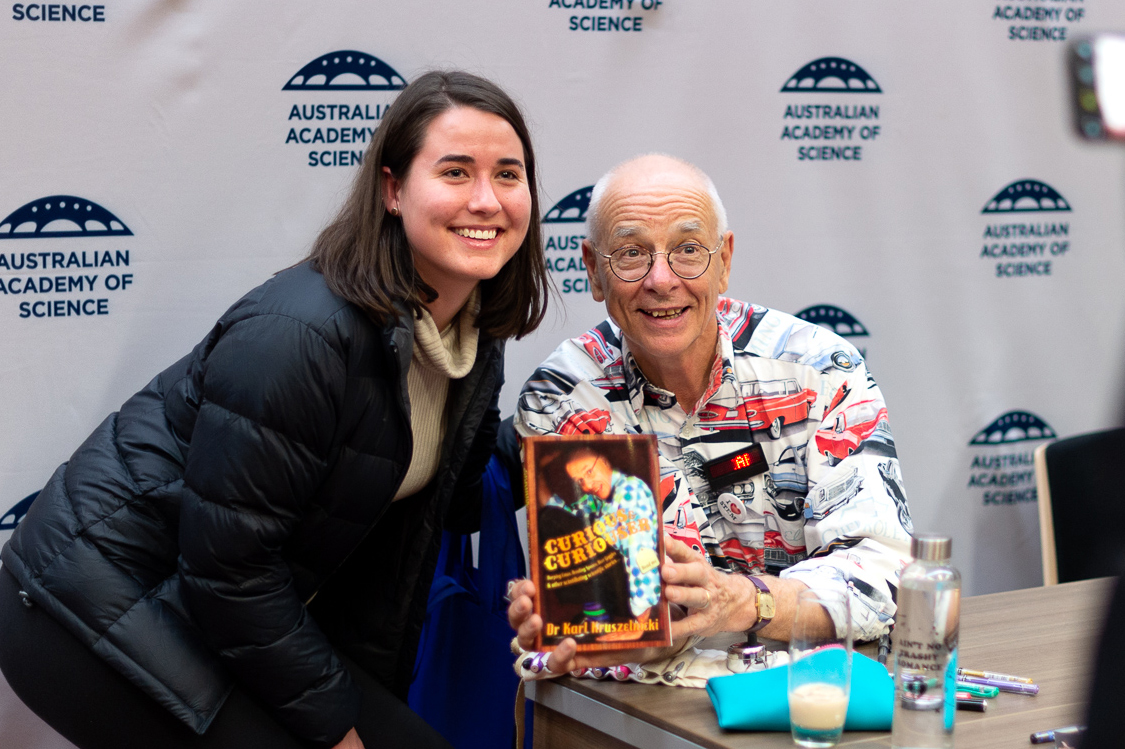
Renowned science communicator, Dr Karl Kruszelnicki
The Australian Academy of Science reached new audiences during National Science Week, capping off the annual celebration of science with record crowds attending shows featuring renowned science communicator Dr Karl Kruszelnicki and newly elected Fellow, UNSW Professor Veena Sahajwalla FAA.
The Academy kicked off the week with the fourth event of the year in the ‘Science of Us’ series. The event attracted the biggest audience for the series in 2018, with 227 people packing into the Shine Dome to hear Professor Mike Kyrios (Flinders University) and Professor Helen Christensen (Black Dog Institute) talk about mental health and technology.
The Academy then moved to Sydney for the first event in the Academy’s National Speaker Series for 2018, ‘The Science of Sport’. 120 attendees heard four outstanding speakers discuss how sport and science intersect, including the impact of caffeine on sports performance and how we can efficiently fuel our bodies during physical activity.
To finish the week the Academy brought Dr Karl Kruszelnicki and UNSW Sydney Professor Veena Sahajwalla to the National Convention Centre for two shows: high school students during the day and the general public in the evening. A total of 3,267 tickets were booked for both events.
Professor Hans Bachor, Academy Secretary for Education and Public Awareness of Science, said the Academy went boldly where it had not been before.
“The public events on the Friday were amazing, the response of the public, students, teachers were great. When do you have over 1,000 students quietly focusing on one topic, for over an hour? When have you got people waiting for so long to get their book signed? What a buzz,” Professor Bachor said.
The shows were supported by Defence Science & Technology, The Australian National University, The University of Sydney, UNSW Canberra, University of Canberra and the National Convention Centre Canberra.
On social media the Academy reached an audience of almost 26 million on Facebook and over 250,000 (impressions) on Twitter during National Science Week.
The National Science Week video produced by the Academy was viewed over 130,000 times.
View the National Science Week video
The Academy video with the biggest reach during National Science Week (over one million views so far) featured APEC ASPIRE Prize winner, Associate Professor Madhu Bhaskaran.
View the video on Associate Professor Madhu Bhaskaran.
Australian scientist wins APEC ASPIRE Prize
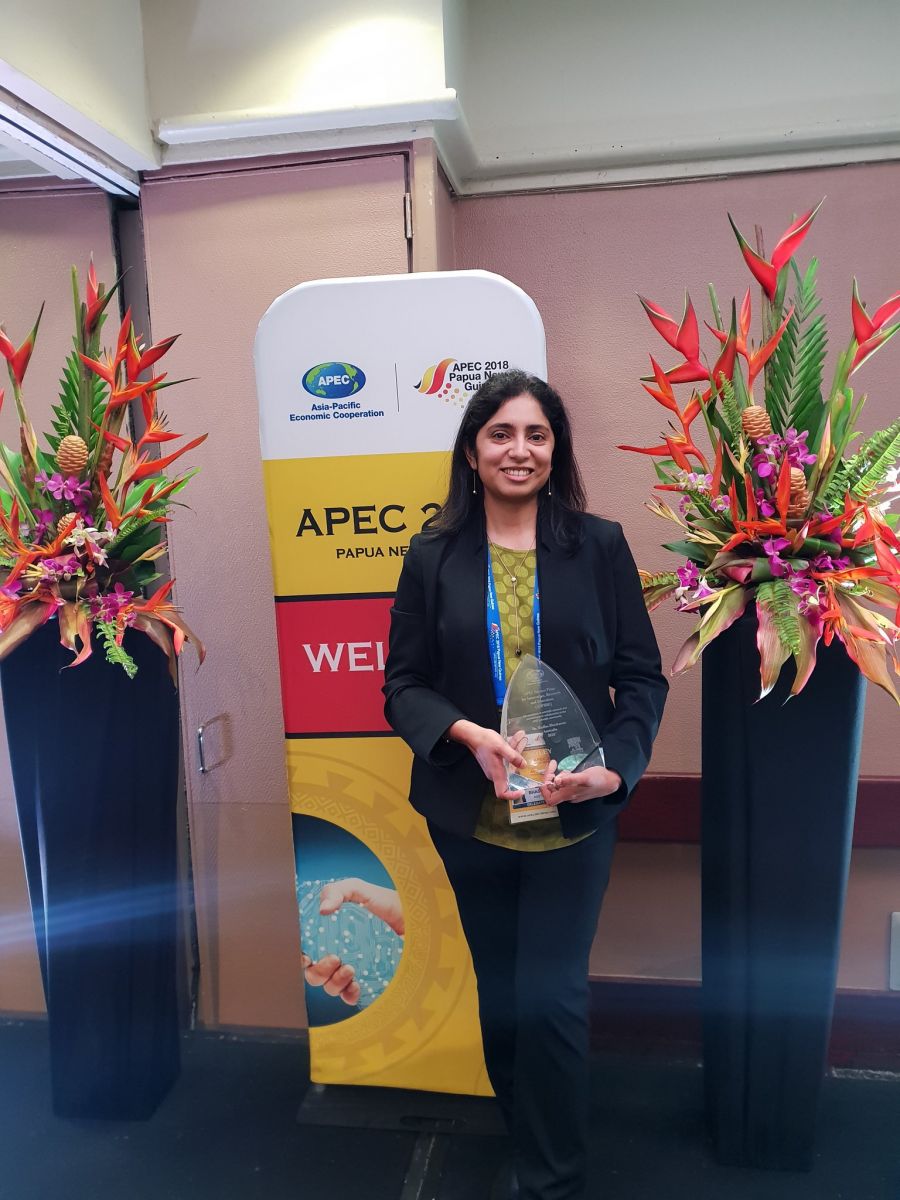
A talented local scientist’s work to develop a form of ‘electronic skin’ that monitors the environment and the human body has been recognised with the APEC Science Prize for Innovation, Research and Education (ASPIRE).
Associate Professor Madhu Bhaskaran from RMIT University, who was nominated by the Australian Academy of Science for the prize, beat a strong international field of candidates from countries including the United States, China, Russia, Malaysia and Canada. She is only the second Australian to win the prize since the award’s inception in 2011.
The ASPIRE Prize, valued at US$25,000, recognises scientists under the age of 40 who are working in APEC nations. This year it was announced at the 12th APEC PPSTI Meeting in Papua New Guinea in August.
Associate Professor Bhaskaran’s work combining oxide, elastic and plastic materials at high temperatures, has led to sensors that can be worn as “electronic skin”. The sensors are currently being integrated into new health monitoring technology to improve aged care, and can potentially be used for detecting dangerous gases in mines, in monitoring UV rays and as smart contact lenses.
Fellows receive prestigious ARC Laureate Fellowships
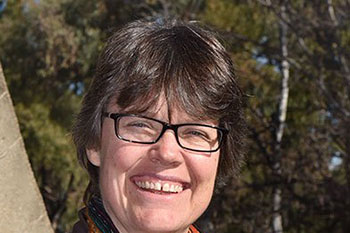
Professor Christine Beveridge is one of Five Fellows to receive ARC Laureate Fellowships
Five Fellows of the Australian Academy of Science are among 16 recipients of the Australian Research Council’s prestigious Laureate Fellowships, announced by the Minister for Education and Training Simon Birmingham.
The recipients are:
- Professor Christine Beveridge FAA from the University of Queensland. Awarded $2.9M to investigate the genetic mechanisms of shoot branching in agricultural and horticultural plants.
- Professor Karl Glazebrook FAA FASA from Swinburne University of Technology. Awarded $2.8M to develop deep learning techniques for use by the James Webb Space Telescope (launching in 2020 as successor to Hubble) in mapping and understanding the universe during its first billion years.
- Professor Julian Gale FAA from Curtin University. Awarded $2.5M to develop new predictive methodologies for crystallisation processes that underpin food and minerals processing, and pharmaceutical development
- Professor Bostjan Kobe FAA from the University of Queensland. Awarded $2.8M to investigate mechanisms of innate immunity in plants and animals.
- Professor Peter Visscher FAA FRS from the University of Queensland. Awarded $3.5M to use big data and genomic technologies to understand the causes and consequences of human trait variation.
The Academy warmly congratulates these distinguished Fellows on the awarding of one of Australia’s most distinguished research Fellowships.
More information about the Laureate Fellowships can be found here: http://www.arc.gov.au/australian-laureate-fellowships
Australian mathematician wins Fields Medal
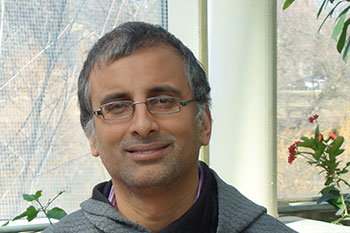
Akshay Venkatesh has become only the second Australian to win a Fields Medal
Australian mathematician Akshay Venkatesh has become only the second Australian to win a Fields Medal, often described as the Nobel Prize for mathematics. The first was Terence Tao FAA FRS in 2006.
The medal is awarded every four years to between two and four researchers under 40 years old, to recognise outstanding mathematical achievement for existing work and for the promise of future achievement.
The medal is named after the Canadian mathematician John Charles Fields (1863–1932), who conceived the award to celebrate the great achievements in the area. In addition to a gold medal, the winner receives $15,400.
Venkatesh is a professor of mathematics at Stanford University, USA and has spent the past year as visiting professor at the Institute for Advanced Study (IAS) in Princeton, where he will soon take up a longer-term role.
He has been recognised for ‘his synthesis of analytic number theory, homogeneous dynamics, topology and representation theory.’
The other winners of the 2018 Fields Medal, announced at the International Congress of Mathematics in Brazil, are Alessio Figalli, Caucher Birkar and Peter Scholze.
Professor Venkatesh said just manipulating numbers makes him feel happy.
“A lot of the time when you do math, you’re stuck, but at the same time there are all these moments where you feel privileged that you get to work with it. And you have this sensation of transcendence, you feel like you’ve been part of something really meaningful,” Professor Venkatesh said.
Academy Fellow and UWA professor Cheryl Praeger AM FAA, has known Akshay since he was 12 and says he is extraordinary.
‘At our first meeting I was speaking with Akshay’s mother Svetha, while Akshay was sitting at a table in my office reading my blackboard which contained fragments from a supervision of one of my PhD students, just completed,’ recalls Professor Praeger.
‘At Akshay’s request I explained what the problem was. He coped with quite a lot of detail and I found that he could easily grasp the essence of the research.
‘Akshay became the youngest ever student to study at UWA and went straight into second year maths units, writing exam papers over the summer for core first year maths courses he had never taken to demonstrate that he did not need to do those units. He was not seeking credit but rather exemption from the courses,’ says Professor Praeger.
Venkatesh earned a BSc in mathematics and physics with first class honours at UWA in 1997, becoming the youngest ever to achieve this feat. At the age of 16 Venkatesh left Australia for the United States on a UWA Hackett Scholarship, completing his PhD in maths at Princeton in 2002.
‘He’s had such a stellar career since then. A Clay research fellowship taken in New York; full professorship at Stanford and this year he will be moving back to Princeton. Twice Akshay has visited UWA as Professor at Large where it was great hearing his lectures and seeing his interactions with students,’ recalls Professor Praeger.
Watch the video about Akshay’s Fields Medal here. https://www.facebook.com/AustralianAcademyofScience/videos/1769303643147159/
Importance of soils the focus of S20 summit
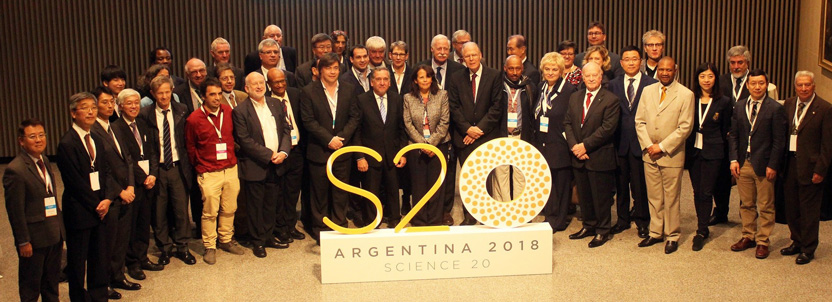
Scientists from around the world, including Academy President Professor John Shine, met in Argentina recently, with a focus on the importance of soils to food and nutrition security.
The importance of soils to food and nutrition security was the focus an international summit of scientists held in Argentina recently.
Academy President, Professor John Shine, joined more than 200 other scientists at the Science 20 (S20) Summit in Argentina, from which recommendations for achieving a sustainable food future were made. The S20 is made up of academies of sciences of G20 countries and is a powerful voice for science across the world.
The group's recommendations, Food and Nutrition Security: Improving Soils and Increasing Productivity was presented to Dr Lino Barañao, Argentine Minister of Science, Technology and Innovative Production. The minister was also presented with four books containing research on food and nutritional security by the InterAcademy Partnership, an organisation that represents 120 academies of science from around the world including Australia, for consideration by the G20 leaders.
The S20’s statement focused on promoting good soil governance and knowledge about soil. It encouraged new international programs to boost scientific cooperation on sustainable soil management, and the creation of opportunities for professionals and scientists from developing countries. Academy Fellows Dr TJ Higgins and Professor Alex McBratney contributed to the statement.
Chand Gudi wins Heidelberg Laureate Forum Fellowship
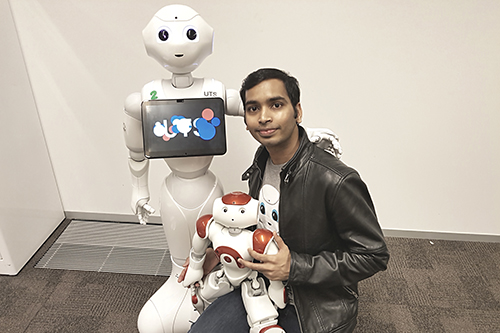
PhD student and social roboticist Chand Gudi
PhD student and social roboticist Siva Leela Krishna Chand Gudi has been selected by the Australian Academy of Science to represent Australia at the highly prestigious 6th Heidelberg Laureate Forum in Germany in September.
The forum will see 200 leading young mathematicians and computer scientists from around the world ‘engage in a cross-generational scientific dialogue’ with the laureates of the most prestigious prizes in their fields: the Abel Prize, Turing Award, Nevanlinna Prize and Fields Medal.
Mr Gudi, who is based at the University of Technology Sydney’s Magic Lab/Centre for Artificial Intelligence, is one of only 30 of 200 researchers worldwide attending this year’s forum that will present their research.
Mr Gudi said social robotics research is an emerging field which explores how robots can assist humans.
“For example, the role of a robot to act as a companion to an elderly person or to ensure they take their medications on time. In the future, I can also see robots taking on the role of coach or giving advice to humans in different situations,” Mr Gudi said.
“My goal is to make a ground-breaking contribution in the field of robotics using artificial intelligence, which can make a big impact on society.”
At the age of 26 Mr Gudi has already registered patents for a range of new technologies including a drone based wireless network, a wearable smart tight cross-legged detector, an infant mental state analysis system and an autonomous reconnaissance bot.
The 6th Heidelberg Laureate Forum will take place from 23 to 28 September 2018.
The Academy’s Heidelberg Laureate Forum Fellowship is open to young researchers at all phases of their careers: undergrad, PhD or postdoc.
The 2018 Fellowship has been made possible thanks to support from the Science and Industry Endowment Fund with the successful delegate receiving a travel grant of $3,500 and complimentary registration for the Academy’s annual Science at the Shine Dome event.