




Celebrating the iconic Shine Dome’s 60th birthday

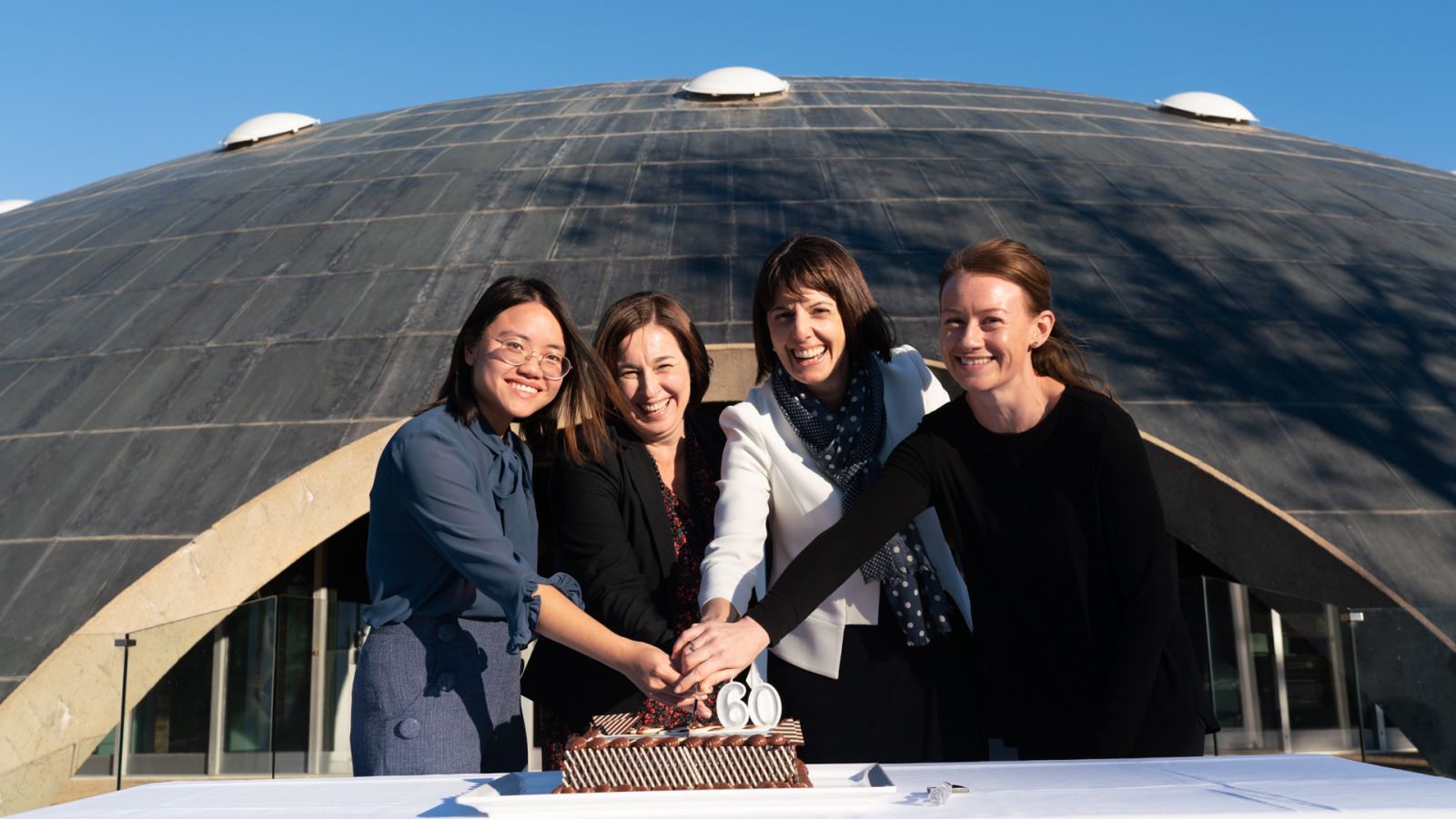
Sixty years ago, on 6 May 1959, the Shine Dome was officially opened as the home of the Australian Academy of Science. It continues to serve that original purpose and is a great source of pride for the Academy. The Shine Dome is both a meeting place for Australia’s leading scientists and an iconic building that many people in Australia—and across the globe—recognise.
Reflecting some of the more adventurous architectural ideas of the mid-20th century, the Shine Dome, originally known as Becker House, remains one of the most unusual buildings in Australia. The dome—roof, walls and structure combined—dives down beneath the still water of its moat to give the sense that it is floating.
The Shine Dome’s historical and architectural significance led to it being the first Canberra building to be added to the National Heritage List.
As part of the Canberra and Region Heritage Festival on 5 May, the Academy hosted public tours through the Shine Dome, providing an insight into this extraordinary building and the Academy’s history. The tours, along with a showing of the film Hidden Figures in the Shine Dome theatre, were sold-out events.
While Academy staff took the opportunity on Monday 6 May to mark the Shine Dome’s 60th birthday with a small gathering, our official celebrations of the 60th anniversary of the Shine Dome as well as the 65th anniversary of the formation of the Academy will take place at Science at the Shine Dome at the end of May.
Canberra media also marked the anniversary, including Strange but true facts about Canberra’s Martian Embassy and Canberra’s Shine Dome to celebrate 60th anniversary.
Interested in the Shine Dome as a unique venue for a special event? The Academy welcomes conferences, meetings, art events, weddings, family celebrations and more. Find out more about the Shine Dome as an event venue.
Academy Fellow elected to United States National Academy of Sciences
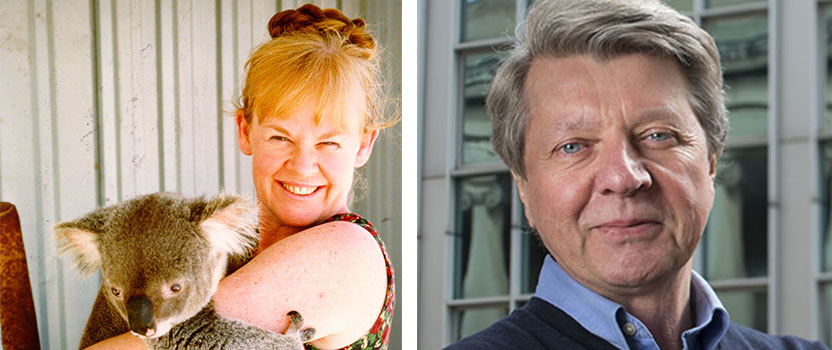
Australian Academy of Science Fellow Professor Jenny Graves AO is one of 125 scientists recently elected to the United States National Academy of Sciences (NAS), and the only Australian scientist to be elected this year.
Professor Graves, from La Trobe University, was elected as a Foreign Associate in recognition of her distinguished research in genetics. She is renowned for her pioneering investigation into the genetics of sex, and her work mapping the genomes of the kangaroo and platypus.
“I’m delighted to have been elected into the National Academy of Sciences and to join a group of such world-leading scientists,” Professor Graves said.
Professor Graves was elected to the Australian Academy of Science for her seminal work on the mammalian genome. In 2017, she was awarded the Prime Minister’s Prize for Science.
Australian Academy of Science Corresponding Member Professor Krzysztof Matyjaszewski, a chemistry researcher at Carnegie Mellon University, was also announced among the new Members of the NAS.
Professor Matyjaszewski is known for inventing a method of polymerisation that has spawned a prolific area of chemistry research and practical applications.
Election to the NAS is considered one of the greatest honours a scientist can receive. There are only a handful of Australian scientists among the NAS membership.
Similar to the Australian Academy of Science, the NAS is a private, non-profit organisation. Scientists are elected by their peers for outstanding contributions to research. A maximum of 100 new members, who must be US citizens, are elected each year. Foreign Associates are non-US citizens and only 25 are admitted per year.
The Academy congratulates both Professor Graves and Professor Matyjaszewski for their achievements.
International science engagement pays dividends for Australia
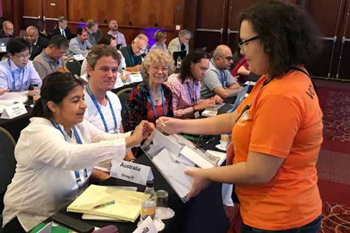
The Australian delegation votes at the International Mathematical Union’s general assembly in Rio de Janeiro, 2018. Photo: Ya-Xiang Yuan
The economic and scientific benefits to Australia’s membership of major global science organisations have been outlined in a report released today by the Australian Academy of Science.
The report, Benefits of Australian membership of the International Science Council and International Scientific Unions, also highlights the important role that science has as a soft power asset in diplomacy.
Professor Sir Peter Gluckman, former Chief Science Advisor to the New Zealand Prime Minister, launched the report today in Canberra in his role as President-elect of the International Science Council (ISC). The Australian Academy of Science represents Australia on the International Science Council.
The report shows that Australia benefits as a member of global science organisations by:
- receiving a direct economic return—estimated at $118 million from 2000 to 2017— through hosting scientific union meetings in Australia and other activities
- receiving indirect benefits such as the invaluable opportunities for Australian scientists, especially young scientists, to collaborate with international leaders in ways that greatly accelerate delivery of the long-term economic benefits of scientific progress for Australia
- providing opportunities for Australian perspectives to contribute efforts to use science to solve global challenges
- enhancing Australia’s international scientific profile and reputation.
“As members of international science organisations, Australians scientists have the opportunity to help shape science in our region and beyond,” said the Academy’s Foreign Secretary, Professor Elaine Sadler FAA.
“While Australia benefits from its membership of the International Science Council and the International Scientific Unions, we would derive greater scientific and economic benefits by taking a more strategic approach.”
Diplomacy through science also provides benefits to Australia and the national interest is well served when scientific activities open doors and broker dialogue with other nations, especially where geopolitical issues might otherwise slow positive cooperation.
“In Australia science is an under-used element in diplomacy and it is not yet recognised as a key soft power asset, whilst in countries around the world science diplomacy is fast becoming a strategic part of the national tool kit,” Professor Sadler said.
Australia has felt the absence of an international engagement strategy for science, technology and innovation with long-term resourcing.
Such a strategy would enable Australia to:
- maintain participation in key international decision-making science bodies
- support bids to attract international scientific conferences to Australia
- contribute to bilateral and multilateral partnerships and research programs where they align with research priorities, or serve our diplomatic objectives
- allow Australia to meet its agreed Sustainable Development Goal obligations
- develop a program for early- and mid-career researchers to establish partnerships with international leaders in their field, building networks that will be beneficial to Australia for decades to come
- expand the network of science counsellors and attachés in Australian embassies in priority countries and regions around the world
- target programs to provide scientific support to assist Australian foreign affairs and trade policy objectives.
Internationals scientific engagement is a key priority included in the Australian Academy of Science priorities for the 2019 federal election: Earning Our Future.
Since it was formed in 1954, the Academy has received funding from the Australian Government to oversee membership of these organisations on the nation’s behalf. It manages these memberships with guidance and assistance from the Academy’s 22 National Committees for Science and the more than 450 scientists who are active in various levels of the organisations at any time.
The report, Benefits of Australian Membership of the International Science Council and International Scientific Unions is available here: www.science.org.au/isc-benefits
Professor Elaine Sadler FAA and Sir Peter Gluckman are available for media interview on release of the report at 7.30am AEST Wednesday 17 April.
Background
Australia has been a member of the International Science Council (formerly known as the International Council for Science), since its establishment in 1931. The International Science Council (ISC) serves as an interface between the scientific community and high-level international policy forums, and are important features of the global science and diplomacy landscape.
Specifically, the ISC advances science as a global public good by convening the scientific expertise and resources needed to generate international action on issues of major scientific and public importance; provides advice to international bodies such as the United Nations; and champions the universality of science to promote free and responsible conduct of science, by protecting the freedom of movement, association and expression of scientists, ensuring equitable access to data and other resources and supporting capacity development in developing countries.
The ISC has a membership of 40 international scientific unions and associations and over 140 national and regional scientific organisations. On behalf of the Australian Government, the Academy is a member of the Council and 30 of its member bodies.
Academy announces successful recipients of the 2019 J G Russell Award

Dr Giulia Ghedini from Monash University is one of four 2019 J G Russell Award recipients.
The Australian Academy of Science has announced the successful recipients of its 2019 J G Russell Award.
The award is aimed at financially helping talented younger researchers in the basic sciences as a token of the community’s regard for them.
Awardees are chosen from the recipients of the Australian Research Council Discovery Early Career Researcher Awards. The award recognises the costs involved in experimental research, and can be used towards the costs of equipment, maintenance, and travel.
The recipients are:
- Dr Giulia Ghedini from Monash University to resolve how entire ecological communities respond to global warming and identify the mechanisms that drive these responses.
- Dr Yu Heng Lau from the University of Sydney to uncover a new and generalisable platform technology for controlling chemical reactions on the nanoscale, which could benefit the manufacturing industry.
- Dr Tatiana Soares da Costa from La Trobe University to identify novel and smarter herbicide development strategies for effective weed management to sustain our fauna, flora and agricultural industry.
- Dr Qi Wu from the University of Adelaide to develop an Artificial Intelligence (AI) agent that communicates with humans on the basis of visual input and can complete a sequence of actions in environments by combining computer vision (CV), natural language processing (NLP) and reinforcement learning (RL).
The awards are valued at $6,000 each and are supported by the generosity of the late Miss J Russell. Find more information about the award here.
Academy expert panel responds to Government report on fish deaths
The Independent Assessment of fish deaths in the lower Darling final report released by Minister David Littleproud today is a welcome contribution to the growing evidence base to help inform action to improve the health of Australia’s rivers.
ANU Professor Craig Moritz FAA, who chaired the multidisciplinary panel of experts convened by the Australian Academy of Science, said although the scope and expertise of the Government and Academy expert panels differ in parts, there is strong consensus across both reports.
This includes agreement on:
- The immediate causes of the fish kills, with severe drought and extreme temperatures as major contributors, and the latter being attributable to ongoing climate change;
- The strong likelihood that increased upstream diversions have contributed to deteriorating flow regimes in the Darling River;
- The need for improved measurement of all diversions, monitoring of river conditions, and modeling of the system as a whole for management and policy needs, the last including better modeling of the effects of climate change on the Northern Basin;
- The need for Water Resource Plans now under development by NSW and QLD to:
- fully consider downstream flow requirements; and
- implement active management to ensure that low flows are maintained and that environmental flows are protected and effective.
- The opportunity to rethink how state and federal agencies manage the Menindee Lakes system for improved environmental and social outcomes;
- The need for stronger engagement with local communities in advising on management strategies and participating in their implementation;
- The need to support research that is essential to management actions that will improve understanding of the hydro-ecology of the system, restore and maintain the health of fish populations and enable more effective intervention as critical conditions approach;
- The importance of the Murray Darling Basin Plan as the key instrument for managing water for environmental and social needs.
Professor Craig Moritz said the Academy’s expert panel welcomed recent moves by the Murray Darling Basin Authority to increase engagement with local stakeholders, including Indigenous elders, in river management, and to improve the understanding of climate change impacts on the system.
“Announcements from both the Federal Government and Opposition of initiatives to address some of the recommendations from each of the reports are also welcome, though more remains to be done,” Professor Moritz said.
“If we are to successfully manage this system, especially as climate becomes more challenging, a bipartisan approach will be important,” Professor Moritz said.
Academy welcomes government strategy to advance women in STEM
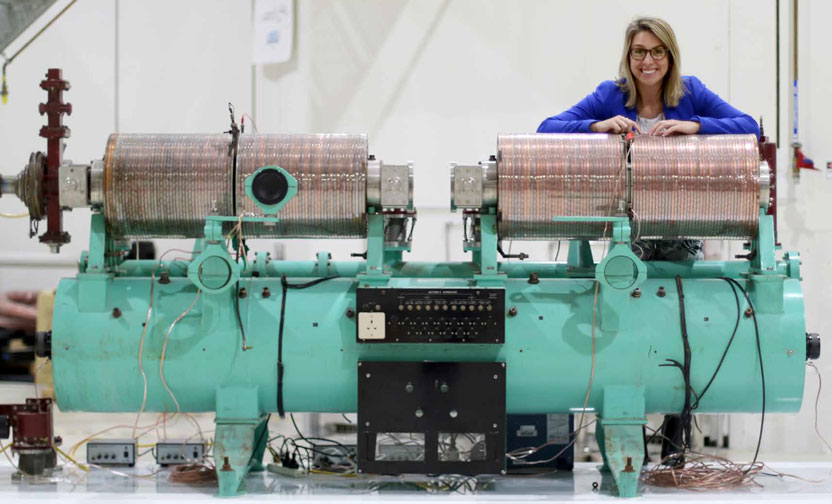
Dr Katie Sizeland uses synchrotron based techniques to investigate the nanostructure of collagen biomaterials. Image: ANSTO
The Australian Academy of Science has applauded the Australian Government’s ‘Advancing Women in STEM’ strategy released today by Minister for Industry, Science and Technology the Hon Karen Andrews MP.
Advancing Women in STEM responds to the issues outlined in the Women in STEM Decadal Plan released on 1 April 2019 by the Academy of Science and the Academy of Technology and Engineering, and outlines the Government’s commitment and the role it plays in supporting increased gender equity across the STEM sector.
The Academy supports the three key areas of focus presented in the strategy, which are closely aligned with the Women in STEM Decadal Plan: enabling STEM potential through education; supporting women in STEM careers; and making women in STEM visible.
The Government's women in STEM strategy also outlines the broad range of programs and initiatives led or supported by the Australian Government to support girls and women in STEM.
This includes $1.8 million new funding announced in the 19/20 Federal Budget to support the Science in Australia Gender Equity (SAGE) initiative, a unique transformative national gender equity program designed to achieve sustained change via ongoing evaluation and a national accreditation framework.
President of the Academy of Science Professor John Shine AC said that the Australian Government has a leadership role as an employer of women with STEM qualifications; as a provider of STEM education; and in its role in developing policies and funding programs to achieve gender equity.
“The Australian Government’s unique role in modelling and encouraging best practice is a powerful lever for change.
“The Advancing Women in STEM strategy clearly articulates a leadership role for the Australian Government and acknowledges the importance of working with stakeholders across the STEM ecosystem to achieve gender equity in STEM in Australia.
“It is particularly pleasing to see the government’s ongoing commitment to the SAGE program which is bringing about sustained change in the higher education and research sector.
“The Academy applauds the development of best-practice guidelines for government grant programs so that they are administered in such a way that does not disadvantage women.
“To meet the rising demand for STEM skills, attracting women and girls to STEM and providing an environment for them to thrive and progress is a shared responsibility of government, academia, the education system, industry and the community.
“The Academy of Science looks forward to working closely with the Australian Government to deliver a strategic, sustained and evidence-based approach to tackling gender inequity in STEM,” Professor Shine concluded.
The Women in STEM Decadal Plan was developed by the Australian Academy of Science in collaboration with the Australian Academy of Technology and Engineering and offers a vision and six opportunities to guide government, academia, industry, the education sector and the community as they go about taking actions to build the strongest STEM workforce possible to support Australia’s prosperity.
Asia–Pacific research partnerships set to tackle big challenges
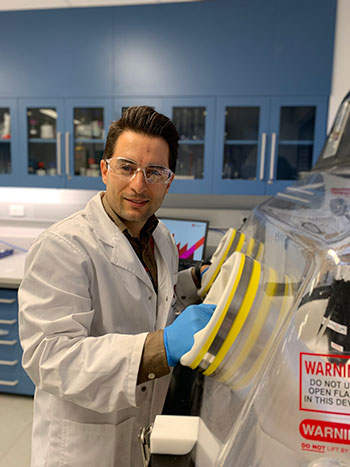
Dr Mohsen Asadnia from Macquarie University leads a project to develop gas sensor arrays to spot explosives—one of 14 projects funded in round two of the Regional Collaborations Programme.
Fourteen collaborative research projects will collectively receive $1.25 million of Australian Government funding as part of the Regional Collaborations Programme, administered by the Australian Academy of Science.
Minister for Industry, Science and Technology Karen Andrews announced successful grant recipients today.
The funding is provided under the second round of the $3.2 million Regional Collaborations Programme, part of the National Innovation and Science Agenda.
The grants will support Australian researchers who are collaborating with Asia–Pacific partners to develop innovative solutions to shared challenges.
Funded projects address a range of health, technological and environmental challenges, including battery recycling, malaria and coastal water quality monitoring.
The largest grant, of $257,767, goes to the Menzies School of Health Research for a project with collaborators in Bangladesh, Indonesia and the Netherlands aiming to reduce malaria risk in areas where two types of malaria (Plasmodium vivax and P. falciparum) co-exist.
Other recipients include collaborative research initiatives between:
- CSIRO—Oceans and Atmosphere Business Unit and partners in Singapore and Malaysia to develop a digital Earth observation-based solution to improve monitoring and management actions for coastal water quality ($228,390)
- Asbestos Diseases Research Institute and partners in New Zealand, Japan, South Korea, Fiji, Vietnam, Thailand and the Philippines to share preventative technologies to address asbestos-related diseases ($150,000)
- The Burnet Institute with partners in Kiribati, Papua New Guinea and Solomon Islands to develop systems for the surveillance of antimicrobial resistance across the Pacific ($127,240)
- Curtin University with partners in Vietnam and Japan to research selective solvent extraction for recycling lithium-based batteries ($108,000)
See all funded projects in Round 2
The Regional Collaborations Programme aims to strengthen research ties between Australia and the wider Asia–Pacific region. The programme supports greater mobility among our technical and research workforce and enhances links across global science and research networks.
Mixed news for science in the 2019-20 Budget
The 2019-20 Federal Budget contains mixed news for science, with a number of very welcome announcements along with some cuts to research programs.
Positive measures include $3.4 million new funding to support women in STEM, including the Science in Australia Gender Equity (SAGE) initiative led by the Australian Academy of Science and the Australian Academy of Technology and Engineering.
Also included are a raft of initiatives through the Medical Research Future Fund, $25 million new funding for coastal, environment and climate research, $56 million for nuclear medicine and waste management, $5 million for a dark matter particle research facility, $15 million for expanded outreach and education activities through Questacon, and $19.5 million over four years to establish a Space Infrastructure Fund.
Negatives include the abolition of the $3.9 billion Education Investment Fund which could have been used to support strategic research infrastructure; and savings of almost $50 million from the entrepreneurship and industry research programs.
President of the Academy of Science, Professor John Shine AC, said that while the Academy applauded the range of new initiatives, it was hoped that there would be more focus on science and innovation in the budget given the Government’s emphasis on knowledge and skills.
“It is counterintuitive to seek to produce a surplus by cutting the knowledge economy. The reductions in indexation of research programs over the forward estimates, resulting in cuts of $345 million to university research funding remain concerning.” Professor Shine said.
“Given the Government’s focus on economic growth it is disappointing that some of the very welcome announcements in this budget went hand in hand with some cuts to Australia’s research programs” Professor Shine said.
FURTHER INFORMATION ON 2019-2020 SCIENCE BUDGET MEASURES
Major science initiatives announced or elaborated in the Budget include:
- $56.4 million over three years to the Australian Nuclear Science and Technology Organisation to support nuclear medicine production, critical radioactive waste management and nuclear decommissioning activities, and asset management. The Government will also provide an equity injection of $56 million to ensure the continued protection of both the community and the environment.
- $25 million over four years to establish a coasts, environment and climate science research and education centre at Point Nepean, Victoria. The centre will be led by Monash University and the University of Melbourne and include an interdisciplinary research facility on marine and coastal ecosystems, climate science and environmental management.
- $15.1 million over three years to expand Questacon’s education and outreach activities.
- $3.4 million over four years to support women in STEM through the SAGE Initiative and a digital National Awareness Raising Initiative led by the Women in STEM Ambassador Professor Lisa Harvey Smith.
- $19.5 million over four years to establish a Space Infrastructure Fund.
- $5 million over two years to build the Stawell Underground Physics Laboratory to allow the University of Melbourne to join the global research effort to understand dark matter.
- Funding of $2.9 million over three years to facilitate national leadership in agricultural innovation.
- $3.6 million over two years from 2019-20 to trial a National Innovation Games through which students will work together to solve innovation, technology and/or digital challenges set by a corporate sponsor.
- $0.5 million over five years (and $0.1 million ongoing from 2023-24) to establish an Australian Antarctic Science Council that would support reform initiatives announced as part of the Government’s response to the Australian Antarctic Science Program Governance Review 2017
Savings measures include:
- Abolishing the $3.9 billion Education Investment Fund and using the capital to establish a new Emergency Response Fund.
- Savings of $48.9 million over five years from 2018-19 from the Entrepreneurs’ Programme and the Industry Growth Centres Initiative.
- Reductions in indexation of science and research programs over the forward estimates resulting in savings of:
- $345 million to university research funding through the research support program.
Update to the Australian Academy of Science Federal Budget response
Based on the information available, the Australian Academy of Science’s media release in response to the Federal Budget stated that there had been cuts of $21.5 million over the forward estimates to the CSIRO. This analysis was derived by comparing the 2019/20 budget with the previous year’s budget over the forward estimates period.
Further information provided subsequently has clarified that the budget was referring to a reduction in the CSIRO’s total expenses, not a reduction in Government funding to CSIRO. The Academy understands that the Government’s investment in CSIRO across this period remains consistent with previous levels, increasing by over $6 million in line with indexation.
Under-representation of women in STEM is holding back national prosperity
Australia has not yet made the systemic changes required to achieve diversity in science, technology, engineering and mathematics (STEM), with the current under-representation and under-utilisation of women in the STEM workforce posing a threat to Australia’s prosperity.
The findings are contained in the Women in STEM Decadal Plan launched this evening at Parliament House by the Minister for Industry, Science and Technology, Karen Andrews. The plan was developed by the Australian Academy of Science in partnership with the Australian Academy of Technology and Engineering.
It outlines six opportunities to strengthen gender equity in STEM in Australia over the next 10 years, including establishing a national evaluation framework to guide decision making and drive investment and effort into STEM measures that work.
Australian Academy of Science Fellow and Expert Working Group member, Professor Sue O’Reilly AM FAA, said while many organisations are taking actions at an individual level to support the attraction, retention and progression of women in STEM, extensive stakeholder consultations confirmed there is an urgent case for cohesive, systemic and sustained change.
“Change can commence at the grassroots and this should not be discouraged. However, the systemic and sustained change required to make a step change in achieving gender equity in Australia will primarily occur when led and championed from the top,” Professor O’Reilly said.
The decadal plan highlights the economic case for gender equity, citing the 2017 World Economic Forum’s ‘Gender gap report’ which estimates that closing the gender gap in economic participation by 25% by 2025 could add as much as US$5.3 trillion to global gross domestic product (GDP) in the same timeframe.
“It’s not just an equality perspective that’s important here, it’s a business imperative,” said Australia’s first ambassador for Women in STEM, Professor Lisa Harvey-Smith.
“Australia needs to be the clever country again. We need to be getting those large tech companies to stay in Australia and we need to be developing business capabilities around the new economies and become worldwide competitive again.”
Dr Bruce Godfrey, Vice President of Diversity at the Australian Academy of Technology and Engineering, said the plan provides the first opportunity to tackle the issue of gender equity at a national scale and highlights the importance of government, academia, industry, the education sector and the community working together to drive change.
“If this plan and the opportunities contained within it are realised, the STEM graduates of 2030—9- and 10-year-olds making their way through primary school in 2019, as well as those entering the workforce from other life journeys—will join workplaces that are respectful, free of harassment and discrimination, value diversity, and structured to support a variety of STEM careers that include women in leadership positions,” Dr Godfrey said.
The starting point for the implementation of the plan is a Pathways to Equity in STEM workshop hosted by the academies in Melbourne on 3 April. It will provide an opportunity for delegates to learn what other organisations are doing in the gender equity space, providing a platform for both learning and collaboration.