


Academy Fellow recognised internationally in celebration of women and girls in science

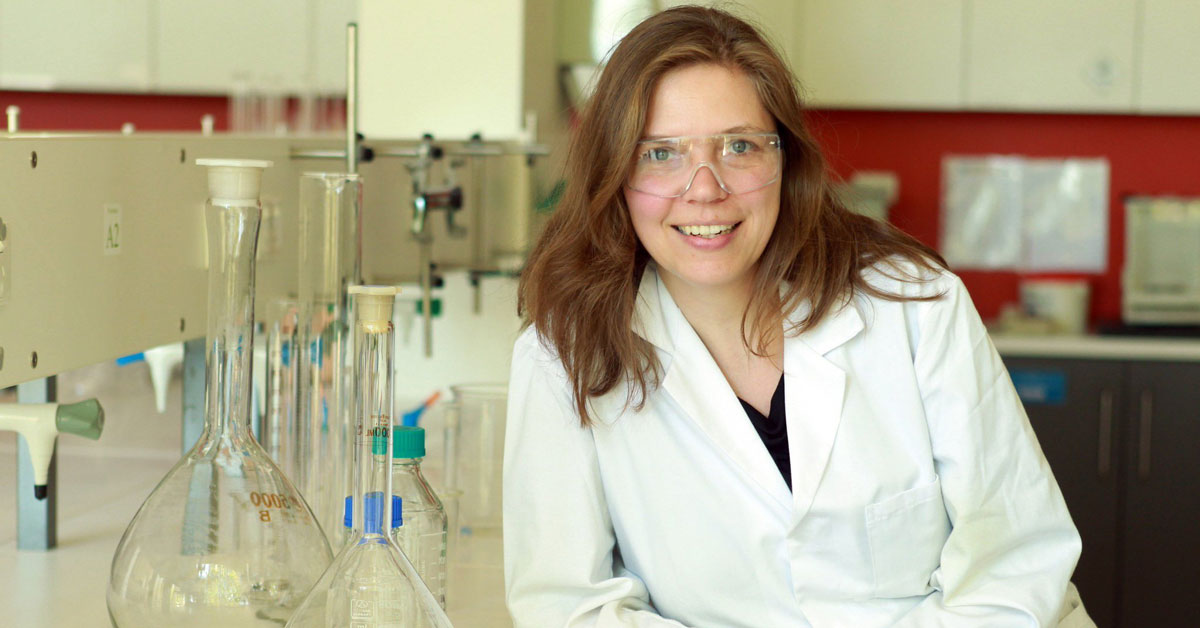
Academy Fellow Professor Martina Stenzel has been internationally recognised as one of the most distinguished women in chemistry by the International Union for Pure and Applied Chemistry (IUPAC). She was listed alongside eleven other female chemists from around the world to receive the 2021 IUPAC Distinguished Women in Chemistry or Chemical Engineering Award earlier this week.
“An award like the 2021 IUPAC Distinguished Women in Chemistry or Chemical Engineering Awards showcases the achievements of 12 female scientists, but behind that is an army of brilliant female researchers in every country that make their impact every day,” says Professor Stenzel, from UNSW Sydney.
“We are just representing the incredible talent that is available in every country, but it is time that this talent receives the support, mentorship and recognition it deserves.”
Professor Stenzel is a renowned polymer chemist and has been the chair of the Academy’s National Committee for Chemistry since 2017. She was elected to the fellowship of the Academy in 2018.
“Martina has given so much to the Australian chemistry community, not only through her cutting-edge research, but also as a mentor to many, and as Chair of the National Committee for Chemistry,” says Professor Elizabeth New from the University of Sydney, who assisted in nominating Professor Stenzel to IUPAC. “I am delighted to see that her contributions are recognised through this award.”
This is the eleventh year of the IUPAC Distinguished Women in Chemistry or Chemical Engineering Award, which was launched during the International Year of the Chemistry in 2011 and is awarded every two years. It recognises women in chemistry contributing to the field through scientific research, education, and leadership in their communities. The announcement comes ahead of the International Day of Women and Girls in Science on 11 February.
Max Day Awards support researchers to protect bees and frogs
Bees need healthy diets too
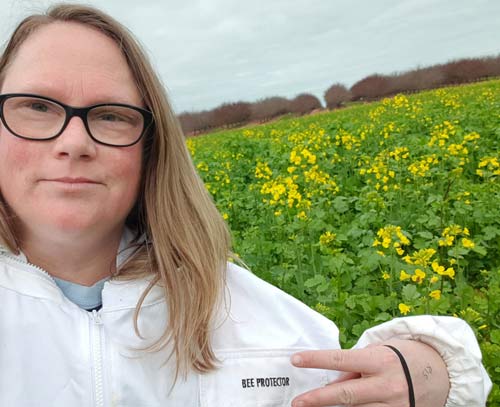
Ms Lea Hannah, a PhD candidate at Western Sydney University, received the 2021 Max Day Environmental Science Fellowship Award. Photo: supplied.
Bees are dying off around the globe, but one of the recipients of the Australian Academy of Science’s 2021 Max Day Environmental Science Fellowship Award is working to protect them in Australia.
In 2019, 50 billion bees died in just a few months while being deployed for America’s almond pollination.
Ms Lea Hannah, a PhD candidate at Western Sydney University, is looking at how a diversity of flowers near orchards can support bees, which play a key role in many agricultural industries, including almonds.
She’s planting extra floral resources on several orchard plantations in Victoria’s Sunraysia district. The aim of additional species is to improve the diet of the honey bees, rather than just relying on almond flowers, making them stronger and more resistant to vulnerabilities.
“These resource plantings that I've done is a multi-species mix of five different plant species that are flowering as the bees come into the almond orchards,” Ms Hannah said.
The Max Day Fellowship grant will allow Ms Hannah to assess the results of her experiment, using next-generation DNA sequencing of the pollen collected by the bees.
Frogs affected by fungus fight to survive
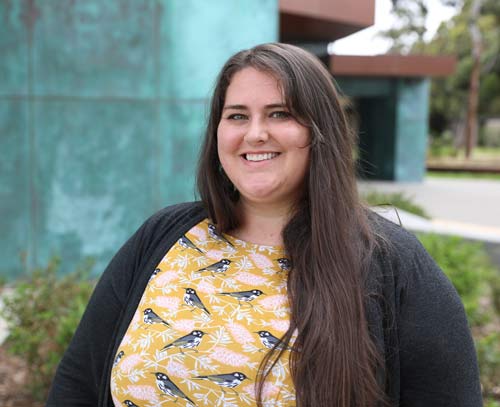
Dr Laura Brannelly, a researcher at University of Melbourne, received the 2021 Max Day Environmental Science Fellowship Award. Photo: supplied
DNA sequencing is also at the heart of the work of Dr Laura Brannelly, the other recipient of the 2021 Max Day Environmental Science Fellowship Award. Originally from Boston, she now studies Australia’s alpine tree frog at the University of Melbourne.
The alpine tree frog once occupied much of the Snowy Mountains, but is now consider endangered in New South Wales and Victoria, partially due to the fungal disease chytridiomycosis, which is affecting amphibians across the globe.
Although the alpine tree frog has been severely impacted, Dr Brannelly says the fact the species has persisted is significant.
“We think that the reason why these animals are still surviving in these populations is because they’re putting more effort into breeding,” Dr Brannelly said.
“The idea is called terminal investment. When an animal thinks that it’s about to die, it will do all it can to keep its genes within the population.”
She intends to use her Max Day grant to better understand that process by analysing the genetics of 20 frogs from nine populations, which could help with future management strategies.
The legacy of an environmental champion
The Max Day award provides up to $20,000 for early-career researchers working on the conservation of Australia’s flora and fauna, the ecologically sustainable use of resources, and the protection of the environment and ecosystem services.
It is named in honour of Academy Fellow, the late Dr Maxwell Frank Cooper Day AO FAA, who spent a lifetime championing entomology, conservation and forestry, as well as helping other scientists.
Three researchers and their projects were also ‘highly commended’ for the 2021 Max Day Environmental Science Fellowship Award:
- Dr Luke Jeffrey: Greenhouse gas guzzlers: Are methane consuming microbes active within the bark of endemic Australian wetland trees?
- Ms Maggie-Anne Harvey: Developing low-impact selenium agromining using Neptunia amplexicaulis
- Dr Stephanie Gardner: Deciphering the microbial signature of nitrous oxide producing ascidians
Applications for the 2022 awards will open soon.
More information about the Max Day Environmental Science Fellowship Award
Academy shines a spotlight on new Australian science with Research Focus video series
With the world’s population expected to reach almost 10 billion by 2050, increasing food production is one of the greatest challenges of the 21st century.
The future of our food sources relies on photosynthesis and scientists say improving photosynthesis is critical to improving crop yield.
Since 2014, the ARC Centre of Excellence for Translational Photosynthesis has made significant progress towards developing crops that will enhance growth and yield. New research at the centre has also found how to ramp up photosynthesis.
The work of the centre features in a new video published by the Australian Academy of Science.
The video is part of the Academy’s ‘Research Focus’ series, which creates unique digital video content to showcase the depth and breadth of Australian research that is sometimes unknown to the public and decision-makers.
The benefits of sharing research include the potential for further support and funding, and to encourage better understanding within the community about the benefits of public investment in research.
The Academy has more than 2.4 million followers on social media—one of the largest social media followings of any Australian science organisation. It produces accurate, trusted and engaging science content that is read and shared by millions across the globe.
Other institutions that have so far partnered with the Academy to highlight their research include:
University of Sydney
- New treatment for addiction?—Associate Professor Michael Bowen and his colleagues have developed a new drug which mimics the effects of oxytocin to treat addiction and social disorders and are gearing up to start human trials this year.
Queensland University of Technology
- Mapping the migrane mystery—Migraine is one of the leading causes of disability in the world. QUT researchers are involved in research which aims to identify which genes play a role in the debilitating illness.
- Ancient plant helps vaccine development—QUT scientists have sequenced the genome of an ancient Australian tobacco plant that helps develop vaccines and they’re sharing it with researchers around the world to aid the COVID-19 vaccine development effort.
The Academy invites Australian universities, research institutions and STEM organisations to partner with it and be part of the Research Focus video series.
Scientists call on Australian Government to implement Samuel review recommendations
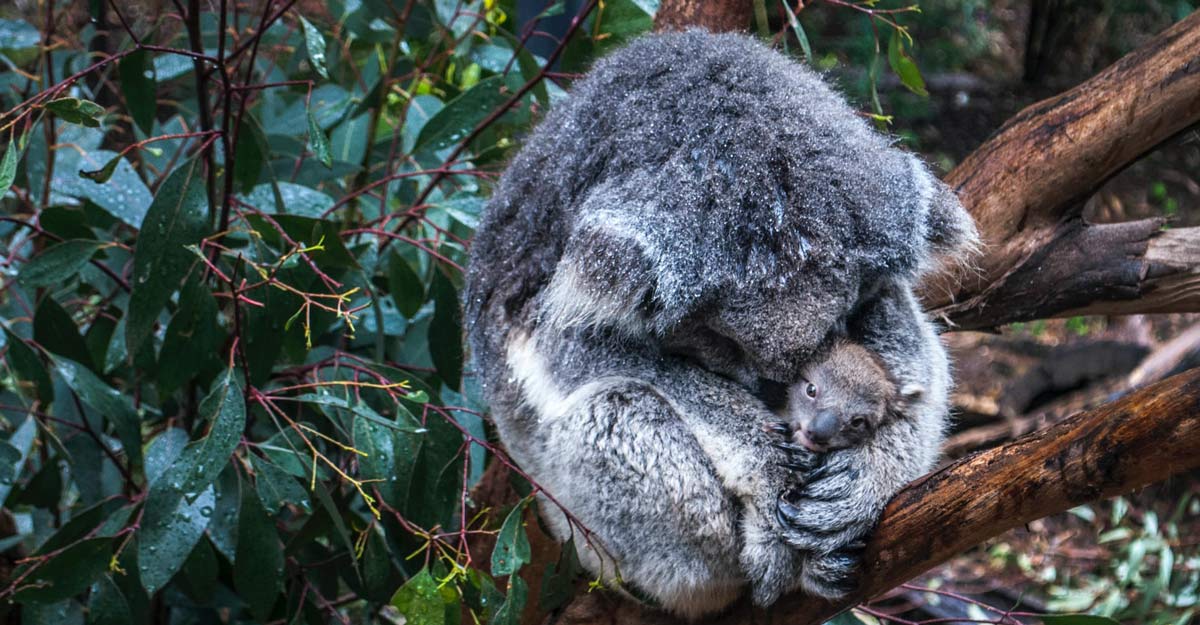
Deterioration of ecosystems and species extinction is occurring at an unprecedented rate in Australia. Photo by Scott Kelly on Unsplash.
The Australian Academy of Science welcomes the recommendations of the Samuel review and calls on the Australian Government to advance them. We also call on the Opposition to support durable, collaborative reform to Australia’s environment laws that places science and Indigenous knowledge at the heart of the EPBC Act.
All the recommended elements—national environmental standards, scientific evidence through high-quality data and analysis tools, and robust and independent assurance systems—are essential to ensure that devolved decision-making retains the Australian people's confidence. The report outlines a comprehensive program for reform and should be pursued in full.
The scientific challenge is known and it is urgent. Deterioration of ecosystems and species extinction is occurring at an unprecedented rate.[1]
Around one million animal and plant species are threatened with extinction, many within decades. Australia has one of the worst records of species extinctions of any continent, with nearly 50% of the world’s known and historically recorded mammal extinctions.[2]
Stresses facing species and ecosystems globally, such as invasive species, overharvesting, habitat loss, and fragmentation, are exacerbated by a rapidly changing climate.[3]
But as the report makes clear, Australia’s biodiversity information systems are antiquated and not fit for purpose. The Academy continues to support the establishment of a national biodiversity information agency.
Only through significant changes in Australia’s data and information systems can we hope to derive economic, social and environmental benefits from our biodiversity regulatory regime.
Science, working with landholders, business, government, and other researchers, can solve this crisis and reverse Australia’s lamentable record for biodiversity devastation.
[1] Steffen, W., Broadgate, W., Deutsch, L., Gaffney, O., Ludwig, C., 2015. The trajectory of the Anthropocene: The Great Acceleration. Anthr. Rev. 2, 81–98. https://doi.org/10.1177/2053019614564785; Woinarski, J.C.Z., Braby, M.F., Burbidge, A.A., Coates, D.,
Garnett, S.T., Fensham, R.J., Legge, S.M., McKenzie, N.L., Silcock, J.L., Murphy, B.P., 2019. Reading the black book: The number, timing, distribution and causes of listed extinctions in Australia. Biol. Conserv. 239, 108261. https://doi.org/10.1016/j.biocon.2019.108261
[2] Brondizio, E.S., Settele, J., Diaz, S., Ngo, H.T., 2019. Global assessment report on biodiversity and ecosystem services of the Intergovernmental Science-Policy Platform on Biodiversity and Ecosystem Services. IPBES Secr. Bonn.; Hughes, L., 2014. Changes to Australian terrestrial biodiversity, in: Christoff, P. (Ed.), Four Degrees of Global Warming: Australia in a Hot World. Routledge, Abingdon, UK and New York, USA , pp. 63–83.
[3] Creswell, I., Murphy, H., 2016. Biodiversity, in: Australia State of the Environment 2016, Australian Government Department of the Environment and Energy, Canberra, https://Soe.Environment.Gov.Au/Theme/Biodiversity, DOI 10.4226/94/58b65ac828812.
Academy Fellow among Australian space researchers honoured at COSPAR 2021
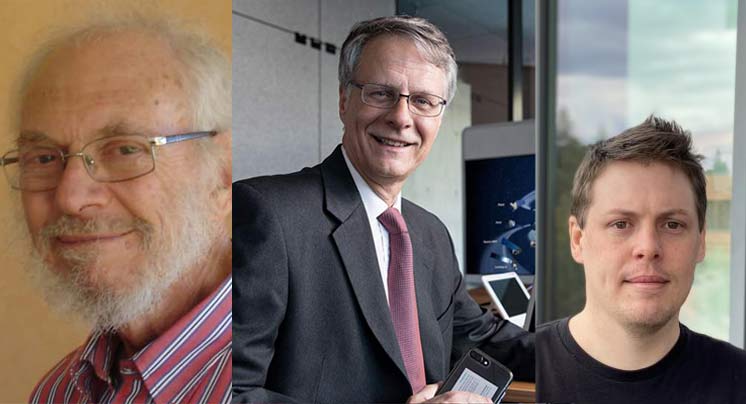
Three Australian researchers, including a Fellow of the Academy, have received international recognition for their contributions to astronomy and space science at the awards ceremony of the 43rd Committee on Space Research (COSPAR) Scientific Assembly.
Dr Ken McCracken AO FAA FTSE received the COSPAR Space Science Award for “outstanding contributions to space science”. Dr McCracken, elected a Fellow of the Academy in 1987, has been a leading light in space science for over 60 years, working across cosmic ray and heliospheric research, X-ray astronomy, interplanetary archeology and mineral exploration.
His contributions include developing instruments to measure flow characteristics of the solar cosmic radiation (which was central to the formulation of radiation protection procedures in manned space flight) and innovations in time domain electromagnetic methods for exploration geophysics. He currently studies cosmic ray traces in polar ice cores to help interpret the history of the sun’s magnetic field over the past 150,000 years.
As part of the award, Minor Planet (8258) McCracken has been named in his honour.
Dr Alex Held, Director of CSIRO’s Centre For Earth Observation, received the COSPAR Harrie Massey Award for “outstanding contributions to the development of space research in which a leadership role is of particular importance.”
Dr Held is the first winner of this award from the southern hemisphere. Among his other distinguished work in steering national and international science policy, Dr Held led the award-winning delivery of the Sentinel Hotspots program (2002–2006), which is still used to support bushfire response activities in Australia. He is currently overseeing the establishment of the new radar satellite NovaSAR-1 as a national research facility.
Minor Planet (8479) Held has been named in his honour.
Dr Daniel Graham, an Australian researcher at the Swedish Institute of Space Physics (IRF), received the Yakov B. Zeldovich Medal, a joint award of COSPAR and the Russian Academy of Sciences, from COSPAR Scientific Commission D. This award is conferred on young scientists for excellence and achievements, and one medal is awarded from each of the COSPAR Scientific Commissions.
After completing his PhD at the University of Sydney in 2012, Dr Graham has worked with IRF in Uppsala looking at the magnetosphere, where earth’s magnetic field meets the solar wind. Recently, he has begun working with the Magnetospheric Multiscale mission.
COSPAR hosts a Scientific Assembly every two years, gathering almost three thousand participating space researchers.
COSPAR’s objectives are to promote on an international level scientific research in space, with emphasis on the exchange of results, information and opinions, and to provide a forum, open to all scientists, for the discussion of problems that may affect scientific space research.
The full citations of all the winners can be found on the COSPAR website.
Welcoming the new Early- and Mid-Career Researcher Forum Executive

The new members of the EMCR Forum Executive (from top left): Dr Vipul Agarwal, Dr Raffaella Demichelis, Dr Mohammad Taha, Dr Mary McMillan, Dr Patrick Taggart, Dr Vanessa Moss and Dr Maithili Sashindranath.
The Academy’s Early- and Mid-Career (EMCR) Forum has announced the new Executive for 2021.
Seven new passionate and engaged EMCRs will help advocate for researchers in Australia through the Forum and all its activities. Dr Yee Lian Chew, Dr Timothy Lau, Dr Zsuzsa Banhalmi-Zakar, Dr Michelle Christie and Dr James Gong are continuing their ongoing terms, bringing seasoned knowledge to the Executive.
Meet the new members
Dr Vipul Agarwal is a researcher at the University of New South Wales. He is passionate about addressing stress-related mental health challenges for EMCRs.
Dr Raffaella Demichelis is a Senior Research Fellow at Curtin University. She is passionate about science communication and has co-initiated networks in Western Australia that teach software skills to PhD students.
Dr Mohammad Taha is an engineer and scientist at the University of Melbourne. They are dedicated to the inclusion of gender-diverse, non-binary, queer, intersex and transgender people within Australia and particularly the Australian scientific community.
Dr Mary McMillan is a senior lecturer at the University of New England. She is passionate about supporting regional researchers in Australia, championing STEM equity programs and science communication.
Dr Patrick Taggart is a research officer within the Vertebrate Pest Research Unit (VPRU) of the NSW Department of Primary Industries. He is determined to identify sustainable and achievable career paths for EMCRs.
Dr Vanessa Moss is a radio astronomer working on the intersection of astronomy, telescope operations and data science at CSIRO. She is a passionate proponent of accessible and inclusive digital-first interactions and advocates for the development of effective EMCR career structures.
Dr Maithili Sashindranath is a biomedical scientist at Monash University. Dr Sashindranath maintains a strong community focus and actively promotes STEM to children, with a special emphasis on inspiring young girls as a ‘CSIRO STEM Professionals in Schools’ partner.
New leadership team
The EMCR Forum will be guided by the new executive leadership team that includes Dr Yee Lian Chew as chair. Dr Timothy Lau and Dr Zsuzsa Banhalmi-Zakar will each take on the role of co-deputy chairs.
Dr Yee Lian Chew is an NHMRC Research Fellow at the University of Wollongong. She enjoys mentoring young researchers from underrepresented backgrounds and is passionate about creating a stronger, more diverse research community.
Dr Timothy Lau is a Senior Research Associate at the Centre for Energy Technology at the University of Adelaide. He is passionate about STEM subjects being more effectively communicated to the younger generation and sees EMCRs as the perfect ambassadors.
Dr Zsuzsa Banhalmi-Zakar is an environmental scientist and lecturer at James Cook University in Townsville. She is an experienced public speaker and a great networker, who can engage with multiple industry stakeholders. She has three children, and is passionate about supporting women, mothers and daughters through their careers, PhD and ECR journeys.
Outgoing members
The Academy would like to sincerely thank the members of the Executive who finished their term in 2020. Outgoing members include Associate Professor Michael Bowen (outgoing Chair), Associate Professor Vanessa Wong (2019 Chair), Dr Emma Beckett, Dr Adrian Murdock, Dr Alexie Papanicolaou, Dr Justine Shaw and Dr Irene Suarez-Martinez.
It was a challenging year for EMCRs. But thanks to the commitment and expertise of these members, the Forum continued to support EMCRs and advance the representation of EMCRs in Australian science through the pandemic.
Fellows recognised in 2021 Australia Day honours
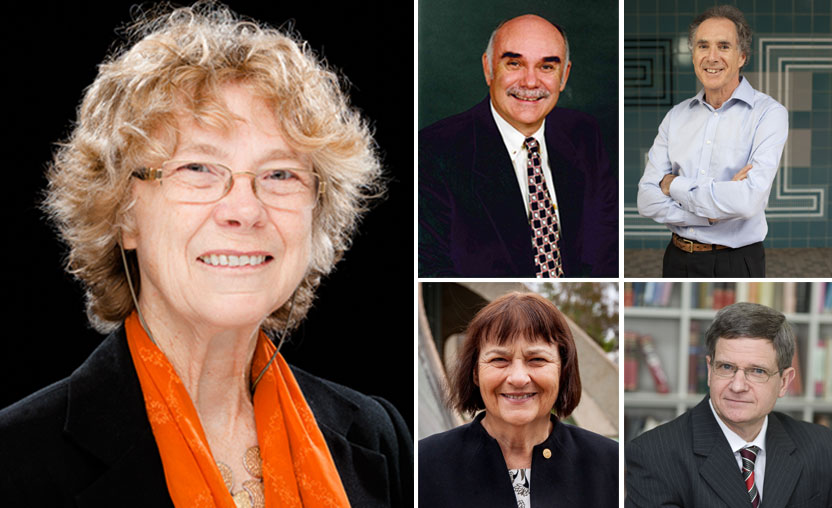
Five Academy Fellows are among the Australians recognised in the 2021 Australia Day Honours List.
Emeritus Professor Cheryl Praeger, who was previously recognised with a Member of the Order of Australia in 1999, received the highest honour as one of just four people Australia-wide to be appointed a Companion in the General Division of the Order of Australia (AC), which recognises ‘eminent achievement and merit of the highest degree in service to Australia or to humanity at large’.
Emeritus Professor Praeger from the University of Western Australia is a past Foreign Secretary of the Academy and also sits on the International Science Council’s Committee for Freedom and Responsibility in Science. In 2019, she was awarded the Prime Minister’s Prize for Science.
Companion of the Order of Australia (AC)
Emeritus Professor Cheryl Praeger AC FAA—For eminent service to mathematics, and to tertiary education, as a leading academic and researcher, to international organisations, and as a champion of women in STEM careers
Officer of the Order of Australia (AO)
Professor Graham Goodwin AO FRS FAA FTSE—For distinguished service to tertiary education, and to electrical engineering, as an academic and researcher, and to scientific academies
Professor Helene Marsh AO FAA FSTE—For distinguished service to the biological and environmental sciences, to the conservation of marine mammals, and to tertiary education
Professor Mark Randolph AO FRS FREng FAA FTSE—For distinguished service to geotechnical engineering and science, to tertiary education and research, and to professional organisations
Professor Roger Reddel AO FAA FAHMS—For distinguished service to biomedical research in the field of adult and childhood cancer and genetics, and to tertiary education
Academy statement on the pandemic, vaccines and misinformation
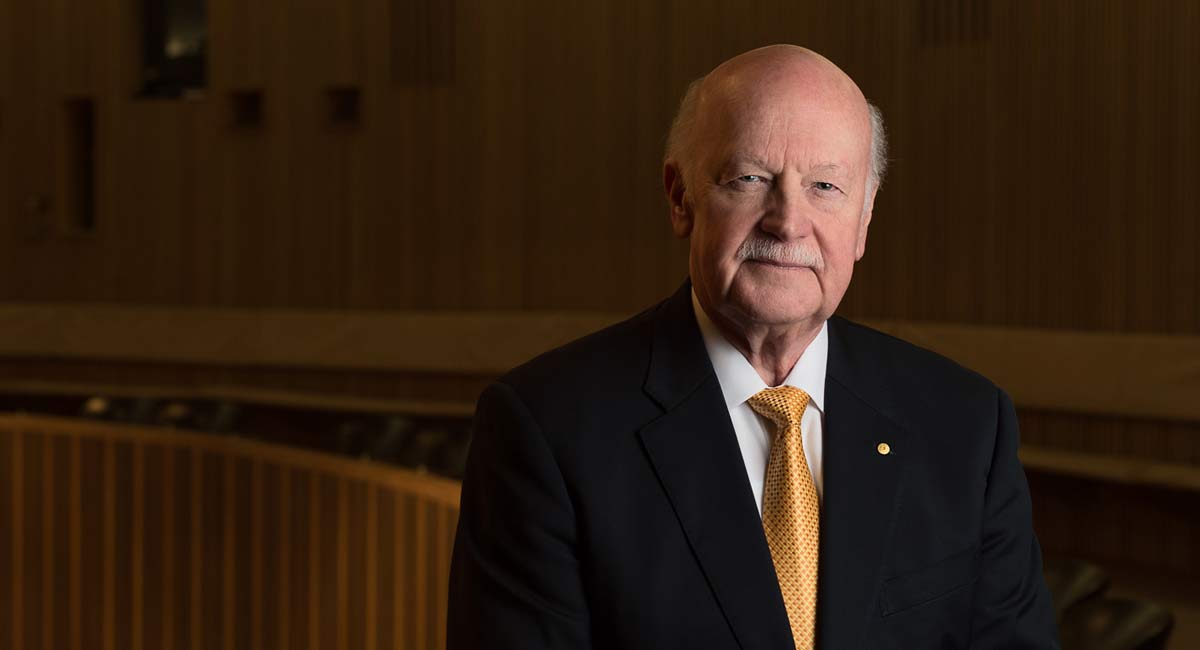
Academy President Professor John Shine
This week we’ve seen significant misunderstandings and differing views regarding the effectiveness of first-generation COVID-19 vaccines. It is crucial that the distinction be made between a vaccine’s effectiveness at protecting from severe disease versus its effectiveness at stopping transmission.
Australia’s current vaccination strategy is aimed at reducing the severity of disease—put simply, to reduce the number of exposed individuals getting very sick or dying.
Australia has become a pandemic success story. The majority of individual Australians’ willingness to follow public health directions, and a laudable commitment from governments to listen to experts and allow science to guide policy, has been mostly responsible for this success.
Australians can be confident that vaccines approved for use by the Therapeutic Goods Administration will be safe and effective at reducing the risk of developing severe COVID-19.
Australia is in a fortunate position as we are not facing the COVID-19 transmission rates currently experienced by the USA, the UK, European countries, and others worldwide. Our hospitals are not operating at capacity, and death and community transmission rates of COVID-19 are low.
Australia is not experiencing conditions that would require vaccination rollout via emergency use authorisation. As such, our nation will benefit from growing data on vaccine dose and effectiveness as they are implemented in countries with the greatest need.
Vaccinated individuals will be protected from the worst of COVID-19 but will not be protected from becoming infected. None of the vaccines that have been approved for use have demonstrated that they can stop transmission of SARS-CoV-2 (the virus that causes COVID-19)—conclusive data is not available yet.
Importantly, in preventing severe COVID-19 that requires hospitalisation, both the AstraZeneca and Pfizer vaccines are equally effective. Accordingly, the Academy supports the current Australian Government vaccination strategy, informed by the best available expertise and science.
Public confusion has arisen around the implications of 62% or 95% effectiveness of first-generation COVID-19 vaccines. These figures represent the AstraZeneca AZD1222 and Pfizer BioNTech BTB162b vaccines’ respective effectiveness rates at protecting an infected person from developing mild to moderate COVID-19 symptoms.
Either vaccine is amply effective to prevent severe disease—the outcome we all fear most and the primary goal of Australia’s vaccination strategy.
The approval and deployment of COVID-19 vaccines alone will not bring an end to the COVID-19 pandemic. Consequently, public health measures such as practising good hygiene, high levels of testing, contact tracing and physical distancing must continue in 2021.
Australians should get vaccinated. Administering first-generation vaccines will be critical to reducing the number of people infected with COVID-19 who then progress to hospitalisation, intensive care or death. It will allow us to avoid a major wave of illness like that currently being experienced in the northern hemisphere.
Lifting public health measures will only be possible following further research, adequate worldwide vaccination and the control of spread at an international level. In this context, the Australian Government’s commitment to the World Health Organization, COVAX and supporting our Pacific and South-East Asian neighbours to obtain access to vaccines is highly commendable.
Australians are looking for trustworthy information and answers about COVID-19 and vaccination. With much misinformation in the public domain, we urge Australians to continue to consult reputable sources of evidence-based information such as Commonwealth and State Departments of Health, our Chief Medical Officers, the Australian Academy of Science, as well as our other Learned Academies such as the Australian Academy for Health and Medical Sciences.
In this context, Australians with questions about vaccines are encouraged to consult Academy resources, including our COVID-19 Hub, and the Science of Immunisation, which is currently being updated.
Australians can be reassured that the current Australian Government vaccination strategy is informed by experts and the best available science. Only science will solve this.
Professor John Shine AC PresAA FRS
President
Australian Academy of Science
Fellows' favourites: your summer reading and listening recommendations
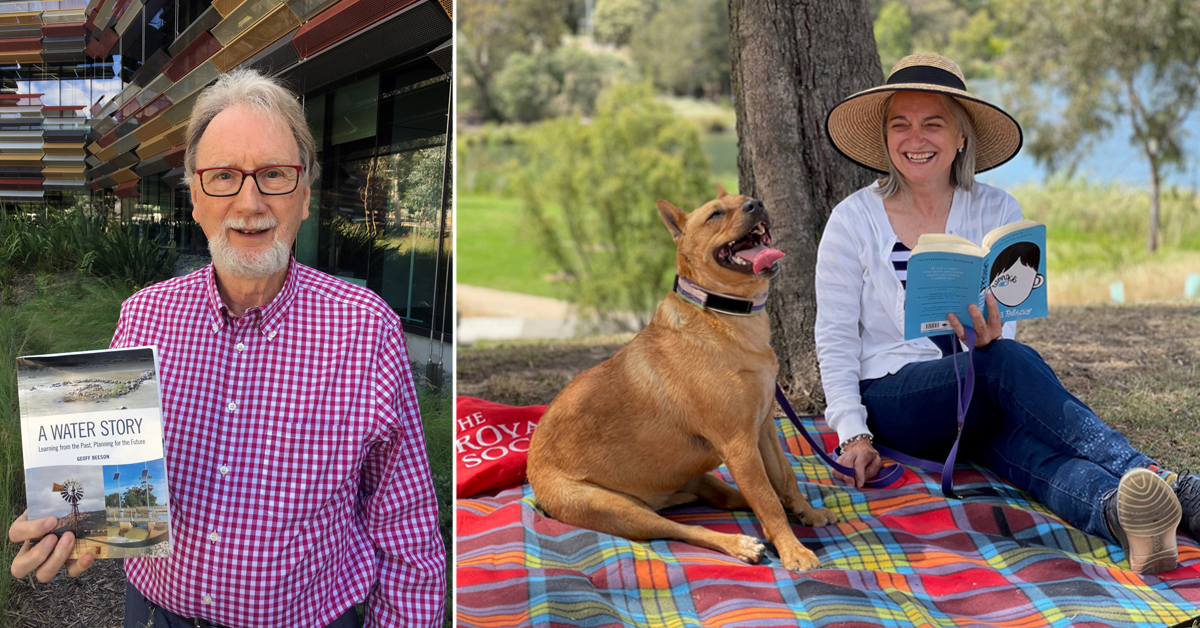
The Australian Academy of Science’s Annual Fellows’ Christmas Book and Podcast List, released today, contains 37 favourite reads (and listens) recommended by the Academy’s Fellows.
As we have for the past four years, we asked our Fellows to provide their top book and podcast suggestions for this year.
- See the Fellows’ book and podcast list.
Here's a small sample of this year's recommendations:
Books
Wonder, by RJ Palacio
Recommended by Emeritus Professor Frances Separovic AO FAA
‘Wonder’ is a delightful book recommended for children aged 8 to 12 but its themes of identity, bullying and acceptance apply to readers of all ages. It tells the story of a boy born with severe facial differences as he starts school. The power of the book comes from how normal and relatable each character is and the insight into how one person can affect the lives of others.
Bad Blood: Secrets and Lies in a Silicon Valley Startup, by John Carreyou
Recommended by Professor Georgia Chenevix-Trench FAA FAHMS
Everyone with an interest in biotech should should read this. It is scary how gullible clever men are when faced with a charismatic young woman, and how many people were fooled. The court case is pending but the author tells a gripping story.
A Water Story: Learning from the Past, Planning for the Future, by Geoff Beeson
Recommended by Dr TJ Higgins AO FAA FTSE
Water is a precious chemical globally and is especially so in Australia. This very accessible book with its excellent illustrations tells of the use and importance of water from ancient times to the present. The focus is on Australia and it covers everything from aquifers to yabbies.
English Pastoral, by James Rebanks
Recommended by Dr Jean Finnegan FAA
A thoughtful account of how the quest for cheap food has changed farming practices and the effect that this has had on farmland in the Lake District. Rebanks tells of his efforts to return to more traditional farming practices and to restore parts of his farm to a ‘wild’ state with benefits for both flora and fauna.
Morality, by Jonathan Sacks
Recommended by Professor Steven Prawer FAA
This book reassesses moral philosophy in the face of a society which seems to have lost its way. We in the Academy believe in evidence and truth as the basis for a society in which we want to live; but this notion is currently under threat in the era of post-truth and fake news. Sacks provides a vision of the moral basis for society in which the values which we hold dear can flourish.
Podcasts
13 Minutes to the Moon, hosted by Kevin Fong
Recommended by Professor Ivan Marusic FAA
Podcast on Nasa's missions to the Moon. Gripping interviews and original audio recordings of mission control, astronauts and partners who made the mission possible. Apollo program revised in a refreshing way with theme music by Hans Zimmer.
Terrible Lizards, hosted by David Hone and Iszi Lawrence
Recommended by Professor Andrew White FAA
This the podcast about dinosaurs that you have been missing your entire life. It brings together each week paleontologist Dr David Hone, comedian and writer Iszi Lawrence, and an expert guest. Using the latest research, they answer listeners’ questions with conversations that are equally entertaining and informative.
Ground-breaking research forum set to expand with Minderoo Foundation commitment
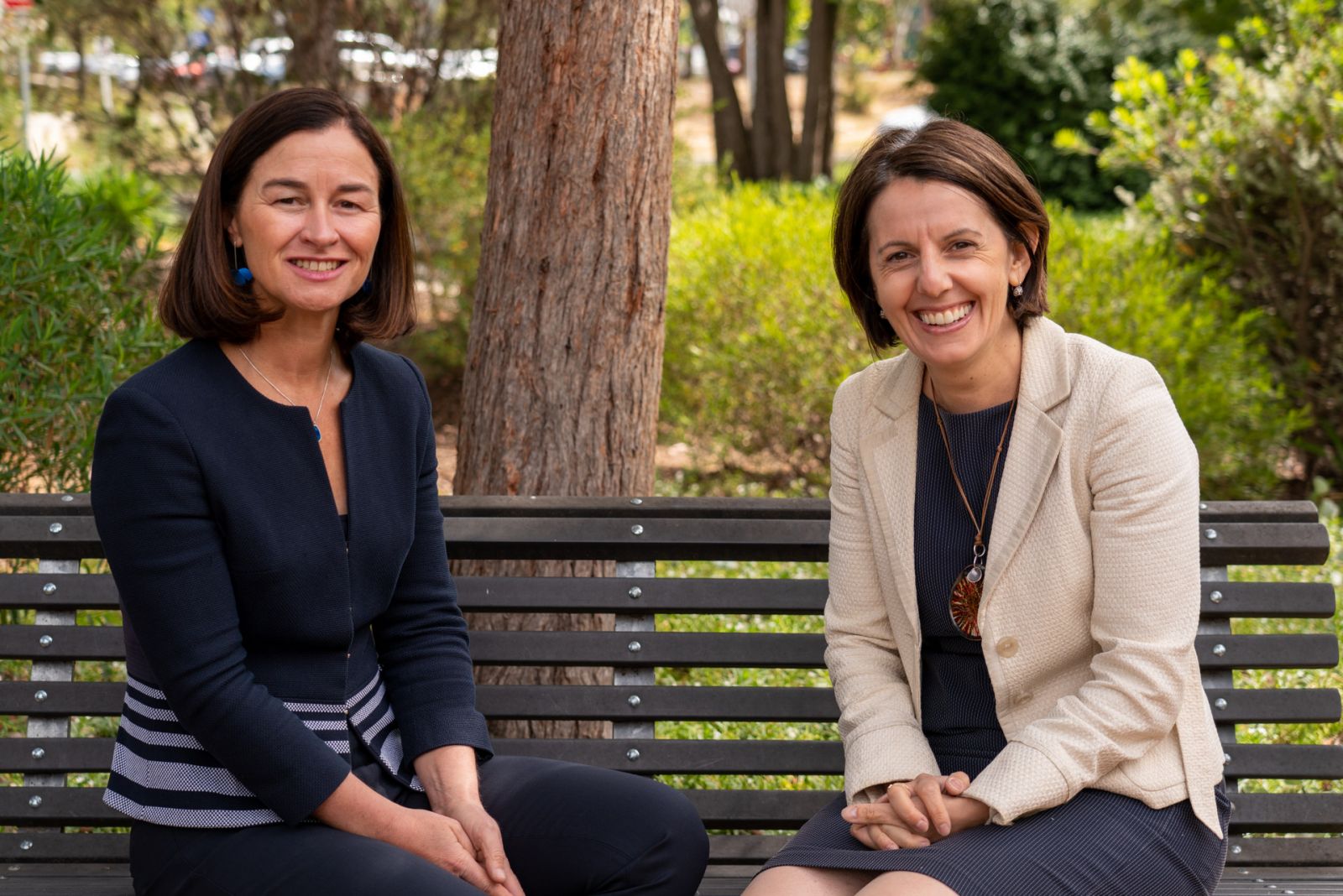
The highly successful Rapid Research Information Forum (RRIF), tasked with providing the latest scientific evidence to the Australian Government’s decision makers, will continue and expand with support from Minderoo Foundation.
Australia’s success in containing the COVID-19 outbreak, largely based on an evidence-based response, including the work of the RRIF, is the envy of the world.
In April, as the COVID-19 pandemic took hold globally, Australia’s Chief Scientist Dr Alan Finkel together with the country’s science, research and innovation sectors, began fielding questions from the Federal Government about the coronavirus, in what was a rapidly changing situation.
Chaired by Dr Finkel, the RRIF’s operations are led by the Australian Academy of Science. The RRIF is an innovative model that provides the best and latest evidence to Government to help drive the country’s response to the pandemic.
The RRIF and its impact on the nation has been publicly recognised by the Prime Minister, Scott Morrison. Minderoo Foundation’s commitment of $400,000 to the Australian Academy of Science will strengthen the RRIF and help lay the foundations for the model into the future.
Australian Academy of Science Chief Executive, Ms Anna-Maria Arabia, warmly welcomed the commitment from Minderoo Foundation.
“This collaboration demonstrates a shared understanding of the need for evidence-informed decision making,” Ms Arabia said.
“The strengths of the RRIF are its multi-disciplinary focus, independence, and ability to rapidly draw on Australia’s best and most relevant experts on any given policy matter.
“The RRIF has demonstrated the critical value of independent evidence to inform social and economic policy and this has been recognised by the Minderoo Foundation.
“This grant sees the RRIF model strengthened for the immediate term. The RRIF will continue its remit to rapidly provide the scientific expertise needed to answer questions received from Australian Government Ministers during the recovery phase of the pandemic.
“We are also working to encourage the adoption of the RRIF as a policy model in the long term to ensure that decision makers are drawing on the best evidence-base possible whatever the policy question.”
Research Chair of Minderoo Foundation Fiona David said the RRIF is fast becoming one of Australia’s greatest research assets, delivering clear evidence on key policy issues at the speed needed to help the country through crises.
“Now more than ever, Minderoo Foundation understands the importance of quality research which can be used to transform and improve the lives of all Australians,” Ms David said.
“Back in May, the RRIF released a report which outlined COVID-19’s devastating impact on Australia’s research sector. In response, Minderoo Foundation launched a fellowship program at the Forrest Research Foundation, to support some of the best and brightest early career researchers in Australia. Our new Prospect Fellowship Program aims to provide stable funding to Australian researchers during this challenging time.
“Minderoo is thrilled to be working with the Australian Academy of Science to be part of the Rapid Research Information Forum. We eagerly anticipate the publication of the next report.”
Forum member organisations: