




The risks to Australia of a 3°C warmer world

Scientists release landmark climate change report
The Australian Academy of Science is calling on the Australian Government to accelerate Australia’s transition to net zero greenhouse gas (GHG) emissions over the next 10 to 20 years to play our part in avoiding the worst impacts of climate change.
The key recommendation is included in a landmark Academy report published today.
The report, which explores the risks to Australia’s future based on the current global trajectory of greenhouse gas emissions, states that the world reaching net zero emissions by 2050 is an absolute minimum, if Australia is to avoid potentially insurmountable challenges to its cities, ecosystems, industries and food and health systems.
The report says Australia is well positioned to play its part in meeting this challenge, with a skilled workforce, strong industrial base and plentiful renewable energy resources facilitating easier emission reductions compared to many other countries.
It highlights that even if the world’s governments meet their current Paris pledges on time, Earth is likely to reach average global surface temperatures of 3oC above the pre-industrial period during this century, with catastrophic consequences.
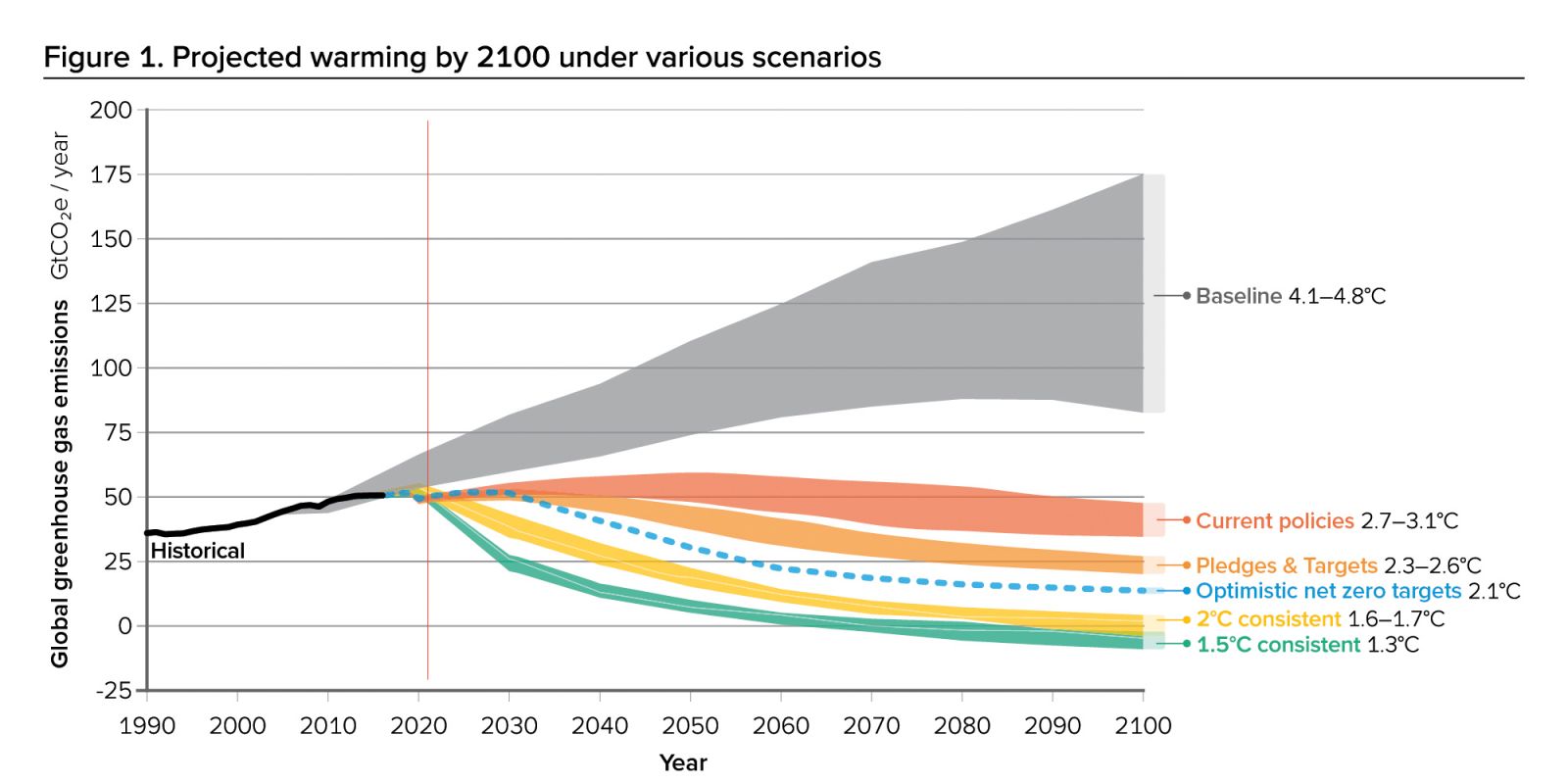
Further pledges to achieve net zero emissions by 2050 are required for the world to stay well below 2oC of warming, the goal agreed to under the Paris Agreement.
To achieve net zero, the report says Australia will need to rapidly remove greenhouse gas emissions from a range of sectors including electricity generation and distribution; electrify the transport sector, industry and buildings; increase energy efficiency across the board; and reduce non-energy related GHG emissions from all sectors including industrial processes and agriculture.
President of the Australian Academy of Science, Professor John Shine, welcomed the report.
“The Australian Academy of Science is proud to have played an active role in assessing the science of climate change since the 1970s. This new report makes clear that while the planet is well on the path to harmful climate change, as with COVID-19, science has solutions,” Professor Shine said.
“Australia is well positioned to meet the climate change challenge by combining our scientific knowledge with economic opportunities associated with moves to net zero greenhouse gas emissions.
Australia is well positioned to meet the climate change challenge by combining our scientific knowledge with economic opportunities associated with moves to net zero greenhouse gas emissions.Professor John Shine
“We urge the Australian Government to implement the recommendations of this report. The Academy stands ready to assist by providing sound scientific advice on climate change to inform the Government’s multifaceted policy response.”
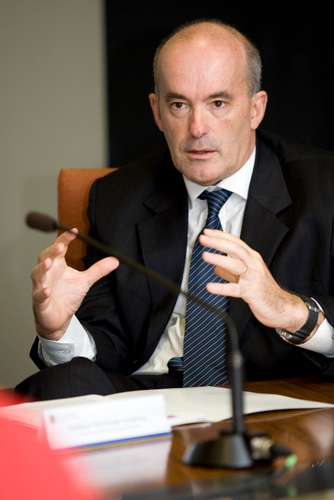
Academy Fellow Professor Ove Hoegh-Guldberg. Photo: supplied.
Academy Fellow Professor Ove Hoegh-Guldberg is the chair of the expert panel that developed the report. He said limiting climate change to 1.5°C is now virtually impossible and that a rapid transition to net zero greenhouse gas emissions is required if the international community is to limit warming to well below 2°C.
“Current international commitments to greenhouse gas emission reduction, if unchanged, would result in average global surface temperatures that are 3°C above the pre-industrial period in the lifetimes of our children and grandchildren,” said Professor Hoegh-Guldberg, from the University of Queensland.
The evidence presented in this risk-assessment report, which is based on peer-reviewed scientific literature, indicates that this would have serious consequences for Australia and the world.Professor Hoegh-Guldberg
“Australia must revisit its emission reduction commitments and work with other countries to provide the leadership and collaboration required to place Australia and the world on a safer climate trajectory.
“Australia has a stable business landscape. We have a great scientific tradition. We have enormous resources for the next wave of innovative technologies. We not only have a responsibility to be an international leader on climate action but need to grasp the enormous economic opportunities presented by the ‘new’ economy,” said Professor Hoegh-Guldberg.
The report says Australia can become a clean energy exporter and potentially a global renewable energy superpower. It highlights Australia’s relative advantage with its abundant natural resources for solar and other renewable energy generation, as well as significant deposits of new economy minerals critical for developing batteries and other low emission technologies.
The report focuses on the consequences of 3°C of global warming for four areas of importance to Australia’s future: ecosystems; food production; cities and towns; and health and wellbeing. It also focuses on Australia’s contribution to what must be done to stay well below 2°C and thus limit these impacts.
The impacts of climatic changes on the lives and wellbeing of Australians are also discussed in detail in the report.
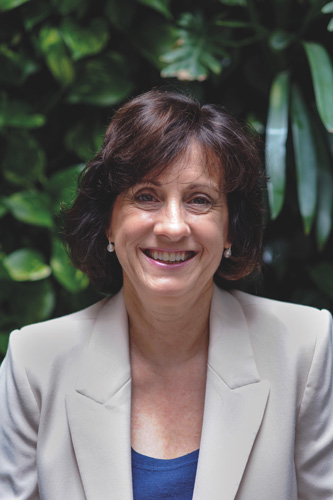
Distinguished Professor Lesley Hughes. Photo: supplied.
The report makes a total of 10 recommendations (see page 13). They include to:
- scale up the development and implementation of next-generation zero greenhouse gas technologies.
- systematically explore how our food production and supply systems should prepare for the challenges of climate change under growing extremes including the implications for carbon sequestration.
- improve our understanding of climate impacts, including tipping points, as well as the compounding effects of multiple stressors at global warming of 2°C or more so that we can develop effective adaptation responses.
Expert panel member Distinguished Professor Lesley Hughes, focusing on ecosystems, said most Australian species cannot evolve quickly enough to cope with the rapid increases in temperatures and associated increases in the frequency and severity of extreme weather events we now observe and feel.
“The unprecedented bushfire season in 2019–20 and the mass dying of corals on the Great Barrier Reef demonstrate how rapidly and fundamentally our global environment is changing with only 1.1°C of global warming,” said Professor Hughes, who is Pro Vice-Chancellor (Research) at Macquarie University.
“It’s not too late to avoid 3°C. We should still be aiming for a stable global temperature below 2°C but to get to that point, we must reduce emissions very rapidly—in particular accelerating the energy transition in the next decade. This must be one of the most urgent national and international priorities.”
Statement from the Australian Academy of Science – Kathleen Folbigg
There are medical and scientific explanations for the death of each of Kathleen Folbigg’s children.
Today the NSW Court of Appeal has dismissed Kathleen Folbigg’s appeal, which requested that the findings of the Commissioner of the 2019 inquiry be overturned.
The appeal reviewed the legal processes undertaken by the Inquiry but did not consider an assessment of the scientific evidence available since the Inquiry.
The incorrect conclusions about the genetics evidence found by the Commissioner of the 2019 inquiry, were adopted by the NSW Court of Appeal in their conclusion today. The Europace peer reviewed scientific paper, which validates the findings of the mutation in Sarah and Laura Folbigg, displaces the findings and non-scientific reasoning at the Inquiry.Professor Carola Vinuesa FAA FAHMS
These points were made clear in the petition recently submitted to the NSW Governor and which is currently being considered by the NSW Attorney-General as a separate matter to today’s Inquiry.
The petition argues that Ms Folbigg should be granted a pardon based on the significant scientific evidence of natural causes of death for her children.
This includes new peer-reviewed genetic findings by an international team of 27 scientists published in a top international cardiology journal last year.
Australian Academy of Science President, Professor John Shine AC PresAA FAHMS(Hon) FRS was among 22 Fellows of the Academy and 90 scientists to sign the petition.
“It is deeply concerning that there is not a mechanism to appropriately weigh up all medical and scientific evidence in a case of this nature. There is now an alternative explanation for the death of the Folbigg children that does not rely on circumstantial evidence” – Professor John Shine.
“The science in this particular case is compelling and cannot be ignored. Despite the new knowledge gained from sequencing the human genome almost 20 years ago, we still have some way to go when it comes to both understanding the complexities of genetic disorders and educating the community about these issues” – Human geneticist and researcher Professor Jozef Gecz FAA FAHMS.
“Expert advice should always be heard and listened to. It will always trump presumption” – Former Chief Scientist Professor Ian Chubb AC FAA FTSE.
Read the petition.
Disruption of 2020 provides opportunities to accelerate progress on Sustainable Development Goals
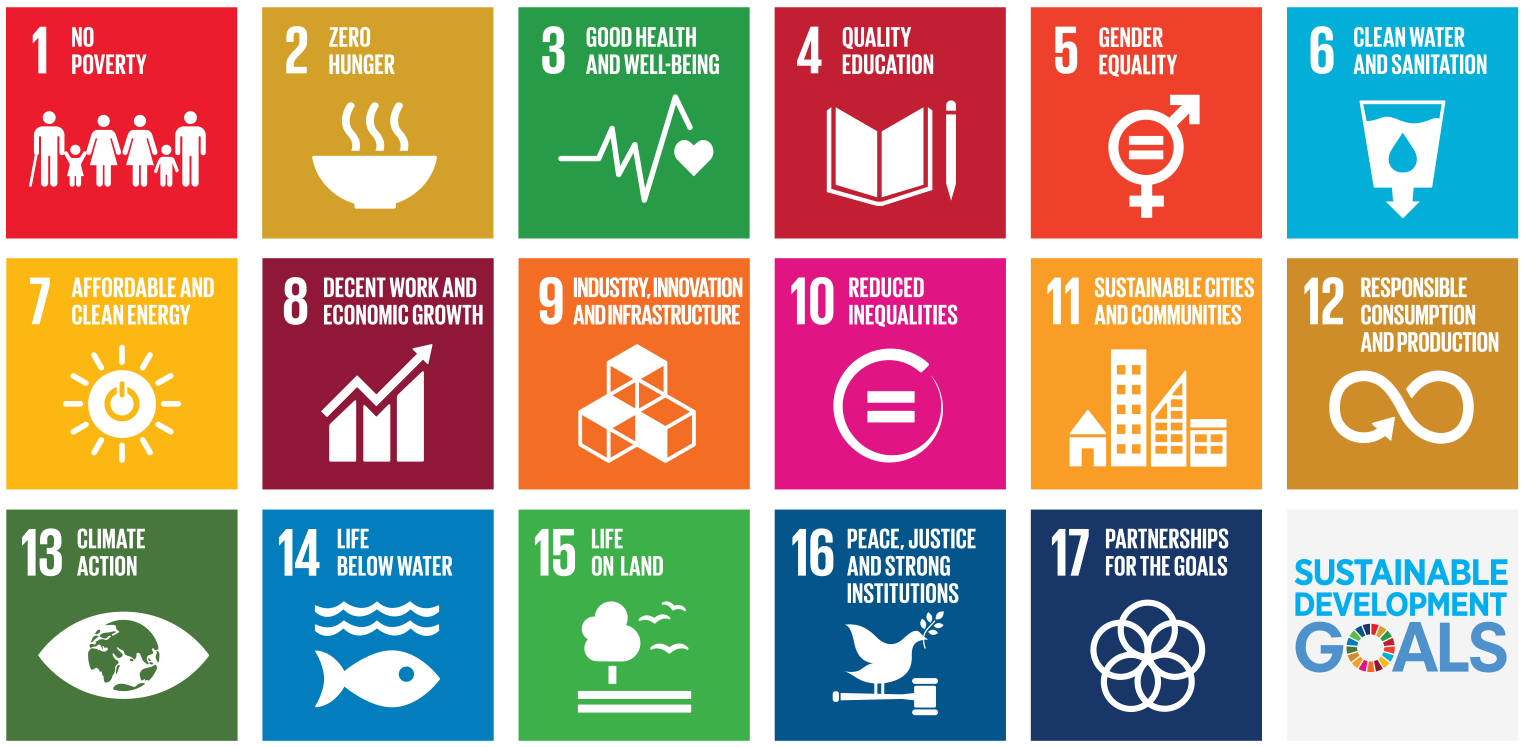
Each of the Sustainable Development Goals has a series of targets.
2030 is the deadline to make the 17 United Nations Sustainable Development Goals (SDGs) a reality.
The UN goals were set in 2015 and the SDGs form the basis of the 2030 Agenda for Sustainable Development, which seeks a global shift to a sustainable and resilient path that promotes prosperity and is free of poverty.
The global community is now in the Decade of Action to make the SDGs a reality. In its latest Science Policy and Diplomacy Newsletter, the Academy outlines its events, programs and initiatives that align with and support the SDGs.
Academy initiatives include STEM Women, the Rapid Research Information Forum, the Early- and Mid-Career Researcher Forum, Taxonomy Australia and Future Earth Australia.
In the foreword to the newsletter, Academy Chief Executive Anna-Maria Arabia writes that the Academy holds these goals in high regard, and much of its work contributes to creating a sustainable and equitable world.
“Whilst 2020 was a year of disrupted progress towards achieving the SDGs, it was also a year that called attention to the importance of addressing inequalities. The science community and the world more broadly can use the opportunity that disruption to business-as-usual provides to accelerate progress towards an inclusive, sustainable and resilient 2030.”
By championing the SDGs, the Academy is representing the role of science in supporting the 2030 Agenda and for positioning Australian science, technology, engineering and mathematics as leaders in sustainable development.
Publishing the Academy’s contributions and achievements that align with the SDGs acknowledges the impact that various initiatives can have on the goals.
It is critical that organisations acknowledge their contributions to the 17 SDGs and continue to support the 2030 Agenda.
The Science Policy and Diplomacy Newsletter shares resources, updates and events that relate to science policy discussion in Australia and around the globe. It reports on the involvement of science in national and international policy and diplomacy and the Academy’s contributions to these discussions.
2021 J G Russell awardees receive funding to further support their research
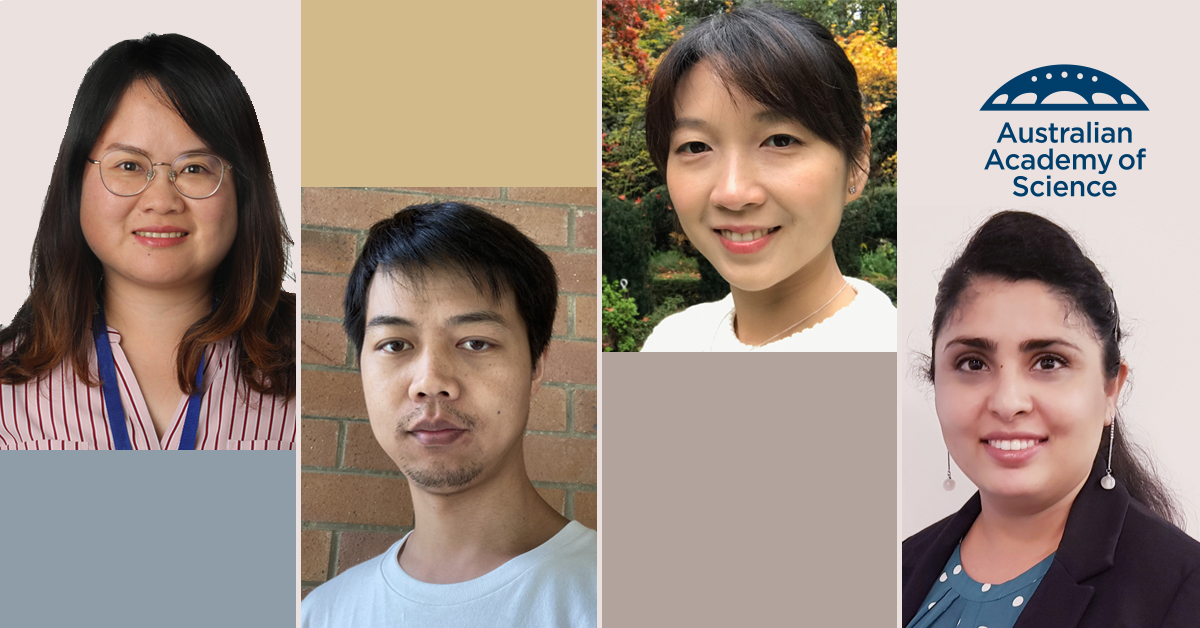
From left: Dr Xiaoxiao Zang, Dr Zhiliang Wang, Dr Yaoxin Hu, and Dr Amandeep Kaur. Image Credit: Australian Academy of Science
Four early-career researchers have been awarded a prestigious top-up grant that recognises and supports excellence in science research.
The J G Russell Award provides an additional $7000 to projects funded through the Australian Research Council’s Discovery Early Career Research Award. It is aimed at helping talented younger researchers as a token of the community’s regard for them. It recognises the costs involved in experimental research, and can be used towards the costs of equipment, maintenance and travel.
The award is made possible by the generosity of the late Miss J Russell.
2021 recipients
Dr Yaoxin Hu
Dr Hu is a chemical engineer who is improving the energy efficiency of heating large structures through the development of new construction materials. She will use the award to purchase an additional air-based cooling apparatus to investigate cooling performance of the materials.
Dr Amandeep Kaur
Dr Kaur develops new chemical tools to provide super-resolution imaging for the study of biological nanostructures and biochemical mechanisms relevant to food security, antibiotic resistance and viruses. She will use the award to establish new capabilities for her research group’s current super-resolution imaging microscope.
Dr Zhiliang Wang
Dr Wang researches ways to improve the generation of energy. He develops materials to convert sunlight into hydrogen-based energy sources, helping to address clean energy challenges. He will use the award to visit a top research group in the United States to discuss ways to incorporate artificial intelligence tools into his research.
Dr Xiaoxiao Zhang
Dr Zhang investigates disease resistance in cereal crops. Her aim is to reduce waste in global food production and address the environmental impact of toxic pesticide use. She will use the award to fund attendance at a conference of synthetic biologists, and to provide additional lab materials for gene editing and protein structure determination.
Applications are not sought for the J G Russell Award. Awardees are chosen from recipients of Australian Research Council Discovery Early Career Researcher Awards.
Australian scientists changing the world recognised with Academy awards
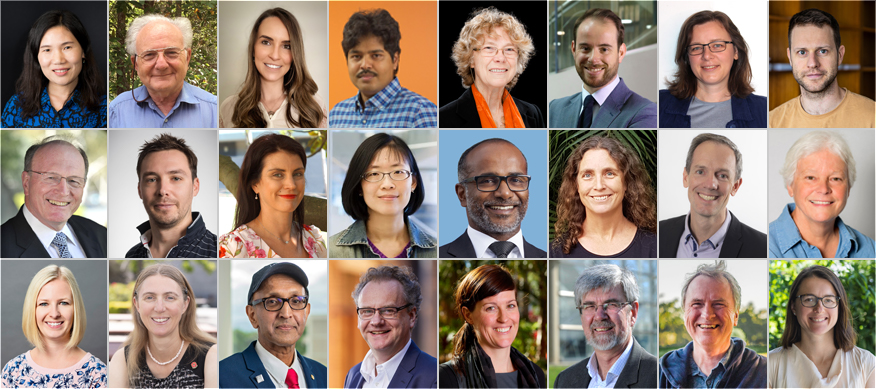
Outstanding contributions to science have been recognised by the Australian Academy of Science today with 24 current and future stars of science receiving prestigious 2021 honorific awards.
The scientists’ discoveries are changing the world, including revealing the physics of sea-level change, leading the discovery of gravitational waves, harnessing the immune system to fight cancer, answering unsolved mathematical problems and creating cheap, flexible, stable and non-toxic solar cells.
Emeritus Professor Cheryl Praeger receives the inaugural Ruby Payne-Scott Medal and Lecture. It is one of the Academy’s most prestigious awards and honours Ruby Payne-Scott’s pioneering contribution to radiophysics and radio astronomy.
Professor Praeger’s work on problems of symmetry has led a revolution in mathematics, and the algorithms she developed are used in technology around the world.
She has a long track record of mentoring and inspiring others, supporting women, advocating for mathematics in schools and promoting mathematics in emerging economies.
“I feel very humbled to receive the inaugural Ruby Payne-Scott Medal and I feel it a great honour: Ruby Payne-Scott was a trail-blazer for women in science,” said Professor Praeger.
“Along with all women who have had the opportunity of a life-long career in STEM, I feel enormous gratitude to Ruby for her courage in fighting against the restrictions which prevented this for married women in the 1950s.
“Although I never had the opportunity of meeting Ruby, I am grateful to have known and worked with her son, mathematician Peter Hall.”
Professor Andrew Holmes is the recipient of the Academy’s other Premier award, the 2021 Matthew Flinders Medal and Lecture.
Professor Holmes is recognised for his world-leading contributions to materials science and biology, including plastics that emit light when sandwiched between electrodes connected to a power source—technology that forms the basis of flexible OLED televisions and plastic solar cells.
“Printed plastic solar technology is certainly going to be a technology in the [energy] marketplace,” said Professor Holmes, in a video published today to highlight his award.
“It has the advantage that it’s lightweight, it’s flexible and, in principle, it’s significantly cheaper than the silicon solar cell technology.”
In the career awards, Professor John Endler and Professor Susanne von Caemmerer are each awarded the inaugural Suzanne Cory Medal, which honours the former Academy president and molecular biologist.
Professor John Endler, a world-leading evolutionary biologist, has pioneered the field of sensory ecology, which explores how an animal’s environment helps determine how their specific senses and signals evolve.
Professor von Caemmerer, an expert in the processes underpinning how plant leaves use CO2, has changed the way we think about photosynthesis. Her research, aimed at improving photosynthesis in crops to increase their yields and adapt to climate change, is now applied worldwide.
One of the early-career researchers also honoured this year is Dr Sarah Perkins-Kirkpatrick, a world expert on heatwaves—their causes, impacts and how they are changing as the earth warms.
She led a global study that found heatwaves have been increasing in frequency since 1950, and receives the 2021 Dorothy Hill Medal, which honours Australia's first woman professor.
President of the Australian Academy of Science, Professor John Shine, said the research of this year’s awardees is at the forefront of science, not only in Australia but around the world.
“While many of these researchers are having direct impacts on our technology and everyday lives, others are pushing the boundaries of basic research—both of which are vital to the advancement of science.
“The Academy is proud to honour such a diverse range of researchers this year, reflecting the people driving Australian science.”
Award recipients
The Academy’s 2021 honorific awards go to:
Premier honorifics
- Matthew Flinders Medal and Lecture—Professor Andrew Holmes AC FAA FRS FTSE
- Inaugural Ruby Payne-Scott Medal and Lecture—Emeritus Professor Cheryl Praeger AC FAA
Career honorifics
- David Craig Medal and Lecture—Professor Thomas Maschmeyer FAA FTSE
- Hannan Medal—Professor Mathai Varghese FAA
- Jaeger Medal—Professor John Church FAA FTSE
- Inaugural Suzanne Cory Medal—Professor John Endler FAA FRS
- Inaugural Suzanne Cory Medal—Professor Susanne von Caemmerer FAA FRS
- Thomas Ranken Lyle Medal—Professor David McClelland FAA
Mid-career honorifics
- Jacques Miller Medal—Professor Mark Dawson
- Jacques Miller Medal—Associate Professor Michele Teng
- Nancy Millis Medal for Women in Science—Professor Angela Moles
- Nancy Millis Medal for Women in Science—Associate Professor Cathryn Trott
Early-career honorifics
- Anton Hales Medal—Dr Nicolas Flament
- Christopher Heyde Medal—Dr Kevin Coulembier
- Christopher Heyde Medal—Dr Vera Roshchina
- Dorothy Hill Medal—Dr Sarah Perkins-Kirkpatrick
- Fenner Medal—Associate Professor Eve McDonald-Madden
- Gottschalk Medal—Associate Professor Francine Marques
- John Booker Medal—Dr Bishakhdatta Gayen
- Le Fèvre Medal—Associate Professor Debbie Silvester-Dean
- Moran Medal—Professor Christopher Drovandi
- Moran Medal—Dr Janice Scealy
- Pawsey Medal—Associate Professor Xiaojing Hao
- Ruth Stephens Gani Medal—Professor Joseph Powell
The awards will be presented in online ceremonies over the course of the year.
Nobel Laureates and leading scientists call for Kathleen Folbigg pardon
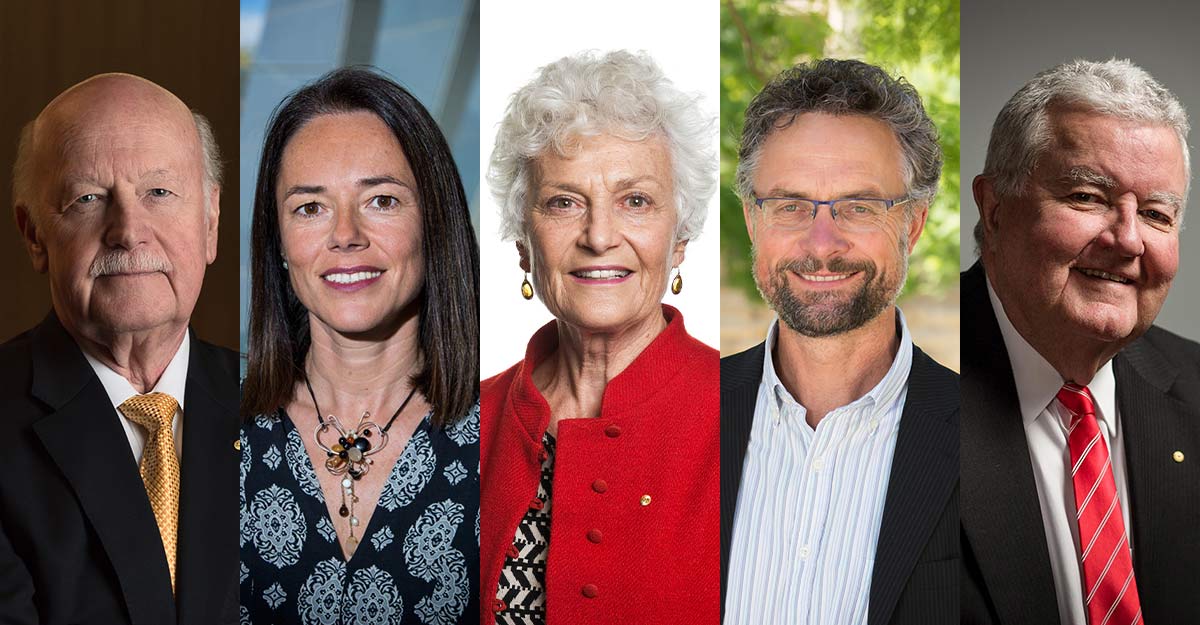
Ninety eminent scientists—including two Australian Nobel Laureates, medical practitioners, science leaders and prominent Australians—have signed a petition calling for Kathleen Folbigg’s immediate pardon and release from jail.
Kathleen Folbigg was convicted and jailed in 2003 for murdering her children Patrick, Sarah and Laura and for the manslaughter of Caleb.
The petition argues that Ms Folbigg should be granted a pardon based on the significant scientific evidence of natural causes of death for her children.
The group submitted the petition to the Governor of NSW, the Honorable Margaret Beazley AC, earlier this week.
The petition includes medical and scientific explanations from leading experts in their field that address each of the Folbigg children’s deaths.
The petition concludes:
The executive prerogative of mercy is designed to deal with failures of the justice system such as this one. It is incumbent on the Governor to exercise her power to stop the ongoing miscarriage of justice suffered by Ms Folbigg. Not to do so is to continue to deny Ms Folbigg basic human rights and to decrease faith in the New South Wales justice system.
Ms Folbigg’s case also establishes a dangerous precedent as it means that cogent medical and scientific evidence can simply be ignored in preference to subjective interpretations of circumstantial evidence.
Australian Academy of Science President, Professor John Shine AC PresAA FAHMS(Hon) FRS is among the petition’s signatories.
“Given the scientific and medical evidence that now exists in this case, signing this petition was the right thing to do,” Professor Shine said.
“These matters are incredibly complex. As our scientific knowledge deepens, so does the complexity, which makes the job of the courts a more complex one too.
“We want to work more closely with the legal community to ensure evidence placed before courts is presented in the most accurate way possible, using the most appropriate experts and the most up-to-date science,” Professor Shine said.
ANU Professor of Immunology Carola Vinuesa FAA FAHMS also signed the petition. She gave evidence to an inquiry into Ms Folbigg’s convictions and was asked to analyse the genomes of Kathleen and her four children in early 2019.
“In all four Folbigg children, there is credible medical and pathological evidence, including new peer-reviewed genetic findings, by an international team of 27 scientists published in a top international cardiology journal last year, that points towards natural causes of death,” said Professor Vinuesa.
“It is our responsibility as scientists to assist our legal peers so that they can rely on scientific, peer-reviewed evidence and ensure that domain experts are at their disposal to solve the issues of a difficult legal case.”
Other petition signatories and Fellows of the Australian Academy of Science highlight below why they signed the petition.
“It is deeply concerning that medical and scientific evidence has been ignored in preference of circumstantial evidence. We now have an alternative explanation for the death of the Folbigg children” – Child and public health researcher Professor Fiona Stanley AC FAA FAHMS(Hon) FASSA.
“The science in this particular case is compelling and cannot be ignored. Despite the new knowledge gained from sequencing the human genome almost 20 years ago, we still have some way to go when it comes to both understanding the complexities of genetic disorders and educating the community about these issues” – Human geneticist and researcher Professor Jozef Gecz FAA FAHMS.
“Expert advice should always be heard, and listened to. It will always trump presumption” – Former Chief Scientist Professor Ian Chubb AC FAA FTSE.
Read the petition (PDF 7.4MB)
The above video features Professor Carola Vinuesa explaining the genetic findings that point towards natural causes of death.
Last year a panel of experts from the Australian Academy of Science and Australian Academy of Law explored the topic of scientific proof and legal proof in a joint symposium.
Australian Government urged to invest in updated vaccine manufacturing capability
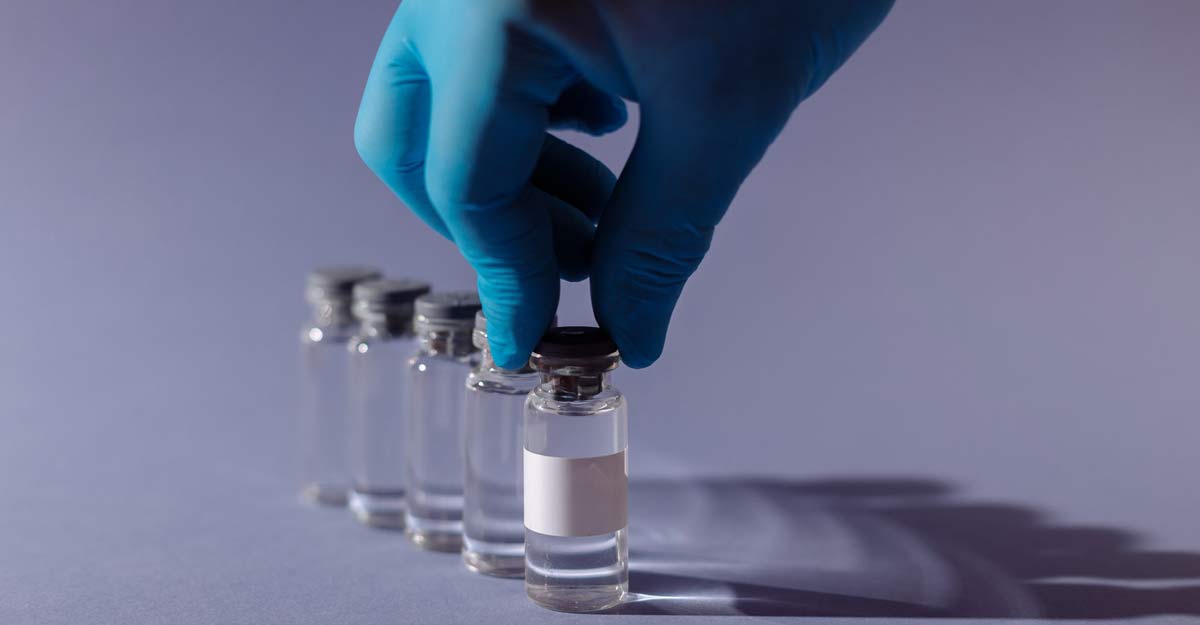
Leading scientists say Australia must be able to make mRNA vaccines onshore to avoid shortages. Image by Thirdman on Pexels.
Australia’s leading scientists have urged the Australian Government to develop additional vaccine manufacturing capability within the next 12 months. They say without the ability to produce mRNA vaccines onshore, Australia and the region remain vulnerable to supply limitations.
The recommendation is contained in the Australian Academy of Science’s 2021-22 pre-Federal budget submission published today.
The submission reads: “Despite our one-hundred-year-old investment in CSL, there are developing gaps in our ability to produce vaccines onshore. Without the ability to produce new vaccines onshore, Australia and the region remain vulnerable to supply shocks.
“Investing in nucleic acid-based technology platforms offers a way to mitigate this risk. Nucleic acid technology shows enough promise to commit to developing a large-scale RNA production capability. Australia needs a strategy for developing additional manufacturing platforms for the years ahead.
“Developing this capability will allow us to build resilience to future pandemics and potential biosecurity situations that may require us to have the onshore capacity to mass produce vaccines.”
The Academy’s Secretary for Science Policy, Professor David Day, said Australia has the scientific expertise for RNA vaccines but not the manufacturing capability.
The Academy’s other recommendations to the Australian Government for the 2021-22 Federal Budget are:
- That a comprehensive review of the Australian system of research funding be undertaken to determine the most sustainable and effective way to support the research and development our nation so heavily relies on.
Despite the Australian Government’s additional investments in the 2020–21 budget, the ongoing negative impact on the scientific enterprise of the pandemic will become more apparent during 2021.
The Academy has long sought an uplift in our national scientific ambition, including an increase in our national R&D effort to 3% of GDP. This ambition requires broad agreement on how to focus any additional funding for science and research on societal challenges. Addressing these challenges requires broad reform to instruments like our R&D tax incentives and the pursuit of a productivity-enhancing Australian open science strategy.
- Maintain sovereign capabilities in research and development by establishing a research translation fund to support research not covered by the Medical Research Future Fund (MRFF).
Australia has been able to position itself as a leading biomedical nation. Such a position is no accident but has come from decades of patient investment. Now is the time to make similar investments in the physical sciences. Investments in Australian fundamental science, from mathematics to materials science and beyond, will build our nation’s scientific capital and enable industries of the future.
- Continue to provide the evidence base to the Australian Government through the Rapid Research Information Forum (RRIF) by investing in its operations and the learned academies’ policy capability.
The RRIF can benefit the Australian Government beyond the pandemic by providing evidence-based answers to questions to inform a range of multidisciplinary policy challenges, from the challenge of a circular economy and building sovereign capability in manufacturing to adaption to global warming.
- Work with Taxonomy Australia to develop a mission to discover all species within a generation, commencing with a full cost-benefit exercise.
At present 70% of the ‘map’ of Australia’s biodiversity is blank. Australia’s taxonomists are planning an ambitious and necessary mission: to discover and document all remaining Australian species within a generation. A recent scoping exercise by Deloitte Access Economics has estimated that a mission to discover and document all remaining Australian species within a generation will provide returns of at least $4–$35 for every dollar invested.
- Conduct a review of higher education funding rates for university teaching of STEM subjects 12 months after implementing the Job-ready Graduates Package.
The passage and implementation of the Australian government’s Job-Ready package is intended to incentivise STEM study. Concerningly, universities have reported job cuts and course changes, which are impacting staffing levels in STEM areas – particularly mathematics, physics, and chemistry – and reducing opportunities for Australians to study and do research. A review would clarify the effectiveness of legislated changes and quantify the ongoing impact of the pandemic.
Read the Academy’s pre-Federal budget submission.
Nominate now for the Academy’s 2022 awards
Nominations are now open for the Academy’s 2022 honorific awards, and applications open for support for research conferences, research awards and travelling fellowships.
These awards and funding opportunities support and shine a light on researchers who are making outstanding contributions to science and progressing the advancement of science in Australia.
The awards recognise remarkable achievements in research fields including Earth sciences, biology, physics, mathematics, chemistry, experimental biomedicine, genetics and more, with some awards nominations being open biennially.
According to Dr Lara Malins, one of many award recipients featured in the Academy’s Science Matters magazine, the JG Russell Award she received is more than just extra funding. “It was just really fantastic to have that support. Awards that recognise early-career researchers set them on a trajectory that helps them be more successful.”
The Academy is committed to celebrating and supporting diversity. It is seeking nominations of outstanding scientists from all career stages, backgrounds and genders, and strongly encourages more nominations of women for all awards, in particular the premier, career and mid-career honorific awards.
New Premier Awards category
The recently launched Ruby Payne-Scott Medal and Lecture joins the Matthew Flinders and Macfarlane Burnet medals and lectures as an Academy Premier Award. The Premier Awards category is the Academy’s most prestigious category of awards, recognising researchers of the highest standing over a career of any length. Candidates and nominators for these awards may be non Fellows. The STEM sector is strongly encouraged to nominate suitable candidates for these awards.
Important dates
Honorific award nominations
All honorific award nominations close 1 May 2021.
Research conferences, research awards and travelling fellowships
All research conferences, research awards and travelling fellowships applications close 1 June 2021.
See below for the full list of 2022 awards, grants, fellowships and funding. More information on each award can be found at the Academy's Awards page, including how to nominate or apply.
Awards and opportunities now open
Earth sciences
- Ruby Payne-Scott Medal and Lecture [Nominations due 1 May] Eligibility: Premier award, Australian residents only
- Ian Wark Medal and Lecture [Nominations due 1 May] Eligibility: Career award, Australian residents only
- Dorothy Hill Medal [Nominations due 1 May] Eligibility: Less than 10 yrs post PhD, Australian residents only, women only
- Anton Hales Medal [Nominations due 1 May] Eligibility: Less than 10 yrs post PhD, Australian residents only
- Nancy Millis Medal for Women in Science [Nominations due 1 May] Eligibility: 8-15 yrs post PhD, Australian residents only, women only
- Frederick White Medal [Nominations due 1 May] Eligibility: Less than 10 yrs post PhD
- Haddon Forrester King Medal [Nominations due 1 May] Eligibility: Career award, Australia and overseas
- Mawson Medal and Lecture [Nominations due 1 May] Eligibility: Career award, Australian residents only
- Aboriginal and Torres Strait Islander Scientist Award [Applications due 1 June] Eligibility: PhD candidate or less than 15 yrs post PhD, Aboriginal or Torres Strait Islanders only
- Selby Fellowship [Nominations due 1 June] Eligibility: More than 15 yrs post PhD, non-Australian residents only
- Elizabeth and Fredrick White research conferences [Applications due 1 June] Eligibility: organisations or individuals on behalf of organisations, Australia and overseas
- The Moran Award for History of Science Research [Applications due 1 June] Eligibility: Postgraduate student, Australian residents only
Physical sciences
- Ruby Payne-Scott Medal and Lecture [Nominations due 1 May] Eligibility: Premier award, Australian residents only
- Ian Wark Medal and Lecture [Nominations due 1 May] Eligibility: Career award, Australian residents only
- Nancy Millis Medal for Women in Science [Nomination due 1 May] Eligibility: 8-15 post PhD, Australian residents only, women only
- Frederick White Medal [Nominations due 1 May] Eligibility: Less than 10 yrs post PhD
- Selby Fellowship [Applications due 1 June] Eligibility: More than 15 yrs post PhD, non-Australian residents only
- Elizabeth and Fredrick White research conferences [Applications due 1 June] Eligibility: Organisations or individuals on behalf of organisations, Australia and overseas
- The Moran Award for History of Science Research [Applications due 1 June] Eligibility: Postgraduate student, Australian residents only
- Aboriginal and Torres Strait Islander Scientist Award [Applications due 1 June] Eligibility: PhD candidate or less than 15 yrs post PhD, Aboriginal or Torres Strait Islanders only
Mathematics
- Ruby Payne-Scott Medal and Lecture [Nominations due 1 May] Eligibility: Premier award, Australian residents only
- Ian Wark Medal and Lecture [Nominations due 1 May] Eligibility: Career award, Australian residents only
- Christopher Heyde Medal [Nominations due 1 May] Eligibility: Less than 10 yrs post PhD, Australian residents only
- Nancy Millis Medal for Women in Science [Nominations due 1 May] Eligibility: 8-15 post PhD, Australian residents only, women only
- Aboriginal and Torres Strait Islander Scientist Award [Applications due 1 June] Eligibility: PhD candidate or less than 15 yrs post PhD, Aboriginal or Torres Strait Islanders only
- Selby Fellowship [Applications due 1 June] Eligibility: More than 15 yrs post PhD, non-Australian residents only
- The Moran Award for History of Science Research [Applications due 1 June] Eligibility: Postgraduate student, Australian residents only
Physics
- Ruby Payne-Scott Medal and Lecture [Nominations due 1 May] Eligibility: Premier award, Australian residents only
- Ian Wark Medal and Lecture [Nominations due 1 May] Eligibility: Career award, Australian residents only
- Pawsey Medal [Nominations due 1 May] Eligibility: Less than 10 yrs post PhD, Australian residents only
- Frederick White Medal [Nominations due 1 May] Eligibility: Less than 10 yrs post PhD
- Nancy Millis Medal for Women in Science [Nominations due 1 May] Eligibility: 8-15 post PhD, Australian residents only, female only
- Elizabeth and Fredrick White research conferences [Applications due 1 June] Eligibility: Organisations or individuals on behalf of organisations, Australia and overseas
- The Moran Award for History of Science Research [Applications due 1 June] Eligibility: Postgraduate student, Australian residents only
- Aboriginal and Torres Strait Islander Scientist Award [Applications due 1 June] Eligibility: PhD candidate or less than 15 yrs post PhD, Aboriginal or Torres Strait Islanders only
- Selby Fellowship [Applications due 1 June] Eligibility: More than 15 yrs post PhD, non-Australian residents only
Chemistry
- Ruby Payne-Scott Medal and Lecture [Nominations due 1 May] Eligibility: Premier award, Australian residents only
- David Craig Medal and Lecture [Nominations due 1 May] Eligibility: Career award, Australian residents only
- Ian Wark Medal and Lecture [Nominations due 1 May] Eligibility: Career award, Australian residents only
- Nancy Millis Medal for Women in Science [Nominations due 1 May] Eligibility: 8-15 post PhD, Australian residents only, female only
- Le Fèvre Medal [Nominations due 1 May] Eligibility: Less than 10 yrs post PhD, Australian residents only
- Aboriginal and Torres Strait Islander Scientist Award [Applications due 1 June] Eligibility: PhD candidate or less than 15 yrs post PhD, Aboriginal or Torres Strait Islanders only
- Selby Fellowship [Applications due 1 June] Eligibility: More than 15 yrs post PhD, non-Australian residents only
- The Moran Award for History of Science Research [Applications due 1 June] Eligibility: Postgraduate student, Australian residents only
- Elizabeth and Fredrick White research conferences [Applications due 1 June] Eligibility: Organisations or individuals on behalf of organisations, Australia and overseas
Biological science
- Ruby Payne-Scott Medal and Lecture [Nominations due 1 May 2020] Eligibility: Premier award, Australian residents only
- Macfarlane Burnet Medal and Lecture [Nominations due 1 May] Eligibility: Premier award, Australian residents only
- Ian Wark Medal and Lecture [Nominations due 1 May] Eligibility: Career award, Australian residents only
- Fenner Medal [Nominations due 1 May] Eligibility: Less than 10 yrs post PhD, Australian residents only
- Nancy Millis Medal for Women in Science [Nominations due 1 May] Eligibility: 8-15 post PhD, Australian residents only, female only
- Ruth Stephens Gani Medal [Nominations due 1 May] Eligibility: Less than 15 yrs post PhD, Australian residents only
- The Margaret Middleton Fund for endangered Australian native vertebrate animals [Applications due 1 June] Eligibility: Hold an APA, university scholarship or less than 3 yrs post-PhD, Australian residents only
- The Max Day Environmental Science Fellowship Award [Applications due 1 June] Eligibility: PhD candidate or less than 5 yrs post PhD, Australian residents only
- The Moran Award for History of Science Research [Applications due 1 June] Eligibility: Postgraduate student, Australian residents only
- Boden Research Conferences [Applications due 1 June] Eligibility: Organisations or individuals on behalf of organisations, Australia and overseas
- Thomas Davies Research Grant for Marine, Soil and Plant Biology [Applications due 1 June] Eligibility: Less than 15 yrs post PhD
- Aboriginal and Torres Strait Islander Scientist Award [Applications due 1 June] Eligibility: PhD candidate or less than 15 yrs post PhD, Aboriginal or Torres Strait Islanders only
- Selby Fellowship [Applications due 1 June] Eligibility: More than 15 yrs post PhD, non-Australian residents only
- Graeme Caughley Travelling Fellowship [Applications due 1 June] Eligibility: Career award, Australian or New Zealand residents only\
- Rudy Lemberg Travelling Fellowship [Nominations due 1 June] Eligibility: Career award, Australian or overseas residents
Biomedical science
- Ruby Payne-Scott Medal and Lecture [Nominations due 1 May] Eligibility: Premier award, Australian residents only
- Macfarlane Burnet Medal and Lecture [Nominations due 1 May] Eligibility: Premier award, Australian residents only
- Suzanne Cory Medal [Nominations due 1 May] Eligibility: Career award, Australian residents only
- Gustav Nossal Medal for Global Health [Nominations due 1 May] Eligibility: Career award, Australian residents only
- Ian Wark Medal and Lecture [Nominations due 1 May] Eligibility: Career award, Australian residents only
- Gottschalk Medal [Nominations due 1 May] Eligibility: between 8 to 15 post PhD, Australian residents only
- Jacques Miller Medal [Nominations due 1 May] Eligibility: Less than 15 yrs post PhD, Australian residents only
- Nancy Millis Medal for Women in Science [Nominations due 1 May] Eligibility: 8-15 post PhD, Australian residents only, female only
- Boden Research Conferences [Applications due 1 June] Eligibility: Organisations or individuals on behalf of organisations, Australia and overseas
- The Moran Award for History of Science Research [Applications due 1 June] Eligibility: Postgraduate student, Australian residents only
- Aboriginal and Torres Strait Islander Scientist Award [Applications due 1 June] Eligibility: PhD candidate or less than 15 yrs post PhD, Aboriginal or Torres Strait Islanders only
- Selby Fellowship [Applications due 1 June] Eligibility: More than 15 yrs post PhD, non-Australian residents only
Population and the environment, and environmental science
- Ruby Payne-Scott Medal and Lecture [Nominations due 1 May] Eligibility: Premier award, Australian residents only
- Ian Wark Medal and Lecture [Nominations due 1 May] Eligibility: Career award, Australian residents only
- Nancy Millis Medal for Women in Science [Nominations due 1 May] Eligibility: 8-15 post PhD, Australian residents only, female only
- Aboriginal and Torres Strait Islander Scientist Award [Applications due 1 June] Eligibility: PhD candidate or less than 15 yrs post PhD, Aboriginal or Torres Strait Islanders only
- Selby Fellowship [Applications due 1 June] Eligibility: More than 15 yrs post PhD, non-Australian residents only
- The Max Day Environmental Science Fellowship Award [Applications due 1 June] Eligibility: PhD candidate or less than 5 yrs post PhD, Australian residents only
- Fenner Conference on the Environment [Applications due 1 June] Eligibility: Organisations or individuals on behalf of organisations, Australia and overseas
- The Margaret Middleton Fund for endangered Australian native vertebrate animals [Applications due 1 June] Eligibility: Hold an APA, university scholarship or less than 3 yrs post-PhD, Australian residents only
- The Moran Award for History of Science Research [Applications due 1 June] Eligibility: Postgraduate student, Australian residents only
Engineering
- Ruby Payne-Scott Medal and Lecture [Nominations due 1 May] Eligibility: Premier award, Australian residents only
- Ian Wark Medal and Lecture [Nominations due 1 May] Eligibility: Career award, Australian residents only
- John Booker Medal [Nominations due 1 May] Eligibility: Less than 10 yrs post PhD, Australian residents only
- Nancy Millis Medal for Women in Science [Nominations due 1 May] Eligibility: 8-15 post PhD, Australian residents only, female only
- Aboriginal and Torres Strait Islander Scientist Award [Applications due 1 June] Eligibility: PhD candidate or less than 15 yrs post PhD, Aboriginal or Torres Strait Islanders only
- Selby Fellowship [Applications due 1 June] Eligibility: More than 15 yrs post PhD, non-Australian residents only
- The Moran Award for History of Science Research [Applications due 1 June] Eligibility: Postgraduate student, Australian residents only
Statement on Facebook blocking science expertise
The nation’s peak bodies representing science and scientific expertise have expressed deep concern about Facebook blocking content today from a range of non-news science organisations.
On Thursday, Facebook blocked content from groups including Science & Technology Australia, the Bureau of Meteorology, the Australian Science Media Centre, the Australian Science Teachers Association, Professionals Australia, The Royal Institution of Australia, and Research Australia.
These organisations share valued and peer-reviewed science insights and Australia’s deep scientific knowledge.
The changes also affected state health departments including those in South Australia and Queensland and some emergency services feeds.
The move comes as part of Facebook’s push back against Australia’s new media code which was passed by the lower house last night and now awaits Senate approval.
Australian Academy of Science Chief Executive Officer Anna-Maria Arabia said Facebook cannot reduce misinformation while blocking sources of trustworthy scientific information.
Science & Technology Australia Chief Executive Officer Misha Schubert said the move to block content from science organisations risked denying the public access to important scientific and health information.
“For Facebook to block access to the feeds of trusted science and health organisations in Australia during a pandemic and bushfire season is irresponsible and dangerous.”
“At a time when the company is taking steps to tackle misinformation on its platform, it’s concerning it has chosen to silence some of this nation’s leading scientific voices.”
Dr Susannah Eliott, CEO of the Australian Science Media Centre said: “We are very concerned about the impact of this action on the quality of information reaching the public. Facebook is used by many non-news organisations to distribute evidence-based information to the public on critical issues such as vaccines, pandemics, climate change and extreme weather events. Social media platforms have a responsibility to enable the sharing of accurate information on these key topics and not increase the prominence of misinformation.”
Australian coastal communities could reap benefits of blue economy

Coastal communities like Bondi could benefit from a 'blue economy'. Photo by Kelvin Li on Unsplash.
Australian communities and decision makers are optimistic about their opportunities in a blue economy, but remain concerned about the wellbeing of coastal communities, a nation-wide consultation by Future Earth Australia (FEA) has found.
FEA today released outcomes papers from seven state and territory-based consultation workshops, which lay the foundations for its 10-Year Strategy on Ocean and Coastal Sustainability.
Dr Beth Fulton, co-chair of the expert working group, said the papers revealed that Australian oceans and coasts are threatened by the fragmented way they are managed.
“Not only does this fragmentation threaten our environment, but it stands in the way of a sustainable blue economy.
“Marine industries like offshore energy and sustainable aquaculture should only be developed in a manner that improves community prosperity and wellbeing, while also promoting thriving marine ecosystems.”
The consultations sought the perspectives of researchers, decision makers, practitioners, First Nations people and community groups.
Emeritus Professor Nick Harvey of the University of Adelaide, co-chair of the expert working group, said the consultations highlighted that urgent coastal and marine issues are not seeing proportionate attention in the policy agenda.
“While some of the most exciting coastal and ocean protection is being led by community groups and passionate people locally, many citizens are not aware of what is coming as the climate changes—like the increasing frequency and severity of coastal storms, or the decline in rivers and estuaries.”
While each state and territory outcomes paper highlighted issues important to their individual areas, common themes included:
- A demand for a coherent and integrated governance system of ocean and coastal management that brings in all three levels of government,
- A priority for the knowledge of First Nations people to be centred in knowledge and governance practices, and
- A need for an open-access national platform for data and information sharing about data affecting the ocean and coast, such as ocean health and acidification and climate modelling around flood and fire risk.
FEA Director, Dr Tayanah O’Donnell, said the outcomes papers will inform the recommendations made in the 10-Year Strategy.
“Future Earth Australia strategies are grounded in grassroots actions and the applied reality of stewarding human and natural systems, along with high-level guidance from national leaders on the expert reference group.”
The 10-Year Strategy on Ocean and Coastal Sustainability, which will outline strategies for achieving healthy and resilient oceans and coasts for all of Australia, will be released in early 2021.
Future Earth Australia is a national peak initiative that enables Australian researchers, governments, industry and NGOs to collaborate with each other and with international networks and programs across Australia and Oceania.
This will be the second targeted strategy created by FEA, following the publication of an urban sustainability plan that was launched in December 2019 at the State of Australian Cities Conference.
The outcomes papers can be read here: https://www.futureearth.org.au/publications
Further information on FEA and the 10-Year Strategy: https://www.futureearth.org.au/initiatives/ocean-and-coastal-sustainability